Centrolene geckoideum: The Enchanting Gecko-like Glass Frog of the Tropical Andes#
Hidden amidst the verdant foliage of the Andean tropical rainforests, a tiny jewel sparkles quietly, often unnoticed, yet profoundly captivating to those fortunate enough to encounter it. Known scientifically as Centrolene geckoideum, this delicate amphibian—commonly referred to as the gecko-like glass frog—transcends simple categorization. Its translucent skin, intricate life cycle, and fascinating ecological role invite nature enthusiasts into a world both mysterious and wonderfully revealing. Beyond simply being beautiful, Centrolene geckoideum is a valuable indicator of environmental health, reflective of the delicate ecological balance within its unique Andean habitat.
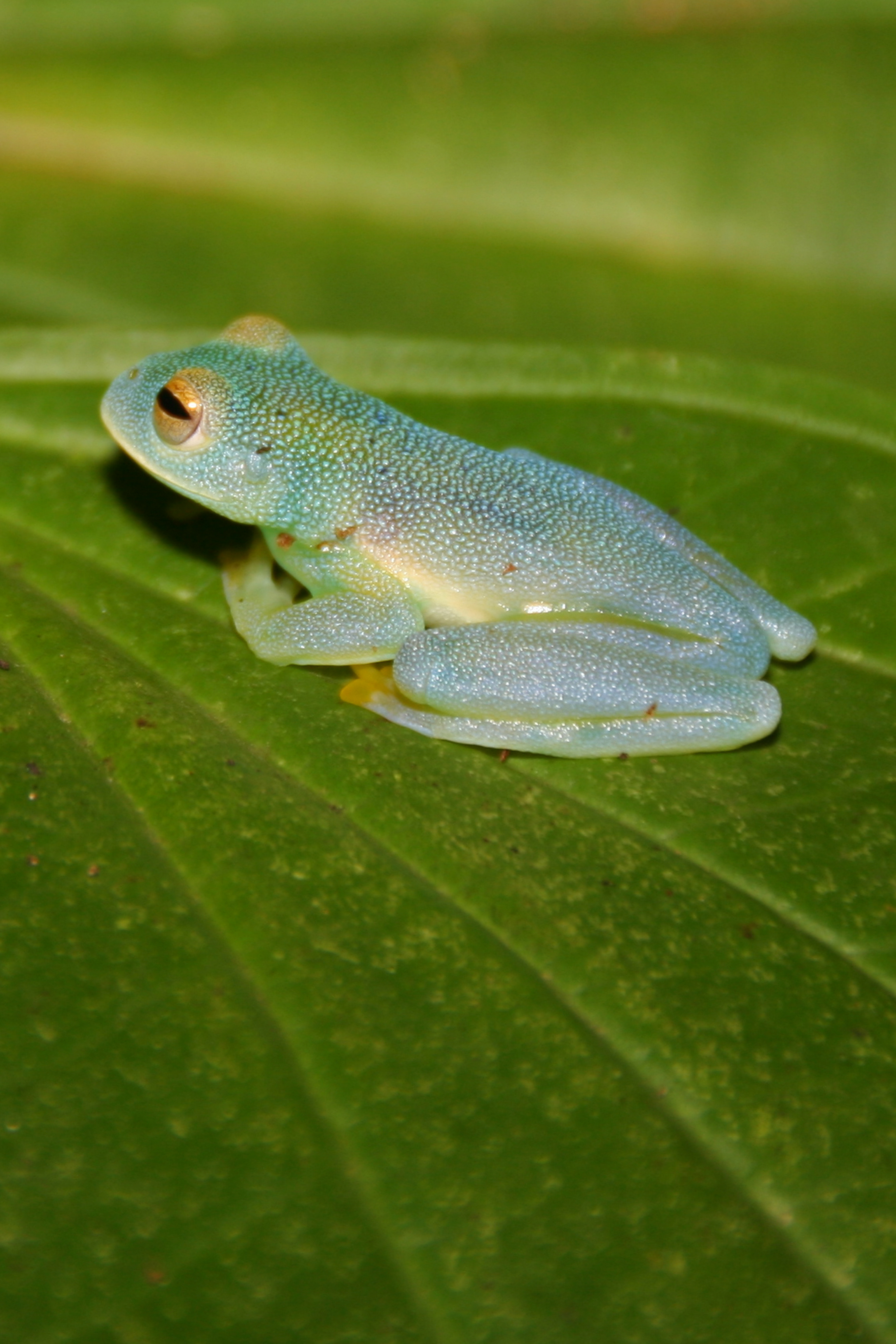
Imagine wandering into the mists of a cloud forest, surrounded by towering trees draped in mosses and ferns. Water droplets cling gently to broad leaves and creeping vines. Amidst this lush vibrancy, perched inconspicuously on a leaf just above a gently flowing stream, a green, translucent form sits still as a statue, its presence betrayed only by a subtle glistening in the dappled light. Meet Centrolene geckoideum—the gecko-like glass frog, whose see-through belly draws wonder and intrigue, offering glimpses into the very workings of its tiny internal organs.
Taxonomy and Classification#
Centrolene geckoideum belongs to the family Centrolenidae, a distinctive amphibian family known colloquially as glass frogs owing to their unique transparent skin. Within Centrolenidae, the genus Centrolene is remarkable for several species that share similar physical traits and habitat preferences. Scientifically classified for the first time by Jiménez de la Espada in 1872, its species name—geckoideum—highlights its curious resemblance, in anatomical structure and posture, to certain gecko species, a trait that often piques the curiosity of scientists and wildlife enthusiasts alike.
Close Relatives and Similar Species#
While closely related to other members within the genus such as Centrolene prosoblepon and Centrolene buckleyi, Centrolene geckoideum holds unique identifiers in both behavior and subtle morphological features, which help researchers separate it from its congeners. These minute differences are crucial in furthering scientific knowledge regarding biodiversity, evolution, and conservation management.
Natural Habitat#
The natural domain of Centrolene geckoideum is largely confined to the cloud forests of the tropical Andes—encompassing regions within Colombia, Ecuador, and Peru. These amphibians prefer cool, humid mountainous areas at elevations ranging typically from 1,100 to 2,000 meters above sea level. It’s within this narrow ecological gradient that the species finds its ideal habitat: pristine forest streams surrounded by dense foliage, an environment painted in shades of mossy greens, bronzes, and earthy browns. Here, the canopy forms a living roof woven together by leaves, vines, and epiphytes, protecting inhabitants from harsh sunlight while retaining crucial humidity.
The Streamside Micro-habitats#
Centrolene geckoideum relies heavily on streams with crystal-clear waters—a hallmark of undisturbed forests—where males position themselves strategically upon broad leaves and low-hanging branches. These micro-habitats become arenas for courtship displays, vocal interactions, and egg-laying rituals, underscoring the exquisite synchronization between habitat health and species vitality.
Physical Characteristics#
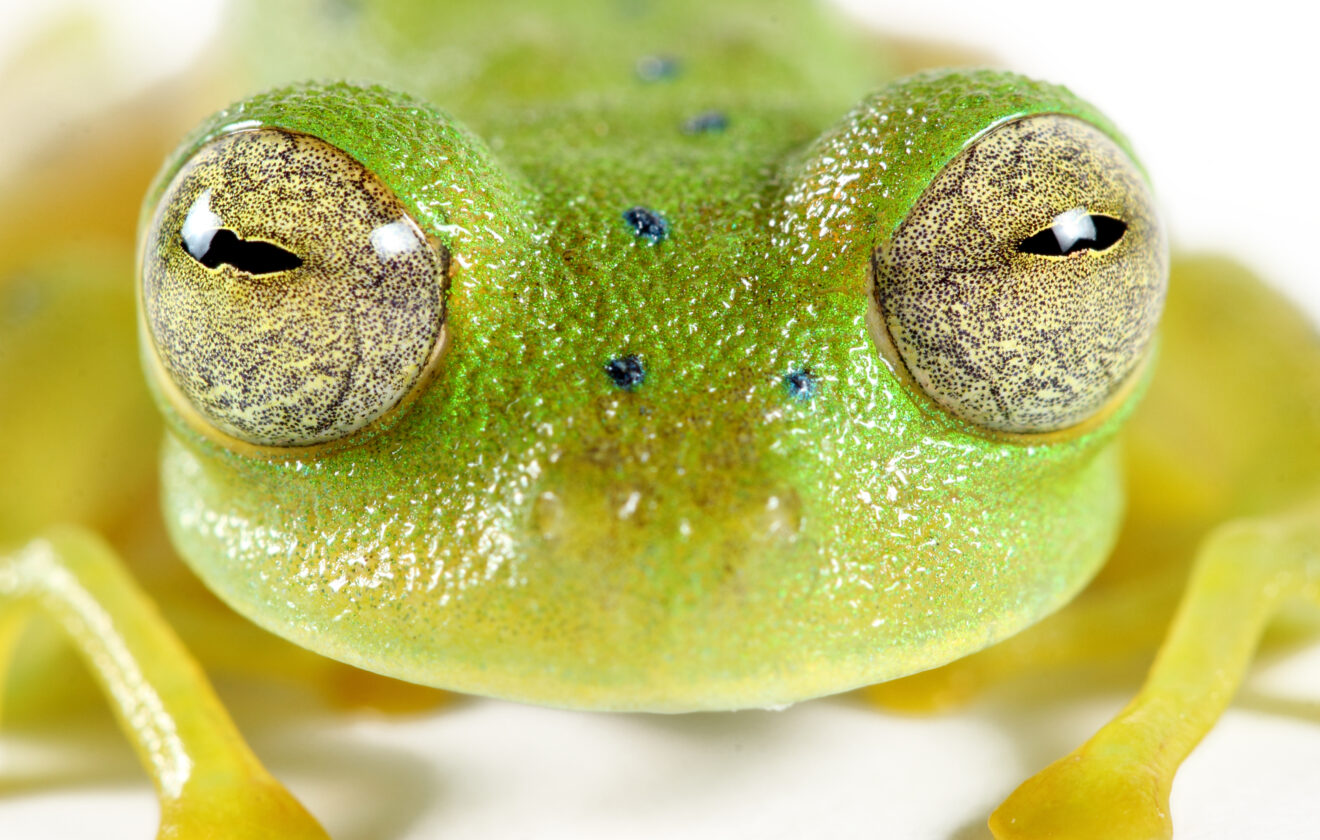
Observing a gecko-like glass frog up close is akin to examining a finely-crafted jewel. Adult frogs are relatively small, averaging between 20mm and 27mm in length. The upper surfaces are emerald-green with occasional yellowish or lime-colored shades, ideally suited for blending seamlessly into their leafy abodes. Their most notable feature, however, is their ventral translucence. Indeed, glass frogs famously possess transparent abdominal skin, which allows a clear view of many internal organs, including their tiny hearts visibly pulsing rhythmically.
Adaptations for Survival#
This transparency, more than an extraordinary aesthetic attribute, serves as camouflage by diffusing the shape and outline of the frog against its foliage background. Combined with their nocturnal and arboreal behavior, these adaptations dramatically reduce the susceptibility of Centrolene geckoideum to predators, such as snakes, birds, and larger amphibians. Their large, forward-facing golden eyes provide sharp nocturnal vision—a perfect complement to their stealthy, nighttime hunting strategies.
Behavior and Life Cycle#
Nocturnal Predators of the Tree Canopy#
By the gentle shimmer of moonlight trickling down through the forest canopy, gecko-like glass frogs wake from their daytime slumber, embarking on a nightly quest for food. Their diet consists primarily of small arthropods—insects, spiders, and ants—captured expertly through lightning-fast tongue strikes or agile leaps through the thick foliage.
Enchanting Breeding Displays#
Breeding events for Centrolene geckoideum occur predominantly during moist, humid nights, typically following heavy rains—conditions reminiscent of their ancestral lineage, reliant on aquatic habitats for successful reproduction. Males vocalize melodically, serenading potential mates from their elevated perches overlooking forest streams. Upon successfully attracting a female, delicate courtship begins, leading to the deposition of jelly-like egg clutches securely attached beneath leaves hanging precariously above slow-moving waterways. In magical display, tadpoles hatch weeks later and plummet safely into the water below, completing their metamorphosis amidst the sheltered streams and pools sheltered by the forest shade.
Unique Parental Vigilance#
Remarkably, several glass frog species—including closely related taxa within this genus—demonstrate parental care behaviors, wherein males actively guard and protect the egg masses from predation and fungal infestations. Although studied less extensively than other Centrolene species, anecdotal observations suggest Centrolene geckoideum harbors similar behaviors, emphasizing their investment in offspring survival.
Ecological Role#
The broader ecosystem captures a delicate balance of predator-prey relationships and exchanges of nutrients. Located toward the heart of this finely-tuned network, Centrolene geckoideum plays a significant role as both predator and prey. As predators, they help regulate arthropod populations, particularly nocturnal insects, demonstrating significant control over potential pest species. As prey, their vulnerability supports a food web inclusive of snakes, birds, and larger amphibians, contributing to the structural complexity and stability of regional biodiversity.
Moreover, due to their extreme sensitivity to environmental pollutants, temperature variations, and humidity fluctuations, glass frogs are frequently referred to as bioindicators—species whose population densities and overall health reflect environmental conditions and habitat integrity.
Threats and Conservation Status#
Despite its ecological importance, Centrolene geckoideum faces continual threats that challenge its ongoing survival. Habitat fragmentation, deforestation fueled by agriculture, illegal logging, mining activities, and expanding human settlements significantly impact remaining cloud forest areas. Further exacerbating these challenges, climate change introduces unpredictable precipitation patterns and temperature fluctuations, critical threats to amphibian species whose life cycles are delicately tuned to climate cues.
The International Union for Conservation of Nature (IUCN) currently classifies Centrolene geckoideum as Least Concern—yet emphasizes sustained vigilance owing to habitat-specific threats and incomplete population data. Conservation programs actively focusing on preserving and restoring terrestrial and aquatic habitat connectivity are increasingly crucial to ensure the persistence of these delicate amphibians into the future.
Cultural and Scientific Significance#
Though relatively less-known compared to some of its amphibian counterparts, glass frogs occupy fascinating niches in cultural symbolism and scientific investigations. Indigenous communities who inhabit Andean regions often regard these delicate yet resilient creatures as symbols of environmental purity. Additionally, the frog’s sensitivity to environmental change makes it indispensable in scientific studies investigating ecosystem health, climate change, and the impacts of pollutants, becoming critical players in environmental science narratives across tropical regions.
Conclusion#
Through their fragile translucence mingled with resilient ecological roles, transformative life cycles, and intricate natural histories, Centrolene geckoideum masters the delicate balancing act central to biodiversity conservation. Engaging deeply with its unseen yet remarkable existence underscores why biodiversity preservation hinges upon meticulous stewardship of seemingly lesser-known species and their habitats.
The enchanting gecko-like glass frog eloquently invites all of us—nature lovers, students, and conservation advocates alike—to explore, understand, and ultimately safeguard the intricate tapestry of life inhabiting our planet’s wild places. Let this amphibian become a compelling reason to protect Earth’s irreplaceable biodiversity—a gentle reminder of what we stand to lose.