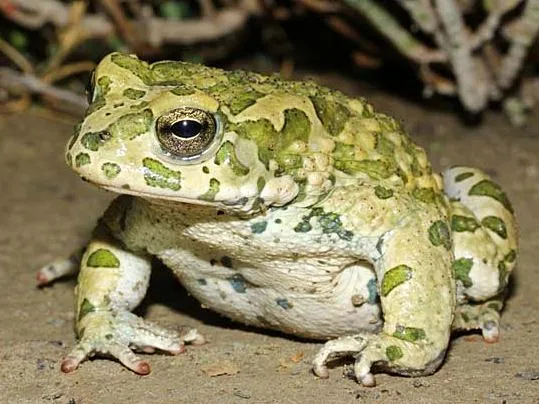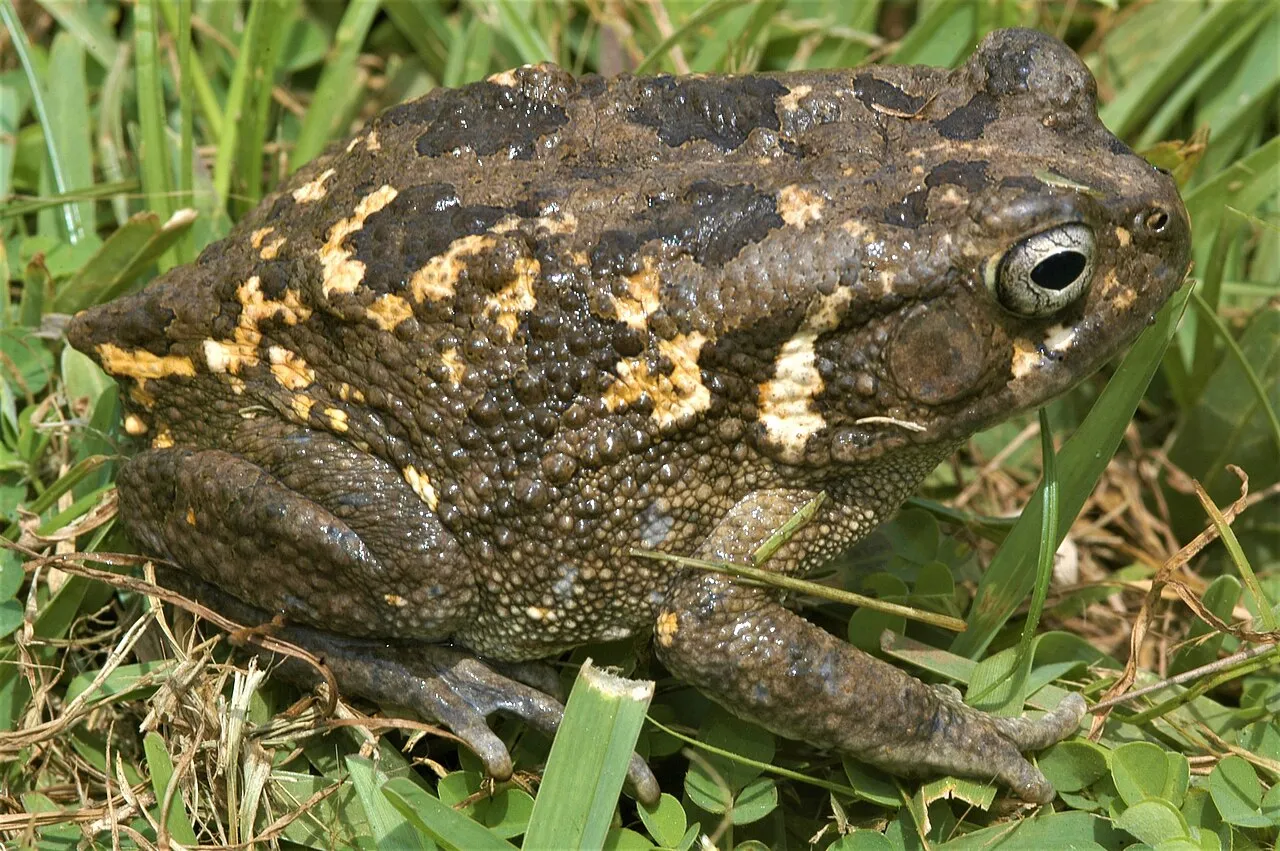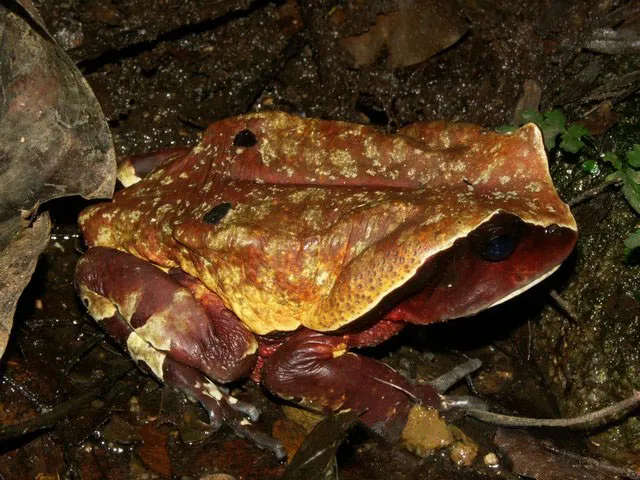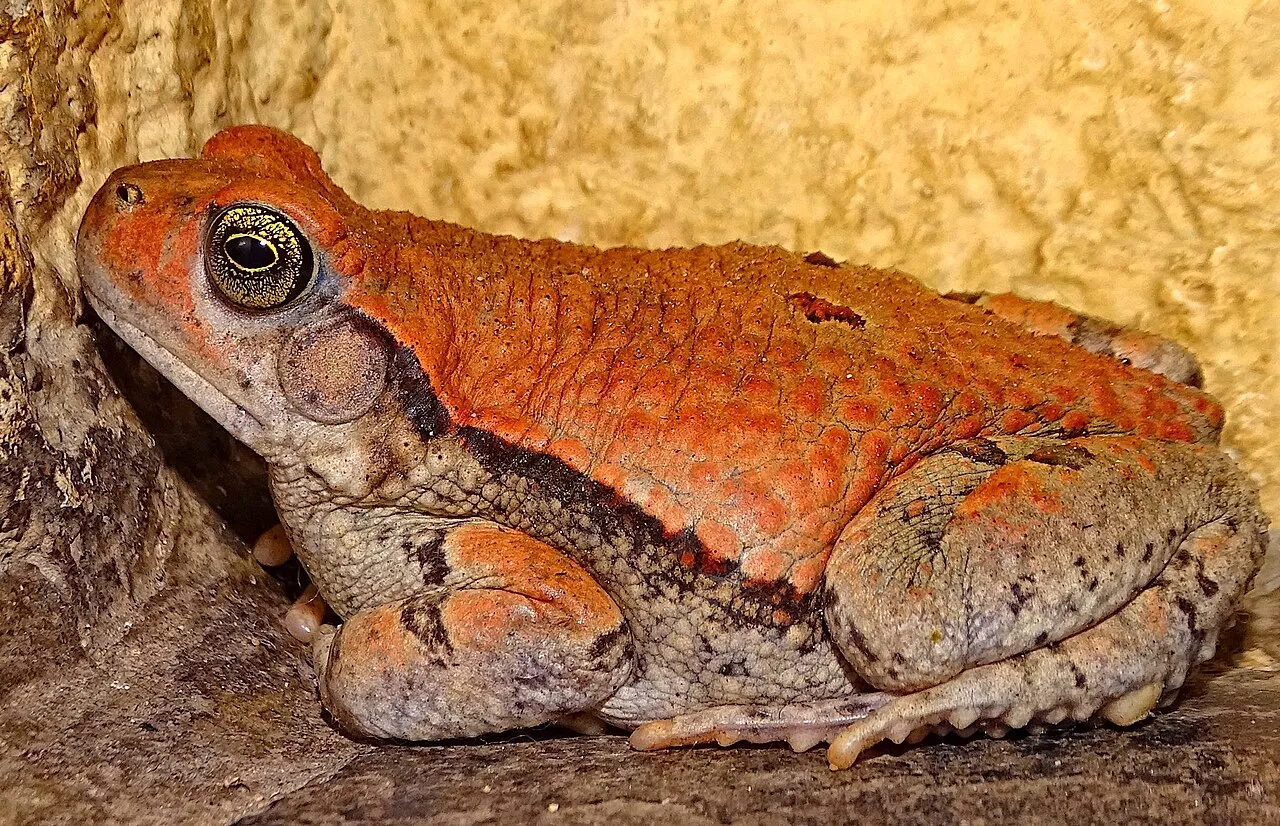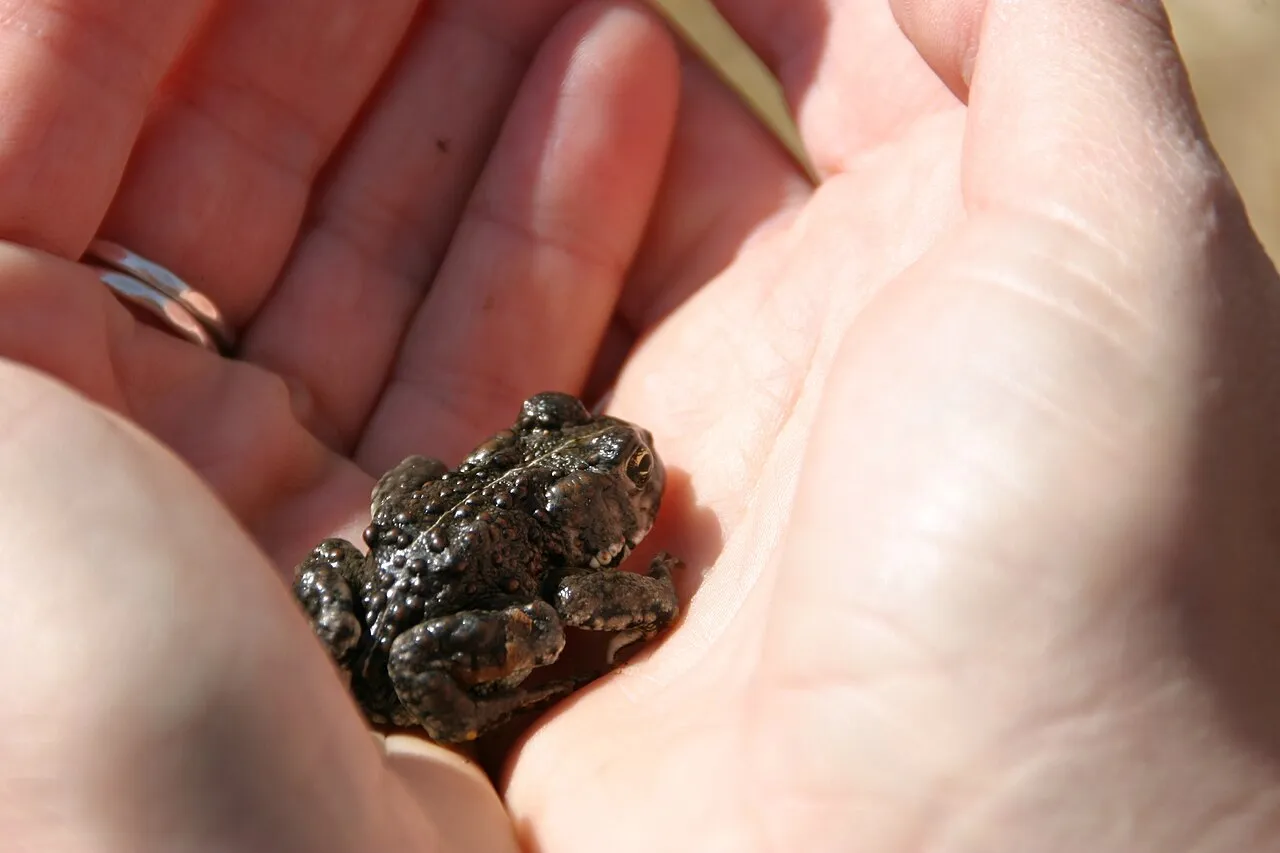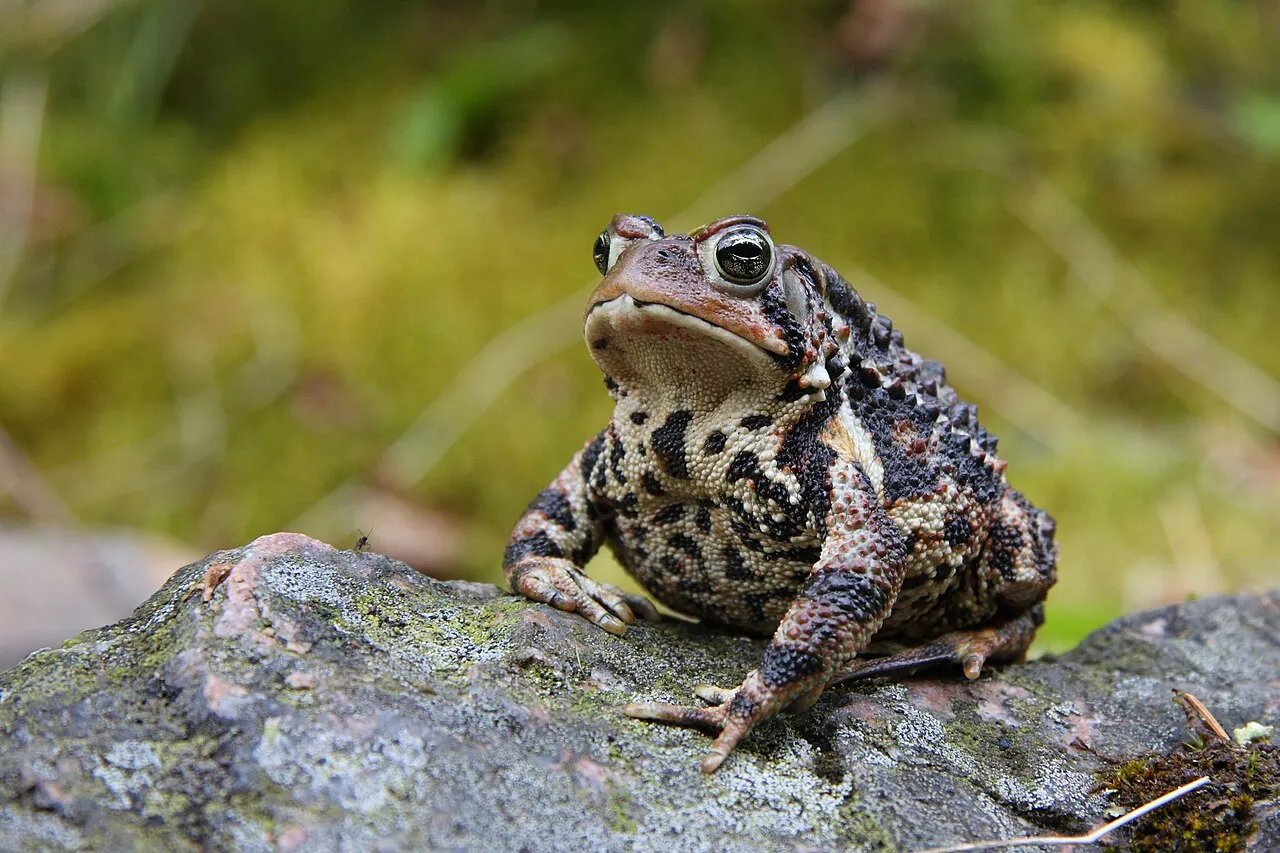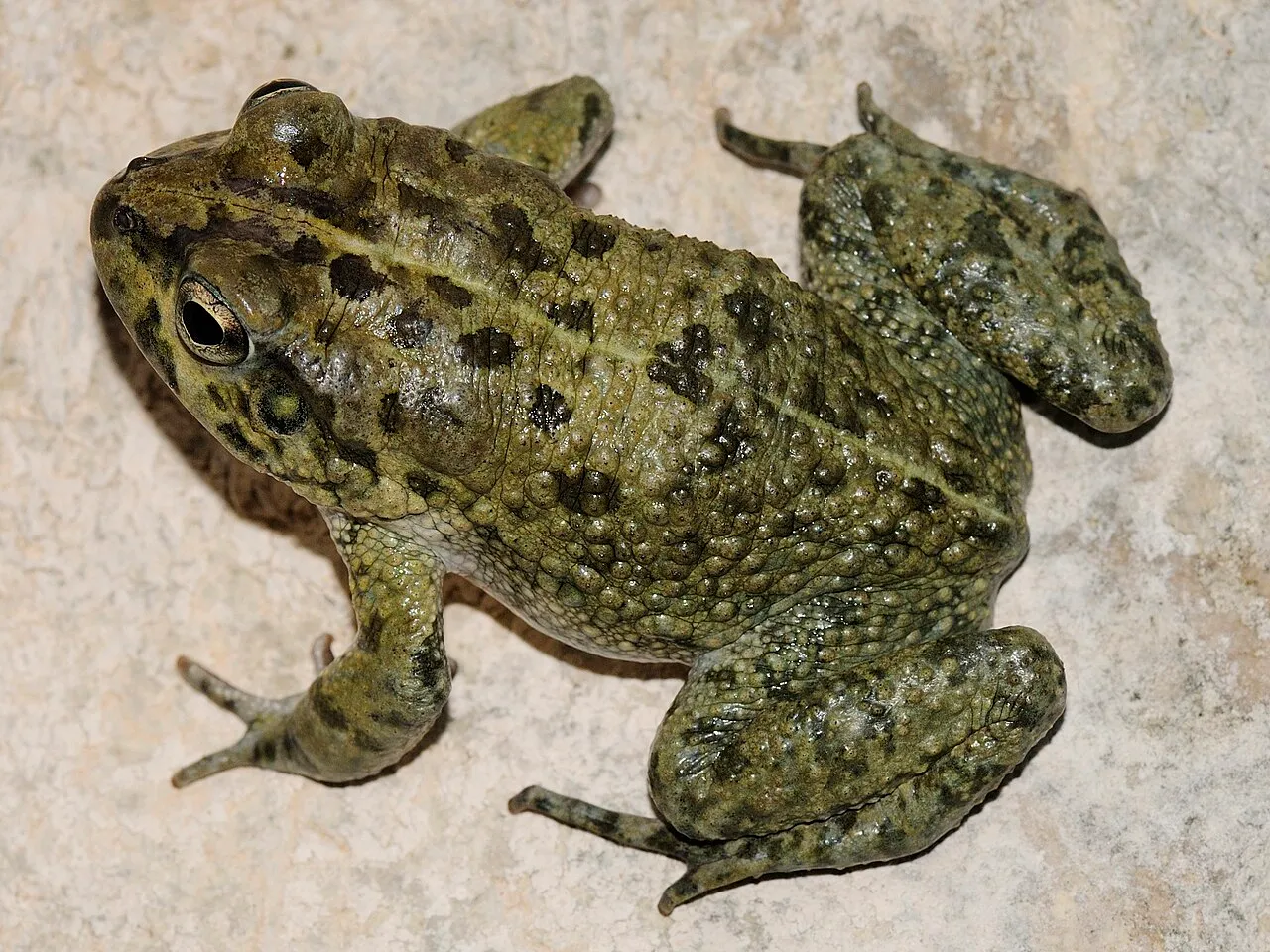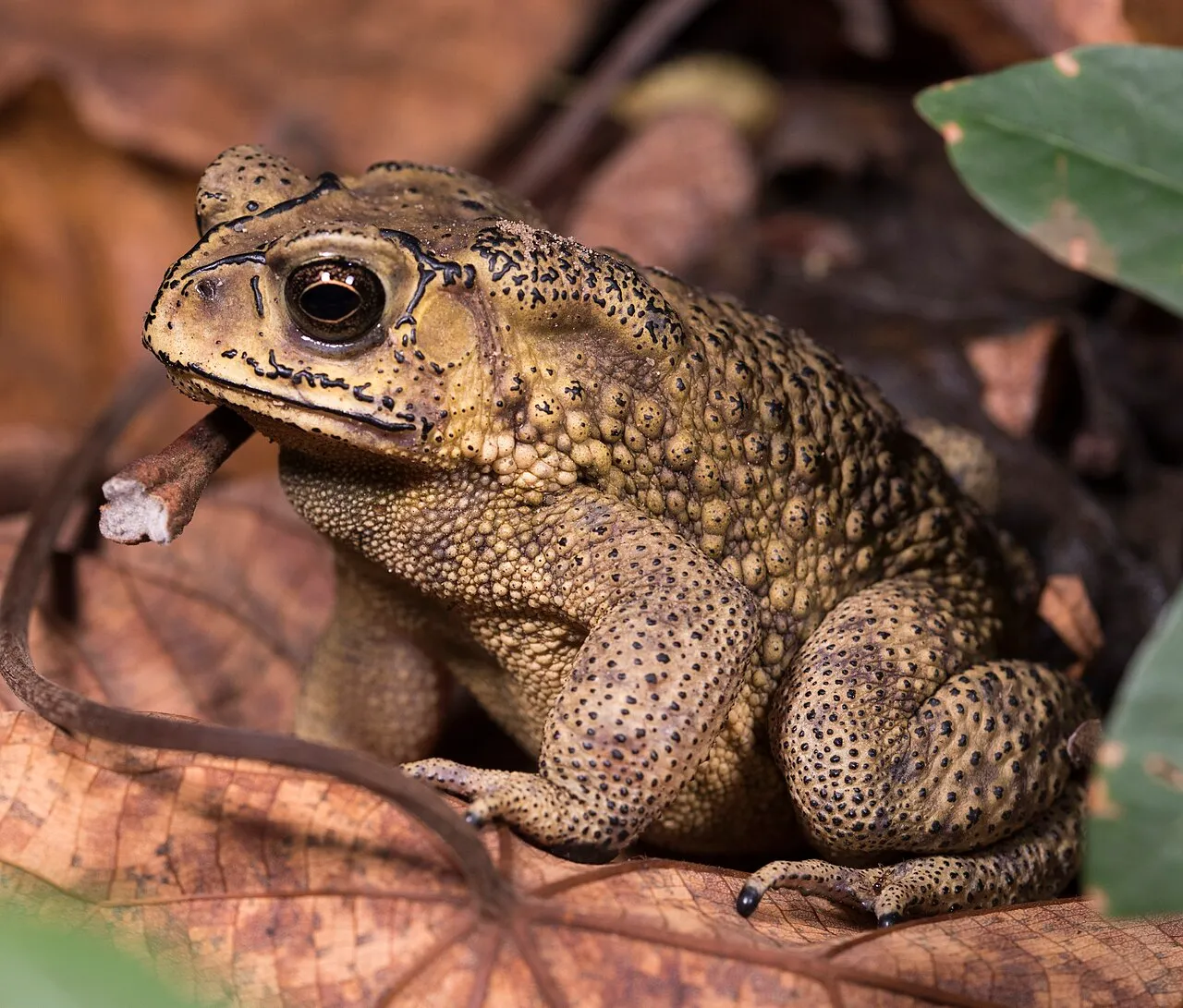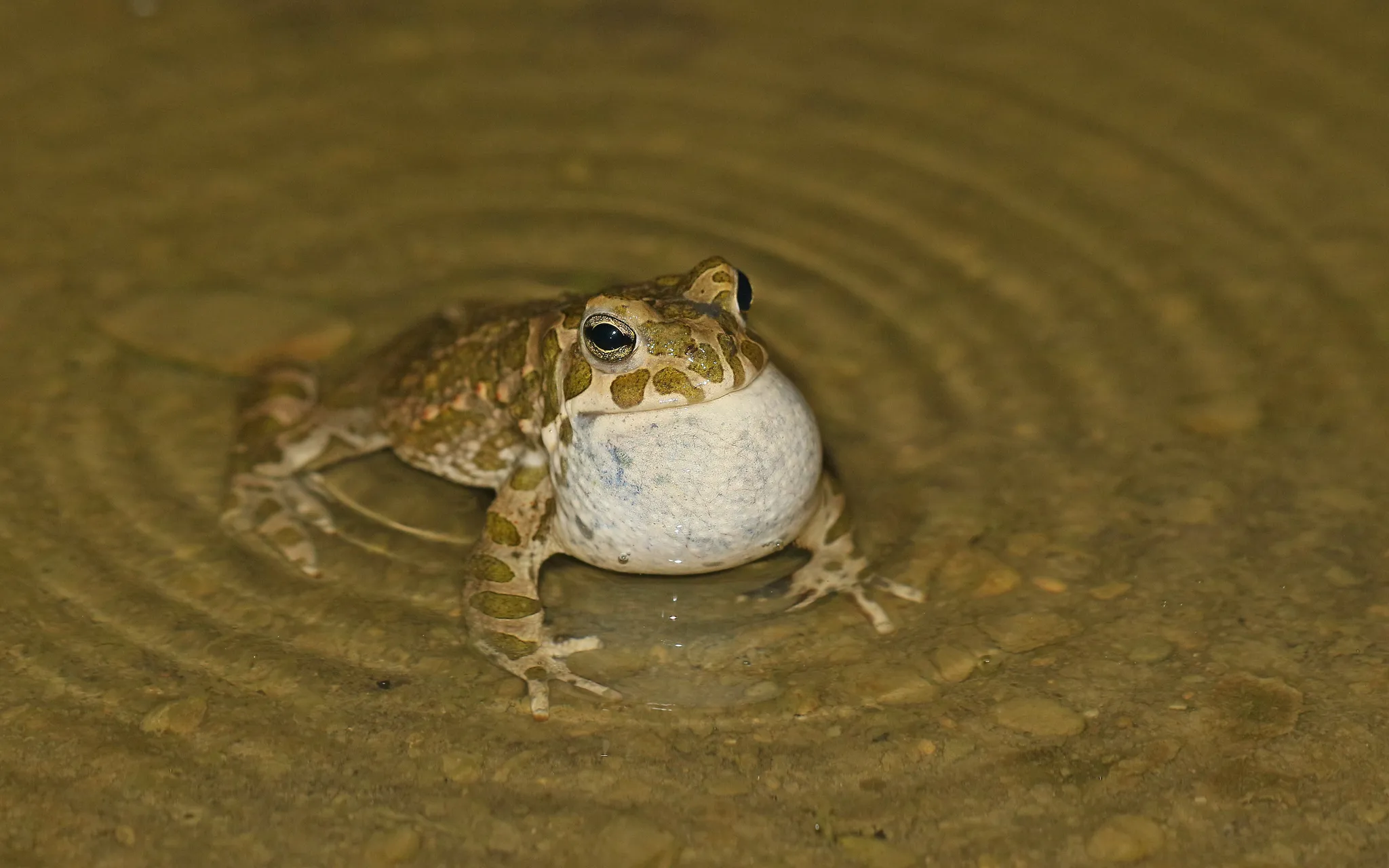
Bufotes viridis, the European green toad, is a species of true toad of mainland Europe, ranging from far eastern France and Denmark to the Balkans, European Russia and the Caucasus. As historically defined, the species reached east into Central Asia and south to North Africa, but genetic and morphological reviews led to 14 populations being regarded as separate species1. It was described by Laurenti in 1768 from Vienna, where he found it in dark clefts and hollows of the city’s walls2.
Identification
The back is a mottled green with large, distinct, irregular patches on a light grey to greyish-brown or pale olive background, and carries many smaller warts, usually reddish. The abdomen is light, the pupil horizontal and the iris green or greenish-yellow. The toad can quickly change colour3 when it moves from one surface to another.
Head-and-body length reaches a maximum of 10 centimetres1, but growth to this size is rare. In a 2020 survey of the population in Donaufeld, Vienna, males averaged 70.8 mm snout-vent length and females, larger, 78.2 mm. Mean body mass there was 42.0 g in males and 52.0 g in females. The survey told the sexes apart by the nuptial pads of the front legs2, the males’ distinct mating call and their release call.
The parotoid glands secrete defensive toxins effective enough to kill most of the toad’s predators. On contact with human skin the toxins are harmless to humans1, a point the Greek reference site herpetofauna.gr4 also makes.
Habitat and range
Green toads have been characterised as steppe dwellers, adapted to dry open habitats with low, gappy plant cover. In Central Europe the species is regarded as synanthropic, occurring mainly in agricultural landscapes with a warm climate, and it also lives in gardens, parks and ruderal areas2 in towns. In Greece it occurs in a wide variety of habitats, even very dry ones, from sea level to above 2000 metres4.
It is usually found on land with relatively high levels of salinity, and in Sweden it thrives in areas with brackish water. Typical biotopes are coastal wetlands at river mouths with dense reed beds, and it also lives along flat rocky coasts with shallow waters. Skansen’s species page lists it from only a few areas3 in Skåne and Blekinge, and on Öland and Gotland.
Since Laurenti’s day the species has survived in the expanding city of Vienna, constantly shifting its distribution. Most previously occupied sites there were no longer inhabited by the 1980s, a decline attributed to lost summer habitat, road traffic, destroyed breeding sites and farm biocides. It rapidly colonised newly created water bodies, such as an irrigation channel east of the city, but owing to succession it quickly abandoned most of these places2.
Behaviour and breeding
The toad is mainly nocturnal, although diurnal behaviour is sometimes recorded, especially in spring. It spends the whole winter hibernating in a frost-free hiding place. It feeds on insects and other arthropods crawling on the ground or in ground vegetation, with beetles and ants common prey3. There has also been a reported attack on a common pipistrelle1 bat in Russia.
Skansen gives the mating season as beginning as soon as the spawning waters have warmed up in April. The males arrive about a week before the females and lie on the water surface, giving a call similar to a curlew’s, but higher pitched. Spawning takes place in May and June in fairly shallow water, anything from small, dirty puddles to clear bays. The eggs are laid in two black jelly-like strings, each three to four metres long. Females can lay 9,000 to 15,000 eggs at a time1. The eggs begin to hatch after a few days, and around three months later the young are toads of 12–19 mm3.
In the Vienna survey, large numbers of tadpoles were at the breeding site from 5 May to the middle of June 2020, and the first metamorph appeared on 15 June. On 30 April the team found a male green toad in amplexus with a female common toad2.
Lifespan is given as up to 7 years in the wild, 8–9 years in captivity3. The toad reaches sexual maturity between its second and third year4.
Conservation
The European green toad is listed as Least Concern5 on the IUCN Red List, in an assessment dated 20231. The species is included in Annex IV of the Habitats Directive, and a 2021 paper describes it in Vienna as a rare and protected species. The Donaufeld population was estimated in 2020 at 137 individuals, and conservation authorities decided that a new pond has to be constructed2 before the existing breeding site may be destroyed in building work.
Skansen calls it Sweden’s most threatened creature. Causes of its decline there include eutrophication, lower groundwater levels and drained spawning waters3, along with poorer water quality and fish and crayfish put into small water bodies.
Similar species
- Common toad (Bufo bufo): in Central Europe the two generally appear spatially segregated, the common toad living in woods and breeding in large permanent ponds2, the green toad in open areas, spawning in shallow, temporary water bodies.
- Natterjack toad (Epidalea calamita): marked by a yellow line down the middle of the back6 and parallel parotoid glands.
- Balearic green toad (Bufotes balearicus): in a 2021 paper, the green toads of Rome are assigned to Bufotes balearicus2, one of the populations now regarded as separate species1 from B. viridis.