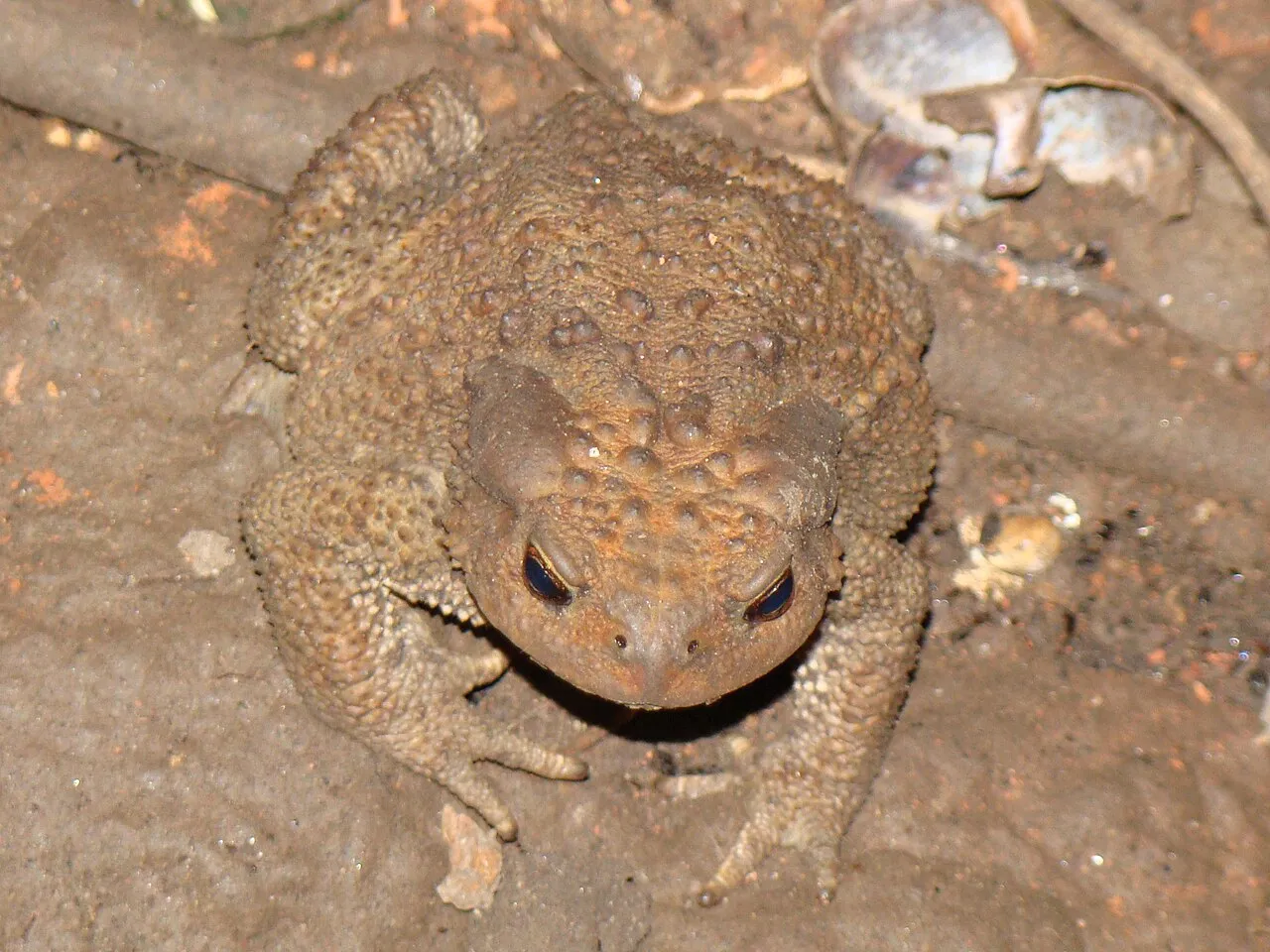
Bufo verrucosissimus, the Caucasian toad, is a true toad of the family Bufonidae, found around the Black Sea and Caucasus region: Georgia, Azerbaijan, Russia, Turkey, Iran and Lebanon. It was first described by Pallas in 1814, originally under the genus Rana rather than Bufo, and has since picked up a second synonym along the way.
Identification
Open, citable sources for this guide do not give a snout-vent length or colour description specific to this species: AmphibiaWeb and the detailed herpetological databases that usually carry this kind of measurement answer automated requests with a bot challenge rather than a page, and a Georgian field atlas with the figures is not on the list of sources this guide can cite, so this entry leaves the measurement out rather than guess. As a member of the genus Bufo, though, it shares the build common to the “true toads”: a stocky figure and short legs that make the group relatively poor jumpers, with thick, dry, warty skin, and a pair of wart-like parotoid glands behind the eyes that are the feature distinguishing true toads from all other tailless amphibians. Those glands do their work chemically: Bufo species secrete a fatty, white poisonous substance as a deterrent to predators, typically containing the toxin bufotoxin.
What is documented specifically for this species is its taxonomic paper trail: it was originally named Rana caucasica by Pallas in 1814 before being moved into the genus Bufo, and it later picked up a second name, Bufo colchicus, coined by Eichwald in 1831, now treated as a synonym of the same species.
Habitat and range
The Caucasian toad occupies temperate forests, subtropical and tropical moist lowland forests, intermittent rivers, ponds, aquaculture ponds and rural gardens, a broad mix of wild and farmed habitat across its range. That range circles the eastern end of the Black Sea and the Caucasus: Georgia, Azerbaijan, Russia, Turkey, Iran and Lebanon, putting it at the meeting point of Europe, the Middle East and Central Asia.
Behaviour and breeding
No open source answers for this species’ diet, calls or breeding biology. The databases that would normally cover toad courtship and tadpole development return a bot challenge instead of a page, so this entry does not guess at what it cannot verify. It will be updated if an openly reachable source turns up.
Conservation
The facts box above carries the species’ current IUCN Red List category, Least Concern. Even with that secure global status, the species is not free of pressure: Wikipedia’s entry notes it is threatened by habitat loss, a risk that tracks the species’ reliance on rivers, ponds and lowland forest across six countries where land use can change quickly.
Similar species
The Caucasian toad’s closest relative was, for a long time, not even considered a separate species. The Talysh toad, Bufo eichwaldi, of southeast Azerbaijan and the Talysh and Elburz Mountains of northern Iran, was previously classified as a subspecies of the Caucasian toad before being split out on its own. Wikipedia’s account of the Talysh toad describes it as a large toad much resembling Bufo verrucosissimus in appearance, so the two are not told apart at a glance from size or build alone. The reliable differences are in the head and glands: the Talysh toad has an abrupt, unrounded snout and body proportions that differ from the Caucasian toad, along with black markings on the parotoid gland where it touches the tympanum, a feature the Caucasian toad lacks. Where the two ranges might otherwise be confused — the Talysh toad’s Azerbaijan population sits within the Caucasian toad’s wider Black Sea and Caucasus distribution — these head and gland details, rather than overall size, are the way to separate them.