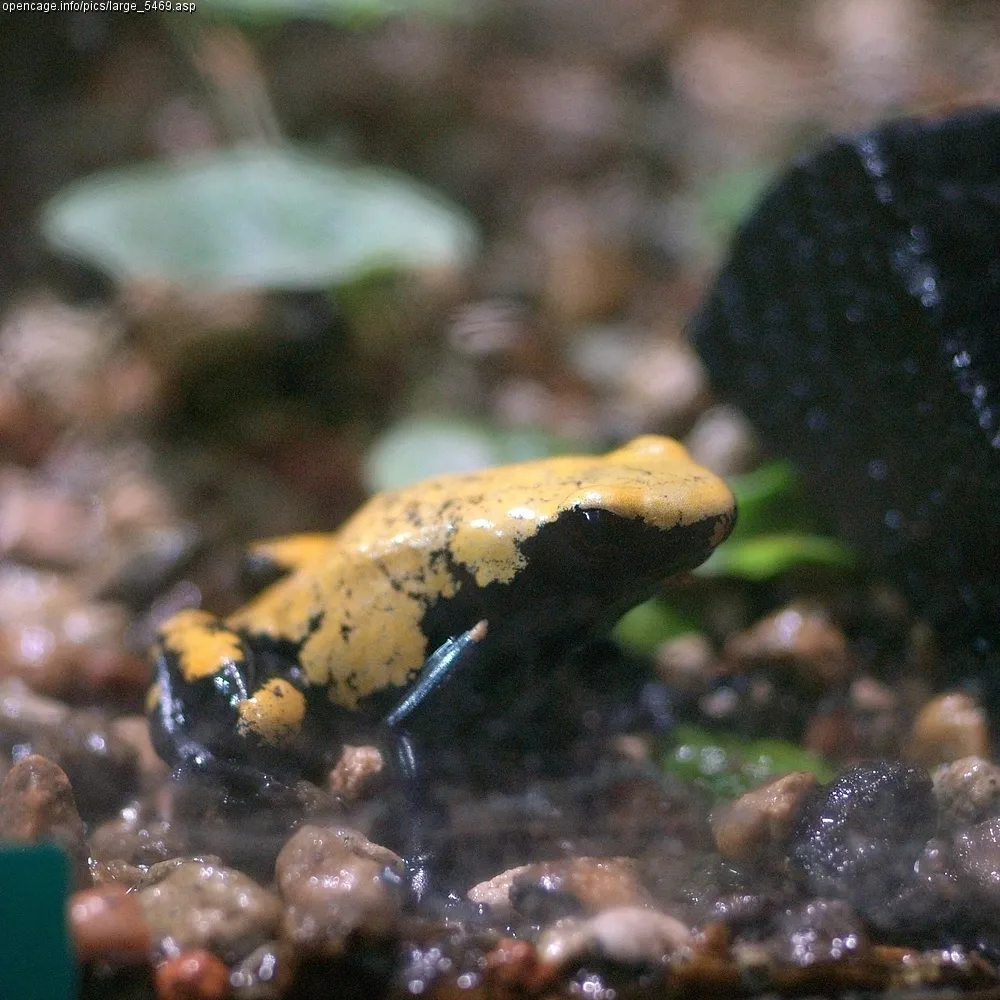
The splashback poison frog, Adelphobates galactonotus, is a brightly coloured dendrobatid endemic to Brazil, in the Amazon Basin south of the lower Amazon River, with records including the area around Conceicao do Araguaia. It belongs to the family Dendrobatidae and the small genus Adelphobates, South American poison frogs named for the toxic skin secretions many of them carry.
Identification
A. galactonotus is a relatively large poison frog, reaching a snout-vent length of up to 42 mm; the facts box carries this figure alongside its checked date. Colour varies considerably between populations, from solid orange or yellow backs to darker, mottled black-and-yellow forms and even near-white “moonshine” individuals. The individual photographed for this page, from the Wikimedia Commons archive, shows one of these mottled black-and-yellow forms.
Habitat and range
The species lives in tropical moist lowland forest in the Amazon Basin, up to about 600 m elevation. Scientists believe this habitat may include water collected in fallen Brazil nut husks, used as a site for tadpole development, though this has not been confirmed as the species’ primary or exclusive breeding site.
Behaviour and breeding
Like other dendrobatids, A. galactonotus is active by day on the forest floor, relying on its bright warning colours rather than concealment to deter predators.
Conservation
The facts box carries the species’ current IUCN Red List category, Least Concern.
Similar species
Other members of the genus Adelphobates, such as the yellow-headed poison frog (Adelphobates castaneoticus), share the same general Brazilian Amazon range and a similarly large size for the family, but A. galactonotus is best distinguished by its orange-to-yellow back colouration, which can vary considerably between populations, paired with black limbs.