- The Enchanting World of the Cochran's Glass Frog (Nymphargus cochranae)
- Introduction: A Window into the Secretive Life of Glass Frogs
- Taxonomy and Classification: Understanding Nymphargus cochranae's Lineage
- The Natural Habitat: A Life Immersed in Cloud Forest Rivulets
- Physical Characteristics: Beauty in Transparency
- Behavior and Life Cycle: Secrets of Their Nocturnal Activities
- An Ecological Keystone: Their Critical Role Within Ecosystems
- Threats and Conservation Status: Preserving Fragile Transparency
- Cultural and Scientific Significance: A Symbol for Biodiversity and Discovery
- Conclusion and Call to Action: Protecting a Living Jewel of Our Forests
The Enchanting World of the Cochran’s Glass Frog (Nymphargus cochranae)#
Introduction: A Window into the Secretive Life of Glass Frogs#
Hidden amidst the verdant foliage along pristine streams deep in the heart of the cloud forests lies an enchanted being—so delicate, transparent, and mysterious that encountering it feels like stepping into a dream. Allow me to introduce you to Cochran’s Glass Frog, scientifically named Nymphargus cochranae. Although small, this remarkable amphibian captures the human imagination precisely because it appears ethereal, almost ghostly. Glass frogs like Nymphargus cochranae have captivated biologists and nature lovers alike, not merely because of their unique crystal-clear undersides that reveal their internal anatomy but also due to their fascinating behavioral and ecological roles within tropical ecosystems.
Named in honor of the acclaimed American herpetologist Doris Mable Cochran, Nymphargus cochranae stands as both a tribute and a reminder of the importance of dedicated scientific research in unveiling the wonders of our natural world.
Taxonomy and Classification: Understanding Nymphargus cochranae’s Lineage#
To fully appreciate this exceptional creature, one must first understand its taxonomic identity and lineage. Cochran’s Glass Frog belongs to the family Centrolenidae, commonly known as glass frogs—a group celebrated for their transparent undersides and nocturnal habits. Within this fascinating family, it occupies a particular niche, classified under the genus Nymphargus, a lineage distinct from similar glass frog groups due to subtle anatomical features such as skeletal structures and specific vocalizations.
Nymphargus cochranae itself was previously classified under the larger genus Cochranella but contemporary genetic analyses prompted taxonomists to reconsider its place, establishing Nymphargus as a genus distinct from its predecessors. The species provides researchers with important evolutionary insights into amphibian diversification, particularly in relation to habitat specificity and reproductive strategies.
The Natural Habitat: A Life Immersed in Cloud Forest Rivulets#
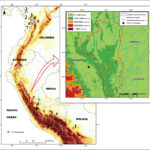
Picture towering emerald trees shrouded in perpetual mist, vibrant moss carpets clinging to their trunks, and small crystal-clear streams whispering their way through dense vegetation. This is the realm of Cochran’s Glass Frog, a species primarily restricted to the Andean foothills and mid-elevations of Ecuador and Colombia. While not widespread geographically, the habitats they occupy are extraordinarily diverse and ecologically complex, making conservation efforts crucial.
Preferring elevations ranging roughly from 500 to 1800 meters, these frogs thrive in humid forested habitats where pristine, slow-moving streams and bromeliads provide ideal conditions for breeding and hunting. The presence of clean, undisturbed water bodies within their territory is vital—not merely for survival but also for reproduction, as their tadpoles depend entirely on freshwater streams to grow and metamorphose into adulthood.
An Intimate Relationship with Its Environment#
Observing Nymphargus cochranae at home reveals a fascinating intimacy with their environment. These frogs rarely venture far from their breeding streams, remaining within hiding spots on leaves, branches, or moss-covered rocks near the water’s edge. Environmental factors such as humidity levels, ambient temperature, and canopy density profoundly influence their activity patterns. Thus, alteration or fragmentation of their habitat poses significant threats to this delicate organism’s survival.
Physical Characteristics: Beauty in Transparency#
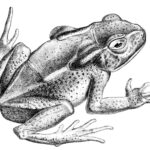
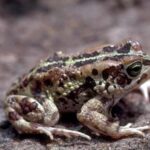
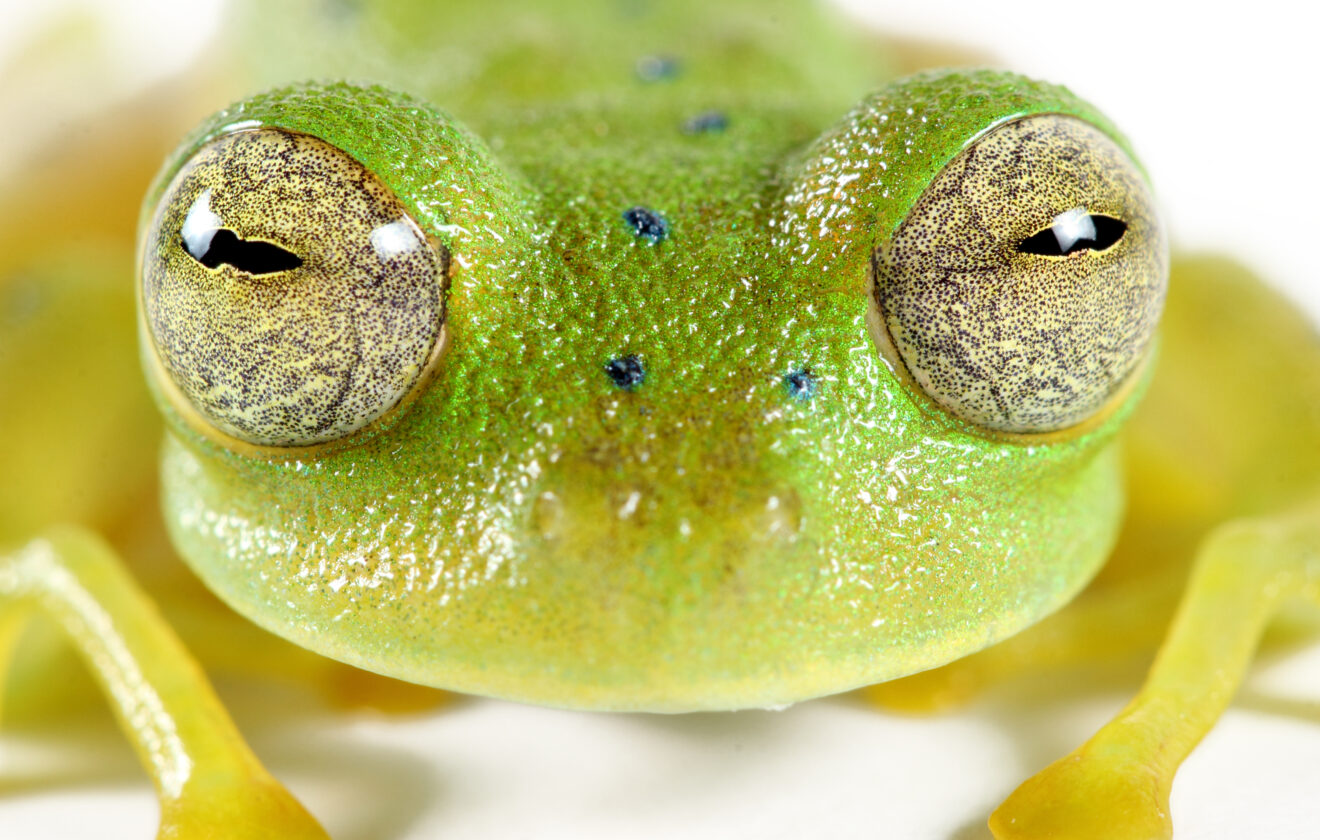
When one first sets sights upon an individual Nymphargus cochranae, the adjective “otherworldly” comes immediately to mind. Measuring approximately 20 to 30 millimeters in length, their diminutive size belies their striking beauty. Like other glass frogs in its family, Cochran’s Glass Frog exhibits skin so translucent on its ventral side that the internal organs—heart, liver, and digestive tract—are astonishingly visible. From above, their backs are characterized by emerald-green hues peppered occasionally with delicate yellow or whitish speckles, blending seamlessly with surrounding leaves.
These physical characteristics aren’t merely aesthetic—they provide essential camouflage, crucial for their survival. Their nearly invisible undersides mimic the appearance of rain- or dew-coated leaves, shielding them from predators’ discerning eyes, while the bright reflective spots mimic leaf textures and water droplets, enabling them to melt seamlessly into their arboreal background.
Behavior and Life Cycle: Secrets of Their Nocturnal Activities#
As dusk fades into night and vibrant darkness encases their forest home, Cochran’s Glass Frogs emerge from their daytime hiding places, becoming active participants in an ecosystem bustling with nocturnal insects and calls echoing through the moist air. They are primarily insectivorous hunters, catching resources abundant in their rainforest habitat, such as flies, moths, spiders, and other small invertebrates. Their quick reflexes and strategic positioning upon leaf’s edge above water facilitate successful feeding expeditions every evening.
Love Beneath the Stars: Courtship and Reproduction#
The reproductive behavior of Cochran’s Glass Frog comprises one of nature’s most elegant spectacles—males unsheathing gentle, repetitive mating calls, echoing softly through forest canopies to attract female partners. After careful selection of suitable leafy overhangs near streams, the female lays clusters of tiny, gelatinous eggs directly atop vegetation ensuring optimal safety. Under tranquil moonlight, these eggs glisten like molten jade droplets suspended quietly within rainforest foliage.
Interestingly, this species exhibits sophisticated parental care. Occasionally, males steadfastly guard the egg clutches against would-be predators, diligently maintaining hydration and deterring predators and potential fungal growths through vigilant monitoring. After hatching, tadpoles descend directly into water bodies beneath, navigating their aquatic adolescence until final metamorphosis into miniature replicas of their adult kin.
An Ecological Keystone: Their Critical Role Within Ecosystems#
Though seemingly small and fragile, the role Cochran’s Glass Frog plays within its habitat is profound. As insectivores, they significantly regulate insect populations, indirectly influencing plant pollination and health by controlling herbivorous insect outbreaks. Each individual simultaneously serves as both predator and prey, contributing importantly to the dietary habits of various birds, snakes, and larger amphibians.
Additionally, amphibians such as Nymphargus cochranae often resultingly serve as indicator species. When their populations fluctuate, conservationists can glean vital information about ecosystem stability and environmental health—crucial insights that can guide protection initiatives for a broader range of species.
Threats and Conservation Status: Preserving Fragile Transparency#
Despite being relatively understudied compared to better-known amphibians, Cochran’s Glass Frog faces daunting threats common to many tropical forest-dwelling species. Habitats shrinking due to deforestation caused by agriculture, illicit logging, and expanding settlements profoundly threaten their populations. Additionally, climate change adds another layer of peril, altering precipitation patterns, humidity, and temperature regimes critical to amphibian survival.
Currently classified as “Least Concern” by the International Union for Conservation of Nature (IUCN), this status primarily reflects insufficient data; though presently widespread within its habitat region, its precise population status remains uncertain. Nevertheless, proactive conservation measures—ranging from protected habitat creation, ecosystem restoration initiatives, and targeted research studies—remain essential to ensure long-term species viability.
Cultural and Scientific Significance: A Symbol for Biodiversity and Discovery#
Named after esteemed herpetologist Doris Cochran, this glass frog symbolizes the interconnected roles of women and underrepresented groups in scientific fields. Specifically representing ecosystems home to countless equally potent yet understudied species, Cochran’s Glass Frog draws continual interest from researchers exploring toxin resilience, amphibian physiology adaptation, and broader rainforest biodiversity secrets.
Conclusion and Call to Action: Protecting a Living Jewel of Our Forests#
The Cochran’s Glass Frog leads a quiet yet meaningful life within pristine rainforest streams, silently reminding us of the vast biodiversity and ecological interdependence that remain treasures worth conserving. Their vulnerability underscores our collective responsibility as custodians of Earth’s biodiversity; comprehensive research and decisive conservation actions remain vital for their sustained protection.
Together, our appreciation, awareness, and advocacy can ensure this remarkable, transparent amphibian continues thriving, suspended in its ethereal existence above clear streams for generations to enjoy, ponder, and marvel. Support conservation efforts, stay informed, and share the awe-inspiring beauty of Nymphargus cochranae—nature’s crystal gift to us all.