- Hidden Jewels of the Forest: Discovering the Glass Frog <em>Cochranella litoralis</em>
- Understanding Taxonomy and Classification of Cochranella litoralis
- A Home within the Misty Canopies: The Habitat of Cochranella litoralis
- A Living Jewel: The Physical Traits of Cochranella litoralis
- The Graceful Rhythm of Life: Behavior and Life Cycle
- Ecological Contributions: The Importance of Cochranella litoralis
- Threats and Conservation Challenges
- Cultural and Scientific Importance of Cochranella litoralis
- Preserving Nature's Transparent Wonders
Hidden Jewels of the Forest: Discovering the Glass Frog Cochranella litoralis#
In the lush, shadow-dappled rainforests lining the Pacific slopes of South America, life buzzes, chirps, and thrums in an ever-present symphony. Amidst this music lies a frog so delicate and translucent it seems crafted from crystal—Cochranella litoralis, one of nature’s most remarkable glass frogs. Barely noticed amidst leaves dripping from tropical rainfall, this species is a silent testament to the wonders—and vulnerabilities—hidden within our world’s ecosystems.
Imagine a creature whose heartbeats you can watch, whose organs pulse visibly through its transparent belly, offering nature’s equivalent of an open window to the workings of life itself. The glass frog Cochranella litoralis fascinates scientists and nature lovers alike, captivating us not only by its ethereal beauty but also through its vital yet delicately balanced existence. This tiny amphibian symbolizes the fragility of tropical ecosystems and the importance of conservation initiatives.
Understanding Taxonomy and Classification of Cochranella litoralis#
Cochranella litoralis belongs to the family Centrolenidae, commonly known as glass frogs. Centrolenidae consists of small arboreal amphibians known primarily for their translucent skin and predominantly nocturnal behavior. Within this intriguing family, the genus Cochranella is characterized primarily by specific morphological features and genetic markers differentiating them clearly from similar genera such as Centrolene and Hyalinobatrachium.
Named to honor Doris Cochran—an esteemed American herpetologist—Cochranella represents a lineage uniquely adapted to their arboreal lifestyles, typically inhabiting cloud forests and humid lowland and montane environments. Among the numerous species in the genus, Cochranella litoralis holds a special status due to its specific habitat preference and limited geographic distribution.
A Home within the Misty Canopies: The Habitat of Cochranella litoralis#
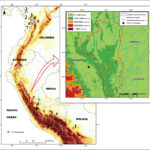
The glass frog Cochranella litoralis primarily resides across limited regions of the Pacific slopes spanning southwestern Colombia into northwestern Ecuador. These areas constitute biodiversity hotspots marked by their humid montane forests and an abundance of freshwater streams and rivulets, serving as vital nurseries and hunting grounds.
Imagine standing upon the leaf-littered floor beneath towering trees, enveloped in humidity, listening to the distant murmur of waterfalls cascading through shadowed canyons. It is in these moisture-rich, vibrant locales that C. litoralis establishes itself, sitting inconspicuously on broad foliage or clung gently upon delicate branches suspended over gently flowing streams.
Microhabitats and Survival Strategies#
Adapted brilliantly to its microhabitat, C. litoralis selects broad-leaf plants located strategically above running water as a critical reproductive habitat. The relative humidity and ideal temperatures these habitats afford prompt successful egg clutches to hatch into tadpoles, dropping safely into aquatic nurseries below upon maturation. The maintenance of ecosystems supporting such vegetation becomes paramount, linking the frog’s survival intricately with the conservation of intact riparian habitats.
Furthermore, subtle microclimatic variables regulate their daily practices, restricting activity to nocturnal periods and influencing their vulnerability to environmental changes. Thus, understanding its habitat intricacies enlightens conservation strategies ensuring these tiny natural marvels continue to thrive.
A Living Jewel: The Physical Traits of Cochranella litoralis#
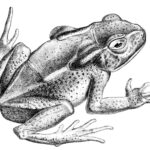
Unmistakably enchanting yet astonishingly elusive, the glass frog embodies elegance and efficiency. Adults typically measure no more than 25 millimeters from snout to vent—an astonishingly slight silhouette barely exceeding the span of your fingernail’s length.
A closer glance reveals the frog’s outstanding characteristic: translucent ventral skin. This unique evolutionary adaptation allows exceptional insight into the intricacies of their physiological inner workings. By day, it becomes almost invisible, camouflaged against the undersides of leaves, its transparent skin refracting light in nuanced ways, effortlessly merging into the verdant canopy.
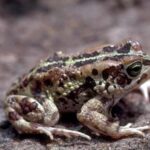
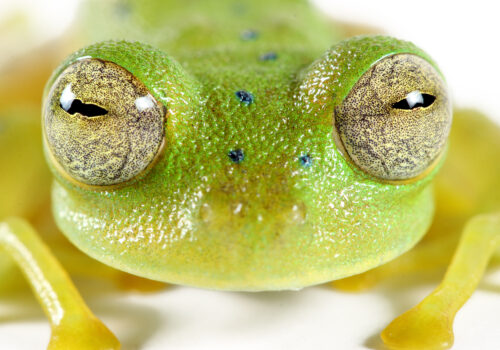
Its dorsal coloration usually features shades of vivid green flecked with minute yellow or white speckles, resembling beads of dew clinging to the surface of leaves. Subtle but highly efficient chromatophores enhance camouflage, aiding in predator avoidance and stealthy hunting. Bulging golden-green eyes protruding from its streamlined head grant excellent visual acuity in dimly lit environments.
Adaptations for an Arboreal Lifestyle#
Its elongated digits and adhesive toe-pads adapted specially for arboreal (tree-dwelling) lifestyles enable the frog to deftly navigate intricate foliage, a trait distinctly essential during foraging and mating. These adaptations, paired seamlessly with their habitat choice and diminutive size, optimize their survival and reproductive success in complex rainforest strata.
The Graceful Rhythm of Life: Behavior and Life Cycle#
Like many glass frogs, Cochranella litoralis maintains a life of quiet anonymity, spending daylight hours concealed against leaves. Upon twilight, these delicate beings reveal themselves, pursuing their nocturnal routine: hunting insects, attracting mates, and safeguarding progeny. Their primary diet comprises small insects, including mosquitoes, moths, and flies, positions them as critical biological control agents within their ecosystem.
Mating and Nesting Behaviors#
The annual rains usher an evening chorus dominating the forest nightscape, with males of various frog species vying to echo their melodic calls through habitats. Mirror-like rivulets glitter under moonbeams as male Cochranella litoralis position themselves carefully upon leaves, emitting soft, chirping calls intended to charm potential mates drawn to their vicinity.
Upon selecting a partner, females deposit transparent eggs atop leaf substrates overlooking streams—each clutch a pearl-like mosaic reflecting faint starlight. Devoted parental behavior manifests through careful nest selection, as females identify optimal positions offering shade, protection, and moisture, crucial for developing tadpoles.
When eggs hatch, tadpoles deftly drop from leaves into gently flowing water below, initiating their aquatic phase. Within these stream sanctuaries, hidden among moss-covered rocks and submerged roots, tadpoles grow and develop until metamorphosis propels them into terrestrial arboreal life, continuing this elegantly choreographed cycle.
Ecological Contributions: The Importance of Cochranella litoralis#
Despite their size, glass frogs constitute vital ecological players, intricately woven within tropical food webs. As both predator and prey, Cochranella litoralis helps regulate insect populations, significantly controlling potential agricultural pests, modulating disease vectors, and serving as an indispensable component within rainforest ecological equilibria.
Moreover, its sensitivity to environmental changes renders it an invaluable indicator species. Declines or alterations in their populations thus serve as early warnings regarding broader ecosystem health, identifying underlying threats such as pollution, climate change, or habitat degradation.
Threats and Conservation Challenges#
Despite their adaptability and fascinating evolution, populations of Cochranella litoralis have encountered increasing threats in recent decades. Habitat fragmentation, widespread deforestation, pollution, global climate anomalies, and invasive pathogens such as chytrid fungus remain significant threats.
Cochranella litoralis currently holds a near-threatened classification by the International Union for Conservation of Nature (IUCN), reflecting worrying trends in natural habitat loss and declining numbers. Conservation biologists and ecologists actively study their vulnerability, advocating forest protection initiatives, captive breeding programs, and environmental policies aimed at promoting sustained ecological integrity.
Cultural and Scientific Importance of Cochranella litoralis#
Glass frogs are more than ecological components; they’re symbols, inspirational ambassadors of environmental stewardship. Indigenous communities across their distribution range often attribute symbolic meanings to frogs, recognizing their profound interconnectedness with ecosystems and broader environmental prosperity and imbalance.
Scientifically, their transparent physiology offers an unprecedented window into amphibian anatomy, physiology, and responses to environmental stressors, thereby enriching our understanding of biodiversity’s resilience and vulnerability.
Preserving Nature’s Transparent Wonders#
Understanding and appreciating Cochranella litoralis underscores how every component—regardless of size—influences ecological stability and health. Facing mounting pressures threatening their continued existence, we must turn fascination into decisive conservation efforts, advocating protective legislations, scientific research enhancement, and public awareness.
Let us celebrate the quietly shimmering beauty and valuable ecological service played by Cochranella litoralis, tirelessly advocating for preserving habitats crucial to its delicate dance of life, ensuring that future generations continue marveling at the transparent beauty glowing softly in the moonlit forests that house this tiny marvel of evolution.