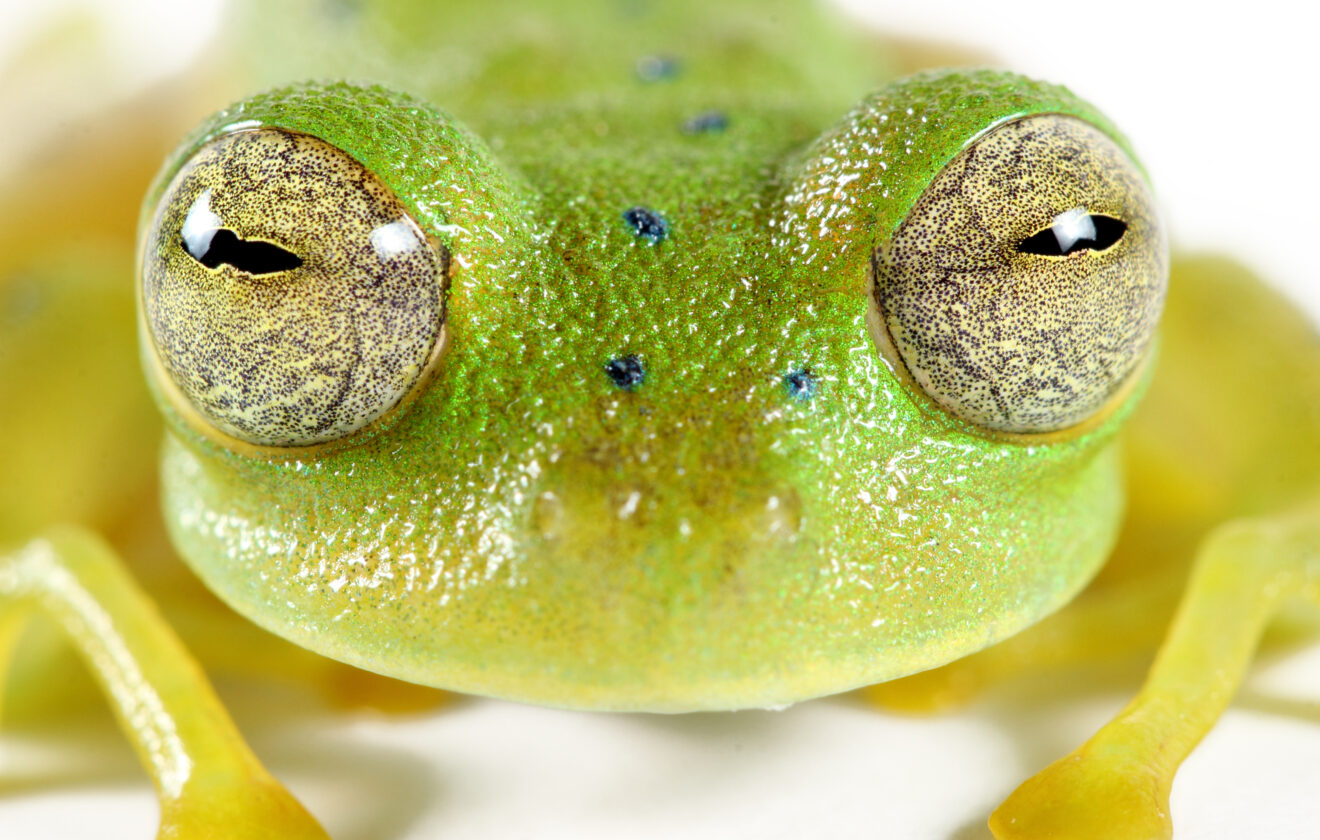
- Centrolene peristicta: The Enchanting Glass Frog of the Andean Cloud Forests
- Taxonomy and Classification
- Natural Habitat: Secrets of the Cloud Forest
- Physical Characteristics: The Translucent Marvel
- Behavior and Life Cycle: Harmony with Forest Rhythms
- Ecological Role: Guardians of Stream Integrity
- Threats and Conservation Status
- Cultural and Scientific Significance
- Conclusion: Guardians of the Clouds
Centrolene peristicta: The Enchanting Glass Frog of the Andean Cloud Forests#
Hidden within the lush, mist-covered foliage of Ecuador’s Andean forests dwells a creature of captivating beauty and intriguing transparency—the Centrolene peristicta. Known commonly as the dotted glass frog, this delicate amphibian possesses skin so translucent that one’s curious gaze can peer directly into its beating heart and vibrant inner workings. Nature enthusiasts and scientists alike continue to marvel at this extraordinary adaptation, but the dotted glass frog holds far greater significance than its aesthetic charm alone: It is an indicator of biodiversity health, a guardian of freshwater habitats, and a potent symbol of conservation urgency.
Join us as we wander deep into the verdant ecosystems where the dotted glass frog thrives, exploring the captivating biology, behavior, ecological importance, and conservation challenges faced by Centrolene peristicta.
Taxonomy and Classification#
Centrolene peristicta belongs to the fascinating family of glass frogs—Centrolenidae—a diverse group known for their remarkable partial transparency and delicate stature. Within the Centrolenidae family, the genus Centrolene encompasses several species commonly inhabiting montane rainforests and cloud-enshrouded woodlands. First described scientifically by Lynch and Duellman in 1973, Centrolene peristicta has since intrigued researchers due to its distinctive coloration and subtle variation among populations occupying different elevations.
Centrolene peristicta shares its woodland habitats with closely related species such as Centrolene lynchi and Centrolene buckleyi, each adapted uniquely to local environmental conditions but collectively serving as ambassadors for genetic diversity within Andean amphibians.
Natural Habitat: Secrets of the Cloud Forest#
Geographic Range and Distribution#
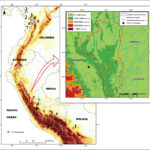
Centrolene peristicta thrives primarily within the Andean cloud forests of Ecuador, specifically within moderately high elevations ranging from 1,200 to 2,500 meters above sea level. This niche environment, characterized by perpetual mists, regular rainfall, and a vibrant tapestry of mosses and epiphytes, provides the perfect sanctuary for this elusive species.
Scattered populations have also been documented in neighboring regions, likely due to continuous forest canopies and extensive river networks facilitating migration and dispersal. Ecuador’s protected areas, such as the Río Zuñac Ecological Reserve, have become critical strongholds for conserving these glass frogs, underscoring the necessity of preserving continuous natural habitats in the Tropical Andes.
Habitat Preferences and Requirements#
To encounter Centrolene peristicta, one must venture into the dense, mist-obscured forests that cloak steep ravines and pristine waters. They actively favor environments adjacent to clear, fast-moving streams and small cascades, relying heavily on moisture-laden air and cool surroundings to maintain their delicate skin. Leaves suspended above streams and branches hanging near water bodies serve as essential breeding grounds where these frogs lay their specialized eggs.
The presence of extensive canopy coverage is also critical; trees and epiphytic plants provide both shelter from predation and regulation of climatic conditions necessary for the frogs’ survival. Any disturbance leading to forest fragmentation—such as logging, agriculture, or urban encroachment—poses severe threats, negatively impacting not only this species but entire ecosystems upon which it relies.
Physical Characteristics: The Translucent Marvel#
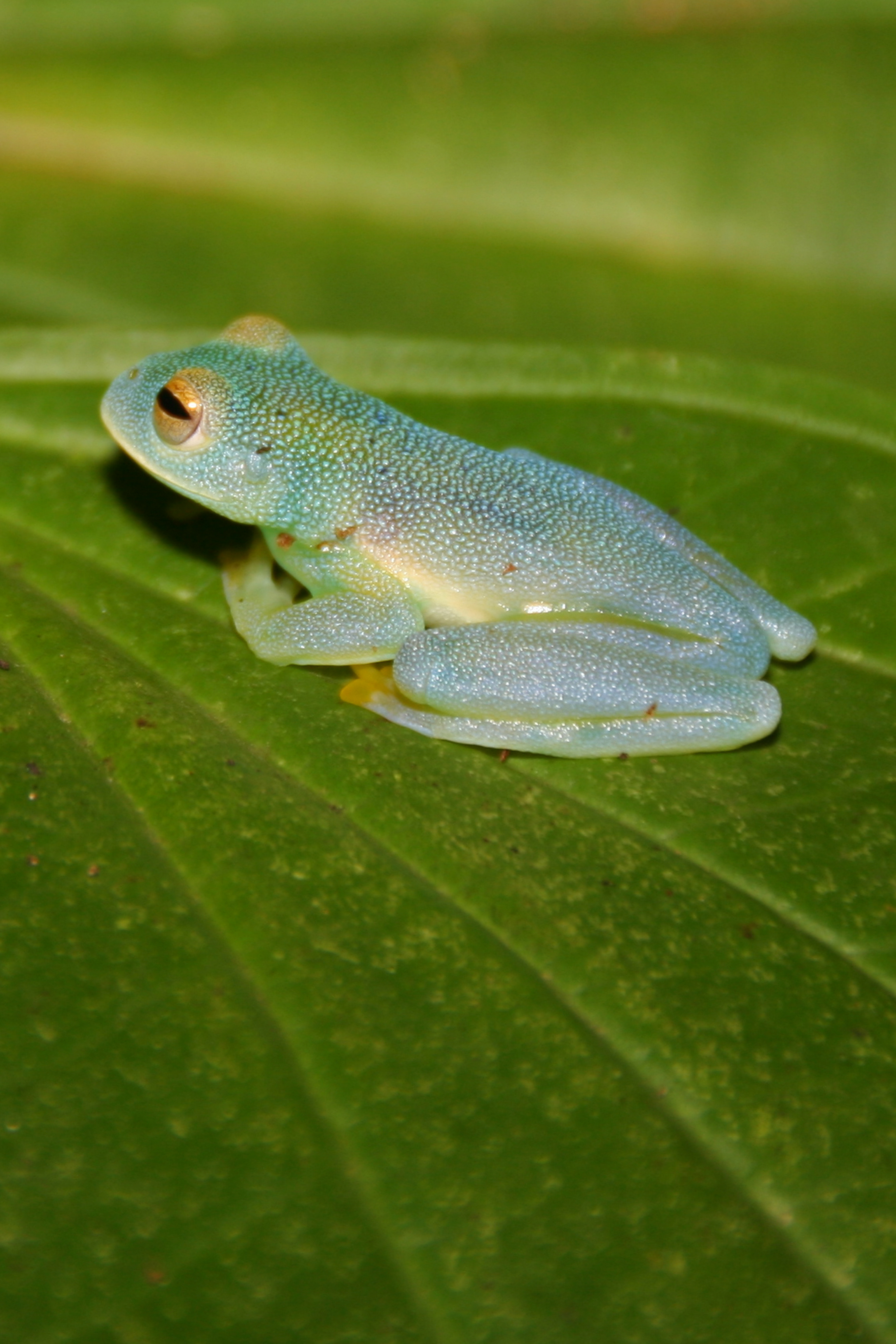
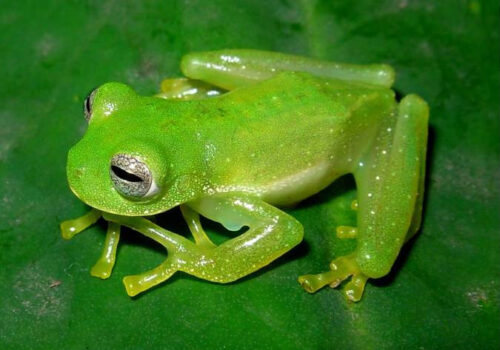
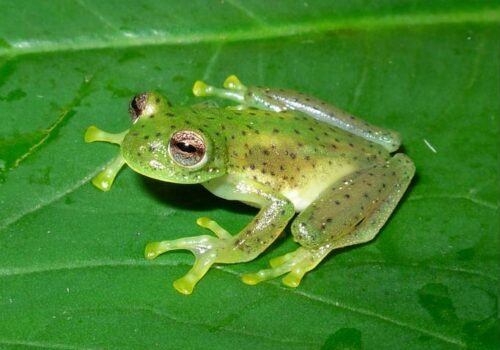
Perhaps the most enchanting attribute of the dotted glass frog is its unique translucent quality, an evolutionary marvel that offers both camouflage and mystery. Adult individuals typically measure between 22 to 25 millimeters in length, fitting comfortably upon a single leaf.
The dorsal side of Centrolene peristicta varies from vibrant emerald greens to more subtle olive shades, generously speckled with numerous small, white or pale-yellow dots, lending them their common name—the dotted glass frog. When viewed from below, the glass-like, nearly transparent skin vividly reveals internal organs, bones, blood vessels, and even a rhythmically pulsing heart. This remarkable translucency likely provides effective camouflage against predators seeking them from below, blending seamlessly into the leaves upon which they rest.
Large, reflective eyes protrude prominently from their head, aiding nocturnal activity as they venture forth into the night for feeding and breeding rituals. Every adaptation in their physiology appears intimately intertwined with their forested homes, highlighting the intricate co-evolution between species and habitat.
Behavior and Life Cycle: Harmony with Forest Rhythms#
Nocturnal Habits and Feeding Behavior#
As darkness descends on the Andean cloud forests, Centrolene peristicta awakens from its daytime slumber, shifting gracefully from leaf to leaf with delicate precision. This nocturnal hunter feeds primarily on small insects such as flies, ants, beetles, and spiders and utilizes remarkable vision, precision tongue movements, and agile leaps to capture prey effectively.
Their active nocturnal predatory habits help regulate insect populations, underscoring their invaluable role within these finely balanced ecosystems. Delicate and efficient, their presence continuously influences the structure of their forest food webs.
A Rich Breeding Ritual#
Following significant rainfall, male frogs congregate near streams, producing gentle, melodious calls to attract potential mates, adding an enchanting chorus to rainy evenings. Upon successful courtship, females meticulously select suitable leaves positioned strategically over running water to deposit jelly-coated clusters of eggs.
Egg clutches are carefully positioned to guard against predators, the constant dripping moisture ensuring their survival until the eventual emergence of energetic tadpoles. Once hatching occurs, gravity guides tadpoles directly into the shimmering stream below, initiating a remarkable journey towards adult frogs. This symbiotic relationship between frogs and streams spotlights the critical dependence of Centrolene peristicta upon healthy freshwater ecosystems—any pollution or stream alteration threatens this delicate life cycle.
Ecological Role: Guardians of Stream Integrity#
Far from merely interesting biological footnotes, glass frogs like Centrolene peristicta signify an invaluable contribution to ecological integrity. Acting as bioindicators, they vividly represent ecosystem health; healthy populations signify pristine freshwater and balanced insect populations, while declining populations may alert conservationists to environmental stressors.
Moreover, their role as prey for larger amphibians, birds, and occasional reptiles highlights their integral place within complex food webs. As their population stability feeds upwards and downwards within ecosystem hierarchies, losing these translucent wonders could profoundly impact community dynamics and biodiversity conservation initiatives alike.
Threats and Conservation Status#
Centrolene peristicta currently holds a classification of “Near Threatened” on the IUCN Red List, indicating the urgency required to maintain stable populations. Habitat loss related to agricultural expansion, logging, and human settlement continues to severely fragment their fragile Andean habitats.
Climate change further threatens to upset delicate environmental equilibriums, shifting rainfall patterns critical for breeding success. Disease is an additional serious threat—like other amphibians worldwide, these glass frogs are vulnerable to chytridiomycosis, a fungal infection devastating amphibian populations globally. Protecting extensive habitat corridors and implementing comprehensive disease-monitoring programs remain central pillars for effective species conservation initiatives.
Cultural and Scientific Significance#
Though Centrolene peristicta may not hold the prominent cultural roles of more widely known species, regional indigenous cultures have long viewed Andean frogs as symbols of environmental purity and water protection. Scientifically, the ongoing fascination with their translucence has inspired studies into biological transparency and camouflage, informing fields ranging from medicine to materials science.
Conclusion: Guardians of the Clouds#
Centrolene peristicta serves as an enigmatic symbol of biodiversity, a master of ecological adaptation, and a sentinel warning us of environmental peril. By deepening our appreciation for these remarkable amphibians, we enhance the urgent motivation for conservation. As guardians of the mystic riverbanks and misty forests of the Andes, their continued existence relies heavily on our commitment to habitat protection and sustainable ecosystem management.
Let us safeguard the cloud forest realms, ensuring generations to come may still marvel at the translucent magic of the Centrolene peristicta—and hear their gentle evening serenades echoing through the forests of Ecuador.