- Meet Wolterstorffina mirei: Secrets of a Rare Mountain Toad
- Taxonomy and Classification
- Natural Habitat: Lost Among Clouds and Mountain Mist
- Physical Characteristics: Masters of Camouflage and Adaptation
- Behavior and Life Cycle: Living Quietly Among Shadows
- Ecological Role: A Critical Link in a Delicate Web
- Threats and Conservation Status: Species at the Edge
- Cultural and Scientific Significance: An Amphibious Ambassador
- Conclusion: Preserving Earth's Hidden Jewels
Meet Wolterstorffina mirei: Secrets of a Rare Mountain Toad#
Hidden among the mist-shrouded forest slopes of Cameroon lies a small, elusive amphibian whose story is as captivating as it is little-known. Wolterstorffina mirei, commonly known as Mire’s small toad or simply Mirei Toad, is a species wrapped in mystery and wonder, fascinating herpetologists and nature enthusiasts alike. With its cryptic appearance, specialized adaptations, and restricted range, it offers invaluable insights into the health of local habitats and an urgent call for conservation action.
Named after the French biologist Fernand Mire, who first drew scientific attention to its quiet existence, Wolterstorffina mirei continues to epitomize the hidden wonders of our natural world. To truly appreciate this extraordinary amphibian’s uniqueness and significance, we must journey deep into its cloud-covered rainforest home, uncover its fascinating biology, and explore the ecological challenges that threaten its very existence.
Taxonomy and Classification#
Wolterstorffina mirei belongs to the family Bufonidae—more commonly recognized as the true toads. Within this diverse and broad family, it occupies a niche tucked neatly within the genus Wolterstorffina, an exclusive grouping of small, subtropical African toads. This secretive genus includes only a handful of species, each adapted for survival in geographically limited and ecologically fragile environments.
Described officially in 1971 by Jean-Louis Amiet, a renowned French herpetologist, W. mirei was immediately recognized as distinctively different from its regional counterparts. Its closest relatives, such as Wolterstorffina chirioi and Wolterstorffina parvipalmata, similarly inhabit restricted mountainous habitats across the Cameroonian Highlands, marking this genus as particularly vulnerable to habitat changes and ecological shifts.
The precise taxonomy of Wolterstorffina mirei is defined as follows:
- Kingdom: Animalia
- Phylum: Chordata
- Class: Amphibia
- Order: Anura
- Family: Bufonidae
- Genus: Wolterstorffina
- Species: W. mirei
Natural Habitat: Lost Among Clouds and Mountain Mist#
Wolterstorffina mirei has an exceedingly restricted geographical distribution. Specifically endemic to Western Cameroon, it survives only within the high-altitude montane forests and cloud forests atop mountains such as Mount Oku and the Bamenda Highlands. These habitats feature dense, humid, and perpetually moist environments, with elevations ranging between 2,000 and 2,500 meters, where swirling mists cloak the landscape in perpetual mystery.
The region’s cool climate and consistent rainfall create rich mats of moss and leaf litter—perfect microhabitats in which Mire’s Toad shelters. It favors pristine, undisturbed vegetation where humidity and moisture remain high. Streams, seepages, and small pools nestled beneath shaded canopies provide the lifelines necessary for their amphibious lifecycle, from egg-laying to larval development.
When exploring these ecosystems, one might initially overlook the subtle presence of Wolterstorffina mirei. With their small forms carefully camouflaged among leaf litter and woody debris, they quietly showcase nature’s brilliant adaptation to subtlety and modesty—attributes essential for survival in a densely populated habitat of predators and competitors.
Physical Characteristics: Masters of Camouflage and Adaptation#
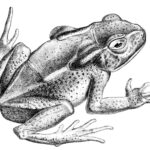
Wolterstorffina mirei is diminutive—even among small amphibians—with adults rarely exceeding 3 centimeters in length. However, within their tiny frames live masters of ecological efficiency.
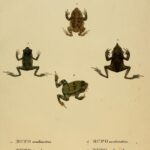
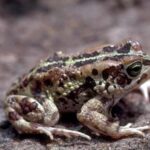
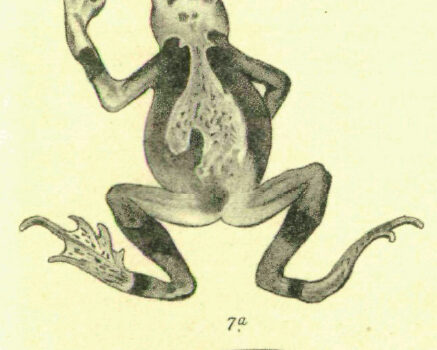
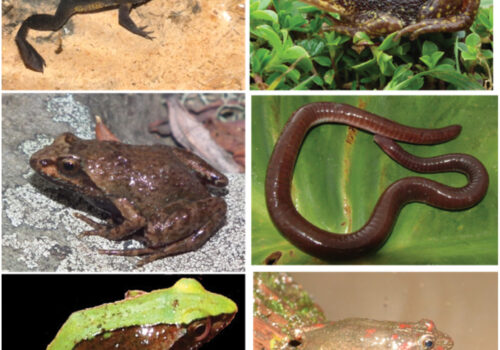
Its coloration showcases an adaptive mastery: a patchwork pattern of dull browns, olive greens, and subtle greys allows it to blend seamlessly within the moss-draped forest floor. Its bumpy skin texture, adorned with small wart-like protrusions, enhances the camouflage effect while simultaneously serving as subtle deterrents to predators.
The presence of parotoid glands—small toxin-secreting glands located above and behind the eyes—characteristic of most true toads, provides Wolterstorffina mirei an additional layer of defense. Although not as elaborately poisonous as brightly colored amphibians from other regions, these glands deter would-be predators, ensuring survival even in a world fraught with threats.
A close encounter reveals fascinating features: eyes boldly protruding yet covered by remarkably protective ridges, perfect adaptations for navigating dark, cluttered forest floors. The limbs, relatively short yet muscularly defined, are adept at rapid, hopping motions and precise burrowing beneath moist debris—behaviors that help the animal quickly evade both danger and desiccation threat.
Behavior and Life Cycle: Living Quietly Among Shadows#
Life for Wolterstorffina mirei unfolds quietly beneath layers of shadowed green. Largely nocturnal, these shy amphibians emerge under the gentle cover of darkness and drizzle, patiently stalking prey such as ants, tiny beetles, springtails, and other minute invertebrates. Their hunting style is meticulously stealthy; employing both sharp eyesight and sensitive vibrations to detect their prey, they skillfully ambush unsuspecting insects beneath the damp foliage.
Reproduction and Parental Care#
Mating for Wolterstorffina mirei begins subtly with the onset of seasonal rains. At this time, male toads employ a surprisingly delicate, low-frequency call to attract females, audible primarily in tranquil forest settings. Following successful courtship and amplexus—the amphibian embrace—the female lays small clusters of gelatinous eggs in shallow pools or gentle rivulets, often hidden carefully away beneath leafy debris.
The tadpoles, slender and translucent upon hatching, remain relatively inconspicuous within their watery nurseries. Each carefully timed metamorphosis occurs before water sources dry up, a timing perfectly synchronized with seasonal rainfall patterns. This judicious timing exemplifies the evolved strategies essential for survival in fully terrestrial, high-altitude environments where temporary water sources dominate.
Ecological Role: A Critical Link in a Delicate Web#
Though small in stature, Wolterstorffina mirei serves a vital role in its montane ecosystem. As predators, they keep insect populations balanced, quietly contributing to the overall health of their habitat. Conversely, as prey themselves, Mire’s Toad provides sustenance to predatory birds, mammals, and larger amphibians, ultimately sustaining biodiversity and maintaining ecological harmony.
Perhaps most importantly, their sensitivity to pollution and habitat alteration positions them as bioindicators, living bellwethers of environmental health. A decline in their populations frequently indicates impending ecological disturbances, compelling conservationists and ecologists to action long before issues become irreversibly severe.
Threats and Conservation Status: Species at the Edge#
The International Union for Conservation of Nature (IUCN) currently classifies Wolterstorffina mirei as Critically Endangered—highlighting the immediacy and gravity of conservation needs. Habitat destruction through deforestation, unsustainable agriculture, livestock grazing, and climate change significantly threatens its already precarious existence.
Moreover, amphibian diseases, notably chytridiomycosis, present additional concern. The intricate balance of serenity, moisture, and pristine conditions essential for this species to survive can collapse astonishingly quickly when faced with human intrusion or climate shifts.
Thankfully, dedicated conservation initiatives have begun forging partnerships between local communities, researchers, and conservationists. The protection and restoration of critical habitats, educational outreach, and scientific monitoring have grown steadily, fostering hope that Wolterstorffina mirei’s vulnerable populations can recover alongside healthy environmental stewardship.
Cultural and Scientific Significance: An Amphibious Ambassador#
While Wolterstorffina mirei evokes little cultural lore, its powerful role as an ambassador species in scientific communities cannot be overstated. Its presence stresses the importance of conservation throughout Cameroon’s biologically rich mountain landscapes. Beyond merely academic interest, discoveries surrounding this tiny amphibian have deepened scientific understanding of ecological health indicators, adaptive evolution, and the nuanced interactions within montane communities worldwide.
Conclusion: Preserving Earth’s Hidden Jewels#
In preserving Wolterstorffina mirei, we champion a future where biodiversity flourishes, where each small creature—no matter how hidden or obscure—receives respect, protection, and appreciation. Our increased awareness and willingness to take action can ensure their continued survival, teaching future generations invaluable lessons about caretaking Earth’s spectacular biodiversity.
Let this captivating small toad remind us of nature’s quieter wonders, ever urging us toward deeper exploration, understanding, and responsible stewardship of our precious, shared planet.