The Enigmatic Wolterstorffina chirioi: Secrets of Cameroon’s Rare Forest Toad#
In the shadowed and mist-laden mountain forests of Cameroon, among carpets of moss and tangled roots, lives a small amphibian whose existence is a story of quiet discovery and cautious optimism. Wolterstorffina chirioi, commonly known as Chirio’s forest toad, is a species that rarely makes headlines. Yet, this humble amphibian, scientifically documented only recently, shines as a captivating testimony to nature’s complexity and fragility.
Named in honor of Laurent Chirio—a renowned French herpetologist who dedicated much of his life’s work to the amphibians and reptiles of West Africa—this species captures our imagination with its quiet but crucial existence. Its discovery highlights both the astonishing biodiversity hidden in Cameroon’s mountainous forests and the urgent call to protect these delicate habitats before their secrets vanish unnoticed.
Taxonomy and Classification#
The Chirio forest toad belongs to the family Bufonidae, a diverse amphibian group widely known as true toads. Within this large family, it sits within the relatively obscure genus Wolterstorffina, itself named after the respected German zoologist Willy Wolterstorff, who significantly contributed to early 20th-century amphibian taxonomy.
Today, this genus comprises a handful of rare, seldom-seen species, most of them confined exclusively to montane cloud forests in Central Africa. Described formally in 2001 by Perret, the specific identity of Wolterstorffina chirioi marked an exciting addition to herpetological knowledge, underscoring the richness and vulnerability of biodiversity in isolated forest habitats.
Natural Habitat#
A Rare Jewel of Cameroon’s Highlands#
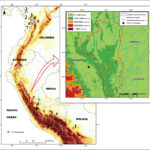
The Chirio forest toad is endemic to Cameroon’s mountainous western regions, particularly within the elevated and densely vegetated slopes of the Cameroon Volcanic Line. Steeped in secrecy, the toad’s habitat consists primarily of moist montane forests, characterized by heavy mists, persistent rainfall, and lush carpets of forest floor bryophytes and leaf litter.
Here, the interplay of altitude, temperature, and moisture creates micro-habitats that shelter a unique suite of life. Beneath towering trees adorned with trunks dappled with lichens and gracefully drooping ferns, Wolterstorffina chirioi moves discreetly, blending perfectly with its environment. Its preference for these secluded, moisture-laden forests reflects a finely tuned ecological niche, resulting in both its limited geographic range and cryptic nature.
Adapted to Cloud Forest Life#
Cloud forests provide a continuously humid environment that amphibians like Chirio’s toad require to maintain their moist skin, critical for breathing and regulating water loss. Low and consistent temperatures at higher elevations also favor their reproductive cycles. Streams trickling gently through these ecosystems provide essential breeding grounds, where still pools and moss-lined edges offer ideal spawning sites for egg-laying and tadpole development.
Yet these habitats are precariously positioned at the mercy of climate change and human-driven threats, making the careful study and conservation of Wolterstorffina chirioi’s home particularly urgent.
Physical Characteristics#
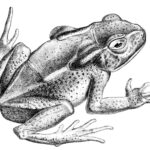
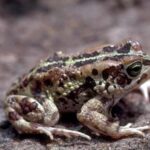
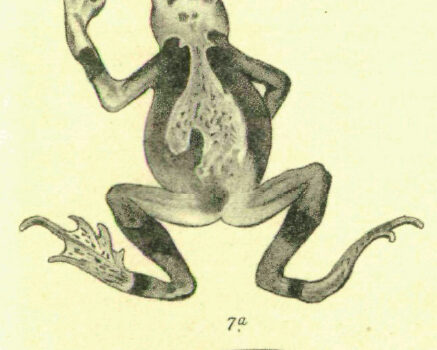
Wolterstorffina chirioi is notably diminutive, rarely exceeding three centimeters in length—compact enough to comfortably perch within the palm of your hand. Its small, stocky body is perfectly adapted to its subterranean and ground-dwelling habits, with relatively short limbs ideal for navigating dense vegetation and leaf litter.
The skin texture is part of its understated allure—rough, glandular, adorned with small tubercles that mimic tiny grains of stone or bark. This granular patterning, varying subtly from brown-grey to olive undertones, provides exceptional camouflage within its montane forest environment. Occasionally, faint darker or lighter patches ripple across the toad’s back, further disrupting its outline against soil and vegetation—this intricate natural mosaic of color and form ideal for evading predators’ searching eyes.
Eyes, wide and expressive yet blending naturally into its coloration, grant the Chirio forest toad keen awareness of its surroundings. Pupils horizontally elongated help the species better perceive motion and navigate effectively through low-light conditions common under the dense forest canopy.
Behavior and Life Cycle#
A Life of Quiet Secrecy#
Thought to be primarily nocturnal, Wolterstorffina chirioi rests inconspicuously during daylight hours under logs, leaf litter, or aboard damp moss patches, emerging after twilight to conduct its nightly activities. During these moonlit hours, it silently prowls the forest floor, preying primarily upon insects and small invertebrates. Ants, termites, and various other arthropods constitute essential nourishment, caught quickly and dexterously using its sticky tongue.
During mating season, males serenade potential mates with subtle and gentle chorus calls—soft vocalizations akin more to a muted trill or rustle than the loud croaks familiar from its larger counterparts. Females, drawn to these understated songs, select mates who then carefully guide them to the secluded water features scattered throughout their forested homes.
Reproduction Shrouded in Mystery#
Precise details of Chirio’s forest toad breeding habits remain astonishingly scarce, even now. It is assumed, based on studies of related species, that eggs are laid in small clusters, deposited carefully along stream edges or within leaf-curated pools. Tadpole development likely occurs in hidden patches of still water or moist crevices, shielded meticulously from predation and desiccation by the layered structures of leaves and mosses.
This cautious approach to reproduction, typical in secretive amphibians living in moist, predator-rich habitats, ensures, as much as is possible, offspring survival—though now threatened dramatically by external factors altering their increasingly fragile world.
Ecological Role#
Despite its unobtrusive habits, Wolterstorffina chirioi plays a decisive role within the intricate forest web. As both predator and prey, it helps control insect populations, mitigating potential pest outbreaks within its ecosystem, and provides sustenance for larger forest occupants including snakes, birds, and small mammalian predators.
As a bioindicator, the sensitive ecology of this toad alerts conservationists to environmental disturbance—any decline in Chirio’s forest toad populations likely reveals underlying stresses within the ecosystem itself. Protecting this small toad thus becomes a proxy for safeguarding an entire community of forest life, emphasizing the interconnectedness intrinsic to healthy ecosystems.
Threats and Conservation Status#
Currently classified as “Critically Endangered” according to the International Union for Conservation of Nature (IUCN) Red List, Wolterstorffina chirioi faces multiple anthropogenic threats, notably habitat destruction driven by logging practices, agricultural encroachment, and changing climates. Specific pressures such as increased temperatures, shifting rainfall patterns, and escalating human activities impose severe strains on its limited geographic range.
Efforts to protect intact forest regions within Cameroon are underway, notably community-based conservation initiatives and national protections targeting vulnerable montane environments. However, challenges remain significant, exacerbated by limited public awareness and economic pressures for lands to be converted to agriculture and commercial uses.
Cultural and Scientific Significance#
While not yet ingrained in local folklore or cultural practice due to its elusive nature, Wolterstorffina chirioi symbolizes broader narratives of ecological fragility and scientific curiosity. Its discovery underscored the importance of sustained biological surveys and field research, highlighting previously unseen wonders hidden within Cameroon’s rich biodiversity reserves. For scientists worldwide, this rare toad is a tantalizing subject of biodiversity studies, evolutionary biology, and environmental research corroborating the significance of amphibians as vital indicators of environmental health and climate change effects.
Conclusion#
In the quiet presence of Wolterstorffina chirioi, there stands as a compelling, humbling lesson on the beauty, complexity, and fragility of the natural world. This modest mountain-dependent toad invites a critical conversation about responsible environmental stewardship, the urgency of habitat preservation, and the fundamental importance of protecting biodiversity—no matter how obscure or overlooked.
As readers, conservation advocates, and nature enthusiasts, our awareness, observation, and advocacy remain vital. In amplifying awareness and fostering a world conscientious of its small but significant residents, we honor a species whose quiet existence is a powerful reflection on our shared responsibility towards Earth’s wild, irreplaceable corners.