- Introduction: A Creature Closer Than You Think
- Taxonomy and Classification
- Natural Habitat: At Home in Sub-Saharan Savannas
- Physical Characteristics: More Than Just Warts
- Behavior and Life Cycle: Rhythms Beneath the African Sky
- Ecological Role: Connecting Threads in Nature's Web
- Threats and Conservation Status: Protecting an Underestimated Species
- Cultural and Scientific Significance: A Toad with Human Connections
- Conclusion: A Call to Understand, Protect and Appreciate
Introduction: A Creature Closer Than You Think#
Hidden among leaf litter and nestled within grasses of West and Central Africa’s woodlands and savannahs, the unassuming yet remarkably adaptable Sclerophrys tuberosa makes its home. Known commonly as the African warty toad, this amphibian’s humble appearance often masks a complexity of behaviors and adaptations that have enabled it to thrive for millennia—even amidst shifting environmental pressures.
Despite their small stature, these amphibians wield significant ecological importance, contributing to the delicate balance of their ecosystems by controlling insect populations and serving as prey for higher trophic predators. With their characteristic wart-covered skin, distinct vocalizations echoing through the night air, and fascinating reproductive habits, Sclerophrys tuberosa invites closer examination and appreciation—offering a wealth of insight into amphibian biology and conservation needs.
Taxonomy and Classification#
The African warty toad belongs to the order Anura, class Amphibia, within the Bufonidae family—a large and diverse family known as true toads. Scientifically named Sclerophrys tuberosa, this species underwent several taxonomic revisions, previously classified under the genus Bufo until recent molecular studies prompted reassignment to the genus Sclerophrys. Such shifts highlight amphibians’ evolving taxonomy as research deepens our understanding of their genetic and morphological variation.
Close relatives of Sclerophrys tuberosa within the same genus include recognized species such as Sclerophrys regularis and Sclerophrys gutturalis, with differentiation largely reliant upon nuanced morphological characteristics and geographical distributions. Studying these amphibians side-by-side aids scientists in understanding adaptive radiation and the subtle yet significant evolutionary divergence within the Bufonidae family.
Natural Habitat: At Home in Sub-Saharan Savannas#
The geographic range of Sclerophrys tuberosa extends across a vast stretch of Sub-Saharan Africa, predominantly inhabiting western countries such as Nigeria, Ivory Coast, Togo, Ghana, Benin, Cameroon, and parts of Central Africa. This species thrives in varied ecosystems—dry savannas, gallery forests, wetlands, and open grasslands—exemplifying remarkable adaptability to a mosaic of habitats.
Habitat Preferences and Adaptations#
Favoring moist environments during their reproductive phase, adult toads exhibit an affinity for areas near shallow water bodies like ephemeral ponds or seasonal marshes. Their rough, warty skins enable exceptional moisture retention, reducing dehydration in regions experiencing dramatic fluctuations in rainfall patterns. Measurements suggest that the distinct morphology of their skin allows them to remain active even through dry seasons, retreating into shaded burrows or taking shelter under leaf piles, awaiting wet conditions to resume breeding and feeding activities.
Through these varied adaptations, Sclerophrys tuberosa effectively utilizes its environment, making it a species particularly intriguing to biologists studying amphibian survival strategies amidst changing climates.
Physical Characteristics: More Than Just Warts#
At first glance, Sclerophrys tuberosa might not seem attention-grabbing, yet closer examination reveals unique features that play integral roles in their survival. Adults average between 4 and 9 centimeters in length, displaying a robust, squat body perfectly suited for terrestrial locomotion, hopping short distances across vegetation and forest floors with ease.
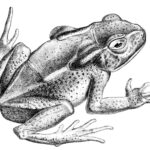
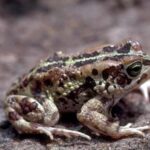
The skin—rough, dry, and thick—harbors numerous wart-like tubercles that give the toad its common name and scientific epithet, “tuberosa,” meaning “full of tubers” or bumps. The coloration is typically earthy and mottled—shades of brown, olive, and grey melding seamlessly with leaf litter and undergrowth. Such cryptic coloration provides excellent camouflaging, allowing them to evade predation in open and semi-open habitats.
Adaptations for Defense and Survival#
Defensive adaptations extend beyond mere coloration. These toads exude a milky toxin from parotoid glands located just behind their eyes when threatened by predators. While not harmful enough to fatally wound typical predators like larger amphibians, birds, or mammals—this secretion produces irritation enough to dissuade repeat attacks, contributing considerably to their survival.
Behavior and Life Cycle: Rhythms Beneath the African Sky#
Sclerophrys tuberosa, like most amphibians, hosts a dynamic, complex life cycle beginning with their distinctive vocalizations echoing through the African night air during mating seasons. Adult males congregate near suitable water bodies, initiating choruses of resonant, trilling calls to attract females.
Mating and Reproductive Behaviors#
Following acceptance by a female, the male clamps onto her back in a reproductive embrace called amplexus. This gripping arrangement persists until the female deposits gelatinous strands of eggs into shallow water sources—often temporary pools or marshes formed after seasonal rains. These egg strings contain hundreds, occasionally thousands of embryos, representing the toads’ strategy to counter high rates of predation and environmental mortality.
Tadpole Development#
The emerging tadpoles are ravenous feeders, grazing primarily on algae, decomposing plant matter, and microscopic organisms. Rapid development is crucial, as these ephemeral water bodies typically shrink or dry entirely within weeks. Within four to seven weeks, depending on environmental conditions, tadpoles undergo metamorphosis—reabsorbing tails, fostering limbs, and transitioning to terrestrial life, equipped to venture onto land and begin their unique lifecycle anew.
Ecological Role: Connecting Threads in Nature’s Web#
In ecological terms, Sclerophrys tuberosa serves various vital roles within its ecosystems. As adult toads primarily feed on insects, spiders, and small invertebrates, their predation effectively limits excessive insect populations, thereby indirectly benefiting agricultural areas and human settlements often prone to insect-borne diseases or crop damage.
Conversely, juvenile toads and tadpoles provide nourishment to a range of local predators, from water snakes and birds to small predators like mongooses and rodents. Such predator-prey interactions showcase their importance within African savanna ecosystems, stabilizing food webs and contributing biodiversity—a metric crucial in assessing the health of ecosystems.
Threats and Conservation Status: Protecting an Underestimated Species#
Despite a relatively widespread and adaptable niche, Sclerophrys tuberosa faces increasing pressures from human activities. Habitat destruction—primarily through agricultural expansions, logging, and urban development—represents significant threats. Destruction or disruption of breeding sites can rapidly decrease populations, a scenario exacerbated by pollution and contamination of water sources by pesticides and industrial run-off.
Climate change further compounds these challenges. Shifts in rainfall patterns and prolonged droughts strain lifecycle timing, reducing tadpole survival and reproduction success. Although currently categorized by the International Union for Conservation of Nature (IUCN) as of ‘Least Concern,’ conservationists warn that ongoing environmental degradation necessitates vigilance and proactive habitat conservation strategies to safeguard this amphibian’s continued survival.
Cultural and Scientific Significance: A Toad with Human Connections#
Beyond ecology, amphibians often carry cultural significance in traditional communities across Africa. While specific cultural stories or symbolism surrounding Sclerophrys tuberosa remain relatively undocumented compared to more iconic species, amphibians broadly represent fertility and renewal in many African folklore traditions due to their close association with seasonal rains.
Scientifically, amphibians like the African warty toad have become pivotal bioindicators—species whose sensitivity to environmental changes provides early warnings for ecological degradation. Furthermore, the study of their unique toxins and skin secretions holds promising prospects in pharmacological research, potentially yielding novel compounds for medicinal applications.
Conclusion: A Call to Understand, Protect and Appreciate#
Sclerophrys tuberosa—a humble, warty denizen of African landscapes—remains profoundly representative of amphibians’ contribution to ecological balance, biodiversity, and scientific discovery. Appreciating their natural histories and addressing challenges such as habitat loss and climate change ensures that these often overlooked amphibians continue thriving within their habitats.
As nature enthusiasts, conservation advocates, or simply curious individuals, it is our responsibility to become stewards of biodiversity. Supporting habitat protection efforts, raising awareness in conservation communities, and continuously expanding our knowledge bases forms essential steps in considering how we coexist with remarkable creatures like Sclerophrys tuberosa.