- Sclerophrys pusilla: The Enchanting World of the Flat-Backed Toad
- Taxonomy and Classification: A Detailed View
- Natural Habitat: Life Within Verdant Realms
- Physical Characteristics: Small but Remarkably Adapted
- Behavior and Life Cycle: Secrets Beneath the Leaf Litter
- Ecological Role: Guardian of Balance
- Threats and Conservation: Challenges Facing the Flat-backed Toad
- Cultural and Scientific Significance: A Greater Understanding
- Conclusion: An Amphibian Worth Cherishing
Sclerophrys pusilla: The Enchanting World of the Flat-Backed Toad#
In the lush corners of sub-Saharan Africa, quietly inhabiting dense woodlands, flooded savannas, and slow-flowing riverbanks, lives a frog species whose presence often goes unnoticed yet plays a vital part in its ecosystem: the flat-backed toad, scientifically known as Sclerophrys pusilla. Despite its modest size and unobtrusive behavior, this amphibian is astonishingly resilient, exhibiting a remarkable adaptability and intriguing behaviors. Indeed, beneath its humble exterior lies a fascinating animal, finely tuned by evolution to thrive in habitats that pose distinct challenges.
With a body rarely larger than the palm of a child’s hand, Sclerophrys pusilla often slips past untrained eyes undetected. Yet this frog not only serves as an essential predator of insects but also acts as an environmental indicator—a valuable window into the health of its natural surroundings. Delve deeper into the secretive life of Sclerophrys pusilla, and you’ll discover a world of intricate interactions, fascinating adaptations, and an embodiment of subtle ecological harmony.
Taxonomy and Classification: A Detailed View#
Sclerophrys pusilla, commonly known as the Flat-backed toad, belongs to the Bufonidae family—commonly referred to as “true toads.” This substantial amphibian family includes hundreds of fascinating species, each uniquely adapted to their local habitats around the globe. Within the Bufonidae family, Sclerophrys pusilla falls under the genus Sclerophrys, a grouping once included in the broader genus Bufo but now recognized through genetic studies as distinct.
The word “pusilla” itself comes from Latin, meaning “small” or “tiny,” a direct nod to the frog’s diminutive size compared to its larger, better-known relatives. Closely related to other African toads such as Sclerophrys regularis (the African common toad) and Sclerophrys maculata, Sclerophrys pusilla highlights the beauty of taxonomic diversity occurring even within a single region, evolving distinct ecological niches and behaviors.
Natural Habitat: Life Within Verdant Realms#
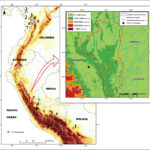
Sclerophrys pusilla inhabits a patchwork of lush habitats varying from moist savanna grasslands to riverine forests and wooded areas close to slow-moving streams or temporary pools of water across southern Africa. Ranging widely through Namibia, Botswana, Zimbabwe, Mozambique, Zambia, and South Africa, the species flourishes in environments with ample moisture and plentiful cover, making the arboreal underbrush and ground-level leaf litter ideal places to live and breed.
What makes these habitats particularly appealing for Sclerophrys pusilla isn’t merely availability of water—it’s their intricate complexity. Rotting logs, fallen leaves, and pools of rainwater create micohavens teeming with insects and shelter from predators, offering the amphibians an environment crucial for both survival and reproduction. During the onset of rains, temporary pools teem with life as male frogs congregate, flexing their vocal muscles in harmonious symphonies to attract mates, signaling that the breeding season has commenced.
Physical Characteristics: Small but Remarkably Adapted#
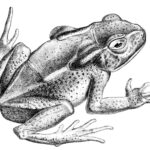
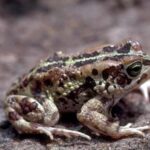
At first glance, Sclerophrys pusilla may appear quite ordinary—a small amphibian measuring only about 20-35 mm in length, modestly colored, and easily overlooked. However, a closer inspection reveals subtle yet impressive evolutionary adaptations that set it apart from its kin. True to their name, these amphibians display remarkably flattened backs that inconspicuously help them blend seamlessly into their environment—especially in areas of sparse vegetation or leaf litter. Their flattened appearance not only aids camouflage but also allows efficient burrowing into soft soil and leaf litter, offering additional refuge from predation and extremes of heat or dryness.
Typically a shade of brown or greyish-brown with darker blotches, individuals of Sclerophrys pusilla are intricately patterned, mimicking soil texture and fallen foliage with exquisite accuracy. Subtle hints of reddish-brown or olive are occasionally seen in individuals, suggesting slight regional and environmental variations influencing their coloration. Large, expressive eyes positioned high on their heads allow them to remain mostly buried while watching for prey or scanning surroundings for predators—a brilliant evolutionary solution to the often-dangerous savanna floor existence.
Behavior and Life Cycle: Secrets Beneath the Leaf Litter#
Feeding Habits and Predation#
By night, under the cloak of darkness, Sclerophrys pusilla becomes a tenacious, silent predator. Equipped with a sticky tongue and rapid movements, it preys upon ants, termites, beetles, and small insects making their own nocturnal journey through the underbrush. This varied, opportunistic diet not only helps control pest populations but also fulfills nutritional needs vital for proper growth, reproduction, and energy storage.
Their keen eyesight and acute sensitivity to vibrations enable them to detect prey before quickly projecting their tongues with impressive accuracy. Observing Sclerophrys pusilla feed reveals a display of pinpoint accuracy and almost artistic grace—each movement precise, efficient, and attuned to their nocturnal world.
Breeding and Tadpole Development#
Reproduction typically peaks at the start of the rainy season with male flat-backed toads assembling near temporary flooded pools, where choruses echo through rainy nights. Each male vocalizes distinctively—a melodious dialogue that female frogs respond to selectively, choosing mates based on call characteristics. After attracting females, couplings ensue swiftly, with eggs being laid in gelatinous masses directly into water, preferably shallow puddles protected by vegetation.
Eggs hatch into tadpoles after only a few days, rapidly transforming into juvenile toads in small pools fraught with predation risks. This development process highlights the delicate balance and risks inherent in early amphibian life—a period of exquisite vulnerability countered by rapid growth and dispersal to safer terrestrial habitats. Parental care is minimal, relying entirely on instinctive mechanisms for survival and predation avoidance strategies.
Ecological Role: Guardian of Balance#
Sclerophrys pusilla, despite its size, occupies a vital ecological niche. By controlling large populations of insects, they’re natural pest regulators, maintaining balance within their ecosystems. Furthermore, their role as prey for birds, snakes, and small mammals places them squarely into a web of life that sustains ecosystem health and biodiversity. Amphibians like the flat-backed toad serve as valuable bioindicators because they are particularly sensitive to environmental contaminants and habitat degradation, their population changes often signaling broader ecological shifts.
Threats and Conservation: Challenges Facing the Flat-backed Toad#
According to current assessments by the International Union for Conservation of Nature (IUCN), Sclerophrys pusilla is currently classified as “Least Concern,” largely due to its wide distribution and stable populations. Nonetheless, this status does not make them immune to environmental deterioration. Habitat loss through agriculture expansion, deforestation, invasive plant species, and human-induced pollution represents tangible threats. Climate change, posing altered rainfall patterns and extended drought arms, navigates possible risks to breeding and survival success—troubling factors warranting vigilance and further research.
Proactive conservation efforts, ranging from habitat protection and restoration to education and monitoring population trends, have been modestly implemented, yet much more investment into awareness and sustainable land management is necessary. Amphibians worldwide are experiencing declines; thus, recognizing the threats early is essential for safeguarding not just Sclerophrys pusilla but the well-being of entire ecosystems where they thrive.
Cultural and Scientific Significance: A Greater Understanding#
Throughout African folklore, amphibians often embody connections between water and land, signaling ecological health and seasonal renewal. Although Sclerophrys pusilla itself may not frequently feature directly in many cultural narratives, its subtle presence conveys intrinsic natural harmony. Scientifically, studying such organisms allows researchers profound insight into evolutionary adaptations, climate-impact indicators, and ecological interactions. Each discovery concerning amphibian biology enriches collective conservation knowledge and strategy.
Conclusion: An Amphibian Worth Cherishing#
Sclerophrys pusilla, humble and small as it may seem, exemplifies the delicate intricacies defining functional ecosystems. Awareness of its life, its struggles, and its importance to environmental health remains crucial in ensuring the species continues to thrive, connecting humanity through vivid narratives that inspire greater conservation action. Ultimately, recognizing and safeguarding their existence helps ensure broader ecological sustainability, reminding us that even the smallest creature holds vital significance in the grand tapestry of nature.