- Sclerophrys gracilipes: Unraveling the Secrets of Africa’s Graceful Toad
- Introduction: Meet the Gracefully Hidden Amphibian of Africa's Forests
- Taxonomy and Classification: Decoding the Family Tree of a Graceful Species
- Natural Habitat: Enchanting Forest Floors of West and Central Africa
- Physical Characteristics: Slender Elegance in Subtle Tones
- Behavior and Life Cycle: Navigating Life in Hidden Realms
- Ecological Role: Quiet Guardians of Forest Health
- Threats and Conservation Status: Challenges Facing a Fragile Species
- Cultural and Scientific Significance: Bridging Tradition and Science
- Conclusion: Advocating Conservation for the Graceful Toad
Sclerophrys gracilipes: Unraveling the Secrets of Africa’s Graceful Toad#
Introduction: Meet the Gracefully Hidden Amphibian of Africa’s Forests#
In the secretive interiors of West and Central Africa’s lush forests, a fascinating amphibian quietly thrives beneath mossy logs and amidst leaf litter, often unnoticed by casual observers. Known among scientists as Sclerophrys gracilipes, this distinct member of the Bufonidae family is commonly referred to as the Graceful Toad—a name reflective of its elegant movements and slender form compared to its robust toad cousins. Although petite in stature and discreet in its habits, Sclerophrys gracilipes plays an outsized ecological role, maintaining balance within its rich tropical ecosystems.
A quirky inhabitant cloaked in intricate patterns, this amphibian not only contributes to ecosystem health but acts as a sensitive indicator of ecological disturbance, drawing attention to subtle environmental changes. While this species may not earn celebrity status like iconic mega-fauna such as elephants or lions, examining the life of this modest amphibian reveals compelling insights into biodiversity, adaptation, and the interconnected web of African forest life.
Taxonomy and Classification: Decoding the Family Tree of a Graceful Species#
Sclerophrys gracilipes belongs within the Bufonidae family, a diverse group of predominantly terrestrial toads found worldwide. Described scientifically by Boulenger in 1906, the species was initially placed within the extensive genus Bufo, where numerous toads resided. Taxonomic revisions resulting from advances in DNA analysis led herpetologists to segregate African species into the genus Sclerophrys. This genus encapsulates many of Africa’s unique toad species, distinguishing them through genetic markers, morphology, and biogeographic considerations.
Close relatives, including Sclerophrys regularis (African common toad) and Sclerophrys maculata (Hallowell’s toad), share certain characteristics, but it’s the finer distinctions—the elongated limbs, reduced body size, and refined patterns—that clearly differentiate Sclerophrys gracilipes. Understanding these nuanced relationships helps scientists better appreciate the evolutionary pressures that shaped this subtly beautiful amphibian.
Natural Habitat: Enchanting Forest Floors of West and Central Africa#
The Graceful Toad is predominantly found across regions spanning Cameroon, Democratic Republic of Congo, Equatorial Guinea, Gabon, Central African Republic, and the Republic of the Congo. It selects habitats carefully, favoring the humid recesses beneath the forest canopy—particularly dense lowland forests and lightly disturbed secondary forests. Within these moisture-laden microhabitats, its slender frame allows it to expertly navigate through narrow spaces under dead leaves, fallen branches, decaying logs, and around moss-covered rocks.
Perfect Adaptations to a Rainforest Lifestyle#
The forest floor provides a sanctuary and fulfills all its survival needs. Moist leaf litter is a preferred microenvironment, offering both camouflage and ample prey. The high humidity and moderate forest temperatures significantly reduce water loss through its delicate skin, critical for maintaining moisture. Shallow forest streams and temporary rain pools also serve as essential breeding grounds, showcasing the species’ intricate reliance on intact forest ecosystems.
Physical Characteristics: Slender Elegance in Subtle Tones#
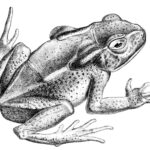
Sclerophrys gracilipes contrasts notably with typical bulky toad stereotypes. Adults seldom exceed four centimeters in length, their slender bodies supported by delicately proportioned limbs—hence the epithet “gracilipes,” meaning “slender footed”. This lightweight morphology grants exceptional agility, enabling the species to leap gracefully and evade predators effortlessly.
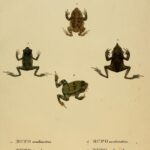
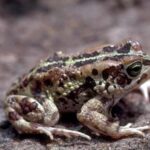
The coloration and patterns are equally mesmerizing. Shades of brown, olive, grey, and black mingle attractively forming an intricate mosaic across its skin. A camouflage artist, its cryptic coloration blends perfectly with fallen leaves and forest detritus, an essential defense against birds, reptiles, and mammals that feed energetically across the forest floor. Notably lacking prominent glands or pronounced bumps common in other toads, its smooth and subtle appearance underscores its adaptation to the cloistered floor of humid, verdant habitats.
Behavior and Life Cycle: Navigating Life in Hidden Realms#
The behavior of the Graceful Toad complements perfectly its subtle appearance. Primarily nocturnal, it emerges as twilight deepens into night, capitalizing on the relative safety of darkness to forage efficiently. Its menu consists largely of small insects, including ants, termites, beetles, and tiny arachnids. This feeding habit positions the species as a subtly influential regulator of insect populations beneath the forest canopy.
Courtship Understated Yet Intriguing#
When monsoon rains saturate the forest, signaling prime breeding conditions, males congregate near small forest pools and streams. Calling softly yet persistently from concealed perches adjacent to the water, their gentle trills serve as acoustic beacons guiding receptive females to suitable breeding grounds.
Females arrive silently, choosing mates based upon subtle acoustic traits indicative of robust health and genetic quality. Egg masses, laid delicately in shallow pools, hatch into tiny tadpoles equipped to thrive in ephemeral aquatic habitats. Their metamorphosis into juvenile toads occurs rapidly, adapting them swiftly to terrestrial life—essential for survival in transient pools susceptible to rapid evaporation.
Ecological Role: Quiet Guardians of Forest Health#
Though diminutive, Sclerophrys gracilipes delivers significant ecological contributions. By predating heavily on various insect populations, it controls insect abundances, indirectly influencing leaf litter decomposition rates and nutrient cycling. Conversely, it is a prey species itself, sustaining numerous predators from small mammals and snakes to avian hunters. Its sheer sensitivity towards habitat integrity also earmarks it uniquely as a bioindicator; fluctuations in its abundance often signal subtle alterations in forest dynamics or environmental degradation.
Threats and Conservation Status: Challenges Facing a Fragile Species#
Like many amphibian species globally, the Graceful Toad faces mounting pressures linked directly and indirectly to human activities. Habitat destruction due to logging, agricultural expansion, urbanization, and mining intensifies habitat fragmentation and degradation. Roads and commercial developments within formerly contiguous forests interrupt migration routes to breeding areas, critically impacting reproductive successes. Moreover, climate change forecasts increasingly erratic precipitation, drought cycles, and temperature shifts—seriously complicating the life cycle timing crucial to breeding and larval survival.
Although currently listed as Least Concern by the International Union for Conservation of Nature (IUCN), ongoing habitat degradation coupled with climate change predictions prompts increased vigilance and proactive conservation efforts. Monitoring populations, protecting forest areas, and raising awareness about ecosystems’ interconnectedness form critical conservation strategies.
Cultural and Scientific Significance: Bridging Tradition and Science#
Though relatively obscure in cultural symbolism compared to more prominent species, frogs and toads in Central African cultures often symbolize fertility, prosperity, and renewal due to their moisture-dependent life cycles tied closely to monsoon patterns. Sclerophrys gracilipes, by extension, embraces some of these symbolic meanings. Scientifically, amphibians including this species have significantly deepened our understanding of evolutionary adaptation, bioindicators, and ecological sensitivity. Its presence or decline can offer scientists subtle yet powerful insights into the biodiversity health of forest habitats.
Conclusion: Advocating Conservation for the Graceful Toad#
Beyond being merely another amphibian species tucked quietly into the lush undergrowth of African rainforests, Sclerophrys gracilipes symbolizes the rich biodiversity and delicate ecological balance underlying these vibrant ecosystems. Its continued survival—graceful yet fragile—hints at broader conservation challenges and opportunities within a fast-changing landscape.
For anyone captivated by the beauty and mystery of the natural world, understanding and advocating for lesser-known yet ecologically integral species becomes vital. Our stewardship and conscious conservation actions today will shape the thriving existence tomorrow of hidden treasures like the Graceful Toad. Let the quiet presence of Sclerophrys gracilipes remind us gently yet profoundly to tread carefully and support the preservation of our planet’s irreplaceable biodiversity.