Sclerophrys fuliginata: The Enigmatic African Forest Toad#
Hidden beneath lush vegetation in the humid, vibrant rainforests of Central Africa resides an amphibian whose modest charm hides its ecological significance: the Sclerophrys fuliginata. Also known as the African Forest Toad or Sooty Toad, this curious species captures the essence of the wild places it inhabits—a compelling blend of mystery, survival ingenuity, and quiet brilliance.
At first glance, one might overlook this small amphibian, cloaked in subtle shades of grey, brown, and green. However, hidden beneath its calm presence lies a fascinating array of behavioral quirks, unique adaptations, and an essential ecological role, deserving our admiration and protection.
Taxonomy and Classification#
The African Forest Toad, scientifically named Sclerophrys fuliginata, is classified within the family Bufonidae, or “true toads,” a diverse group encompassing hundreds of species worldwide. Bufonids are characterized by their relatively stout bodies, dry and warty skin, and their preference for terrestrial habitats. Within the Bufonidae family, Sclerophrys stands out as a genus native primarily to sub-Saharan Africa, renowned for their adaptability and unique evolutionary pathways.
This particular species shares its genus with other notable toads, such as the Common African Toad (Sclerophrys regularis). However, unlike its more common relatives, Sclerophrys fuliginata has evolved to flourish in dense, tropical rainforests, perfectly adapted to living amidst leaf litter and the intricate tapestry of forest floor microenvironments.
Natural Habitat#
The African Forest Toad predominantly occupies the lush, evergreen rainforests of Central Africa, primarily found in nations such as Cameroon, Republic of Congo, Gabon, and Equatorial Guinea. These regions, characterized by high rainfall, warm temperatures, and dense canopy coverage, provide an ideal habitat for this secretive species.
Within these rainforests, Sclerophrys fuliginata particularly thrives within leaf litter, gently rotting logs, and moist underbrush—an environment offering safety from predators, abundant shelter, and a rich hunting ground. The consistently humid microclimates within the lower forest strata ensure necessary skin hydration, critical to amphibian respiratory health and efficient physiological functioning.
The African Forest Toad carefully selects habitats near slow-moving streams and pools, pivotal areas for reproduction. Gentle trickles of clear streams winding through moss-covered rocks, combined with shaded, undisturbed pools formed by forest depressions, provide ideal breeding grounds. These water sources not only facilitate successful amphibian reproduction but also become biodiversity-rich ecosystems, bursting with insect life, plant growth, and numerous interconnected ecological relationships.
Physical Characteristics#
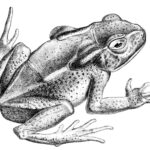
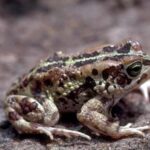
Measuring roughly 2.5 to 4 centimeters in length, the African Forest Toad is a relatively small-sized member of its genus. Its body, covered in typical toad skin—drier, rougher, and often studded with irregular sets of granular glands—is specifically adapted to terrestrial life. The dorsal side displays a patchwork coloration, varying from shades of dark grey and brown to subtle greens, perfectly matching its forest habitat. This cryptic coloration acts as nature’s camouflage, blending seamlessly with wet leaves, decaying wood, and moist mosses, effectively masking the creature from the eyes of hungry predators.
A distinguishing characteristic of this species is the distinctly pronounced parotoid glands located just behind the eyes. These elongated glands secrete a mild toxin, providing some level of chemical defense against predators such as birds, reptiles, and mammals. Although not deadly to humans, these secretions deter predators through their bitter taste and mild irritation, providing the gentle amphibian with a critical defense strategy in an environment rife with danger.
Its rounded pupils, typical to true toads, enhance nocturnal vision, essential for nighttime foraging. Sturdy, nimble limbs equipped with webbed digits assist formidable movements through their cluttered surroundings, traversing damp, uneven terrain with impressive agility.
Behavior and Life Cycle#
Nocturnal Hunters#
As the rainforest cloak of darkness descends, the African Forest Toad emerges slowly from its daytime hiding spots, turning twilight into feeding time. Equipped with excellent low-light vision, these nocturnal hunters actively search out an abundance of prey—primarily insects, spiders, worms, and occasionally small invertebrates found amidst the leaf litter and vegetation.
With a patience rooted in evolutionary adaptation, the toads sit motionless, carefully waiting until prey wanders within striking distance. In an instant, their sticky tongues spring forward like miniature catapults, swiftly capturing their unsuspecting prey, a quick and effective hunting strategy perfected over millions of years.
Breeding and Development#
The onset of the rainy season initiates an extraordinary transformation for the African Forest Toad. Encouraged by rumbling storms and the satisfying patter of seasonal rainfall, male toads venture toward breeding pools and temporary forest streams, showcasing an impressive chorus of mating calls. Their vocalizations—a series of repeated, melodic clicks and trills—echo softly through the nighttime forest, creating an acoustic tapestry that signals readiness to mate.
After attracting receptive females, pairs engage in amplexus, an amphibian mating position prompting females to lay hundreds of gelatinous eggs in quiet, shallow waters. Within several days, the crystalline spheres hatch into tiny, energetic tadpoles that embark on their developmental journey beneath the protective canopy of the rainforest.
Over the subsequent weeks, these tadpoles experience a remarkable transformation—resorbing their tails, growing limbs, shifting from gill-breathing aquatic larvae into fully terrestrial juveniles, perfectly adapted to their forest existence. This astounding metamorphosis is not only fascinating but serves as a symbol of nature’s miraculous adaptability and resilience.
Ecological Role#
Despite their small stature, the African Forest Toad plays an indispensable role within its ecosystem. Primarily acting as efficient insect predators, they serve critical ecological functions, balancing populations of potentially detrimental insects and pests. By controlling insect numbers, this small amphibian indirectly supports healthy vegetation growth and contributes to a balanced, biodiverse rainforest environment.
Concurrently, these fragile amphibians themselves are indispensable prey items for numerous rainforest predators, including snakes, birds, and mammals, encompassing a critical trophic link within complex food webs. The presence and abundance of toads also serve as barometers of environmental health, responding rapidly to changes in forest conditions, serving as bioindicators capable of signaling declining ecological health before such changes affect larger, more resilient creatures.
Threats and Conservation Status#
Currently assessed by the International Union for Conservation of Nature (IUCN) as “Least Concern,” the populations of Sclerophrys fuliginata remain relatively stable. However, like many amphibians globally, this toad faces various emerging threats, notably habitat destruction driven by deforestation, mining activities, infrastructure developments, and agricultural expansion.
Additionally, global threats such as climate change have begun altering rainfall patterns, drying crucial breeding grounds, and affecting survival rates during critical developmental stages. Moreover, infectious diseases, particularly chytridiomycosis, a fungal disease devastating amphibian populations globally, also loom as potential threats to regional populations.
Conservation efforts to sustainably manage forest habitats, regulate destructive development, and rapidly respond to emerging threats remain crucial to preserving healthy populations. Sustained monitoring programs, habitat protection initiatives, and community-led conservation education can substantially improve the prospects of this subtly magnificent species.
Cultural and Scientific Significance#
Though not celebrated widely in folklore or traditional beliefs compared to larger, charismatic animals, the African Forest Toad holds considerable scientific significance. Researchers recognize this species as an effective bioindicator, uniquely sensitive to environmental stressors—offering invaluable insights into broader ecosystem health. Understanding their ecology and life history can help conservationists sustainably manage and protect their habitats, conserving broader rainforest health and biodiversity.
Additionally, researchers continue to explore the unique chemical secretions from their glands, recognizing the potential for new biomedical applications—from pain relievers and antimicrobial agents to novel pharmaceuticals addressing human infections and diseases.
Conclusion#
Small and often overlooked, Sclerophrys fuliginata embodies an astonishing tale of adaptation, survival, and ecological responsibility. Its quiet presence in forest shadows reminds us vividly of the interconnectedness and fragility of rainforest ecosystems. Just as vibrant as the canopy giants above, their survival enriches our understanding of ecology, serves as a barometer for forest health, and inspires conservationists worldwide.
The continued existence of the African Forest Toad depends largely on actions we all can take: supporting conservation initiatives, appreciating the subtle splendor of overlooked species, and embracing vigilance toward sustainable development. By supporting responsible stewardship of our planet’s rainforests, we ensure the enchanting whispers of the African Forest Toad’s evening choruses endure for generations yet to come.