- Exploring the Secretive Life of Schismaderma carens: Africa's Enigmatic Red Toad
- Taxonomy and Classification
- Natural Habitat: Where the Red Toad Makes Its Home
- Physical Characteristics: An Appearance that Demands Attention
- Behavior and Life Cycle: An Intricate Symphony of Survival
- Ecological Significance: A Key Player in the Ecosystem
- Threats and Conservation Status: Challenges on the Horizon
- Cultural and Scientific Significance: Unveiling Nature's Hidden Gems
- Conclusion: Conserving Africa's Remarkable Amphibian Treasure
Exploring the Secretive Life of Schismaderma carens: Africa’s Enigmatic Red Toad#
Within the lush, verdant wilderness of Sub-Saharan Africa, a chorus of amphibian voices permeates the twilight air, announcing the arrival of evening. Among these myriad calls, one particularly resonant yet enigmatic voice belongs to a fascinating species known as Schismaderma carens, commonly referred to as the Red Toad. Although often overlooked in favor of flashier rainforest frogs, this intriguing amphibian captivates biologists and nature lovers alike due to its distinctive call, striking appearance, and unique ecological role.
The Red Toad—scientifically named Schismaderma carens—holds significance beyond simple curiosity. It embodies the delicate interplay between amphibians and their rapidly changing habitats. Uncovering the secret lives of these creatures not only enriches our understanding of biodiversity but also illuminates the intricate connections maintaining ecological harmony.
Taxonomy and Classification#
Belonging to the family Bufonidae, which encompasses the “true toads,” Schismaderma carens occupies a distinctive position within its genus. It is currently the sole species within the genus Schismaderma, placing it in a taxonomic spotlight of considerable scientific interest. Its unique evolutionary lineage separates it from close relatives, providing valuable insights into the evolutionary processes shaping amphibians across the African continent.
The taxonomic placement of the Red Toad emerges from extensive genetic research and morphological comparisons, underlining the species’ distinctive characteristics that warrant its solitary genus classification. Scientists continue examining its genetic markers to better understand its evolutionary heritage and relationships to other toads within Bufonidae.
Natural Habitat: Where the Red Toad Makes Its Home#
Schismaderma carens inhabits a wide range of ecological zones across Sub-Saharan Africa, showcasing impressive adaptability to various habitats. From Angola, Botswana, Namibia, and South Africa in the south, to Kenya, Uganda, and Tanzania in the east, the Red Toad’s distribution spans diverse landscapes.
Preferred habitats range from savannas and grassy plains to open woodlands and suburban gardens. The species frequently resides near temporary wetlands, ponds, and slow-moving streams, showcasing a distinct affinity for habitats featuring ample breeding pools and moist foliage cover. Although relatively tolerant of human-induced urbanization, it thrives best within natural grasslands interspersed with small bodies of water and vegetation-rich margins where insect prey remain abundant.
Roaming amidst grasses, emerging after dusk with the onset of humidity-laden night air, the Red Toad’s presence highlights the important ecological link between amphibians and moisture dynamics in African ecosystems. Its choice of habitat is a careful balance between moisture availability, prey supply, and safe retreat spaces, each element crucial for its survival.
Physical Characteristics: An Appearance that Demands Attention#
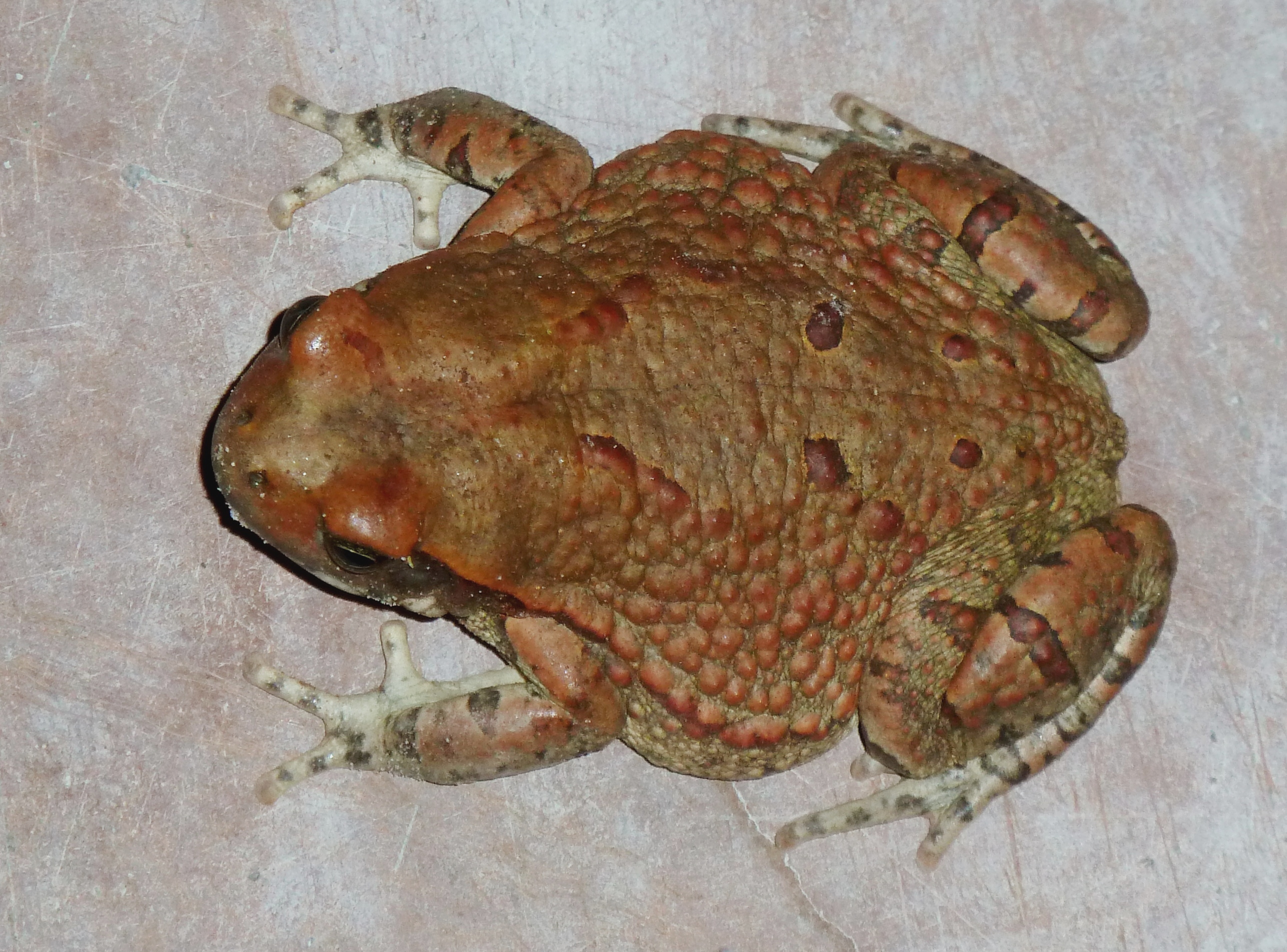
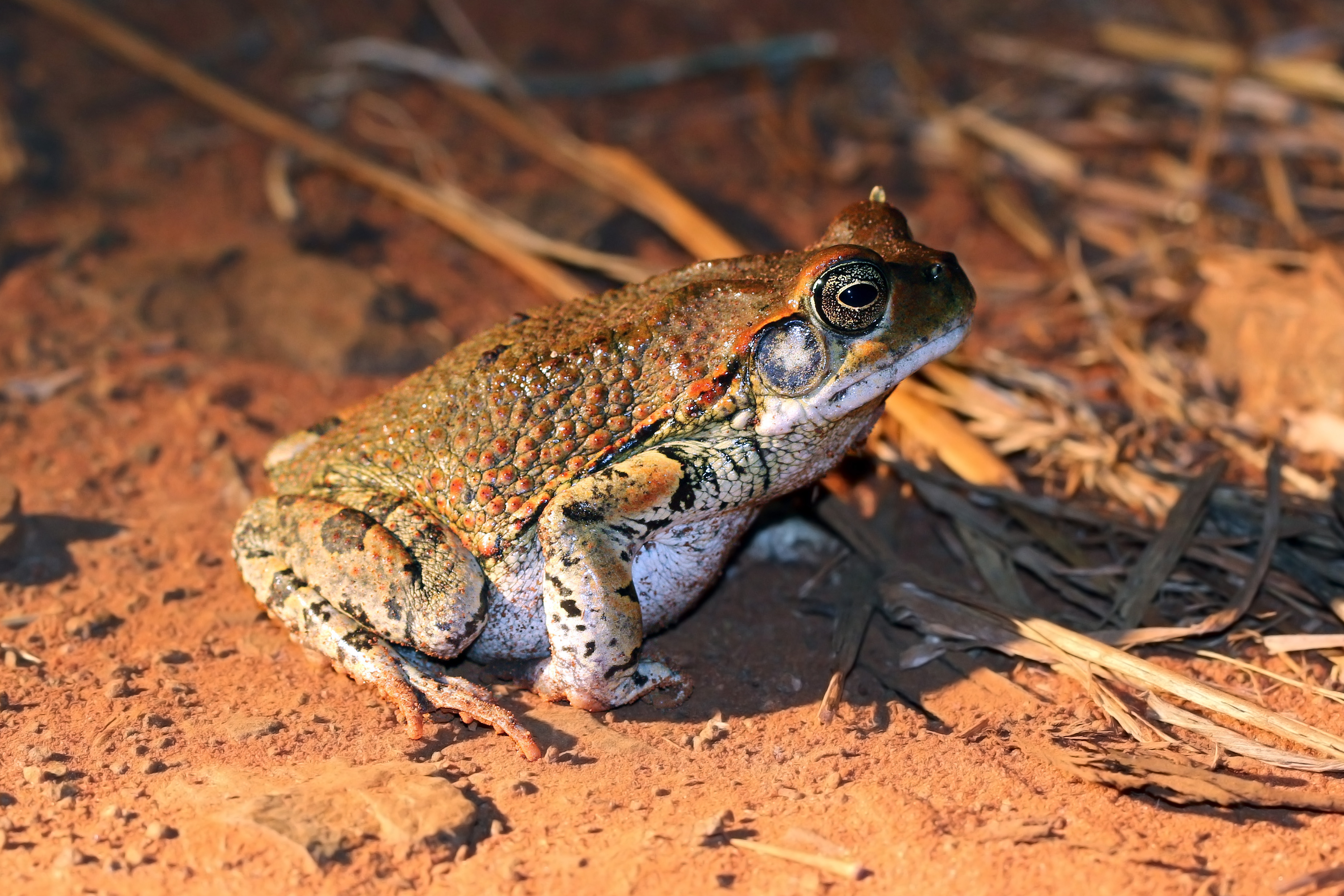
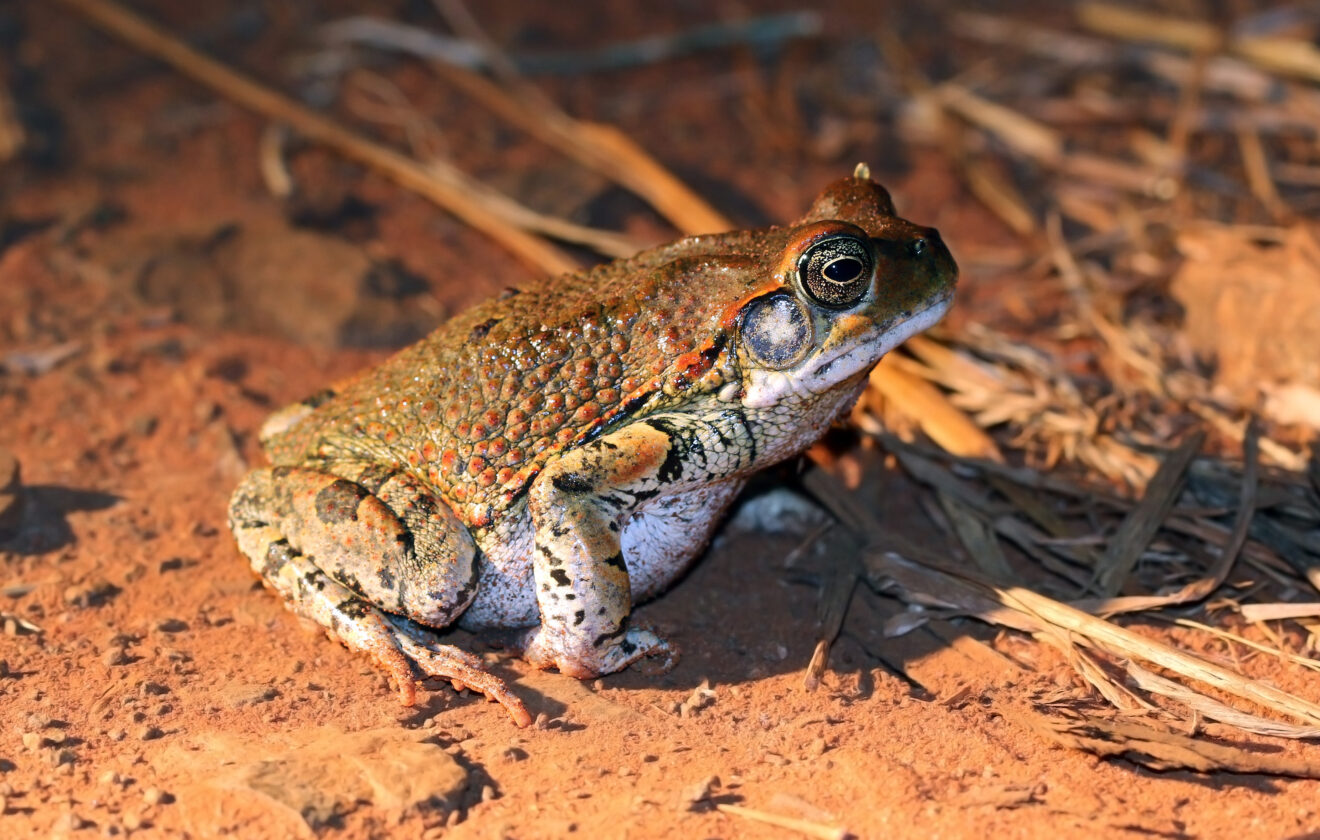
At first glance, the Red Toad immediately captivates with its robust, compact build and distinctive coloration, setting it apart from its fellow amphibians. Adults typically measure between 70 to 90 millimeters from snout to vent, making them easily recognizable due to their relatively sturdy stature.
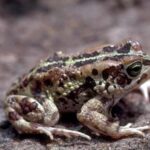
The name “Red Toad” aptly describes its striking coloration, which varies from reddish-brown to deep, brick-like red hues. Its dorsal surface is sculpted with numerous dark spots or blotches, giving each individual a unique camouflage pattern, potentially serving as defense against predators by seamlessly blending into leaf litter or reddish soils.
Its skin texture is typically verrucose—covered in wart-like protrusions characteristic of its Bufonid ancestry. Pronounced glandular ridges behind its prominent eyes hint at another defensive mechanism: potent secretory compounds designed to dissuade predators. These toxins can irritate sensitive skin and mucous membranes, safeguarding the toad from smaller predators and some larger ones as well.
Adaptive physical traits extend beyond just camouflage and chemical defenses. Its forelimbs and robust hind legs enable rapid, powerful leaps, valuable for evading predators, catching fast-moving insect prey, and facilitating territorial contests during mating periods.
Behavior and Life Cycle: An Intricate Symphony of Survival#
The Nocturnal Chorus: Communication among the Underbrush#
Communication represents a vital facet of Schismaderma carens’ survival strategy. A central component of this species’ behavioral repertoire is the males’ evocative, trilling calls—sounds filling the darkness of humid African summer nights. Such calls, resonant and persistent, play a primary role in establishing territories, advertising fitness, and attracting potential mates during breeding seasons. Listening closely, a careful observer will hear call-and-response exchanges echoing throughout the evening air, creating an auditory tapestry fundamental to their reproductive success.
Diet and Foraging Strategies#
Primarily insectivorous, the Red Toad occupies an essential predatory niche, consuming beetles, ants, termites, spiders, and other arthropods. Utilizing sit-and-wait ambush predation alongside active opportunistic foraging, these toads effectively harness both methods, displaying remarkable versatility in food acquisition strategies. Their powerful leaps, paired with acute vision sensitive to movement at ground level, make them formidable hunters within their microhabitats.
Reproduction and Development: Life Begins in Water#
Reproduction for Schismaderma carens occurs during the rainy season, marked by increased humidity and flooded temporary pools ideal for egg laying. Males gather in vibrant, nighttime choruses near shallow waterbodies, vigorously vocalizing to attract females. Upon successful pairing, eggs are deposited in gelatinous strings, commonly attached to submerged vegetation. These egg strings hatch rapidly into agile tadpoles, embarking on a transformative journey toward terrestrial adulthood.
Tadpole development occurs rapidly, occurring within temporary aquatic systems vulnerable to drying out, thus necessitating rapid maturation. Within weeks, tadpoles metamorphose into miniature versions of their terrestrial parents, gradually adapting from aquatic to terrestrial environments—a delicate transition heavily influenced by moisture availability.
Ecological Significance: A Key Player in the Ecosystem#
As an abundant insect predator, Red Toad populations exert considerable influence on the abundance and diversity of terrestrial invertebrates, balancing insect communities and indirectly benefitting agriculture and human livelihoods. Conversely, the Red Toad also provides essential nourishment to many larger predators—including snakes, birds, and small carnivorous mammals—positioning it as a cornerstone species that supports higher-level predators.
Moreover, amphibians like Schismaderma carens function as sensitive ecological indicators. Changes in their populations often signal subtle and early warnings of ecosystem stress, making the preservation of this toad essential in broader environmental conservation efforts across its range.
Threats and Conservation Status: Challenges on the Horizon#
The International Union for Conservation of Nature (IUCN) currently lists Schismaderma carens as Least Concern, reflecting its widespread distribution, adaptability, and large populations. However, this optimistic status should not obscure growing threats from habitat degradation, urban expansion, deforestation, and pollution pressures increasingly impacting amphibians globally.
Agricultural pesticides, habitat fragmentation due to expanding urban settlements, invasive species, and climate change-driven variability in rainfall and drought cycles escalate threats to their long-term survival. Continued habitat destruction compromises breeding sites and food resources, underscoring the urgent need to integrate amphibian conservation perspectives into broader landscape management practices.
Cultural and Scientific Significance: Unveiling Nature’s Hidden Gems#
While the Red Toad’s unique aesthetic qualities intrigue nature enthusiasts, cultural references to this species vary across indigenous African societies. Some communities associate it symbolically with rainfall patterns due to its prominent emergence coinciding with seasonal rains, signaling promising agricultural yields and abundance.
Scientifically, ongoing research into the chemical compositions of the defensive secretions from Schismaderma carens reveals bioactive compounds relevant in medical and ecological studies, underscoring broader scientific and biomedical potentials lurking within this often-overlooked amphibian species.
Conclusion: Conserving Africa’s Remarkable Amphibian Treasure#
The narrative of Schismaderma carens exemplifies the compelling stories amphibians weave within Africa’s ecological tapestry. Ensuring their survival demands recognition and attention from scientists, conservationists, and nature enthusiasts. Encouraging responsible environmental stewardship, raising awareness, and advocating for sustainable habitat management can shape a positive future for this charismatic yet enigmatic amphibian. Appreciating the Red Toad means understanding and safeguarding its rightful place within the diverse ecosystems it enriches.
Embrace the marvel of Schismaderma carens and join the broader conservation efforts to protect these quiet guardians of ecological balance.