Secrets of the Amazon Leaf-Litter: The Hidden Life of Rhinella poeppigii#
Beneath the multilayered tapestry of the Amazon rainforest, amid the moist blankets of fallen leaves and tangled roots, emerges an unassuming yet profoundly meaningful creature—the Rhinella poeppigii, a fascinating toad species often overlooked by even avid wildlife enthusiasts. Scientifically known as Rhinella poeppigii and belonging to the family Bufonidae, this subtly charismatic amphibian inhabits a world as intricate and delicate as any found high in the forest canopy. Although modest in appearance, Rhinella poeppigii is deeply woven into the ecological fabric of its environment, quietly performing critical roles that sustain the rainforest’s health and biodiversity.
Perhaps one of the most intriguing mysteries around Rhinella poeppigii is its remarkable ability to blend flawlessly into its surroundings. Its skilled camouflage not only becomes an extraordinary defense mechanism but symbolically mirrors the often overlooked nature of amphibians in broader conservation narratives. By delving into the vibrant yet hidden life of this species, we gain a captivating perspective on the interconnectedness that sustains Neotropical ecosystems.
Taxonomy and Classification#
Rhinella poeppigii belongs within the Anura order of amphibians, commonly recognized as frogs and toads. More specifically, this toad is a part of the Bufonidae family, renowned for their stout bodies, rugged skin, and distinctive vocalizations. Within this diverse family, the genus Rhinella is particularly known for containing species frequently referred to as “true toads,” characterized by distinct parotoid glands behind the eyes that secrete toxins for defense against predators.
The species Rhinella poeppigii was first described by Johann Jakob von Tschudi, a distinguished Swiss naturalist and explorer, who named the species in honor of Eduard Friedrich Poeppig, a nineteenth-century German botanist who tirelessly explored the Neotropics. Closely related to other toads within the Rhinella genus—including the common cane toad Rhinella marina and several other Amazonian members such as Rhinella margaritifera—Rhinella poeppigii nonetheless distinguishes itself through subtle yet significant differences in habitat preference, morphology, and behavior.
Natural Habitat#
Native to the richly biodiverse ecosystems of South America, Rhinella poeppigii primarily inhabits tropical humid forests across western regions of the Amazon basin. This species is widespread in countries such as Ecuador, Peru, Brazil, and Colombia, where it dwells predominantly beneath the dense canopy cover on the forest floor.
Within its chosen habitats, Rhinella poeppigii exhibits a pronounced affinity for leaf-litter environments barely touched by sunlight. Secluded amid decaying vegetation, moss-covered logs, and moist soils saturated year-round by forest humidity and frequent rainfall, these toads thrive in spaces dominated by intricate microclimates. The leaf-litter layer provides not only refuge from predators but also serves as a microcosmic hunting ground teeming with invertebrates, essential to their sustenance.
A Symphony of Microhabitats#
The dense understory of the rainforest resembles a terrestrial coral reef—a vibrant mosaic of life, energy, and ecological interactions. Rhinella poeppigii masterfully navigates this terrain, selecting microhabitats that fulfill its thermal, moisture, and reproductive needs. They are particularly sensitive indicators of environmental quality, subtly signaling ecological changes precipitated by human activities such as logging and habitat fragmentation.
Physical Characteristics#
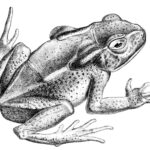
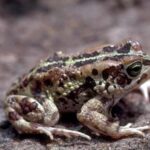
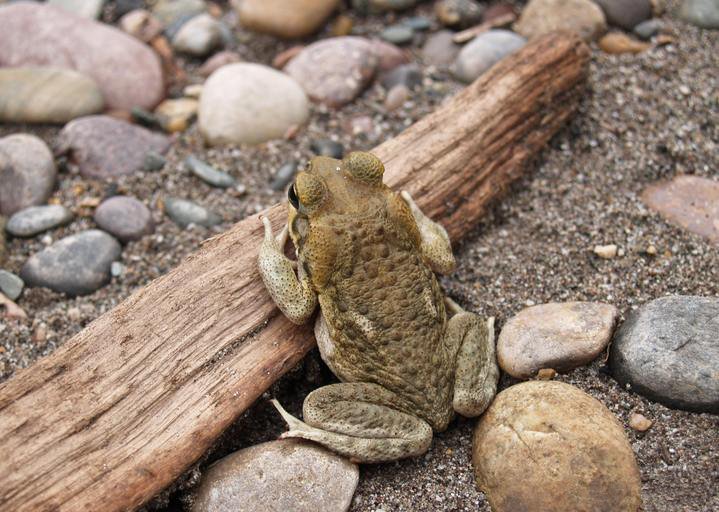
Beneath natural camouflage adorned by countless shades of browns, tans, and earthy greens, Rhinella poeppigii exhibits morphological features subtly attuned to a life in permanent concealment. The adults typically measure between 50 to 70 millimeters, exhibiting a stout and robust build common in many members of the Bufonidae family. Their rough-textured, wart-covered skin further enhances their camouflage, allowing their remarkably cryptic appearance to blend with the forest floor litter, logs, and soil.
Perhaps the most remarkable adaptation of Rhinella poeppigii lies in the distinctive, bulging parotoid glands positioned behind their golden-bronze eyes. These glands secrete potent toxins as a defense mechanism against potential predators, a sophisticated evolutionary adaptation subtly signaled by their prominently rugged silhouette.
An Artful Blend of Camouflage and Defense#
These physical traits, while seemingly unassuming, play a pivotal role in predator avoidance within their highly competitive ecosystem. Their coloration and patterns vary somewhat among individuals, mirroring the leaf litter’s endless palette of colors and patterns. This blend of camouflage and chemical defenses underscores an evolutionary strategy marked by subtlety rather than flamboyance—a narrative that defines their quiet yet enduring presence in their ecological niche.
Behavior and Life Cycle#
Basking subtly in daytime shadows cast by towering trees, Rhinella poeppigii assumes nocturnal habits as daylight recedes. Under cover of darkness, they emerge to embark on silent hunts, preying upon insects, spiders, and occasionally small invertebrates abundant in the leaf-littered floor. Equipped with sticky tongues and acute visual perception tailored for low-light conditions, their nightly feeding bouts maintain balance in insect populations, subtly underpinning the broader ecosystem health.
A Serenade in the Rainforest#
During the rainy season—an event eagerly anticipated among forest inhabitants—a transformative symphony emerges in the Amazon night. Rhinella poeppigii participates in choruses of breeding calls, with males producing resonant, melodic croaks from concealed perches adjacent to breeding ponds and streams. These vocalizations punctuate rainy nights, drawing females toward suitable aquatic habitats for reproduction.
Females deposit gelatinous strands of eggs in temporary pools or floodplain waters, carefully chosen for security from predators. Following fertilization, the eggs mature into free-swimming tadpoles, which thrive in shallow, nutrient-rich waters, gradually transforming into miniature replicas of adult toads. Their metamorphosis complete, young toads emerge onto the forest floor, perpetuating the ongoing drama of life in the delicate rainforest ecosystem.
Ecological Role#
Rhinella poeppigii serves as a vital biological linchpin within Amazonian ecosystems. Acting simultaneously as predator and prey, this modestly scaled amphibian becomes an integral node within complex food webs. As voracious insectivores, Rhinella poeppigii toads contribute significantly to controlling insect populations, thus indirectly supporting plant health, pollinator dynamics, and deterring pests that could disrupt ecological equilibrium.
Indicators of Environmental Integrity#
Amphibians, including Rhinella poeppigii, often serve as sensitive biological indicators of environmental health due to their semi-permeable skins and dependence upon consistent moisture and clean freshwater habitats. Thus, declines in their populations can dramatically indicate larger ecological disruptions—warning signs the attentive scientist or conservationist closely monitors.
Threats and Conservation Status#
Although currently not classified as globally threatened according to the International Union for Conservation of Nature (IUCN), Rhinella poeppigii nonetheless faces pressures from accelerating habitat destruction, deforestation, and pollution from expanding agricultural fronts and resource extraction ventures across Amazonia. Climate change poses additional subtle yet pervasive threats, altering rainfall patterns crucial to their reproductive cycles.
Conservation entities increasingly recognize the importance of this versatile amphibian, advancing habitat preservation initiatives and biodiversity monitoring programs. Continued studies and monitoring efforts remain critical, offering valuable insights into the conservation needs of Amazonian amphibian assemblages and fostering broader sustainable management practices in the region.
Cultural and Scientific Significance#
Traditionally, indigenous cultures inhabiting Amazonia have recognized the essential roles amphibians play within forest ecosystems, viewing them as messengers or symbolic figures in mythological narratives. On the scientific frontier, Rhinella poeppigii provides researchers with invaluable insights into toxinology, ecology, and evolutionary biology, pioneering new understandings of chemical defenses, camouflage efficacy, and behavioral adaptations within Neotropical environments.
Conclusion#
In the elegantly modest Rhinella poeppigii, we witness an exemplary model of ecological harmony and evolution encapsulated in a small but pivotal amphibian species. Their discreet lives evoke a crucial awareness of the interconnectedness underpinning the great Amazon rainforest. Let us, as nature lovers, conservation advocates, or fervent students of wildlife, commit to preserving the habitats these humble amphibians call home, ensuring that Rhinella poeppigii continues its unobtrusive yet irreplaceable dance within the endlessly fascinating tapestry of life.