Unveiling the Secrets of Rhinella dapsilis: A Journey into the Life of an Enigmatic Amazonian Frog#
Nestled deep within the dense shadows and lush foliage of the Amazon Rainforest, a small but remarkable creature thrives unnoticed by most human eyes. Meet the Brilliant Forest Toad, scientifically named Rhinella dapsilis, a species belonging to the richly diverse family Bufonidae. This unassuming amphibian is not only a charming representative of Amazonian biodiversity, but it also plays a quietly pivotal role in its intricate ecosystem.
While it may not flaunt vibrant colors or conquer human imaginations as readily as some of its flashier counterparts in the rainforest, Rhinella dapsilis holds its own allure: subtle markings, cryptic survival tactics, and intriguing reproductive behaviors shape the life story of this understated creature. Though small and seemingly inconspicuous, every leap, chirp, and hunting expedition tells a tale deeper than mere survival—it paints an eloquent portrait of adaptation, ecological balance, and the captivating intricacies of rainforest life.
Taxonomy and Classification#
Rhinella dapsilis belongs to the Bufonidae family, more commonly known as “true toads.” This family encompasses a diverse group of terrestrial species adapted to various environments, ranging from deserts and mountain streams to humid tropical forests. The genus Rhinella, to which our forest protagonist belongs, is particularly diverse in South America, renowned for their resilience and ecological versatility.
First described scientifically by Myers and Carvalho in 1945, Rhinella dapsilis initially appeared in taxonomic literature as Bufo dapsilis. Like many amphibians subjected to ongoing taxonomic scrutiny, this species later earned its distinct placement in Rhinella, highlighting its specific evolutionary traits precisely adapted for dense tropical forests.
Understanding the subtleties of taxonomy helps researchers map biodiversity accurately. For Rhinella dapsilis, classification not only places it within the chorus of Amazonian amphibian life but also guides conservation efforts, enabling targeted habitat protection and population monitoring initiatives in a landscape increasingly threatened by human encroachment.
Natural Habitat#
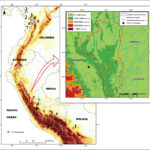
Picture a mosaic of lush greenery, tangled vines, and near-perpetual shadow—this is the home of Rhinella dapsilis. Primarily found in northern South America, including regions within Brazil, Ecuador, Colombia, and Peru, this secretive amphibian is a denizen of the humid, lowland tropical rainforest interiors, especially favoring areas along slow-moving streams, swampy wetlands, and the leaf-strewn forest floor beneath towering tree canopies.
Its life weaves seamlessly into the structure of its forest habitat. Unlike some frogs that venture skyward into the canopy, Rhinella dapsilis remains firmly beneath, discovering security in subtlety. The leaf litter provides ample shelter from predators, cooler microclimates perfect for moisture retention, and abundant feeding opportunities among the insect-rich forest detritus. Ferns, mosses, and fallen logs are more than mere backdrop—they’re essential features where this amphibian finds shelter, hunts, and reproduces.
Stepping gingerly into this shadow-dappled world reveals multitudes of subtle life forms, all intertwined in complex relationships. Rhinella dapsilis, fragile as it may appear, navigates masterfully through this complex tapestry, relying on evolving camouflage strategies that allow it to virtually melt into its leaf-litter environment, a silent sentinel preserving the balance within these vital ecosystems.
Physical Characteristics#
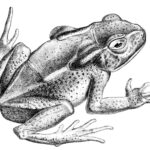
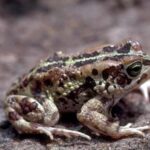
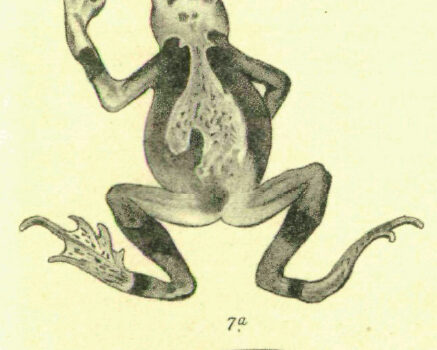
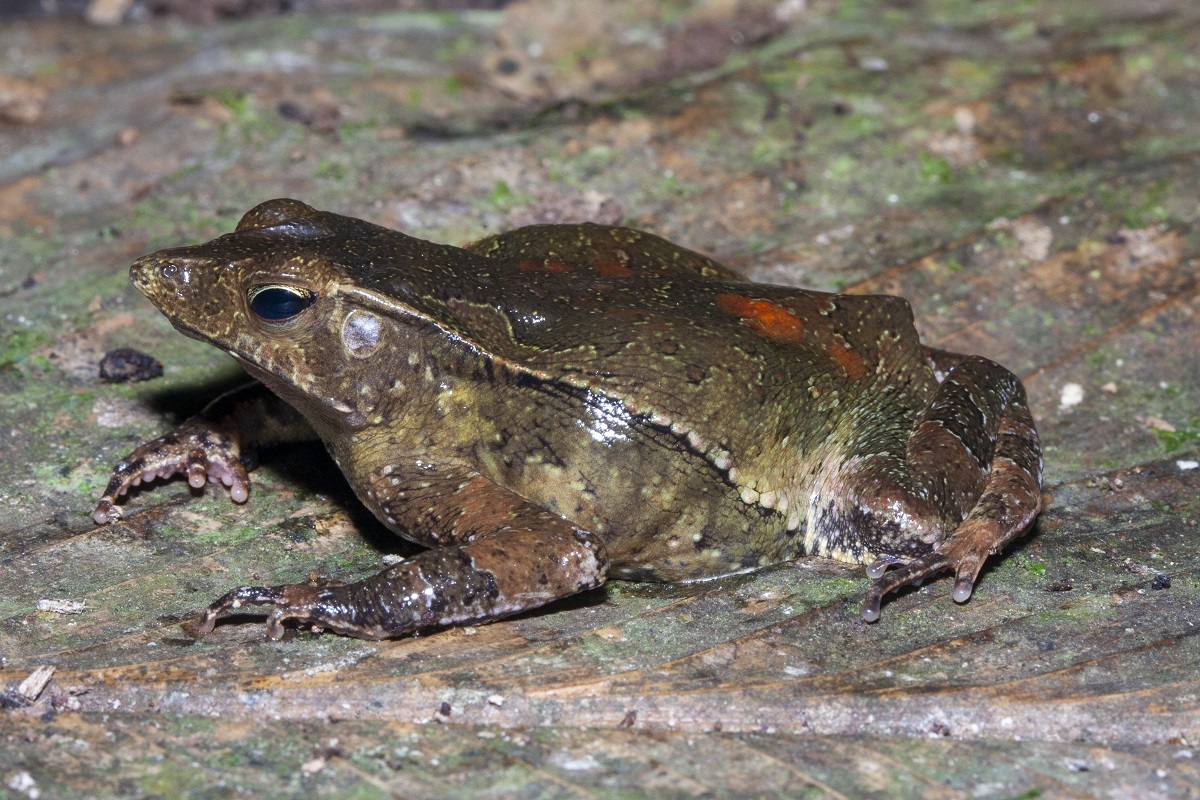
With an average adult size ranging from 3 to 5 centimeters in length, Rhinella dapsilis embodies subtle elegance. Its skin texture, a hallmark among the Bufonidae family, is rough, often adorned with minute tubercles and pronounced parotoid glands behind the eyes—a pair of specialized structures producing toxins, a defensive mechanism critical to its ongoing survival.
Unlike flamboyant poison dart frogs that showcase vibrant patterns, Rhinella dapsilis finds protection in subdued blending. Its coloration spans earthy shades: olive-green, brown, and grey tones speckled or streaked subtly to mimic the mottled hues of the forest floor. The variable pigments effectively mask its presence from predators and prey alike, making it nearly indistinguishable from surrounding detritus at a casual glance.
One of Rhinella dapsilis’s most strategic adaptations lies precisely in these discrete markings. Its cryptic coloration allows minimal energy expenditure while maintaining a vigilant posture against predators. The thick-skinned physique and strategically located poison glands discourage predation attempts, discouraging would-be attackers through an effective chemical deterrent.
Behavior and Life Cycle#
Masters of Ambush: Feeding Habits#
The diet of Rhinella dapsilis is an intricate reflection of its biologically-rich forest home. Primarily insectivorous, this species preys on ants, termites, beetles, spiders, and occasionally smaller invertebrates that traverse its immediate vicinity. Feeding behavior is stealth-driven: the toad adopts patient ambush techniques, sitting motionless until an unsuspecting insect strolls within striking range. It flicks its exceptionally agile and sticky tongue outward in a swift, efficient movement, capturing prey in mere milliseconds. These precise hunting skills, combined with excellent vision adapted for dim forest light, enable effective survival within an environment bustling with competition and prey scarcity at times.
Reproduction: Rainfall and Riveting Choruses#
As rains characterize the rhythm of the rainforest, spawning events for Rhinella dapsilis align precisely with seasonal downpours. When rains arrive—heavy droplets finally penetrating the dense canopy—males congregate at pools and stream edges, initiating highly persuasive calling sessions. Their vocalizations form rhythmic choruses echoing hauntingly throughout the nighttime jungle, signaling courtship and territorial assertiveness.
Females eventually respond, drawn instinctively to the resonant choruses where mating occurs through external fertilization. After laying gelatinous strings with countless tiny eggs, reproductive duties conclude. Tadpoles hatch promptly, utilizing temporary forest pools and slow-moving streams as safe nurseries. Over several weeks, which ultimately depend significantly on microclimate conditions, metamorphosis sees tadpoles transform into terrestrial juveniles who then cautiously explore deeper forest habitats, seeking to establish their own hidden ecological niches.
Ecological Role#
Rhinella dapsilis plays a pivotal yet understated role in its environment. Portrayed not only as effective pest control due to its voracious appetite for insects but also as a dependable food source, it serves as prey for predators like snakes, larger amphibians, and nocturnal mammals. This intricate web enables Rhinella dapsilis to act as an integral ecological link.
Moreover, amphibians like Rhinella dapsilis often serve as valuable indicator species, highlighting subtle ecological disturbances long before they’re apparent to researchers. Their graceful yet sensitive lives can signal ecosystem stress from climate variations, pollution, or habitat alterations, sounding a critical ecological alarm.
Threats and Conservation Status#
Despite its presently stable population and a listing of “Least Concern” by the IUCN, Rhinella dapsilis faces challenges symptomatic of Amazonian wildlife broadly. Deforestation practices, logging activities, agricultural developments, and habitat fragmentation pose significant long-term threats. This intricate balance relies upon maintaining forest integrity, with disturbances potentially leading to population declines as habitats diminish and microclimate conditions deteriorate.
Fortunately, current conservation initiatives actively monitor amphibian diversity throughout South America. Protecting Rhinella dapsilis habitat overlaps neatly with broader Amazonian protection endeavors—ultimately safeguarding countless other species. Emphasizing comprehensive ecosystem protections remains an optimal strategy, maintaining healthy forest ecosystems and thus preserving the microhabitats critical for amphibian survival.
Cultural and Scientific Significance#
While less widely renowned than some of its flashier amphibian cousins, Rhinella dapsilis indirectly influences local traditions and scientific understandings. Traditional communities occasionally attribute spiritual significance to forest creatures, recognizing amphibians as crucial messengers of environmental health and balance.
Scientifically, the species contributes significantly to our broader understanding of toxin production among amphibians, subtle adaptations to cryptic living, and intricate rainforest ecology. Each quiet discovery about Rhinella dapsilis shapes more meaningful insights into rainforest health indicators, adaptive biodiversity, and the interconnected nature of life within these ecosystems.
Conclusion#
The life of Rhinella dapsilis quietly echoes a deeper universal truth: within even nature’s most subtle and unassuming creatures lies profound ecological wisdom. Protecting this species exemplifies a broader commitment to biodiversity conservation, ecosystem integrity, and environmental stewardship.
Every subtle frog chorus in an Amazonian night represents not only an individual species but the entire complex web of wildlife inhabiting Earth’s richest habits. Let the secretive, resilient life of Rhinella dapsilis inspire each one of us toward ecological curiosity, conservation affirmation, and active environmental advocacy.