- The Ornate Toad (Rhinella ornata): A Jewel of Brazil's Atlantic Forest
The Ornate Toad (Rhinella ornata): A Jewel of Brazil’s Atlantic Forest#
Beneath the dense, shady canopies of Brazil’s Atlantic Rainforest, amidst leaf litter speckled with dew and dotted with sunlight, a remarkable amphibian quietly flourishes. It is small, inconspicuous at first glance, yet adorned in intricate patterns and colors worthy of admiration. Meet Rhinella ornata, commonly known as the Ornate Toad. With its finely detailed skin patterns and subtle hues of brown, olive, and cream, this little-known species embodies the delicate beauty and ecological importance hidden within the depths of one of the world’s richest and yet most endangered ecosystems.
The Ornate Toad, scientifically classified as Rhinella ornata, holds within its modest body an extraordinary capacity for resilience, adaptation, and ecological storytelling. Peering closer at its life, behaviors, and habitat illuminates a treasure trove of insight about the intricate web of life that defines rainforest ecosystems. Let’s venture into the wet, leafy heart of Brazil’s forests and uncover the remarkable narrative and biology of Rhinella ornata.
Taxonomy and Classification#
Rhinella ornata belongs to the large and diverse Bufonidae family, more commonly known as the true toads. This family embraces over 500 recognized species worldwide known for their distinct skin with glandular projections, which often secrete toxins as a defense mechanism. Within this rich amphibian lineage, the genus Rhinella (formerly Bufo) includes over 90 species native primarily to Central and South America, many renowned for their specialized adaptations and diverse ecological roles.
The Ornate Toad’s scientific name, Rhinella ornata, aptly captures its distinguishing features. “Ornata” means “decorated” or “ornamented,” paying homage to its beautifully intricate markings. Closely related to species such as Rhinella crucifer and Rhinella schneideri, Rhinella ornata shares habitats with these congeners, often differing subtly in behavior, ecological niches, or microhabitat preferences within the vibrant mosaic of the Atlantic Rainforest ecosystem.
Natural Habitat#
The Atlantic Rainforest of Brazil: A Bastion of Biodiversity#
Stretching over mountainous terrain, coastal lowlands, and plateaus along Brazil’s southeastern Atlantic coast, the Atlantic Rainforest—or Mata Atlântica—is one of Earth’s biodiversity hotspots. Though severely fragmented and reduced to less than 15% of its original extent due to urbanization, agriculture, and road construction, these scattered forest patches host exceptional biodiversity, including Rhinella ornata.
Rhinella ornata favors humid lowland and montane subtropical forests, typically found at elevations ranging from sea level to approximately 1,000 meters. It selects specific microhabitats: damp forest floors, leaf litter beneath dense undergrowth, rocky creek edges laden with moss, and shaded clearings near streams. The toad’s preference for moist, richly vegetated habitats underscores its dependency on a stable moisture regime that influences its breeding success and survival.
Interaction with Their Environment#
As twilight descends, the Ornate Toad emerges quietly from hidden shelters beneath water-soaked logs or dense foliage, navigating its environment with subtle hops. With careful movements attuned to vibrations underfoot and nocturnal sounds above, Rhinella ornata expertly avoids predators while hunting. The Atlantic Rainforest, dense and damp, offers abundant insect prey and protective cover, enabling the toad to thrive despite its vulnerable size.
Physical Characteristics#
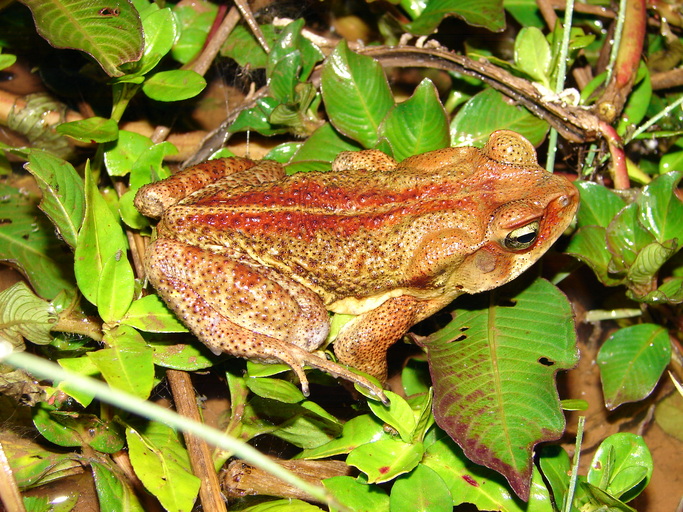
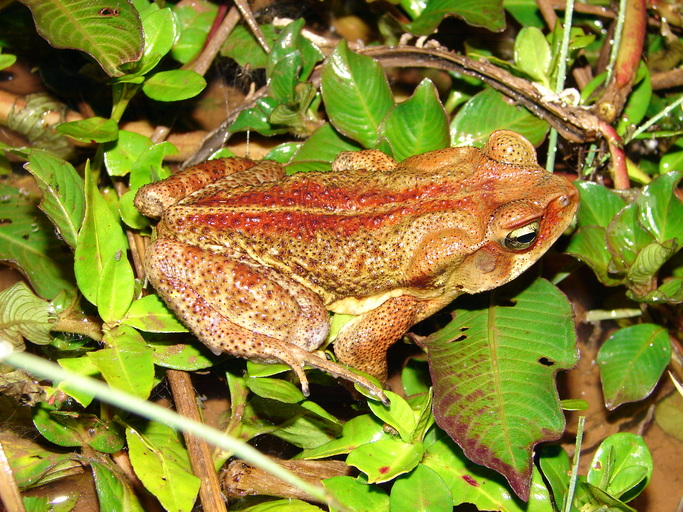
An adult Rhinella ornata typically measures between 4-7 centimeters. Its compact, rounded body features warty skin that, upon closer examination, reveals intricate patterns and textures. The skin’s granular appearance arises from small tubercles and specialized poison glands (parotoid glands), which appear prominently behind the eyes. These glands secrete bufotoxins—defensive substances effective at deterring predators.
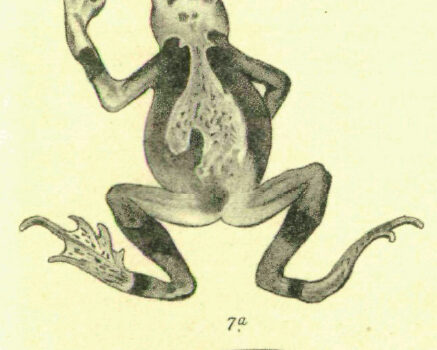
The species showcases earthy colors—from grayish to brownish hues—that blend effortlessly with fallen leaves, moss-covered rocks, or gnarled tree roots of the rainforest floor. Ornate patterning often includes dark blotches or stripes running along the back and limbs, and individuals sometimes exhibit reddish, creamy, or ochre-colored spots. This cryptic coloration serves essential roles: camouflage against predators and stealth against prey.
Behavior and Life Cycle#
Nocturnal Foragers Adapted to Forest Life#
Rhinella ornata primarily emerges at night. Under the cover of darkness, the toad explores the leaf litter and forest floor actively feeding on ants, beetles, spiders, small insects, and other invertebrates abundant in its rainforest habitat. Its hunting style relies on ambush and quick leaps to catch prey with a rapid tongue extension. The toad’s diet helps regulate invertebrate populations, playing a critical role in the ecosystem’s food web structure.
Reproduction: From Mating Chorus to Tiny Tadpoles#
Rains spark activity and reproductive behavior in Ornate Toad populations. Typically coinciding with Brazil’s rainy season (October through March), males congregate around slow-moving streams, flooded pools, or rain-fed forest ponds. Their distinctive mating call—a soft trill repeated rhythmically—resonates through the humid nighttime air, efficiently signaling receptive females.
Females lay strings of gelatinous eggs, numbering hundreds per clutch, in shallow water or beneath vegetation. Eggs hatch into free-swimming tadpoles within days, initiating a journey full of risk. Tadpoles; black-bodied with small swimmers’ tails, graze algae and organic debris in freshwater habitats. Metamorphosis unfolds gradually, with limbs developing first, followed by absorption of the tail, leading to tiny terrestrial toadlets emerging from pools as fully-formed miniatures of adult Rhinella ornata.
Ecological Role#
The Ornate Toad occupies an integral ecological niche within its rainforest habitat. As both predator and prey, it helps regulate insect populations while representing prey for several carnivorous species, including various snakes, birds, and even certain mammals adapted to amphibian diets. Rhinella ornata’s toxin-based defense mechanisms also contribute to evolutionary arms races with specialized predators developing tolerance or avoidance behaviors.
Moreover, Rhinella ornata serves as a crucial environmental indicator species. Due to its permeable skin and sensitivity to environmental pollutants, ecosystem disturbances quickly impact the species, making it an excellent sentinel organism that alerts biologists to changes in habitat health.
Threats and Conservation Status#
Habitat Fragmentation: An Imminent Challenge#
Despite their adaptability within intact habitats, populations of Rhinella ornata face alarming declines due to ongoing deforestation, habitat fragmentation, and urbanization. Each lost forest patch limits dispersal, reduces genetic diversity, and amplifies local extinction risks. Pollution from pesticides and expanding urban areas further threaten their health and reproductive success.
IUCN Status and Conservation Actions#
Currently, the IUCN Red List categorizes Rhinella ornata as “Least Concern” due to relatively wide distribution and presumed large population populations. Yet, vigilance remains vital since habitat connectivity and forest quality continue declining. Brazilian conservation initiatives include promoting habitat restoration, protected areas establishment, and ecological corridors creation, providing hope through targeted biodiversity preservation.
Cultural and Scientific Significance#
Local Brazilian cultures possess traditions deeply tied to the Atlantic Rainforest, encompassing myriad wildlife species, including frogs and toads. Indigenous stories often ascribe symbolic meanings to amphibians as ambassadors of rainfall, seasonal change, or ecological balance—a cultural affirmation of Rhinella ornata’s biological importance.
From a scientific perspective, Bufonids like Rhinella ornata offer fascinating biochemical research opportunities. Their protective alkaloids and peptides challenge researchers to understand molecular evolution processes. Moreover, amphibian monitoring initiatives serve broader purposes in gauging climate change impacts, habitat restoration efficacy, and ecosystem resilience.
Conclusion: Safeguarding the Ornamental Jewel of Brazil’s Forests#
The Ornate Toad symbolizes the intricate beauty and delicate ecological harmony sustained within Brazil’s Atlantic Rainforest. Its story intricately interweaves adaptation, resilience, vulnerability, and hopeful conservation. By acknowledging the species’ significance as both ecological indicator and biological treasure, we amplify conservation advocacy and environmental restoration efforts.
Through dedicated conservation awareness, education, and habitat protection initiatives, it is possible to ensure that Rhinella ornata remains a thriving jewel within Brazil’s forests—worthy of admiration, ecological safeguarding, and ongoing scientific curiosity. Join efforts today to ensure our lasting, shared responsibility in preserving these unique expressions of biodiversity for generations to come.