Exploring the Intriguing World of Rhinella merianae: The Amazonian Giant Toad#
In the dappled shadows of South America’s humid Amazon forests, nestled beneath a carpet of decaying leaves and thriving ferns, lives an amphibian whose quiet presence belies its fascinating biology. Rhinella merianae, known commonly as the Amazonian Giant Toad, is an impressive yet enigmatic creature. It plays an essential role in maintaining balance within its ecosystem, acting as both a predator and prey. But beyond mere ecological importance, this amphibian offers scientists and nature enthusiasts alike an extraordinary glimpse into biological adaptation and the splendor of biodiversity.
Named after Maria Sibylla Merian—a pioneering 17th-century naturalist and illustrator known for her detailed documentation of Amazonian wildlife—Rhinella merianae symbolizes both the vast complexity and exquisite beauty found in the rainforest region. From its cryptic coloration designed to blend seamlessly into forest floors to its unique reproductive strategies, the Amazonian Giant Toad invites nature lovers into a hidden narrative found deep within tropical jungles.
Taxonomy and Classification#
The Amazonian Giant Toad, scientifically classified as Rhinella merianae, belongs to the family Bufonidae. This diverse family includes numerous true toads found worldwide, but particularly abundant within the tropical regions of Central and South America. Within this extensive lineage, Rhinella merianae belongs to the genus Rhinella—a genus comprising species renowned for their robust bodies, prominent cranial crests, and prevalence across Latin American environments.
Initially described by German herpetologist Oskar Boettger in 1883, Rhinella merianae’s recognition marked strides in appreciating the incredible diversity of amphibian life in South American rainforests. Closely related species, including Rhinella marina (the infamous cane toad known worldwide for its invasive spread), highlight an evolutionary lineage marked by impressive adaptability and survival strategies. Yet, unlike its cousin, R. merianae remains intrinsically connected to its unique rainforest habitat.
Natural Habitat#
Wandering beneath towering canopies, one might scarcely notice the subtle movements of Rhinella merianae among layers of damp leaf litter on the forest floor. Primarily inhabiting the expansive Amazonian regions of Venezuela, Colombia, Brazil, Guyana, Suriname, and French Guiana, this species demonstrates distinct habitat preferences linked directly to its survival needs.
It thrives mainly in primary forest ecosystems, characterized by consistently high humidity, abundant rainfall, and thick vegetation cover. Occasionally, individuals may venture toward secondary growth forests or the edges of seasonal wetlands, revealing remarkable adaptability. Still, its presence most strongly indicates healthy, undisturbed forest territories, marking it as an essential indicator species for ecosystem integrity.
Beneath woodland shadows, these amphibians depend greatly upon areas rich in fallen foliage, decomposing logs, and moist soil where they shelter by day, shielded from predators and the harsh glare of equatorial sunlight. As nocturnal creatures, they emerge under the moon’s watchful eye to hunt, breed, and carry on the cycle of life integral to rainforest harmony.
Physical Characteristics#
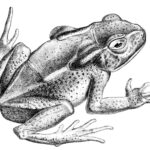
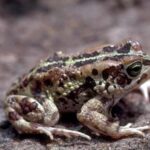
A closer gaze at Rhinella merianae reveals an amphibian drafted impeccably by nature for survival and camouflage. Adults possess notably substantial physiques, attaining lengths of approximately 12 to 15 centimeters, with robustly swollen bodies covered in an array of granular, wart-like glands. This textured exterior, far from unsightly, offers the toad critical protection—the granules harbor glands secreting defensive toxins, serving as deterrents to potential predators.
The coloration of Rhinella merianae is a masterstroke of nature, blending earth-tone hues to maintain its invisibility among the leaf litter. Variations in coloration often include shades of olive-brown to rust-red, marked with darker patches and mottling reminiscent of shadows cast upon damp forest floors. This subtle complexity of pigment and patterns grants the toad extraordinary stealth, vital in predator avoidance, ambush hunting, and successful breeding.
Its head is prominent and relatively wide, accentuated by distinct bony ridges (cranial crests) that outline its expressive facial profile. These sharp contours, paired with wide, alert eyes positioned slightly upward—ideal for detecting predators and prey even in the darkness—add an air of quiet dignity. Its legs, though strong, are rather short, suited perfectly for navigating dense vegetation rather than the dramatic high leaps associated with other temperate frog species. Instead, careful hops and stealthy strides define its movements, quietly orchestrating its nightly activities.
Behavior and Life Cycle#
Nocturnal Life and Feeding Habits#
At sundown, when the forest transforms into a stage resonating with the soft chorus of crickets and frogs, Rhinella merianae sets out from hiding to hunt. The darkness cloaks its movements, allowing it to stalk prey unnoticed. A generalist predator, its diet includes a remarkable variety of organisms—from insects, spiders, and millipedes to small reptiles and even other amphibians.
Employing the ambush strategy perfected by generations of evolutionary success, the toad remains perfectly still, biding its time. With extraordinary patience, it waits, alertly poised until prey unknowingly strays within range. Finally, a lightning-fast flick of its tongue, aided by precision eyesight and highly responsive nervous system, captures its unwary victim. Such remarkable efficiency underscores how uniquely evolved this amphibian is to survive in its competitive habitat.
Reproductive Rituals and Parental Strategies#
Rainfall dictates the life rhythms and reproduction schedules of Rhinella merianae. Typically, breeding activity intensifies during periods of heavy precipitation, prompting males to vocalize near temporary pools and flooded depressions. Their calls, deep and resonant, echo softly between tree trunks, signaling readiness to females nearby.
Females arriving at breeding sites are courted gently by males who clasp onto them in a mating embrace known as amplexus. In these ephemeral waters, females lay long gelatinous strings containing thousands of eggs, securing them carefully to submerged vegetation or debris—hidden from immediate detection yet accessible enough to oxygen-rich water currents.
Tadpoles emerge from eggs mere days later. Over subsequent weeks, they swim through quiet pools, scraping algae and detritus from underwater surfaces, carefully navigating predators and resource competition. Upon metamorphosis into toadlets, miniature replicas emerge, already well-prepared with cryptic coloration and essential survival skills, embarking bravely into the shadows of their rainforest home.
Ecological Role#
Species like Rhinella merianae play pivotal ecological roles within their habitats, reflecting not only amphibian diversity but also broader ecosystem health. Positioned centrally within their trophic web, they serve dual roles as bioindicators and population controllers, remaining vigilant against insect overpopulation and also providing essential nutrition to forest carnivores.
Predators including snakes, birds of prey, and mammals such as coatis increasingly depend on reliable amphibian populations. Through controlled predation, Rhinella merianae also ensures insect populations—many potentially harmful to plants if left unchecked—remain balanced, benefiting entire rainforest ecosystems.
Threats and Conservation Status#
Currently evaluated by the IUCN Red List as Least Concern, Rhinella merianae faces escalating threats common to Amazonian wildlife. Chief among these threats is habitat loss driven by deforestation due to logging, agriculture expansion, and mining-driven land clearing. Combined, such activities fragment the continuous expanses of habitats vital for the species’ reproductive events and feeding grounds.
Additionally, climate change poses an emerging challenge, altering rainfall patterns and impacting reproductive success. Amphibians, notoriously sensitive to environmental change, become vulnerable to shifting climatic conditions, exacerbating pressure on already limited habitats. Conservation strategies prioritizing habitat preservation and restoration, community education initiatives that raise amphibian awareness, and robust scientific research into adaptive strategies are therefore increasingly crucial.
Cultural and Scientific Significance#
Beyond ecological worth, Rhinella merianae holds cultural symbolism across native Amazonian communities. Local folklore often reveres amphibians symbolically—regarded as creatures bridging temporal worlds between water and land, symbolizing renewal, fertility, and transition.
Scientifically, Rhinella merianae aids researchers exploring amphibian skin toxins for pharmaceutical potential, underscoring its intrinsic value. Amphibian-derived compounds can offer insights into medicinal innovation, antibiotic development, and physiological understanding of toxin adaptation.
Conclusion#
Within the tapestry of the Amazon’s remarkable biodiversity, Rhinella merianae stands quietly yet profoundly significant. Its survival strategies, intricate ecological relationships, and adaptability beautifully reflect evolutionary harmony. Advocating for this species means preserving habitats for countless other creatures, too. By understanding and supporting rainforest conservation, we secure their future—and ours—ensuring that beneath wild Amazon canopies, the quiet story of the Amazonian Giant Toad continues to enrich our vibrant natural planet.