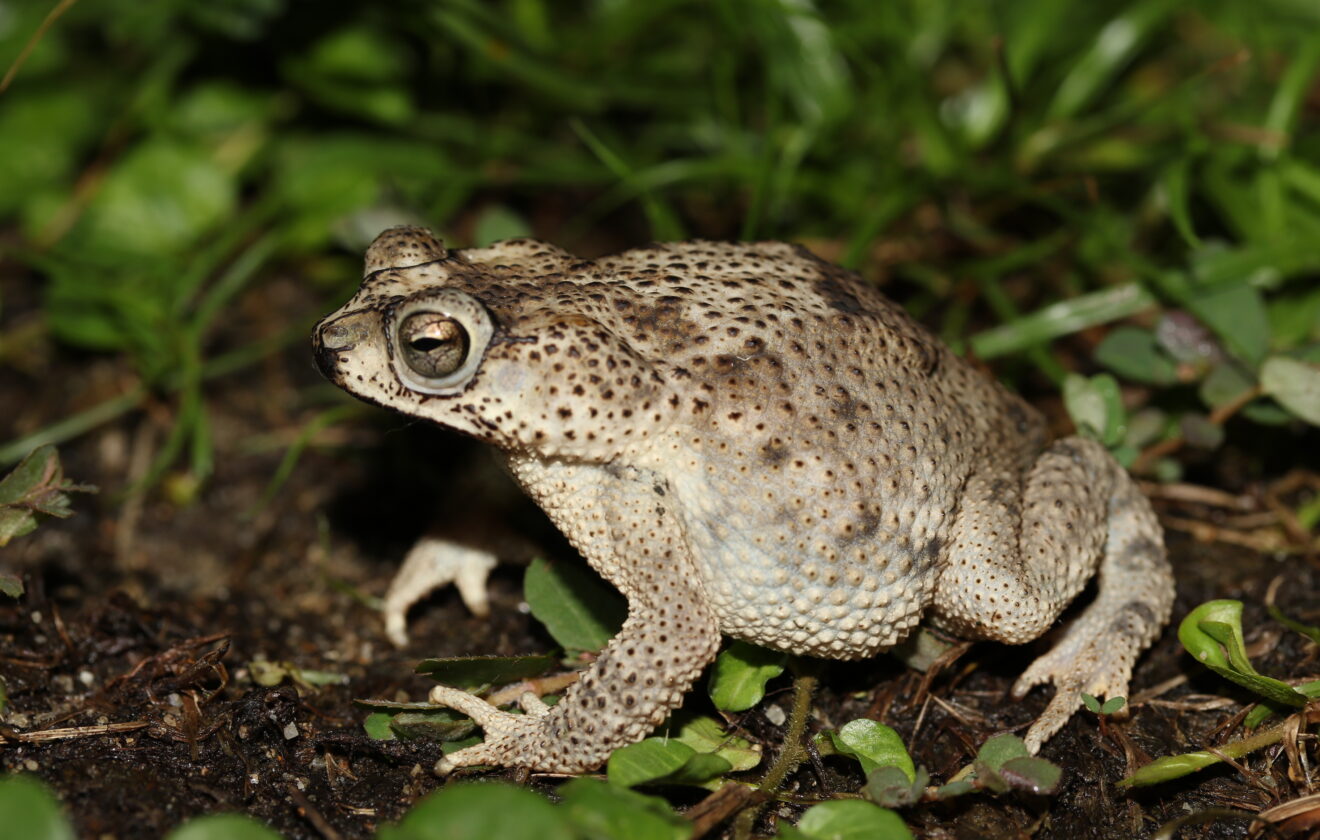
- Rhinella humboldti: Journey into the Enchanting World of Humboldt's Toad
- Taxonomy and Classification: Placing Humboldt's Toad within Earth's Amphibian Tree
- Natural Habitat: The Verdant Realm of Humboldt’s Toad
- Physical Characteristics: Harmony of Form and Function
- Behavior and Life Cycle: Delicate Rhythms and Ancient Rituals
- Ecological Role: The Vital Thread within the Forest Web
- Threats and Conservation Status: Challenges amidst Changing Times
- Cultural and Scientific Significance: Connections Across Time and Science
- Conclusion: Advocates for Humboldt’s Toad and Biodiversity Stewardship
Rhinella humboldti: Journey into the Enchanting World of Humboldt’s Toad#
At dusk, beneath the emerald canopy of South America’s lush forests, a hidden symphony announces the night. Chirps, croaks, and melodious whistles weave a tapestry of life, hinting at creatures waiting patiently in shadows. Amidst this chorus dwells a remarkable yet understated amphibian: Rhinella humboldti, better known as Humboldt’s Toad. Named lovingly in honor of the renowned naturalist Alexander von Humboldt, this amphibious marvel serves as a living testament to the intricate balance and delicate beauty this natural world harbors.
Distinctive yet elusive, Rhinella humboldti offers fascinating insights into evolutionary adaptation, ecological interdependence, and the broader conservation ties that bind all life forms. Join us on a vivid exploratory journey into the habitat, habits, threats, and ecological wonders surrounding Humboldt’s Toad—an animal whose lifestyle and importance extend far beyond its diminutive form.
Taxonomy and Classification: Placing Humboldt’s Toad within Earth’s Amphibian Tree#
Rhinella humboldti belongs to the family Bufonidae, a widespread family commonly referred to as the “true toads.” This diverse taxonomic family encompasses approximately 40 genera and hundreds of species, each extraordinarily adapted to a range of habitats worldwide.
Previously categorized under the genus Bufo, a major taxonomic revision revealed sufficient genetic and morphological differences to warrant a new, more accurate genus—Rhinella. Within Rhinella, Humboldt’s Toad shares its lineage with species like Rhinella marina (the famous Cane Toad) and numerous cloud-forest toads, highlighting a rich evolutionary journey through South America’s complex biogeographic history.
Natural Habitat: The Verdant Realm of Humboldt’s Toad#
The tranquil home of Rhinella humboldti lies primarily nestled within the humid and diverse landscapes of the northern Andes and surrounding tropical regions. Found predominantly in Colombia and Venezuela, this humble amphibian thrives within moist montane forests, cloud forests, and the edges of lowland rainforests. Occasional sightings confirm its presence in transitional foothill areas, emphasizing its adaptability amidst changing climates and landscapes.
Humboldt’s Toad exhibits a special preference for pristine habitats—densely vegetated wetlands, gently flowing forest streams, leaf-litter-clad forest floors, and seepages beneath lush vegetation. Life in these ecosystems demands perfect synchronization between amphibian residents and their watery enclaves, resonating beautifully through senses finely tuned by eons of natural selection.
Beneath towering bromeliads and giant ferns, the forest floor teems with nutrients, moisture, insects, and elusive predators. This lush ecosystem, stable yet ever-changing, provides Humboldt’s Toad its ideal refuge—a perfect balance of hydration, nourishment, camouflage, and space necessary for breeding rituals and young-developing tadpoles.
Physical Characteristics: Harmony of Form and Function#
At first glance, Humboldt’s Toad might appear modest, even unassuming. But take a closer look, and its uniqueness emerges in subtle ways, woven elegantly amongst its features. Adults typically measure between four and eight centimeters, making it moderately sized relative to its family. Characteristically squat, robust limbs anchor it expertly amidst forest debris, allowing quick and nimble leaps through twisting roots and branches.
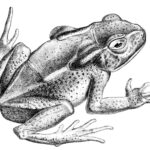
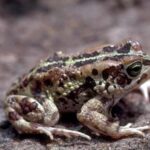
The skin of Rhinella humboldti exhibits a beautifully textured mosaic of granular bumps and irregularly-shaped tubercles. These distinctive markings vary from individual to individual, an evolutionary fingerprint allowing each toads’ survival strategy to align closely with their immediate surroundings. Shades of mottled brown, deep green, olive, and rust accentuate perfect camouflage amidst fallen leaves, damp soil, and trunks dripping with moisture, distinguishing Humboldt’s Toad as a master of disguise.
Notably, behind each eye lie toxin-secreting parotoid glands, vital defensive adaptations common to true toads. These glands deter predators by releasing mild yet effective toxins, a chemical alarm system evolved not only for individual protection but to warn predators against mistreating other members of their species in future encounters. This functional yet subtle palette of adaptations underscores the evolutionary precision refined over countless generations.
Behavior and Life Cycle: Delicate Rhythms and Ancient Rituals#
Masters of Nighttime Foraging#
As twilight blankets the forest in a transformative shade, Rhinella humboldti emerges from nestled retreats beneath leaf litter or hidden logs. By nightfall, it’s a relentless hunter, engaging senses fine-tuned by evolution. Their diet consists predominantly of insects, spiders, earthworms, and various invertebrates. Sensitive eyes accustomed to low light, combined with the acute senses of smell and touch, facilitate precise predation even within a tangled maze of vegetation.
The Enchanting Courtship and Reproductive Rituals#
Seasonal rains usher the mating season, turning Humboldt’s serene habitat into a concert hall. Males ignite the night with resonant trill-like calls, swelling their vocal sacs in rhythmic melody. These croaking symphonies attract females, who respond selectively, approaching cautiously amidst the dark undergrowth. Courtship leads them to shallow forest pools or streams, ideal nurseries where fertilized eggs soon decorate submerged vegetation in gelatinous strings or clusters.
Eggs hatch into tiny, energetic tadpoles, transparent and brown-flecked, exquisitely adapted to their aquatic home. Survival hinges upon navigating a delicate balance, avoiding predatory insects and small aquatic predators while sustaining growth until developing limbs gradually signal a life shift from water-bound larva to terrestrial adult. This metamorphosis embodies resilience, an ancient narrative continually rewritten across humid forests nightly.
Ecological Role: The Vital Thread within the Forest Web#
Rhinella humboldti occupies a critical ecological niche. Functioning simultaneously as predator and prey, community member and environmental indicator, this amphibian underscores ecosystem health, essential in controlling insect populations, fostering plant health through pest suppression, and providing food for numerous predators like birds, snakes, small carnivorous mammals, and larger amphibians.
Indeed, amphibians at large serve as living barometers of environmental quality. Their permeable skins readily absorb toxins and pollution, providing indications of subtle environmental shifts—warning signs indicative of broader ecosystem threats yet to be observed across other species. Thus, Humboldt’s Toad offers scientists an invaluable measure of ecosystem vitality, habitat stability, and orchestrated balance across their richly biodiversity-filled habitats.
Threats and Conservation Status: Challenges amidst Changing Times#
Sadly, the Humboldt’s Toad faces escalating threats demanding immediate conservation attention. Continued habitat destruction for agriculture expansion, logging, and human settlement severely fragments its populations, diminishing viable habitats crucial for reproduction and survival.
Climate change further exacerbates vulnerability, altering rainfall patterns, increasing disease susceptibility (particularly chytridiomycosis—a devastating global fungal epidemic), and intensifying ecological pressures. Although currently classified by IUCN as a species of Least Concern due to widespread occupancy, recent studies caution against complacency, acknowledging signs of subtle population declines that could accelerate rapidly if circumstances deteriorate unchecked.
Proactive conservation includes habitat protection, ecological corridor creation, disease monitoring, and raising awareness. Education, supported through local and global conservation initiatives, ensures communities recognize intrinsic and ecological values of amphibians like Rhinella humboldti, turning passive bystanders into empowered stewards.
Cultural and Scientific Significance: Connections Across Time and Science#
Named to honor celebrated naturalist Alexander von Humboldt, Rhinella humboldti symbolizes the enduring inspiration that nature imparts upon science, exploration, and conservation. Indigenous communities traditionally recognize amphibians such as Humboldt’s Toad as vital symbols of imagination, fertility, renewal, and intricate biodiversity.
Scientifically, studies involving Humboldt’s Toad provide deeper understandings about amphibian susceptibility, resilience strategies, adaptive potential amidst changing landscapes, and identify effective ecological restoration benchmarks. Repeated studies illuminate previously hidden ecological interdependencies—and inspire future conservation-focused research.
Conclusion: Advocates for Humboldt’s Toad and Biodiversity Stewardship#
Rhinella humboldti invites us to recognize intricate ecological connections permeating our natural world. Embracing their story becomes our catalyst—supporting habitat protection, scientific understanding, and promoting biodiversity appreciation shared alongside generations to come.
Let Humboldt’s legacy spark personal curiosity, advocacy, and informed stewardship. In protecting this quiet, elegant amphibian, we safeguard a cornerstone of biodiversity—a commitment promising rich ecological heritage for future generations to cherish and safeguard in perpetuity.