- Secrets of the Forest Floor: Discovering <em>Rhinella centralis</em>, Central America's Enigmatic Toad
- Introduction: Uncovering a Rainforest Mystery
- Taxonomy and Classification: Placing <em>Rhinella centralis</em> in Nature’s Family Tree
- Natural Habitat: A Life Amidst Leaf Litter and Shadows
- Physical Characteristics: Mastery of Subtlety and Survival
- Behavior and Life Cycle: Rituals of Survival and Renewal
- Ecological Role: Linking Threads within an Ecosystem
- Threats and Conservation Status: Facing Challenges with Resilience
- Cultural and Scientific Significance: Windows into the Wilderness
- Conclusion: Guardians of Silent Wonders
Secrets of the Forest Floor: Discovering Rhinella centralis, Central America’s Enigmatic Toad#
Introduction: Uncovering a Rainforest Mystery#
Deep within the lush understory of Central America’s tropical forests, cloaked among leaf litter and fallen logs, dwells an inconspicuous marvel known as Rhinella centralis. Though small and often overlooked by casual visitors, this charming yet enigmatic amphibian carries with it stories of biological intrigue and ecological mastery. More commonly known as the Central American Forest Toad, Rhinella centralis occupies a subtle yet critical position in its environment, shaping its ecosystem through subtle interactions and remarkable adaptations.
Scarcely noticed by many, these toads play key roles as both predator and prey. With each gentle leap through the dappled daylight or night’s cool embrace, they weave intricate bonds of ecological balance beneath the towering canopies. As an intimate explorer and advocate for our planet’s lesser-known wildlife, I invite you into the hidden life of Rhinella centralis, unveiling a world teeming with discovery beneath your feet.
Taxonomy and Classification: Placing Rhinella centralis in Nature’s Family Tree#
The amphibian world is vast and varied, encompassing thousands of distinct species dispersed worldwide. Within this rich fraternity, Rhinella centralis finds itself classified under the Bufonidae family — the family of true toads noted for their stout bodies, warty skin, and distinctive poison glands.
Originally described in 2004, Rhinella centralis was recognized as a distinct species, separating it from its close relatives within Central America’s diverse frog and toad community. It belongs to the genus Rhinella, a grouping of neotropical toads characterized by their robust forms, cryptic coloration, and fascinating ecological adaptations.
Understanding these taxonomic details not only enriches our appreciation of biodiversity but also highlights the evolutionary pathways these humble yet extraordinary creatures have traversed, providing context to their adaptations and behaviors.
Natural Habitat: A Life Amidst Leaf Litter and Shadows#
Distributed primarily throughout the humid lowland and montane forests of Nicaragua, Costa Rica, Panama, and adjoining regions, Rhinella centralis thrives hidden within the forest substrate, exquisitely adapted to habitats few others navigate so masterfully. Unlike brightly colored frogs advertising their toxicity, these toads revel in subtlety, readily camouflaging amongst fallen leaves, soil, and woody debris on dense forest floors.
The habitats they favor tend to be shaded with moderate to high humidity, frequently near flowing streams or still-water bodies providing viable breeding grounds for their offspring. Characteristically elusive, specimens often inhabit dense vegetation, tree buttresses, or hidden enclaves beneath damp logs and rocks, seeking refuge from predators and adverse climatic conditions.
This chosen niche is fundamental to their way of life, offering not merely concealment but abundant sources of nourishment, suitable areas for laying eggs, and ample cover to escape threats. Observing them in their natural settings demands patience, quietness, and a keenly observant eye: a gentle rustle beneath your feet often reveals their secretive presence, allowing brief but enchanting glimpses into their hidden domain.
Physical Characteristics: Mastery of Subtlety and Survival#
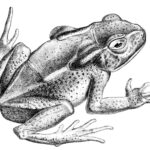
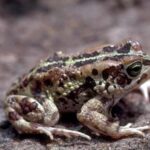
Appearance-wise, Rhinella centralis varies from shades of pale beige and earth-brown to darker hues mottled intricately with blotches and patterns, mirroring the forest floor’s tapestry-like appearance. Their skin texture displays pronounced wart-like glands prominently along their backs, characteristic of many Bufonids, providing deterrent chemicals to potential predators.
Mature individuals typically measure between 3 to 6 centimeters in length, with robust, squat bodies perfectly tailored for terrestrial life. Those expressive eyes, gleaming softly within their rounded sockets, often reveal more about their mood and activity level than any vivid coloration could. Such deliberate, discreet tones and markings confer significant survival advantages — primarily crypsis, ensuring protection from predators such as forest snakes, birds, and small mammals.
Their nimble yet cautious locomotion through woodlands reveals a confident ecology strategist. Strong legs built for jumping—but equally adept for walking—grant them maneuverability within tangled underbrush, enabling efficient ambush hunting techniques as well as stealthy escapes from danger.
Behavior and Life Cycle: Rituals of Survival and Renewal#
Diet and Predatory Strategies#
Rhinella centralis hunts primarily small invertebrates. Ants, beetles, spiders, and occasional small worms make up the bulk of their diet. Employing a sit-and-wait hunting method, these toads cleverly utilize their cryptic coloration, patiently remaining motionless until prey ventures within striking distance. Their rapid and efficient tongue-strike mechanism ensures a secure catch before the unsuspecting prey can sense danger.
Breeding and Reproduction#
Breeding typically occurs during seasonal rains, when small streams and ponds materialize or swell, filling the forests with amphibian choruses that communicate reproductive readiness. Male toads issue mellow, rhythmic calls to entice females toward suitable breeding sites. After careful selection, pairs mate through amplexus, whereby the male firmly grasps onto the female’s back, fertilizing eggs externally as she deposits them into shallow, protected water sources.
Eggs typically hatch within days, releasing tiny aquatic tadpoles into a swift-paced race of growth and development. Tadpoles feast voraciously upon algae and organic detritus, rapidly developing into miniature toads capable of terrestrial survival, completing this remarkable cycle within mere weeks to months—depending largely on environmental conditions.
Ecological Role: Linking Threads within an Ecosystem#
Serving as a predator of insects and other small arthropods, Rhinella centralis contributes significantly to the delicate equilibrium of insect populations within forests. By regulating such populations, these small amphibians play indirect yet pivotal roles in forest health and regeneration processes.
On the opposite spectrum of life, they are also significant prey items for larger predators such as birds, mammals, and larger reptiles. Within their community, these modest creatures embody key elements of the trophic cascade. Their sensitivity to environmental change further casts them as excellent ecological indicators, alerting human stewards of subtle shifts in forest health and habitat quality.
Threats and Conservation Status: Facing Challenges with Resilience#
While currently classified as Least Concern by the International Union for Conservation of Nature (IUCN), Rhinella centralis faces growing threats due to mounting habitat destruction, pollution, and climate disruption. Agricultural expansion, urban encroachment, and deforestation swallow vast tracts of pristine habitats essential to their survival. Contamination from pesticides compromises local populations by reducing prey abundance and causing increased direct toxicological impacts.
Amphibian chytrid fungus, a globally devastating epidemic affecting countless amphibian species, represents another ominous threat. Conservationists closely monitor populations to ensure timely detection and intervention where necessary. Preservation efforts increasingly highlight the role of environmental education, habitat protection, sustainable land-use strategies, and public awareness to preserve these delicate ecological communities.
Cultural and Scientific Significance: Windows into the Wilderness#
Beyond ecological importance, amphibians like Rhinella centralis carry cultural significance for many indigenous communities across Central America, symbolizing renewal, fertility, and an enduring natural balance. Scientifically, amphibians serve as vital research subjects, providing insights into environmental health indicators, toxins with medicinal potential, and adaptive evolutionary strategies.
Conclusion: Guardians of Silent Wonders#
Though modest in appearance and often overlooked, Rhinella centralis embodies the quiet resilience and intricate beauty inherent to our planet’s ecosystems. As responsible stewards of Earth’s diverse yet fragile biodiversity, we are tasked with safeguarding these remarkable amphibians and their habitats. Through mindful conservation actions and committed advocacy, we ensure future generations may continue to witness these subtle yet magnificent creatures silently mastering their hidden rainforest realms.
Let’s join together in speaking for those who cannot—preserving ecosystems, protecting species, and celebrating the incredible wonders beneath every leaf and stone.