Introduction#
Deep within the lush, mist-laden undergrowth of Southeast Asia’s tropical rainforests, a small amphibian species reigns inconspicuously, cloaked neatly in shades of earth and lichen. Its existence easily eludes even seasoned naturalists, and yet its presence indicates far more profound ecological stories hidden among shaded streams and leaf-strewn forest floors. Meet Parapelophryne scalpta, a unique subtropical frog species whose barely-known life reveals complex relationships woven intricately into the tapestry of its habitat.
Known for its cryptic coloration, diminutive size, and secretive lifestyle, Parapelophryne scalpta occupies an intriguing ecological niche. Often called one of nature’s shyest amphibians, this fascinatingly cryptic frog continues to pique the curiosity of biologists and nature enthusiasts, highlighting only how little we truly know about life’s diversity hidden within our planet’s wilderness.
Taxonomy and Classification#
Parapelophryne scalpta belongs to the Bufonidae family, known commonly as the true toads, a widely varied amphibian lineage comprising creatures adapted to diverse habitats, from humid forest floors to semi-arid deserts. Within this family, Parapelophryne stands apart as a genus specifically adapted for life in the humid understory of Southeast Asian forests, showcasing remarkable evolutionary specialization.
Initially described scientifically in the 1870s, this frog has long captivated researchers due to its elusive habits. Although once thought closely related to some members of the genus Ansonia, more recent taxonomic studies, utilizing molecular genetics, have given Parapelophryne scalpta its deserved distinctness, highlighting the vital evolutionary significance inherent in these often-overlooked species.
Natural Habitat#
The mesmerizing forests and high-elevation montane landscapes of Southeast Asia, particularly within Malaysia and Borneo, provide shelter for this secretive amphibian. Dense mist-shrouded canopies, elevated humidity, and consistent rainfall shape an ecosystem ideal for Parapelophryne scalpta‘s survival. Here, among towering native dipterocarps and moss-clad rocks, this frog makes its humble home, invisible to casual human eyes yet constantly alert to subtle environmental changes.
Typically, the species is found nestled within leaf litter or beneath fallen logs adjacent to pristine, slow-moving mountain streams. These microhabitats afford essential camouflage, moisture retention, and abundant prey availability—key factors for survival in the demanding conditions they face daily. This frog’s specialized habitat preference renders it particularly vulnerable to disturbances, from logging activities to changes wrought by climate disruptions.
Physical Characteristics#
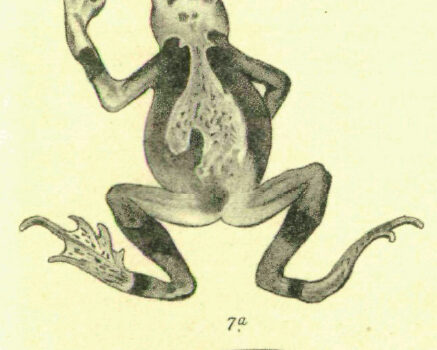
Parapelophryne scalpta exhibits a charm steeped in subtle beauty. Adults rarely exceed 30 millimeters in length, allowing them to remain unnoticed against the rich textures of their habitats. The skin texture, from which the species derives the epithet “scalpta,” meaning carved or sculpted in Latin, aptly describes the frog’s coarse, heavily ornamented surface. Intricate patterns of tubercles and ridged scales offer exquisite detail worthy of a artist’s engraving, blending seamlessly with leaf-litter, bark, and stones.
Coloration pairs harmoniously with this sculpted design: shades of browns, mossy greens, and gray mimic the forest substrate impeccably. The frog’s limbs are relatively short and muscular, adapted neither for extensive jumping nor climbing but rather effective crawling and precise maneuvering through dense vegetation and over uneven terrain. Like many true toads, Parapelophryne scalpta has prominently dilated parotoid glands behind its eyes, likely containing defensive toxins helping deter potential predators.
Behavior and Life Cycle#
Feeding Habits and Predation#
Beneath the silent forest canopy, life teems quietly but steadily. Predominantly insectivorous, the skilled hunter Parapelophryne scalpta preys upon tiny arthropods, springtails, ants, termites, and other invertebrates that wander too near. Preferring an ambush style of hunting, it waits motionless, camouflaged patiently within moss-covered roots, leaf litter, and moist crevices, capturing unsuspecting prey with a rapid flick of its tongue.
Mating Behaviors and Reproduction#
Reclusive by nature, its breeding behaviors remain poorly documented, but observations during the monsoon months provide fascinating glimpses. Males gather near suitable water sources, emitting distinctive yet often quiet mating calls—a soft, repetitive “chirping” audible only along quiet forest trails. Courtship occurs secretively, away from direct observation, and females deposit clusters of eggs securely attached to submerged vegetation or protected under submerged rocks in gently flowing mountainous streams.
Upon hatching, tadpoles display a morphology uniquely adapted for specialized stream environments—compact bodies, muscular tails optimized for clinging to substrates amidst stream currents, and cryptic coloration helping avoid predation from aquatic predators like dragonfly larvae. Metamorphosis occurs relatively rapidly, producing miniature, fully terrestrial juveniles ready to disperse into suitable microhabitats around their birth sites.
Ecological Role#
The presence of Parapelophryne scalpta signifies the ecosystem’s health, acting as an sentient indicator species reliant on pristine habitats. Through predation, it helps regulate populations of insects and arthropods, balancing ecological interactions within its habitat. Equally, it provides prey for larger amphibians, reptiles, birds, and small mammals, demonstrating the interconnectedness essential for a healthy montane forest ecosystem.
Moreover, amphibians like this species are bioindicators sensitive to subtle environmental cues, including habitat degradation or pollution. A healthy, viable population reflects broader biological diversity and pristine conditions within its niche.
Threats and Conservation Status#
Human activities increasingly threaten Parapelophryne scalpta. Accelerating habitat loss due to logging, agricultural expansion, and infrastructure development encroach upon previously pristine landscapes, fragmenting and isolating frog populations. Additionally, climate change poses new threats—from altered rainfall patterns and moisture availability to shifting temperature regimes critical for breeding and survival.
While specific population trends remain understudied, these pressures collectively contribute to declining sightings and raising conservation concerns. The current assessment of the species by the International Union for Conservation of Nature (IUCN) lists it as Data Deficient, primarily emphasizing an urgent need for more field research, ecological studies, and precise conservation strategies.
Recent initiatives in regional conservation efforts that reinforce or restore rainforest habitats offer fresh optimism. Advocacy to protect key habitats, establish conservation corridors, and increase ecological awareness underscores the importance of sustained collaboration between researchers, communities, and policymakers.
Cultural and Scientific Significance#
In local folklore and traditional communities living within proximity of these rich forest habitats, frogs often symbolize fertility, rain, environmental health, and crucial ecological balance. Although specific cultural associations involving Parapelophryne scalpta may be less pronounced due to its cryptic nature, its symbolic importance within the broader ecosystem remains undeniable, reinforcing human respect for biodiversity.
Scientifically, the species serves as a fascinating subject of ecological and evolutionary research. Its adaptations—such as its unique skin texture, habitat specialization, and premating behaviors—provide clues to amphibian evolution in isolated ecological niches. Researchers recognize this attribute as critical for understanding broader ecosystem processes and informing effective conservation management.
Conclusion#
In the quiet corners of Southeast Asia’s forests, the lives of small creatures like Parapelophryne scalpta narrate profound ecological truths. Their existence highlights both the incredible biodiversity our planet harbors and the delicate fragility each species faces amid mounting environmental pressures. Ultimately, conserving this little-known amphibian is a commitment to safeguarding complex ecosystems that sustain countless other species, including our own.
It is a call to appreciation, research, and stewardship—encouraging us all to better understand, support conservation initiatives, and actively protect the intricate, vibrant worlds within our natural habitats. After all, these small creatures remind us continually: every life counts, every species matters, and every effort toward preservation echoes profoundly into the future stability of our shared natural world.