Discovering Rhinella lilyrodriguezae: A Hidden Jewel of the Amazon Rainforest#
In the lush, verdant embrace of the Amazon rainforest where dappled sunlight dances upon thick carpets of moss and leaf litter, a small amphibian quietly contributes to the intricate tapestry of biodiversity. This is no ordinary frog. Named in honor of biologist Lily Rodriguez, Rhinella lilyrodriguezae is a remarkably adapted species whose presence whispers invaluable secrets about the overall health and balance of its jungle home.
Shrouded by the dense foliage and vocal chorus of exotic creatures, Rhinella lilyrodriguezae often escapes the casual gaze. Yet, every discovery is a riveting testament to nature’s subtle beauty, resilience, and complexity. Let’s journey deep into the enigmatic life of this extraordinary amphibian and uncover why its survival is intrinsically linked to ours.
Taxonomy and Classification#
Rhinella lilyrodriguezae belongs to the Bufonidae family, a diverse and widespread group commonly known as true toads. Within this fascinating family, the genus Rhinella—colloquially known as beaked toads—encompasses species well-known for their distinctively coarse skin textures, robust bodies, and complex life cycles.
Described scientifically only in recent decades, R. lilyrodriguezae was named after the renowned Peruvian herpetologist and conservationist Dr. Lily Rodriguez, reflecting her invaluable contributions to South American amphibian conservation. Closely related species within this genus include Rhinella marina, the infamous cane toad, and other rainforest-dwelling cousins whose adaptations offer insight into evolutionary processes.
Natural Habitat#
Geographic Range and Distribution#
Rhinella lilyrodriguezae calls the deep Amazonian rainforests its exclusive home. Restricted primarily to tropical lowland forests in isolated regions of Peru and adjacent border areas in Brazil and Colombia, this species exemplifies the sensitivity and delicate balance typical of highly specialized rainforest inhabitants. The Amazon basin’s impenetrable greenery and intricate network of rivers and tributaries make an ideal sanctuary, fostering unique microhabitats perfectly suited to the needs of these secretive amphibians.
Specific Habitat Preferences#
Navigating humid forest floors, hidden from aerial predators beneath layers of leaf litter, rotting logs, and dense brush, R. lilyrodriguezae thrives in conditions featuring high humidity, stable temperatures, and minimal direct sunlight. Typically active during twilight and nighttime hours, these amphibians prefer riparian habitats—areas adjacent to slow-moving streams and ponds, essential for their reproductive cycle. With porous skin highly susceptible to pollutants and drying, they require minimally disturbed habitats abundant in clear, clean waters and lush vegetation.
The Amazonian forest floor, woven from a complex mesh of roots and leaf detritus, provides numerous hiding spaces for these shy amphibians. Each decaying log is a miniature ecosystem, bustling with insects and arachnids—preferred prey for these toads—while shady understory creates microclimates ideal for amphibian moisture and temperature regulation.
Physical Characteristics#
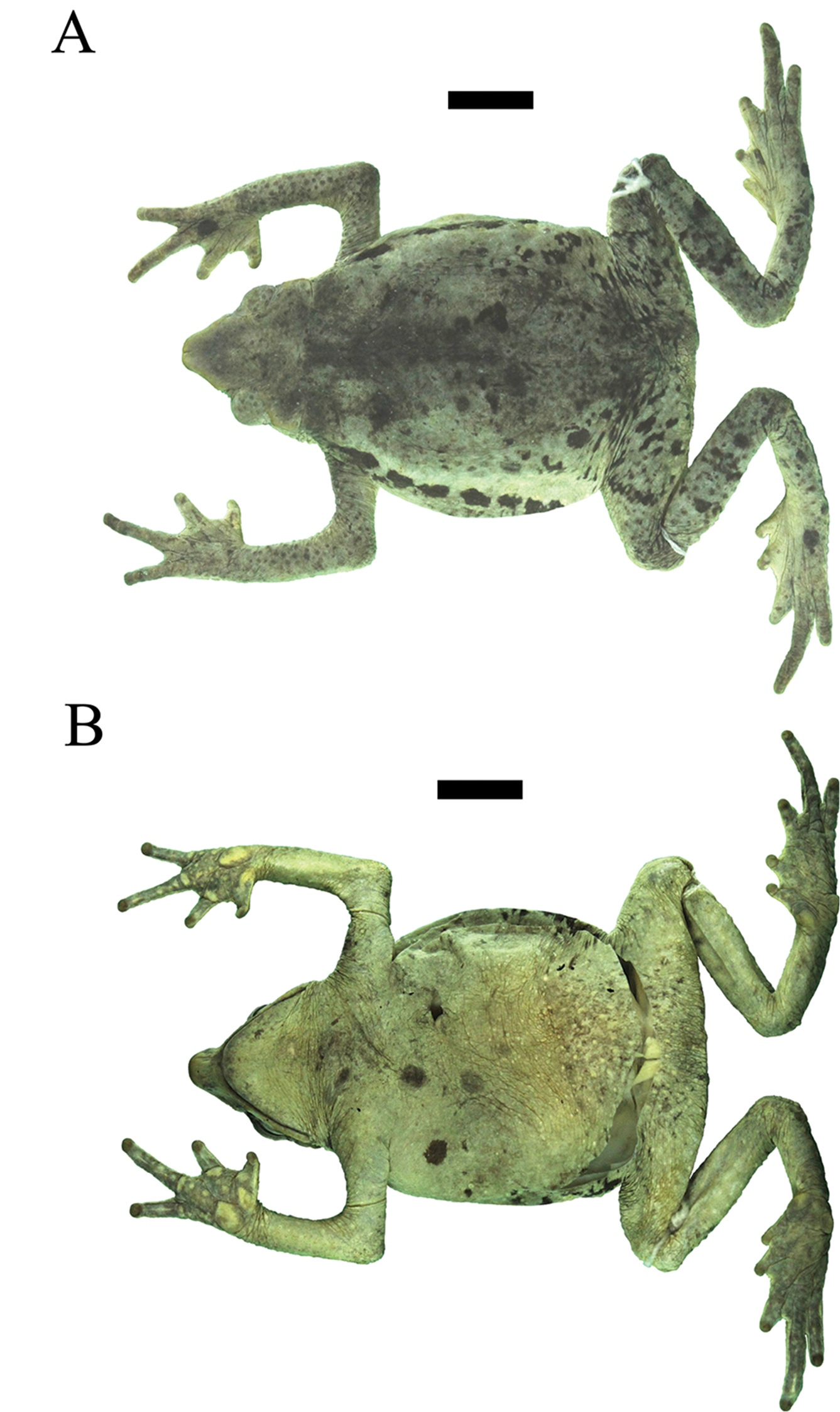
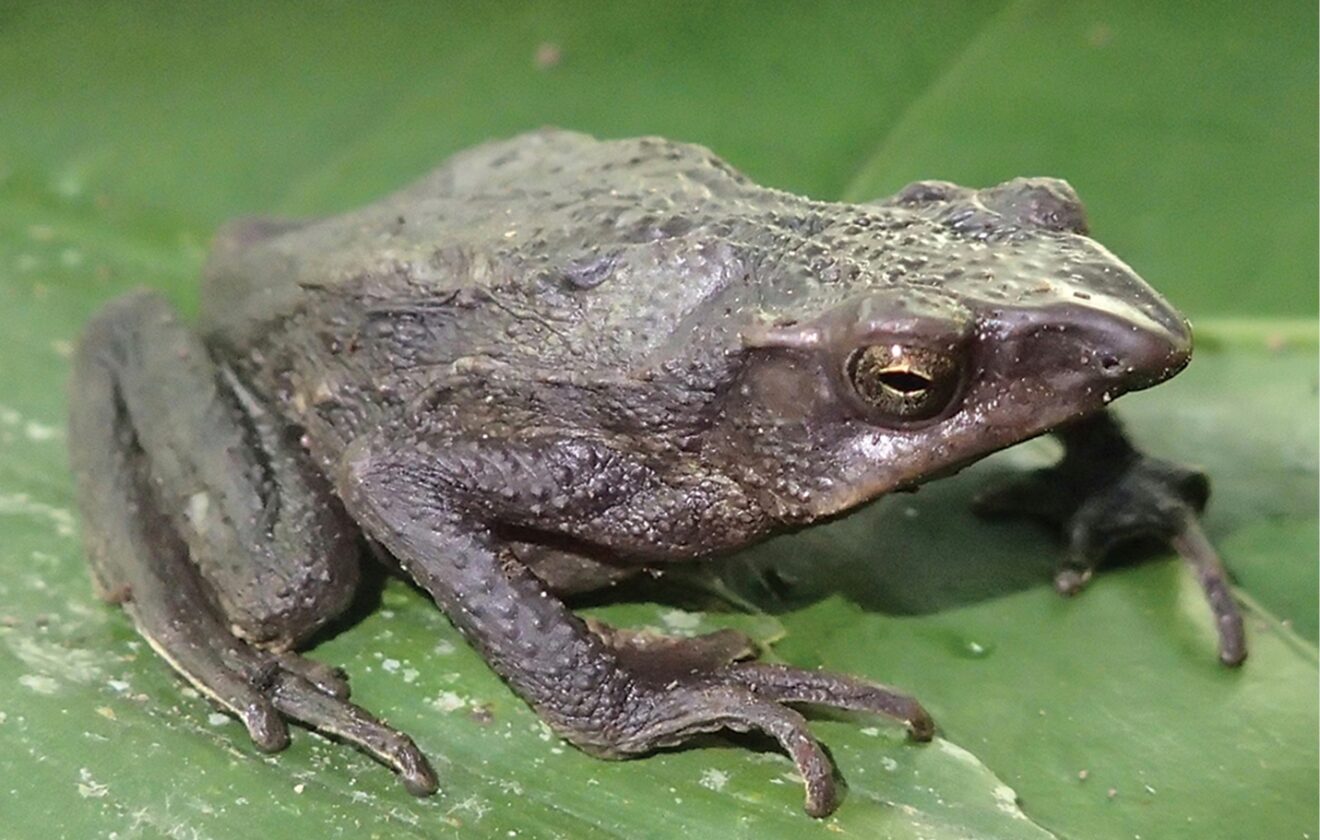
A fleeting glimpse of Rhinella lilyrodriguezae reveals a creature perfectly adapted to its cryptic lifestyle. Measuring approximately 4-6 centimeters in length, it possesses a stout, compact body. Its skin—rough, granular, and coated with protective secretions—serves both as armor and camouflage amidst leaf litter and plant debris.
Coloration among these frogs ranges dramatically, typically featuring earth tones like olive greens, browns, and shades of amber. This color palette not only aids concealment but acts as an effective predator deterrent, signaling potential toxicity or distastefulness. Some individuals sport striking dorsal patterns and patches, which add further depth to their camouflage strategy, breaking up their silhouette in dense leaf litter.
Perhaps the most intriguing anatomical adaptation is the pair of prominent parotoid glands located just behind their eyes. These glands secrete alkaloid toxins, an essential chemical defense system that deters predators. Scientists studying these toxins continue to reveal remarkable biochemical properties, highlighting the medicinal potential and ecological importance of understanding amphibian chemistry.
Behavior and Life Cycle#
Feeding Habits and Predatory Skills#
At dusk, as the rainforest transitions from day to night, the quiet rustling of leaves underfoot signals Rhinella lilyrodriguezae‘s hunting expedition. With a stealthy gait, these frogs methodically navigate through leaf litter, targeting a menu consisting primarily of small arthropods, ants, beetles, termites, and other insects abundant on the forest floor.
Unlike many nocturnal predators relying heavily on vision, they employ predominantly tactile and chemical cues, sensing the vibrations and subtle chemical signatures given off by prey. With sudden, precise movements, their quick, adhesive tongues snap forward to capture unsuspecting prey, highlighting their role as vital predators stabilizing insect populations within the forest ecosystem.
Reproduction and Development#
Mating season for R. lilyrodriguezae coincides with the rainy season, a vital period when rainfall fills ephemeral pools and streams, creating perfect nurseries for their offspring. Male frogs eagerly congregate around aquatic breeding sites, their melodious calls resonating through dense foliage, each vocalization meticulously attuned to attract potential mates while discouraging rivals.
Females, typically larger and selective, carefully evaluate choruses before engaging in amplexus—a reproductive embrace essential for fertilization. The female lays gelatinous strings of eggs in slow-moving waters, each egg carefully positioned to maximize survival chances. Tadpoles subsequently hatch and begin their aquatic journey, consuming algae, microbes, and detritus, vital in recycling nutrients within aquatic habitats.
These tadpoles soon develop robust limbs, absorbing their tails and transitioning from aquatic to terrestrial environments—a miraculous journey known as metamorphosis that emphasizes the adaptability and resilience of amphibians.
Ecological Role#
Far from mere background players, amphibians like Rhinella lilyrodriguezae fulfill crucial ecological roles within tropical ecosystems. Serving dual roles as predator and prey, they maintain numerical balance within insect populations, which indirectly preserves plant health by reducing herbivory.
Amphibians also form significant links in forest food webs. Reptiles, birds, and small mammals readily prey upon these frogs, their nutritional value fueling higher trophic levels. Additionally, sensitive to even subtle environmental changes—pollution, rising temperatures, habitat alterations—they act as reliable bio-indicators, warning us of otherwise imperceptible ecological degradation.
Threats and Conservation Status#
Despite its relative obscurity, Rhinella lilyrodriguezae faces considerable threats, chiefly habitat loss stemming from escalating deforestation and human encroachment in Amazon rainforest areas. Illegal logging, agriculture expansion, mining operations, and roads critically fragment habitats, disrupting their breeding cycles and limiting dispersal.
Climate change compounds habitat stress. Prolonged droughts, extreme flooding events, and temperature anomalies directly impact breeding success and tadpole survival. Currently, conservationists closely monitor this species, collecting valuable population data to understand its distribution dynamics better and propose informed conservation management plans.
Cultural and Scientific Significance#
Though not widely recognized in traditional indigenous lore compared to charismatic megafauna, amphibians like Rhinella lilyrodriguezae symbolize to various Amazonian communities indicators of forest health and balance. Locals sometimes recognize them through subtle ecological indicators, their presence predictive of rainfall patterns and ecosystem vitality.
Scientifically, trailblazing researchers uncover incredible potentials in their biological chemistry. Alkaloids produced by their skin pose promising prospects for medicinal development, such as powerful antimicrobial drugs and pain management solutions—applications that could significantly impact global public health initiatives.
Conclusion: Guardians of Forest Secrets#
Though small and reserved, amphibians like Rhinella lilyrodriguezae quietly steward equilibrium within the Amazon’s exhilarating, fragile ecosystem. They embody the interwoven perfection of nature’s rich tapestry, revealing evidence of subtle environmental disturbances and urging humanity toward stewardship and vigilance.
Through increased awareness, active conservation measures, and dedicated ecological research, we can secure the survival of this unique species, ensuring future generations continue uncovering the remarkable tales whispered by nature’s most humble inhabitants. Let us embrace our shared responsibility, protecting these frogs and the irreplaceable sanctuary they call home.