- Rhinella lescurei: Secrets of South America's Enigmatic Toad
- Taxonomy and Classification of Rhinella lescurei
- Natural Habitat: A Secretive Life in the South American Forest
- Physical Characteristics: Mastering the Art of Camouflage
- Behavior and Life Cycle: Rhythms in Shadows
- Ecological Importance: Guardians of Forest Health
- Conservation Challenges and Future Outlook
- Cultural and Scientific Significance
- Conclusion: A Shared Responsibility
Rhinella lescurei: Secrets of South America’s Enigmatic Toad#
In the lush jungles of northern South America, where dense vegetation glistens under a blanket of mist and the air pulses with life, a remarkable creature thrives quietly—rarely noticed, precious in its obscurity. Rhinella lescurei, a species of toad belonging to the famed Bufonidae family, goes about its mysterious nightly routine in the shadows of towering trees and tangled vines. Often unnoticed yet vitally influential in its hidden habitat, this enigmatic amphibian serves as both predator and prey, guardian and indicator of ecological balance.
Named in honor of acclaimed French herpetologist Jean Lescure, Rhinella lescurei is a species shrouded in mystery, intriguing researchers and nature lovers alike through its elusive habits and distinctive appearance. From subtle life history details to its crucial ecological role, exploring the world of Rhinella lescurei offers us new appreciation for the remarkable biodiversity concealed within South America’s forests.
Taxonomy and Classification of Rhinella lescurei#
Understanding the identity of Rhinella lescurei begins in the detailed science of taxonomy, the classification system bridging our knowledge about every living species. Belonging to the kingdom Animalia, phylum Chordata, and the class Amphibia, this frog further finds itself within order Anura, known universally for their jumping and hopping forms.
Rhinella lescurei holds its position firmly within family Bufonidae, a diverse lineage commonly called the true toads, well-known for the characteristic warty skin and terrestrial habits shared by their kin. Its genus, Rhinella, encompasses a robust group known for prominent glandular bumps and defensive toxins, evolved masterfully to deter predators.
The careful efforts of herpetologists, notably recognized in the dedication of this species’ name to Jean Lescure, have illuminated the subtle characteristics separating this unique species from close relatives such as Rhinella margaritifera and Rhinella castaneotica. However subtle, these distinctions influence how we approach each species’ protection, study, and conservation efforts.
Natural Habitat: A Secretive Life in the South American Forest#
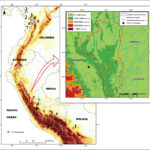
The rainforests that blanket northern South America provide a verdant and complex home for countless amphibians, including the reclusive Rhinella lescurei. Primarily recorded in areas spanning French Guiana and adjacent territories, this species’ particular favorite habitats include pristine, undisturbed forest floors interspersed with small streams, leaf litter, fallen logs, and pockets of damp undergrowth.
Unlike its aquatic cousins who depend constantly on open water bodies, Rhinella lescurei thrives in humid terrestrial habitats, appearing most at ease beneath dense canopy cover, protected from direct sunlight. It finds refuge in the leaf litter, carefully camouflaging itself among fallen debris and decomposing vegetation. Each component in this microhabitat plays a vital role—leaf litter traps moisture, provides shelter against predators, and hosts an abundance of invertebrate prey items crucial for the species’ survival.
Here amid the rich leaf-carpeted floor and nourishing darkness, this humble toad expertly plays its understated yet critical ecological role. Its preference for these highly specific and delicate ecosystems marks it as a crucially sensitive indicator for the well-being of its native forests.
Physical Characteristics: Mastering the Art of Camouflage#
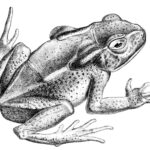
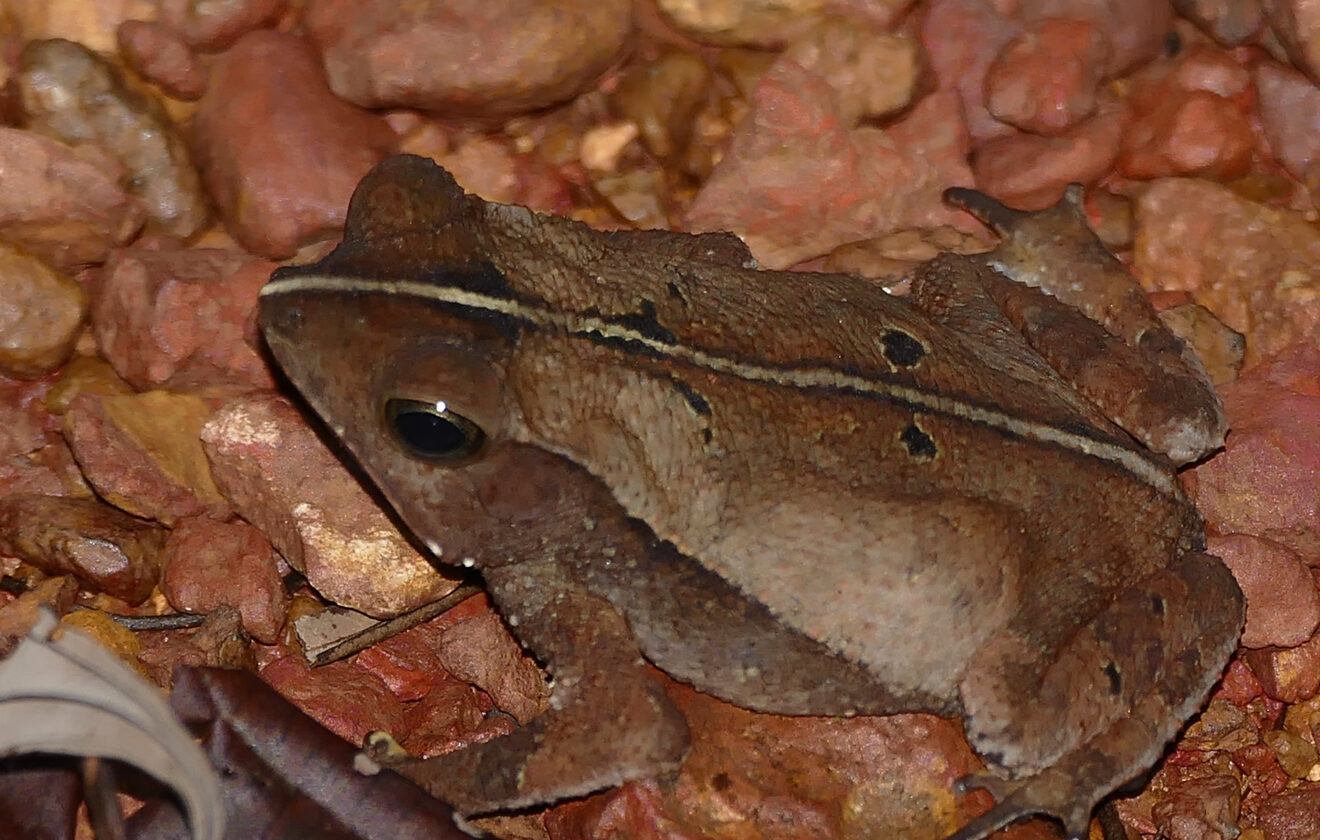
Nature often grants creatures an unparalleled artistry that blends survival with deceptive beauty. The secretive Rhinella lescurei is such an example. Modestly sized, typically ranging from 35 to 50 millimeters (approximately 1.4–2 inches) in length for adult individuals, it assumes a stocky yet graceful posture reflective of its terrestrial adaptations.
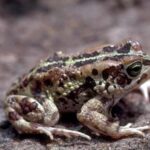
Its skin, adorned in earthy blends—muddy browns, muted grays, deep olives and subtle reds—strikingly echoes the mosaic of a forest floor dappled with fallen leaves, fungi, lichen, and delicate mosses. Faint patterning, sometimes irregular darker spots, scatter across its back, helping further distort its silhouette and breaking its recognizable shape.
The skin itself features characteristic rugged, wart-like bumps that are more pronounced around the head and down the back—typical signatures of Bufonidae. Large parotoid glands behind the eyes secrete mild yet effective toxins, an evolutionary toolbox that grants protection against predators and provides insights for scientific research into biochemical compounds.
Each physical trait, from cryptic coloration to remarkably textured skin, gives this toad unparalleled adaptability to its shadowy habitat, weaving together aesthetics and function in the timeless art of evolutionary survival.
Behavior and Life Cycle: Rhythms in Shadows#
Nocturnal Foragers with a Rich and Varied Diet#
As twilight envelops the forest in a subdued hush, Rhinella lescurei emerges cautiously from daytime shelters to begin its nightly hunt. Its diet, composed largely of ants, beetles, termites, spiders, and other forest invertebrates, reflects the astonishing abundance and diversity of arthropods within their habitat. Slowed only slightly by its measured movements, the toad patiently waits or methodically prowls—flicking out its sticky tongue with impressive precision to snare unsuspecting prey.
Intricate Courtship and Amphibian Reproduction#
The seasonal rains that drench northern South America’s forests signal a thrilling change for amphibians. Male Rhinella lescurei vocalize distinctive, resonant calls from damp leaf-litter beds or from slightly elevated perches on rocks and logs. Females, drawn to these calls, join the males at traditional breeding sites marked by shallow pools or slow-moving streams.
After mating, eggs are laid in jelly-covered strings or patches in quiet eddies or temporary pools. Hatchlings develop into tadpoles, which gracefully transition through their vulnerable aquatic stage sheltered among algae, submerged vegetation, and debris. Metamorphosis, a captivating process of eruption and resorption, gradually transforms tadpoles into tiny froglets eager to begin terrestrial lives mirroring those of their progenitors.
Ecological Importance: Guardians of Forest Health#
Toads like Rhinella lescurei occupy crucial ecological niches that define the health and stability of their forest ecosystems. Acting simultaneously as predator and prey, their presence regulates forest invertebrate populations, maintaining ecological balance. Equally, their population health signals larger trends in environmental changes, serving as indicators of habitat degradation or chemical pollution conditions far earlier than we humans typically perceive.
Conservation Challenges and Future Outlook#
Despite the ample wilderness still present in northern South America, threats loom ominously: habitat fragmentation through logging or mining, climate disruptions altering rainfall patterns, and emerging fungal diseases like chytridiomycosis challenge delicate amphibian populations. Currently listed as Least Concern by the IUCN due to its presumed abundance, vigilance is crucial. Research aimed at monitoring populations and understanding vulnerabilities will be increasingly vital as these threats escalate.
Cultural and Scientific Significance#
Adored quietly, and revered considerably, amphibians embody symbols of renewal, fertility, and transition in indigenous cultures. Scientifically, their sensitive skin and reliance on both water and land make species like Rhinella lescurei invaluable subjects for understanding environmental health and for studying bioactive compounds applicable in medicine.
Conclusion: A Shared Responsibility#
The story of Rhinella lescurei echoes across the shadows of their forest home, reminding us of the hidden connections binding ecosystems, species, and humans in intricate balance. Protecting this fascinating amphibian means preserving habitats, monitoring climate impacts, and nurturing local and global attitudes that prioritize conservation. The enigmatic Rhinella lescurei deserves our curiosity, respect, and stewardship—an enduring emblem that each hidden creature matters profoundly in our shared world.