Nectophrynoides pseudotornieri: The Secretive Jewel of the Eastern Arc Forests#
Introduction#
Beneath the emerald canopy of Tanzania’s pristine Eastern Arc Mountains, amid the dense foliage and misty elevations of these ancient forest islands, lives a frog like no other. The vivaciously named Nectophrynoides pseudotornieri, shrouded in mystery and cloaked by its habitat’s dark secrecy, stands as an intriguing beacon of evolutionary wonder among amphibians. Commonly referred to as the False Tornier’s Forest Toad, this petite yet fascinating creature differs dramatically from the familiar croaking amphibian archetypes our imaginations most often conjure.
Fascinatingly, this mystifying frog species happens to be among the world’s rare viviparous amphibians—frogs who do not spawn eggs externally but instead give live birth to miniature replicas of themselves. A spectacle of evolution, this captivating reproductive adaptation sets them apart from nearly all other frogs, adding another layer of remarkable allure to their existence.
In this comprehensive exploration, we journey into the enigmatic story of Nectophrynoides pseudotornieri, delving into its biology, behavior, role within its ecosystem, and thoughtful conservation concerns. Let’s uncover the secrets of an amphibian whose mysterious charm epitomizes elegance and survival in ever-changing tropical forests.
Taxonomy and Classification#
To truly appreciate the unique identity of the False Tornier’s Forest Toad, one must first understand its position in nature’s vast diversity. Nectophrynoides pseudotornieri belongs to the family Bufonidae, which includes the so-called true toads. Yet, despite such family associations, this species differs prominently from the well-known and widespread toads many of us regularly encounter.
The genus Nectophrynoides is noteworthy for its array of colorfully diverse, culturally significant, and strikingly adapted amphibians. Its members are exclusively endemic to Tanzania, specifically to the Eastern Arc mountains—a chain famed for its remarkable biodiversity and high rates of endemism. Within these mountains lies a hotspot of genetic and species richness, where evolutionary forces have sculpted unique adaptations over millennia, particularly evident in the amphibian fauna that reside there.
Nectophrynoides pseudotornieri closely resembles another congener, Nectophrynoides tornieri. Both species share similarities in appearance and distribution, although subtle morphological distinctions and genetic markers delineate them clearly as separate entities. The nuanced differentiation between these two species highlights the remarkable evolutionary dynamics at play within these Tanzanian forested regions.
Natural Habitat#
A creature of deep forests and mist-dappled mountain slopes, Nectophrynoides pseudotornieri inhabits the montane and submontane humid forests of Tanzania’s Eastern Arc Mountain ranges, such as the Uluguru and Usambara mountains. These isolated mountain ecosystems serve as islands of biodiversity amidst the surrounding landscape, harboring species found nowhere else on Earth.
As inhabitants of moist rain-drenched environments, these frogs prefer lush vegetation, leaf-littered forest floors, and dense thickets near ever-flowing mountain streams. Their habitat comprises an environment knitted intricately from sprawling ferns, moss-covered logs, and bushes that offer the humidity crucial to their sensitive, amphibious skin. The Eastern Arc forests’ cool and reliably moist microclimate provides these frogs not only with vital refuge but equally with abundant invertebrate prey—small insects, spiders, and mites—that sustain their quiet existence.
These frogs adeptly traverse their shaded world, taking refuge away from direct sun exposure and maintaining their delicate skin moisture. Their highly specialized habitats, combined with the narrow altitudinal and geographical range they occupy, make them both isolated gems of evolutionary uniqueness and highly vulnerable to any disturbances.
Physical Characteristics#
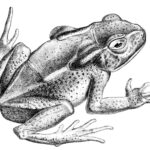
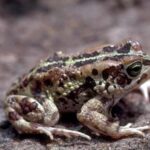
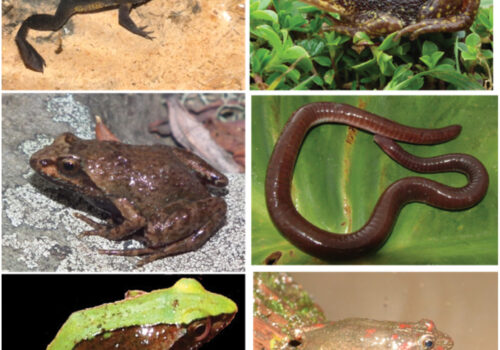
One of the first notable aspects of Nectophrynoides pseudotornieri is their diminutive size and subdued coloring. Adults rarely exceed 35 millimeters in length, and their coloration displays an enthralling blend of dark browns, greens, and shades of gray, occasionally punctuated with subtle patterns of lighter dots or specks. Such cryptic coloration allows the species to blend seamlessly into forest floors layered with decaying leaf litter, bark fragments, and mossy stones.
Iridescent flecks or subtle blotches may occasionally brighten their markings, while the body shape is generally rounded, indicative of their terrestrial habits. Eyes prominently positioned atop their head grant them an exceptional field of vision crucial for hunting small prey and spotting potential predators lurking among the foliage.
Their skin presents an intriguing texture—granular to slightly warty, a feature frequently observed in true toads. More importantly, their permeable skin functions critically in respiration and moisture uptake, making their entire integumentary system delicately calibrated to forest moisture and humidity.
Behavior and Life Cycle#
Nectophrynoides pseudotornieri presents a fascinating display of behavior uniquely adapted to concealed forest living. Primarily nocturnal, these elusive toads utilize the cover of darkness to avoid predation, emerging from daytime refuges in leaf litter, beneath logs, and within the tangled roots and moss-laden trunks of their primary arboreal companions.
Feeding Habits#
Stealthy hunters beneath the moonlit canopy, these frogs predate on ants, termites, beetles, mites, and other tiny insects abundant within their mossy, leaf-strewn microhabitats. With their sharp vision and agile tongues, they move patiently, silently ambushing prey, rarely venturing into open, exposed terrain.
Unique Viviparous Reproduction#
Undoubtedly, the most remarkable aspect of their behavior lies in reproductive biology. Unlike the vast majority of frogs that lay external eggs in water, Nectophrynoides pseudotornieri females carry developing embryos within their bodies until they give birth to live, fully metamorphosed froglets. Through complex internal processes, females nourish developing embryos, providing sustenance directly through specialized maternal tissues, a phenomenon akin to placental mammals and strikingly rare in amphibians.
This extraordinary reproductive innovation allows these toads independence from bodies of water typically necessary for amphibian reproduction, significantly reducing vulnerability to drought conditions and habitat variability. The young are independent immediately after birth, miniature versions ready to navigate the forest floor, hunt tiny prey, and evade predators—all without a traditional larval (tadpole) aquatic stage.
Ecological Role#
Though small and secretive, Nectophrynoides pseudotornieri represents a crucial cog in the forest ecological machinery. As voracious eaters of insects and other invertebrates, these frogs control populations of forest floor arthropods. Their existence helps regulate insect biodiversity and maintain ecological balance within their unique environment.
Simultaneously, this diminutive amphibian plays the role of prey for larger fauna including birds, snakes, and small mammals. Through such intricate ecological webs woven in the heart of Tanzanian mountain forests, the frog acts not only as predator but is ultimately vital as nourisher of life further up the food chain.
Threats and Conservation Status#
Currently classified as Endangered on the International Union for Conservation of Nature (IUCN) Red List, the False Tornier’s Forest Toad faces significant threats. Principal among these threats is widespread and expanding habitat loss caused by intense agricultural encroachment, logging activities, and unregulated human settlements that significantly fragment forest habitats.
Climate-induced changes—altered rainfall patterns, temperature variations, and drying microhabitats—pose similarly catastrophic future prospects for a frog exquisitely adapted to stable humid conditions. Conservation efforts urgently require habitat protection measures, land-use planning governance, and thorough ecological education aimed at fostering community stewardship toward the Eastern Arc Mountains.
Cultural and Scientific Significance#
While not widely immortalized in local legends or folklore, as many charismatic megafaunas frequently are, Nectophrynoides pseudotornieri holds genuine scientific significance. Their unique reproductive biology intrigues evolutionary biologists, while conservationists recognize their potential as indicators of environmental health.
Conclusion#
Undoubtedly, few amphibians encapsulate the wonder, vulnerability, and ecological interconnectedness so elegantly as Tanzania’s Nectophrynoides pseudotornieri. As dedicated admirers of wildlife diversity, we must appreciate, safeguard, and actively protect these precious living jewels, maintaining our planet’s invaluable biodiversity tapestry.
Now is the time to champion crowning achievements of nature’s creativity, starting by treasuring the tiny, intriguing frogs hidden within Tanzania’s rainy mountain sanctuaries.