- Melanophryniscus xanthostomus: Exploring the Secret Life of the Yellow-Mouthed Toad
- Taxonomy and Classification: Understanding the Amphibian Family Tree
- Natural Habitat: Living Among the Leaf Litter
- Physical Characteristics: Tiny, Colorful, and Highly Adapted
- Behavior and Life Cycle: An Amphibian Tale of Breeding and Survival
- Ecological Role: Guardians of Forest Integrity
- Threats and Conservation Status: Fragile Existence Under Threat
- Cultural and Scientific Significance: Translating Nature's Wisdom
- Conclusion: A Call to Protect a Precious Jewel of the Forest Floor
Melanophryniscus xanthostomus: Exploring the Secret Life of the Yellow-Mouthed Toad#
Hidden amidst leaf-littered forest floors, where vibrant greens merge seamlessly with shadows, lives an amphibian of intriguing beauty and vital ecological importance—the yellow-mouthed toad, scientifically named Melanophryniscus xanthostomus. This exquisite yet little-known species captures the essence of biodiversity tucked away in South America’s subtropical forests. Distinctly vibrant with a flashing splash of yellow around its mouth, this small but charismatic toad is far more than just another colorful amphibian; it serves as a living indicator of environmental health, a fascinating example of adaptive evolution, and a beacon for conservationists determined to protect delicate ecosystems.
To glimpse the world through the eyes of the yellow-mouthed toad is to appreciate a secretive, fragile existence closely intertwined with nature’s ever-evolving tapestry. Let us embark on an immersive journey that unravels the biology, ecological roles, conservation challenges, and moreover, the compelling narrative behind Melanophryniscus xanthostomus.
Taxonomy and Classification: Understanding the Amphibian Family Tree#
Belonging to the Bufonidae family, a group commonly known as true toads, Melanophryniscus xanthostomus nestles comfortably within a fascinating genus, aptly named Melanophryniscus. This genus, native mostly to subtropical and tropical forests within South America, includes several species renowned for their vividly colored skin and specialized adaptations for survival.
Melanophryniscus xanthostomus, specifically described rather recently in scientific literature, highlights the constant flux of discovery within zoology. It is closely related to other toads within its genus, sharing their characteristic bright warning coloration (aposematism) and small size, adaptations honed for defense against predators and survival in their niche habitats.
Natural Habitat: Living Among the Leaf Litter#
To appreciate the yellow-mouthed toad truly, one must journey into the lush Brazilian Atlantic Forest—a biodiversity hotspot teeming with life found nowhere else. Here, beneath towering canopies that filter sunlight into delicate emerald shards illuminating the forest floor, lives our enigmatic amphibian companion.
Geographical Range and Habitat Preferences#
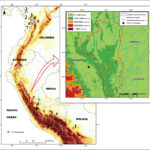
The distribution of Melanophryniscus xanthostomus is remarkably restricted. It is primarily found in Santa Catarina state, southern Brazil—a region characterized by subtropical forests and elevations between roughly 300 to 700 meters above sea level. Humid and cool, this landscape provides the ideal microclimate for the yellow-mouthed toad to thrive.
Unlike some amphibians attracted to aquatic habitats, this toad favors damp terrestrial environments, especially leaf litter accumulated in shaded, humid forest interiors. Quality of habitat—characterized by pristine conditions, minimal human intrusion, and stable microclimates—is crucial to this delicate amphibian’s survival.
During periods of rain, the toads venture from their leafy retreats, becoming more readily visible as they forage or engage in reproductive behaviours. In contrast, during dryer spells, they remain hidden among the soft, moist layers of leaf debris, maintaining hydration and escaping predators.
Physical Characteristics: Tiny, Colorful, and Highly Adapted#
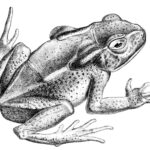
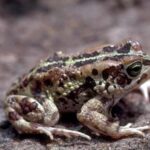
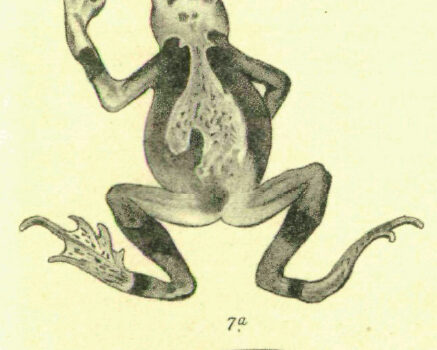
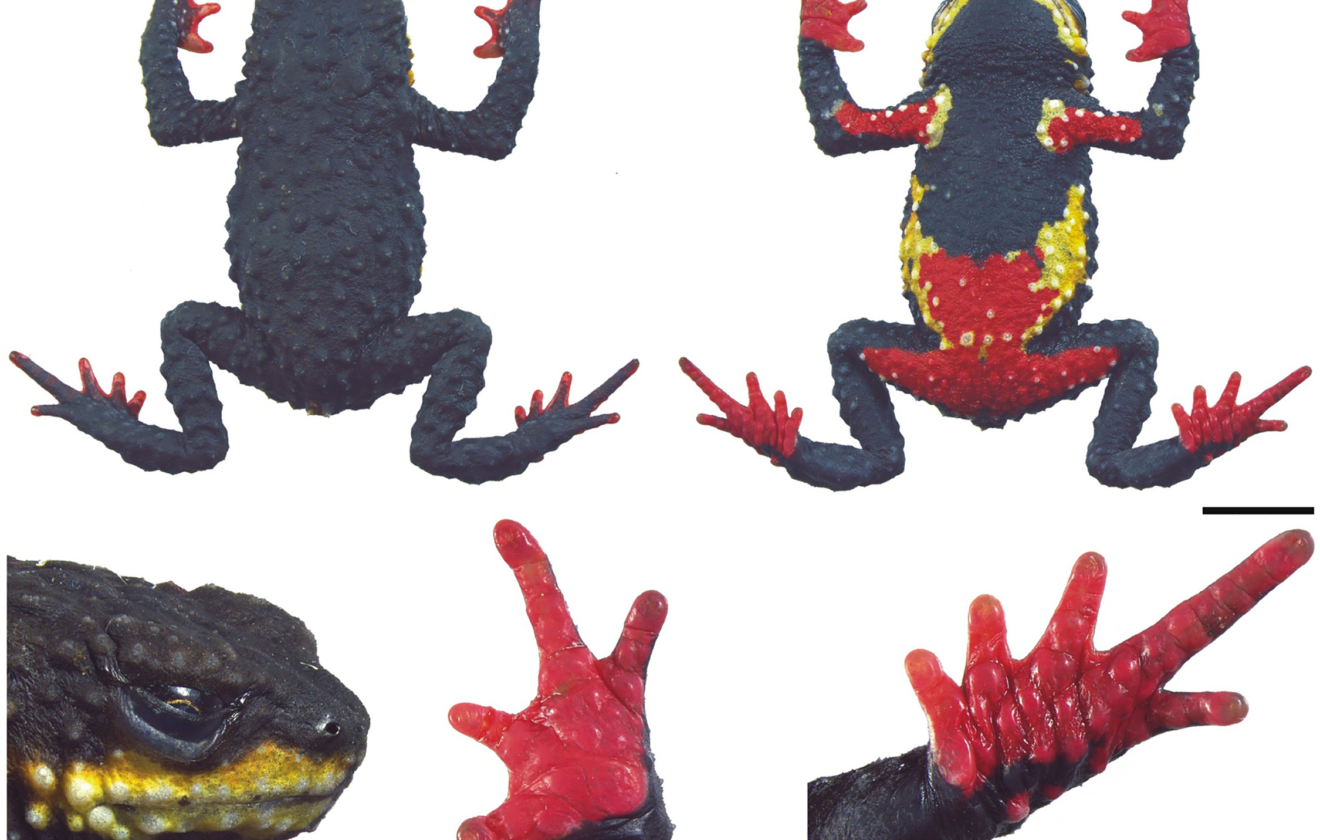
At first glance, the yellow-mouthed toad enchants observers with a striking display of hues. Small and robust, adults typically measure no more than 23 mm in length. Yet, despite its diminutive stature, its visual appeal is mesmerizingly bold. The smooth, somewhat glossy skin is predominantly black, accentuated with vibrant scarlet flashes along its limbs and underside, while the defining characteristic—is a luminous splash of vivid yellow that encircles its mouth, drawing immediate attention.
This spectrum of colors serves as more than a simple aesthetic pleasure—it is a highly effective defensive strategy. Known scientifically as aposematic coloration, this bright palette signals the presence of potent toxins within the toad’s skin, warning potential predators to stay away.
Tiny yet powerful, Melanophryniscus xanthostomus synthesizes alkaloids by metabolizing dietary sources, such as the small arthropods it consumes, accumulating toxins within glands scattered across its skin. Predators soon learn to associate the vibrant coloration with an unpalatable or painful experience, ensuring the toad’s continued safety.
Behavior and Life Cycle: An Amphibian Tale of Breeding and Survival#
Far from a passive creature, the yellow-mouthed toad leads an active, albeit secretive, life. Its behavioral patterns highlight a balance between caution and instinctual urges, showcasing evolutionary ingenuity.
Feeding Habits: Small Prey, Big Significance#
A specialist predator adapted to its surroundings, Melanophryniscus xanthostomus preys primarily upon minute arthropods—small mites, ants, beetles, and springtails—that inhabit its leaf-litter domain. This diet not only sustains the frog but also facilitates the synthesis of defensive toxins via the unique biochemical pathways utilized by this genus.
Reproduction and Development#
When rainy season showers arrive, accompanied by the distinct melodies of amphibian courtship calls echoing humid forest air, breeding behaviors of the yellow-mouthed toad begin in earnest. Males gather at the edges of temporary standing pools formed by rainfall, announcing their availability with distinctive vocalizations. Their calls, though subtle and quiet, serve as effective beacons guiding females through dense vegetation.
Upon successful pairings, females deposit gelatinous egg clusters within temporary aquatic habitats. Tadpoles swiftly develop, morphing into miniature adults remarkably fast—a critical survival adaptation given the fleeting nature of the ponds they temporarily call home. Juveniles inherit the vivid coloration of their parents, signaling their toxicity from the earliest stages of life.
Ecological Role: Guardians of Forest Integrity#
Melanophryniscus xanthostomus plays a subtle yet invaluable role within its ecological community. As both a predator of leaf-litter arthropods and potential prey for certain resistant or naïve predators, it forms a vital link within complex food webs. More significantly, amphibians often act as key indicator species—they are especially sensitive to environmental stresses, quickly exhibiting responses to pollution, climate change, and habitat alteration.
When populations of sensitive species like the yellow-mouthed toad decline or disappear, biologists voice concern. The health and stability of these frogs denote the broader health of ecosystems—highlighting the interconnectedness and fragility of life. Thus, the conservation status of this species simultaneously represents the broader health of South America’s rich subtropical forest habitats.
Threats and Conservation Status: Fragile Existence Under Threat#
Currently classified as Critically Endangered by the International Union for Conservation of Nature (IUCN), Melanophryniscus xanthostomus faces severe existential threats. Rapid habitat loss stemming from deforestation, agriculture expansion, and urban development significantly reduces life-sustaining resources available to the species.
Climate change further exacerbates these threats by altering rainfall patterns, reducing suitable reproduction habitat availability, and disrupting delicate ecological balances. Human-driven pollution further contaminates their habitats, introducing toxins harmful at even low concentrations.
Ongoing Conservation Efforts#
Dedicated groups comprising researchers, conservationists, and community advocates persevere in establishing protections. Initiatives range from habitat restoration projects and captive breeding programs to public education campaigns to raise awareness. Continued ecological research and sustained habitat protection measures significantly influence the fate of this rare amphibian species.
Cultural and Scientific Significance: Translating Nature’s Wisdom#
Though elusive, Melanophryniscus xanthostomus plays a subtle yet meaningful symbolic role, emblematic of conservation efforts aimed at preserving biological diversity. Scientifically, studies of its biochemical defense mechanism, especially toxin synthesis pathways, promise insights that extend far beyond the forests they inhabit—potentially offering biomedical breakthroughs and insights into amphibian evolution.
Conclusion: A Call to Protect a Precious Jewel of the Forest Floor#
As guardians of vibrant ecosystems and ambassadors of biodiversity, each individual toad represents hope and responsibility. Within every flash of yellow mouth echo countless years of evolutionary history, delicate ecological connections, and an urgent call for our stewardship. By learning about and advocating for species like Melanophryniscus xanthostomus, we pledge to sustain not only their lives but the intricate web of life upon which we ourselves depend.
Together, let us amplify awareness, advocate for action, and secure the future of nature’s quiet yet bold yellow-mouthed emissary.