- Introduction: The Admirable Gem of Brazil's Atlantic Forest
- Taxonomy and Classification: Understanding the Admirable Toad's Place in the Amphibian World
- Natural Habitat: Life Among Mossy Stones and Mountain Streams
- Physical Characteristics: Radiant Colors and Adaptive Wonders
- Behavior and Life Cycle: The Dance of Existence
- Ecological Role: Connections Within a Delicate Ecosystem
- Threats and Conservation Status: Fighting to Save a Living Jewel
- Cultural and Scientific Significance: A Symbol of Conservation and Discovery
- Conclusion: A Call to Action for the Admirable Red-Bellied Toad
Introduction: The Admirable Gem of Brazil’s Atlantic Forest#
Within the lush moss-covered rocks and crystal-clear cascading streams of Brazil’s southern Atlantic Forest lives an extraordinary amphibian. Its scientific name, Melanophryniscus admirabilis, hints at the sense of admiration it inspires. Indeed, this small, vividly colored frog belongs to a select group of amphibians that evoke wonder and fascination from scientists and naturalists worldwide.
Commonly known as the Admirable Red-Bellied Toad or the Admirable Toadlet, this extraordinary creature stands out not merely by its brilliant coloration and distinct patterns but also because of its critically endangered status. With fewer than a handful of known populations, the survival of the Admirable Red-Bellied Toad remains precariously balanced. Its existence serves as a poignant reminder of the delicate tapestry woven by biodiversity and the critical need for proactive conservation measures.
Taxonomy and Classification: Understanding the Admirable Toad’s Place in the Amphibian World#
Belonging to the family Bufonidae, the Admirable Red-Bellied Toad is part of the diverse genus Melanophryniscus, a group recognized for their strikingly colorful patterns and small-bodied forms. Within the genus, there are currently over 30 documented species, all characterized by unique coloration and remarkable adaptations to their habitats.
Melanophryniscus admirabilis was formally described in 2006 by a dedicated team of Brazilian herpetologists. Its designation admirabilis, meaning “admirable” in Latin, directly acknowledges the striking coloration and intriguing behaviors observed upon its discovery.
Natural Habitat: Life Among Mossy Stones and Mountain Streams#
The Admirable Red-Bellied Toad flourishes exclusively in a highly specialized microhabitat within Brazil’s southern Atlantic Forest region. Specifically, it inhabits the rugged high-altitude mountainous areas of Rio Grande do Sul state, in the municipalities of Arvorezinha and Ilópolis. These terrains, often shrouded in mist, are characterized by moss-covered rocky outcrops and gentle streams fed by pristine rainwaters trickling down from higher elevations.
This amphibian’s life is closely intertwined with an extremely moist, moss-dominated habitat. During rainy seasons, when the usually still streams transform into bustling watercourses, these frogs come alive with exuberant activity. They show a strong dependence upon the specific moisture content, temperature fluctuations, chemical compositions, and vegetation coverage of their environment. Such a narrow ecological niche explains both their wonder and their vulnerability to environmental disturbance.
Physical Characteristics: Radiant Colors and Adaptive Wonders#
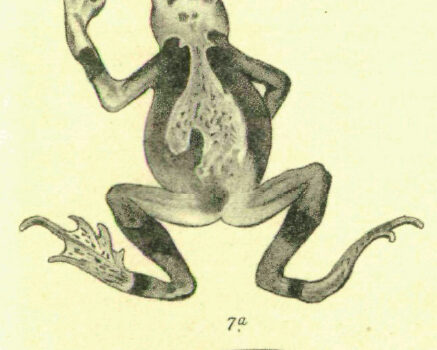
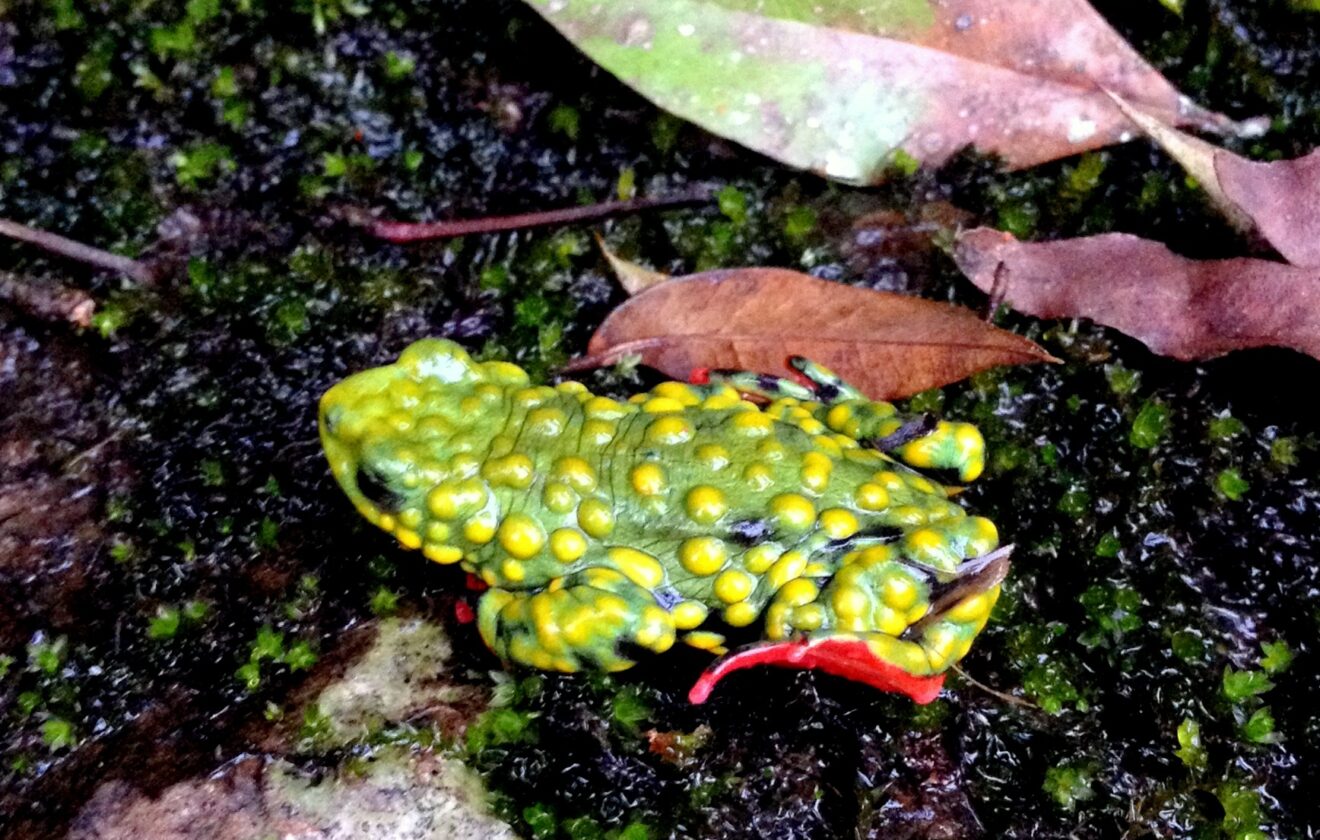
To witness the Admirable Toadlet is to experience an exuberant stroke of nature’s artistic palette: its small, rounded body typically measures less than 3 centimeters—a delicate creature perched lightly on wet moss-covered stones. Dark, almost velvety black skin boldly contrasts with vibrant markings of orange, yellow, and crimson red. Their bellies and limbs exhibit particularly vivid hues, colors warning would-be predators of their hidden chemical defenses.
This striking coloration is no mere aesthetic novelty; instead, it serves as aposematic (warning) coloration, signaling to potential predators that the toad is toxic and unpalatable. Beneath their remarkable skin lies potent bufadienolide toxins, substances capable of deterring even determined predators. Such bold markings are nature’s effective billboard, clearly signaling danger to curious birds, mammals, and lizards that might otherwise feast upon this small amphibian.
Behavior and Life Cycle: The Dance of Existence#
Feeding and Hunting Habits#
As insectivorous amphibians, Admirable Red-Bellied Toads spend considerable time foraging amidst mossy stones, damp leaf litter, and vegetation for minute prey, including ants, small beetles, mites, and mites’ eggs. Their diet is not only essential for nutrition but also aids in accumulating dietary toxins that strengthen their defenses over time.
A Unique Breeding Ritual#
The mating period of these toads is a spectacular event, dictated wholly by seasonal rains that transform quiet trickles into gushing mountain streams. Males initiate the process with distinctive vocalizations—soft, rhythmic calls resonating subtly amidst the sounds of trickling water. Females select suitable males based on call quality and possibly size and vibrant coloration, though the exact selection criteria are yet to be fully understood.
Egg laying occurs exclusively within fast-flowing mountain streams, where females deposit dozens of small, gelatinous egg clusters in moist crevices and shallow water pools. The tadpoles emerge soon after, adapting quickly to their aquatic environment. Unlike some tadpoles, those of the Admirable Red-Bellied Toad show remarkable resilience against torrential waters, an adaptation crucial for survival in their rugged habitat. Eventually, they develop limbs, lose their tails, and begin the treacherous journey to adulthood.
Ecological Role: Connections Within a Delicate Ecosystem#
Within their specialized ecosystem, Admirable Red-Bellied Toads act as vital players, regulating insect populations and indirectly influencing plant vegetation patterns. Their place in the food chain as both predators of small invertebrates and ecological indicators underlines their importance. Furthermore, their chemical defenses contribute to bioaccumulation studies, shedding light on ecological interactions involving arthropod prey and vertebrate predators.
The existence and health of populations of these amphibians can indicate the broader health and stability of their mountain stream habitats. Scientists often consider amphibians like Melanophryniscus admirabilis to be sensitive environmental indicators, with population declines prompting serious examinations of environmental changes.
Threats and Conservation Status: Fighting to Save a Living Jewel#
The Admirable Red-Bellied Toad is tragically categorized as Critically Endangered on the IUCN Red List of Threatened Species. Their precarious predicament results largely from habitat destruction driven by agriculture expansion, deforestation, and uncontrolled wildfires that eliminate the lush vegetation and moisture-rich microhabitats essential to their survival. Climate change intensifies these threats, altering rainfall patterns essential to their reproductive cycles.
Furthermore, illegal pet trade emerges as an additional concern. Their striking colors attract collectors internationally, creating further stress to already fragile populations. Conservation organizations, herpetologists, and environmentalists tirelessly collaborate, promoting protected areas designation, habitat restoration projects, and public awareness campaigns aiming to protect this remarkable amphibian.
Cultural and Scientific Significance: A Symbol of Conservation and Discovery#
Beyond its vital ecological role, the Admirable Red-Bellied Toad has emerged as a symbol of biodiversity preservation efforts throughout Brazil and the international conservation community. Its profile raises awareness and encourages scientific exploration, including biochemical studies investigating their fascinating chemical defenses for potential medical applications.
Locally, efforts to protect this species cultivate cultural pride, reinforcing the community’s connection to the region’s rich biodiversity. Scientific research around this species has deepened insights into amphibian ecology, evolution, and the importance of niche habitats, further underscoring the value of even the smallest, most specialized species.
Conclusion: A Call to Action for the Admirable Red-Bellied Toad#
The story of Melanophryniscus admirabilis is one of vibrant beauty, scientific curiosity, ecological significance, and, unfortunately, vulnerability. Faced with threats from human encroachment, invasive development, and climate instability, their future hangs in the balance. Yet, hope endures through concerted conservation efforts, responsible ecotourism, habitat restoration, and careful scientific monitoring.
The survival of the Admirable Red-Bellied Toad symbolizes the broader fight against species extinction across our planet. As advocates, nature lovers, or simply curious readers, our awareness and support can make tangible differences. By educating others, supporting conservation programs, and making environmentally responsible decisions, we contribute to safeguarding the irreplaceable wonders of our natural world.
Ultimately, by protecting delicate species like the Admirable Red-Bellied Toad, humanity ensures the preservation of the biodiversity tapestry that makes our planet infinitely rich, vibrant, and worth preserving for generations to come.