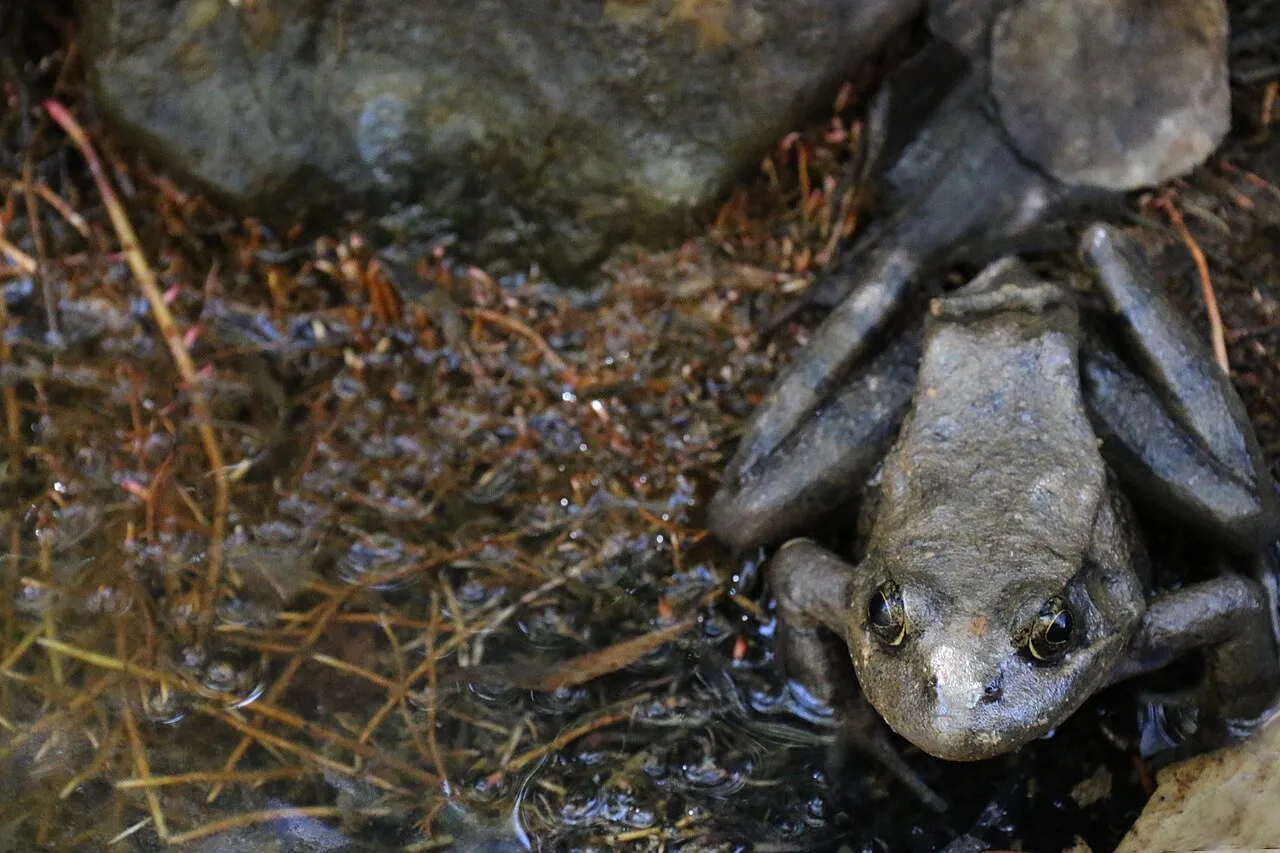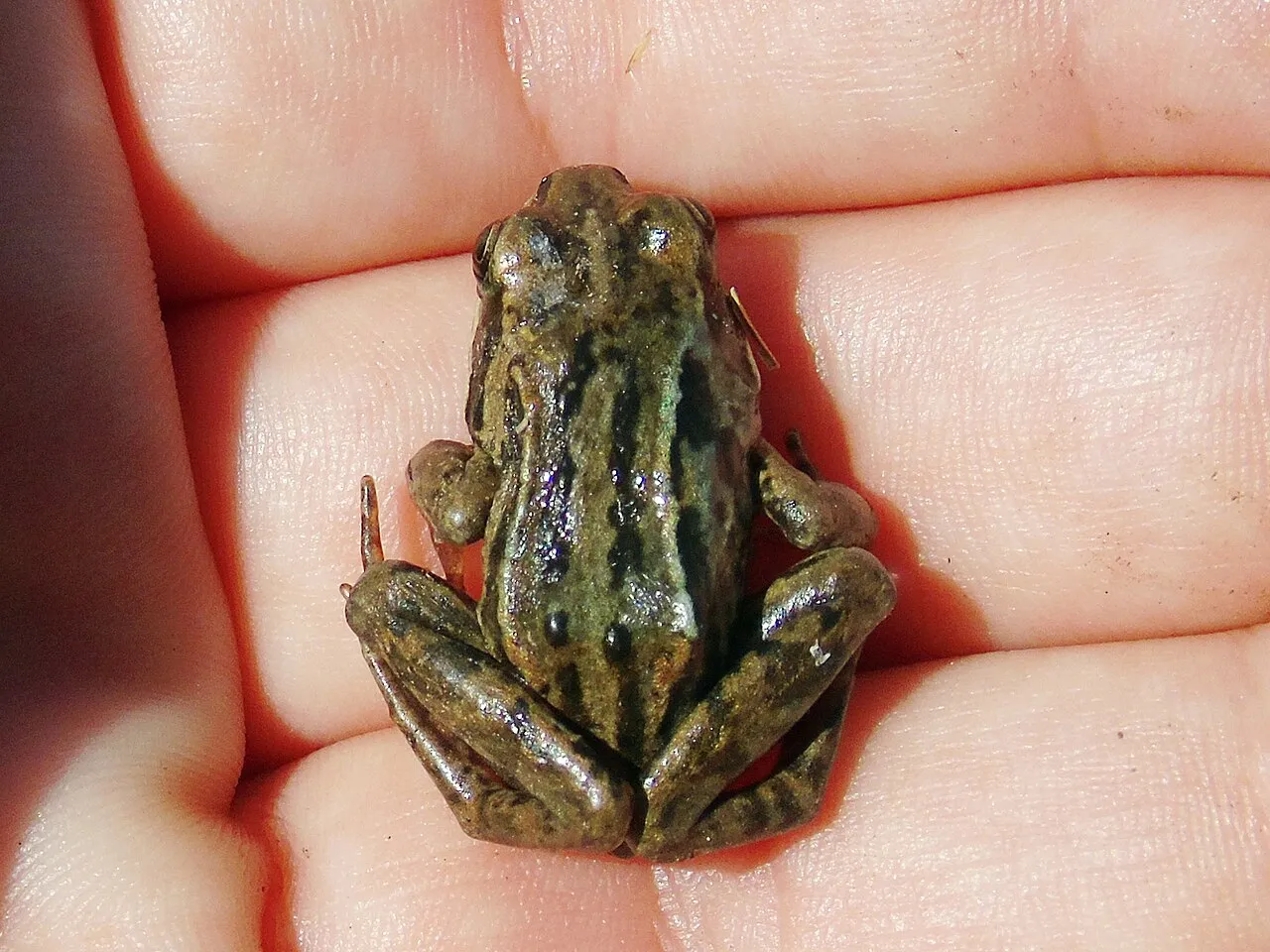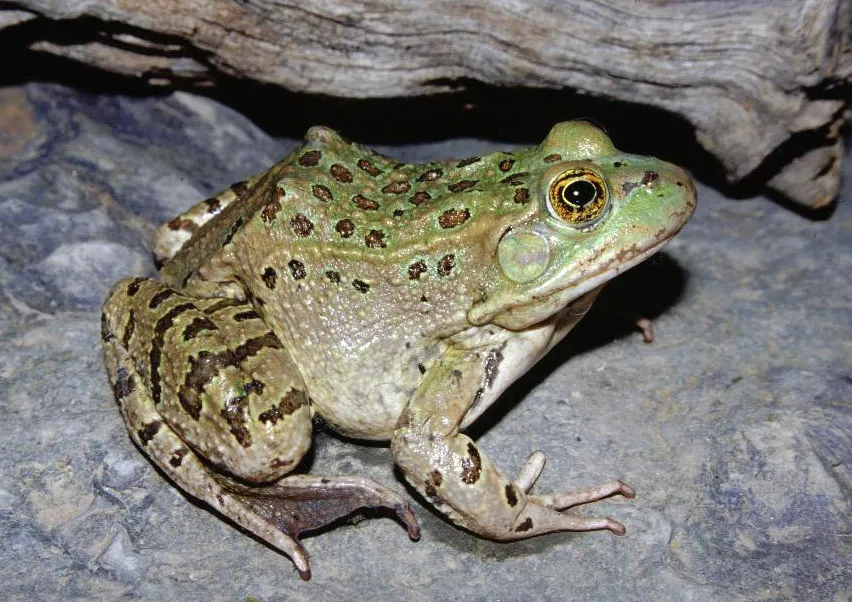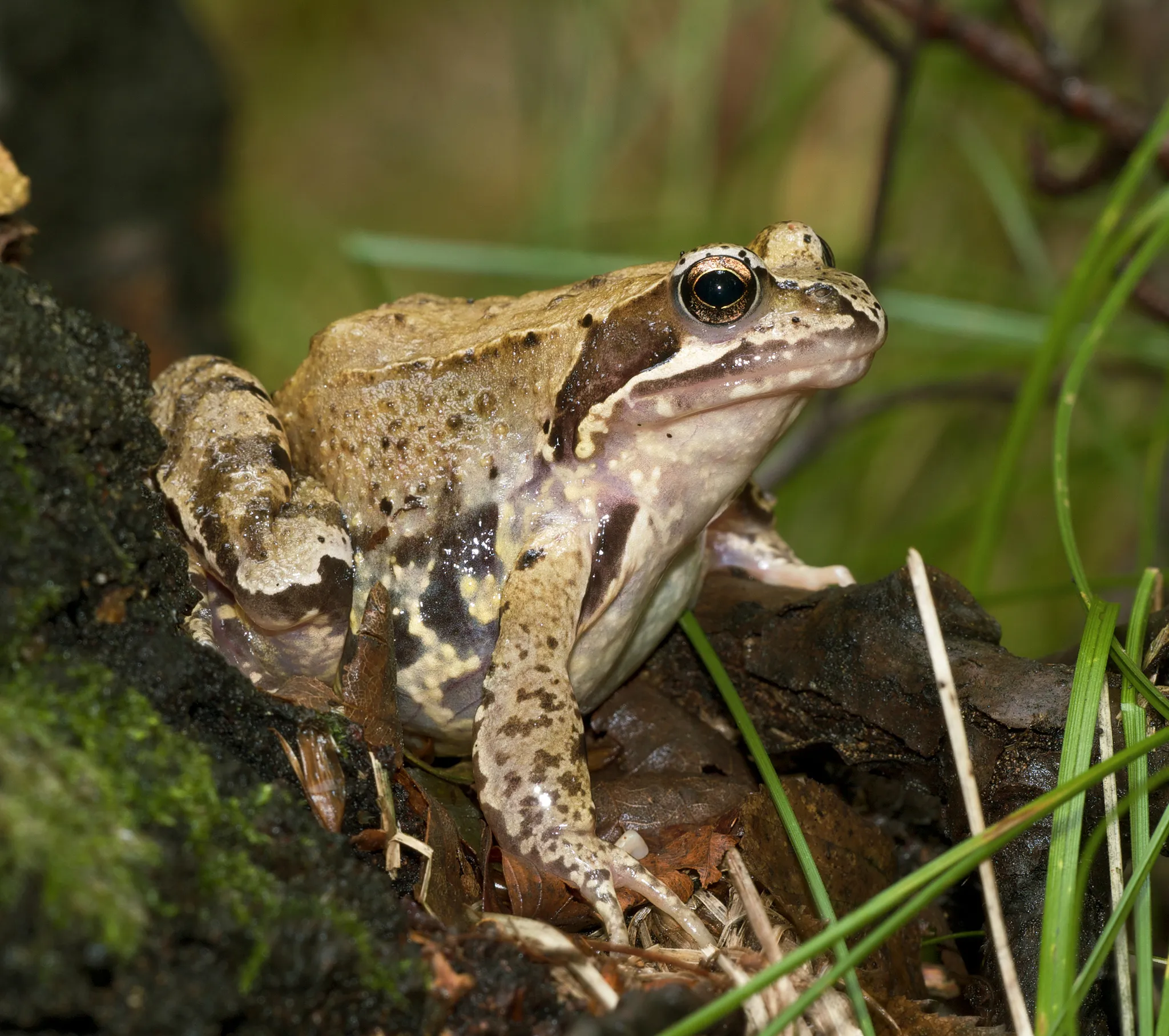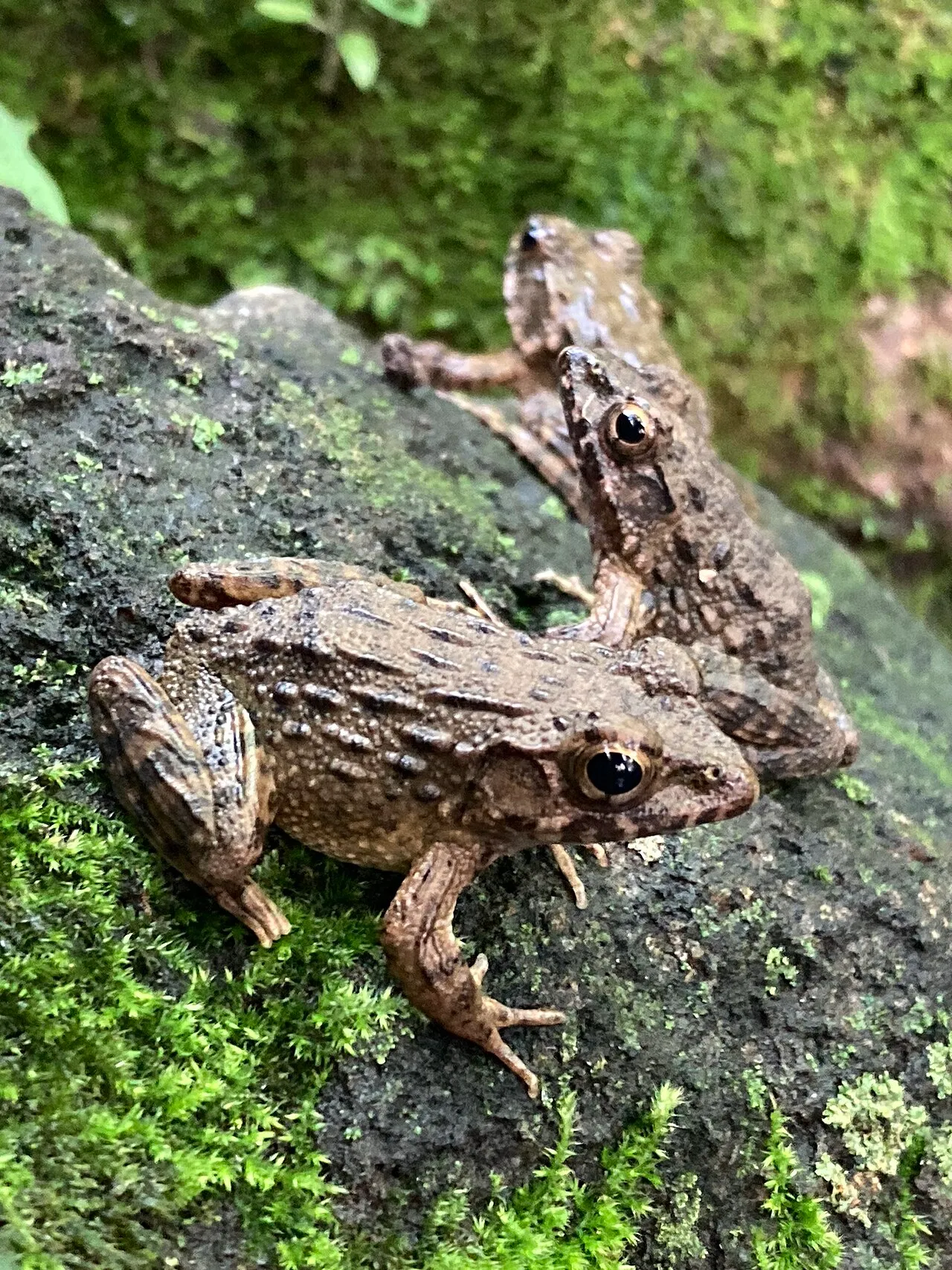
The Japanese wrinkled frog, Glandirana rugosa, is a true frog of the family Ranidae. The US Geological Survey gives its native range as Japan, Korea, northeastern China and parts of the Russian Far East, citing a 19992 study. Japan’s National Institute for Environmental Studies (NIES) lists the same natural range, and within Japan names Honshu, Shikoku, Kyushu and peripheral islands1 such as Sadogashima, Oki and Yakushima.
A narrower treatment counts the mainland frogs as a separate species, the Imienpo Station frog (Glandirana emeljanovi), and gives G. rugosa as native to Japan. A 2022 study of genetic and morphological variation then described the East group of G. rugosa as a new species, G. reliquia. The species is known to include several geographic groups differing in sex chromosomes4, with both male (XX/XY) and female (ZZ/ZW) heterogamety3 in different parts of Japan.
Outside Asia, the frog was stocked for biocontrol in Hawaii. In a table updated in October 2026, USGS records observations from 1896 to 2025 in the drainages of Hawaii, Kauai, Maui and Oahu, and gives the frog’s status as established in Hawaii, with the note that populations may not be currently present2.
Identification
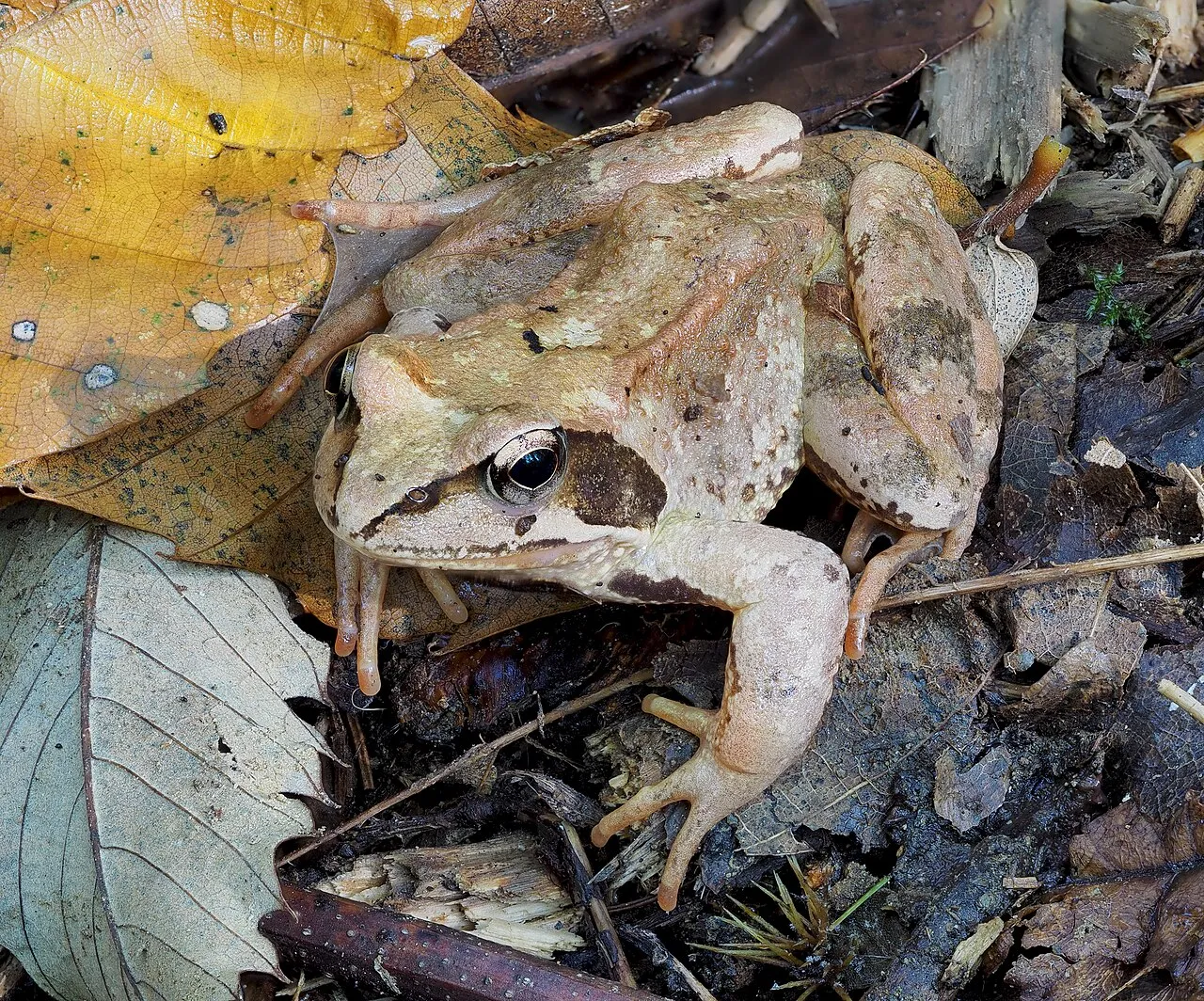
Adult frogs used in a 2013 predation study measured 28–47 mm. The adult has warty skin with a strong, unique odour5 to its secretion. That rough and uneven skin distinguishes it and G. emeljanovi from other species3.
Even so, the Indian rice frog resembles it in colour, size and the small ridges on its back5, which is why the 2013 study chose it as a control.
Habitat and range
In Japan the frog lives in rice fields, artificial ponds, lowland and montane streams and swamps1.
It has also been introduced within Japan. NIES lists introduced populations on the Izu Islands (Izuoshima, Niijima, Miyakejima) and in several areas of southern and western Hokkaido, where it was first recorded in 1985. Tadpoles may have hitchhiked on carp seedlings for aquaculture to reach Hokkaido. In its 2012 profile, NIES gave the origin of the introduced frogs as unknown, possibly several areas in Japan. That profile also noted a record from Kuchinoshima in the Tokara Islands, where establishment status was then unknown. The Hawaiian frogs came from Japan1.
Behaviour and breeding
The frog breeds in various freshwater environments3, the same ponds, streams and wetlands it lives in.
A 2001 study compared its diet with that of Rana nigromaculata where the two share Japanese rice fields. G. rugosa ate mainly ants (56%), against 16% of prey items for its neighbour. The same ground prey in both diets suggests that the two forage on the ground syntopically rather than splitting feeding sites. Its comparatively wider mouth suggests that its ant-heavy diet is not the result of morphological constraints. The difference seems to have resulted from selection of different prey, and this split may be facilitating their coexistence6.
The 2013 trials used 34 adult Japanese striped snakes caught in Fuji, Saga Prefecture, and wrinkled frogs collected in the same area in July 2009. Its skin secretion helps it avoid predation by snakes. The frog is rarely found in the natural diet of the Japanese striped snake (Elaphe quadrivirgata), considered a general predator of amphibians. In the 2013 experiments no G. rugosa were swallowed and all survived being bitten, while 70.6% of Indian rice frogs were killed. Snakes that bit it spat out the frogs and showed gaping, opening and closing their mouths. Brown frogs coated with its secretion were bitten or swallowed less often than controls. In the authors’ own observations, snakes did not die shortly after contact with the frog, and it is not clear whether the secretion is bitter5 to them.
Conservation
Glandirana rugosa is listed as Least Concern on the IUCN Red List (edition 2022.27). In its 2021 assessment the IUCN did not consider it faced by any significant threats3.
Similar species
- Indian rice frog (Fejervarya limnocharis): similar colour, size and back ridges, but its skin secretion is odorless for humans5, unlike the strong smell of G. rugosa.
- Imienpo Station frog (Glandirana emeljanovi): shares the rough and uneven skin, but lives on the East Asian mainland3.
- Glandirana reliquia (the former East group): adults show only minor differences, but its larvae have significantly more sparse skin glands4.
- Rana nigromaculata: G. rugosa has the comparatively wider mouth6 of the two at a similar size.