Exploring the Lost Beauty: The Remarkable Tale of the Rhinella nicefori Frog#
On quiet evenings in the misty Colombian forests, if you listen closely beneath the resonating symphony of nocturnal creatures, you might catch a unique, subtle note—the elusive call of Rhinella nicefori. Known by many as Niceforo’s Toad, this remarkably uncommon amphibian embodies the intricate balance and hidden wonders of South American ecosystems. Although not as widely celebrated as more flamboyant rainforest species, Rhinella nicefori commands our attention through its enigmatic charm and crucial, yet often overlooked ecological role.
Named in honor of Hermano Nicéforo Maria, a respected Colombian naturalist dedicated to biodiversity preservation, Rhinella nicefori carries a legacy of natural exploration intertwined with profound conservation lessons. Yet, disturbingly, its story remains one of struggle—a persistent quest for survival amidst rapidly diminishing habitats and an uncertain environmental future. Intrigued? Let’s journey together into the mist-shrouded woodlands this unique toad calls home.
Taxonomy and Classification#
Rhinella nicefori belongs to the family Bufonidae, known commonly as true toads, comprising hundreds of species across the globe. Within the extensive genus Rhinella, known for species that evolved distinct adaptions suitable for diverse ecological niches, Niceforo’s Toad stands as a testament to nature’s evolutionary artistry. Initially described scientifically by Cochran and Goin in 1970, Rhinella nicefori fits precisely into a distinct grouping, reflecting clear lineage and close evolutionary connections to other Rhinella species, such as Rhinella marina and Rhinella granulosa.
The clarity and precision of taxonomic classification serve more than mere scientific curiosity—it helps conservationists effectively channel resources toward protecting genetically unique species. By describing and understanding Rhinella nicefori’s taxonomy, researchers underscore the significance of conserving its population and genetic diversity amid increasing pressures on its habitat.
Natural Habitat#
Geographic Range and Distribution#
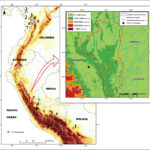
Endemic to Colombia, Rhinella nicefori occupies a relatively limited natural geographic range, primarily found in the lush foothills of the Colombian Andes. Surveys affirm its presence within Santander, Boyacá, and surrounding regions, emphasizing its restricted distribution in fragmented subtropical forests. These forests, gently layered with moss-covered stones, gently flowing streams, and verdant undergrowth, create an ideal microclimate where Rhinella nicefori thrives. This limited geographic range makes Rhinella nicefori highly vulnerable to localized environmental changes.
Habitat Preferences#
Niceforo’s Toad shows a strong affinity for cloud forest habitats, characterized by consistent moisture, cool temperatures, and a dense cover of vegetation. The rugged terrain, permeated by small rivulets and bordered by dense, shady foliage, creates numerous niches where this crepuscular amphibian moves discreetly beneath leaf litter and decaying vegetation. Each moss-covered stone and moisture-laden leaf serves as essential microhabitats, providing shelter from predators and climatic fluctuations.
The persistent fog and perpetual dampness offer constant hydration—crucial for amphibian survival—as their permeable skin requires steady environmental moisture to avoid desiccation. Thus, Rhinella nicefori provides a vivid case study into how specialized habitats shape amphibian evolution, behaviors, and physiological adaptations.
Physical Characteristics#
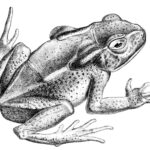
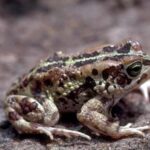
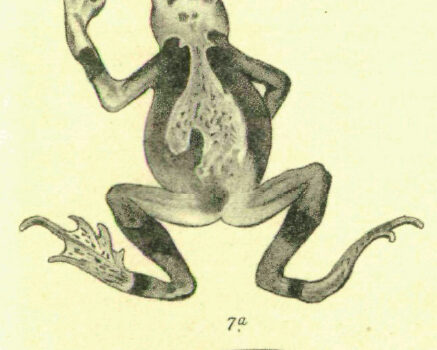
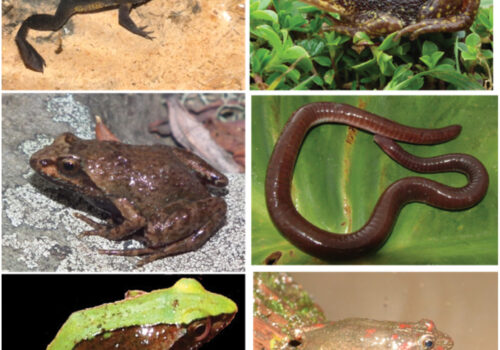
Physically unassuming yet biologically captivating, Rhinella nicefori exhibits features uniquely adapted to its environment. Adults typically measure between 35 and 55mm, their compact yet robust form ideal for navigating leaf litter and rocky terrain. Their skin, characterized by a scale-like texture of small, granular warts, provides effective camouflage and protection from irritation or infection, vital for a moist yet pathogen-filled environment.
Coloration varies subtly, typically ranging from earthy browns and tans to muted olive greens, perfectly blending this secretive amphibian into its forest-floor background. Occasionally, delicate black spotting adorns their backs, speckled patterns reminiscent of rain-soaked earth, adding an intricate, natural aesthetic that rewards careful observers.
Each limb reveals powerful hind legs, adapted to short yet effective jumps, and sturdy forelimbs capable of pressing beneath tangled roots and leaf piles in search of shelter and prey. Their eyes, golden to copper-colored, reflect a profound adaptation to low-light visibility, enabling exceptional nocturnal navigation. In every aspect of its physical form, Rhinella nicefori subtly tells the tale of its longstanding evolutionary dance with its habitat.
Behavior and Life Cycle#
Feeding Habits#
Precision hunters, Rhinella nicefori emerge primarily at twilight and early nightfall, guided by acute sensory abilities honed to detect vibrations and subtle movements within the undergrowth. Like other bufonids, their diet predominantly consists of small invertebrates, including ants, spiders, beetles, and even tiny snails. Their sticky, projectile tongue seizes prey rapidly, a decisive act of predation essential for survival in competitive forest habitats.
Mating and Reproduction#
Each rainy season heralds a vibrant drama of breeding rituals. Male Niceforo’s Toads congregate near shallow streams and forest pools, where their distinct, resonating calls permeate humid nights, attractively vibrating through cool mountain air. Females, carefully assessing calls indicating male fitness, select desirable mates. Subsequently, they release strings of gelatinous eggs into freshwater locations, typically attaching them carefully to submerged vegetation or rocks, where the developing tadpoles benefit from shelter and nutritional components.
The metamorphosis from larvae into fully terrestrial toads remains a particularly vulnerable period, demanding protection within meticulously chosen microhabitats. Juvenile toads gradually adopt terrestrial lifestyles, integrating into the forest’s ecological tapestry, awaiting maturity to repeat their species’ impressive life cycle.
Ecological Role#
Despite their modest appearance, Rhinella nicefori plays a fundamental role within its forest ecosystem. Predominantly insectivorous, their continuous consumption of insects and other small arthropods significantly shapes invertebrate populations, maintaining healthy ecological balances. Conversely, their own role as prey contributes to food webs as numerous forest creatures depend upon amphibians like Rhinella nicefori as key dietary resources. Birds, mammals, snakes, and larger amphibians see these toads as essential nourishment, creating an intricate, interconnected cycle that supports diverse ecosystem vitality.
Furthermore, amphibians such as Rhinella nicefori often serve as important environmental indicators. Their permeable skin and susceptibility to subtle environmental toxins and climate changes highlight them as explicit warning systems. Declines or diseases within amphibian populations often signal broader environmental challenges, alerting scientists and conservationists to urgent ecological concerns.
Threats and Conservation Status#
Unfortunately, Rhinella nicefori’s localized distribution and habitat specificity render it highly susceptible to habitat degradation. The accelerating pace of deforestation for agriculture, cattle ranching, urbanization, and mining dramatically fragments their cloud forest habitats. Pollution and pesticide runoff further compound threats, impacting sensitive amphibian physiology and reproduction.
As a result of these persistent pressures, the International Union for Conservation of Nature (IUCN) classifies Rhinella nicefori as Endangered (EN), underscoring urgent conservation needs. Current conservation measures include habitat preservation initiatives across the Colombian Andes, ecological awareness programs focused on sustaining local biodiversity, and ongoing scientific monitoring. Greater awareness and sustainable engagement practices remain crucial in ensuring Rhinella nicefori’s long-term survival.
Cultural and Scientific Significance#
Although Rhinella nicefori may not be widely represented in popular cultures, its preservation contributes significantly to local identity and pride within communities sharing mountainous territories. The rich biodiversity symbolized by this humble amphibian underscores a wider value—an appreciation of nature’s shared heritage, fostering environmental stewardship and education.
Scientifically, studying Rhinella nicefori yields insights relevant to broader ecological health, climate change models, amphibian biology, and evolutionary studies. Continued research deepens understanding into the effects environmental pressures exert on wildlife adaptability and resilience, providing critical data for global amphibian conservation initiatives.
Conclusion: Conserving a Quiet Wonder#
While Rhinella nicefori may lack widespread fame, its quiet presence deeply enriches our natural world. This unique amphibian exemplifies why biodiversity conservation remains critical—every species, small and seemingly unassuming, holds intrinsic ecological, scientific, and cultural value.
As we conclude our journey through misty Colombian forests, let Niceforo’s Toad inspire active participation in conservation. Whether supporting local initiatives, spreading knowledge, or simply recognizing the profound interconnectedness of life, your actions can safeguard vital habitats and ensure Rhinella nicefori endures, elegantly silent beneath moonlit forest canopies, forever fascinating to those who seek its modest beauty.