- The Intriguing World of the Granular Toad (Rhinella granulosa): Ecology, Behavior, and Conservation
- Introduction: A Remarkable Survivor from the Neotropics
- Taxonomy and Classification
- Natural Habitat: Thriving in Diverse Landscapes
- Physical Characteristics: Beauty Beyond the Surface
- Behavior and Life Cycle: Secretive Existences Unveiled
- Ecological Role: An Essential Link in the Web of Life
- Threats and Conservation Status: Safeguarding a Hardy Survivor
- Cultural and Scientific Significance: Quiet Guardians of Insight
- Conclusion: Celebrating an Underappreciated Amphibian
The Intriguing World of the Granular Toad (Rhinella granulosa): Ecology, Behavior, and Conservation#
Introduction: A Remarkable Survivor from the Neotropics#
In the warm twilight of Brazil’s dry northeastern landscape, amid rocky outcrops, open savannas, and quiet rural backyards, a diligent survivor emerges each evening. It hops in measured leaps, glistening gently beneath moonlight, quietly evoking wonder at its resilience and adaptability. This creature is the Granular Toad, scientifically known as Rhinella granulosa. While perhaps not as brightly colored or flamboyant as some other amphibians in the tropics, its intriguing survival strategies and its quiet presence have captured the imagination of naturalists, scientists, and nature enthusiasts alike. With rough skin replete with small granular textures—earning it its common and scientific name—it holds many secrets worth discovering.
Taxonomy and Classification#
Belonging to the family Bufonidae, the Granular Toad is officially known as Rhinella granulosa—a species that has undergone intriguing taxonomic journeys. Previously placed in the extensive genus Bufo, genetic studies have refined our understanding, positioning this remarkable species firmly within the Rhinella genus. This genus notably includes species renowned for their resilience in varying habitats throughout the Americas.
The Bufonidae family, commonly referred to as true toads, encompasses a diverse array of amphibians known for their distinct, robust bodies and toxicity glands located prominently behind their eyes. Closely related cousins include the infamous Cane Toad (Rhinella marina), underscoring the ecological versatility and adaptable nature intrinsic to this fascinating taxonomic family.
Natural Habitat: Thriving in Diverse Landscapes#
The Granular Toad demonstrates a unique affinity for habitats that challenge many other amphibians. Predominantly distributed throughout eastern and northeastern Brazil, it also populates regions of Argentina, Paraguay, Bolivia, and Uruguay—adapting skillfully to a broad array of landscapes. Whether in semi-arid Caatinga ecosystems, open fields, cultivated lands, or even suburban gardens, Rhinella granulosa consistently exhibits a resilient character.
Adapting to Semi-Arid Conditions#
Within Brazil’s northeastern Caatinga biome, characterized by seasonal droughts and intermittent rainfall, this amphibian demonstrates incredible flexibility. Utilizing crevices in rocks, burrows beneath scattered vegetation, or sheltered corners of rural buildings, the Granular Toad capitalizes on microhabitats that provide protection from desiccating winds and harsh sunlight. These retreats offer safe locations for moisture conservation, essential to amphibians, which generally require a reliable water source.
Moreover, this species has developed physiological adaptations permitting it to tolerate significant water loss. During extended dry periods, it can bury itself within soil, entering dormant states synonymous with aestivation. Mobilizing energy resources judiciously, the Granular Toad patiently awaits the life-giving rains that briefly transform the arid terrain into vibrant ecosystems teeming with life.
Physical Characteristics: Beauty Beyond the Surface#
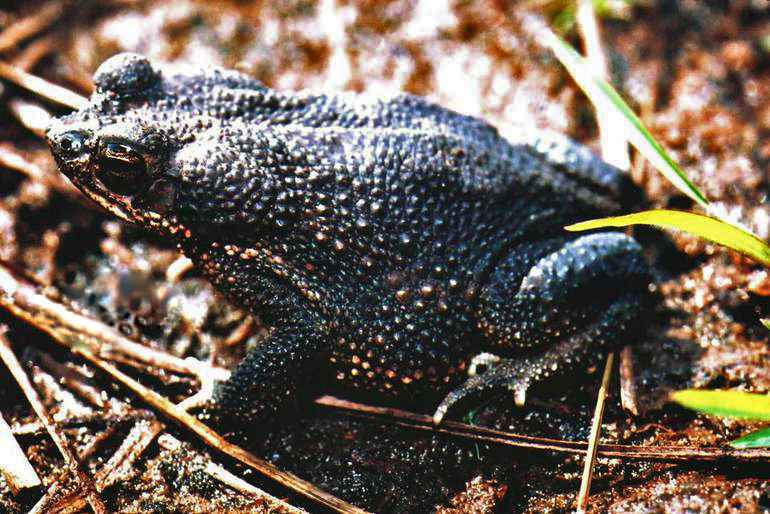
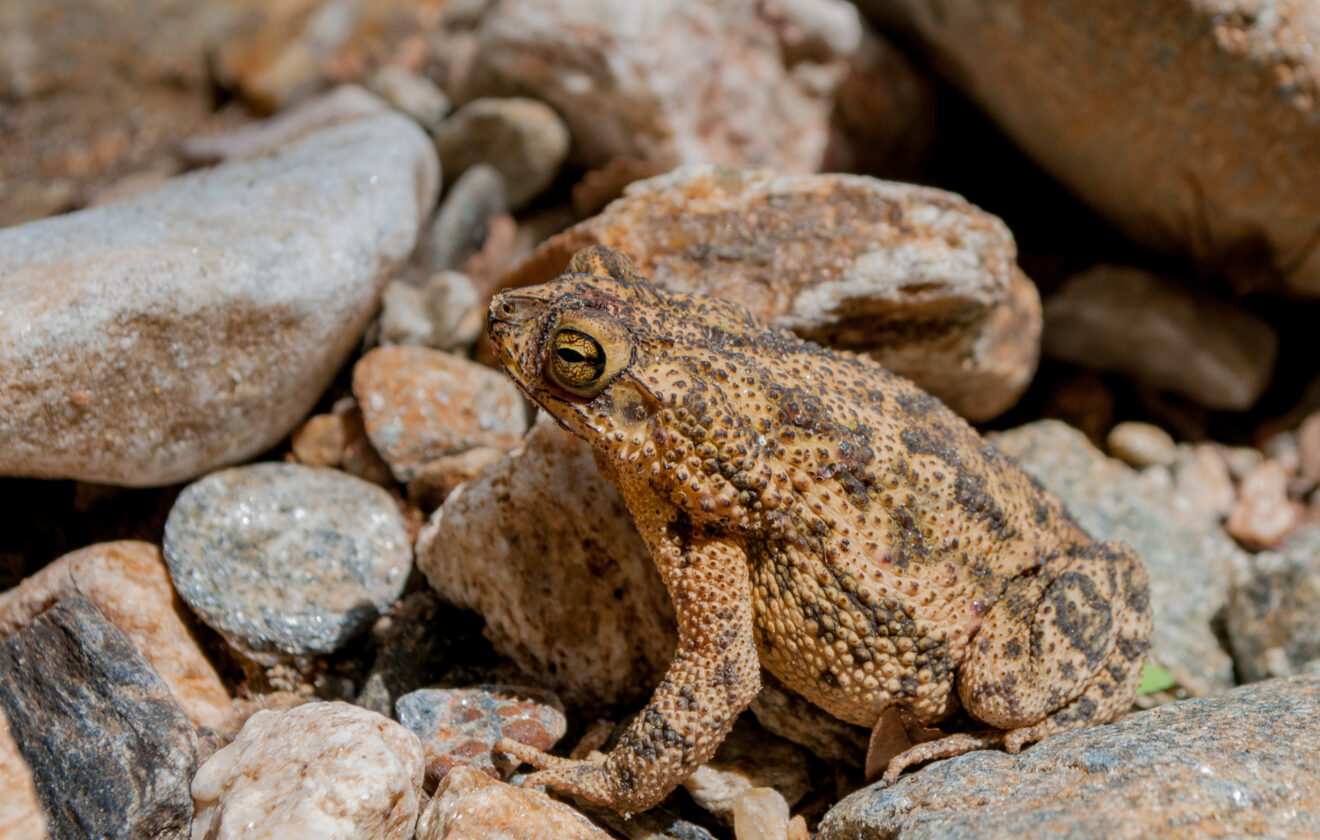
At first glance, the Granular Toad may seem modest compared to more brightly patterned amphibians, yet its intricate features become increasingly profound upon closer inspection. Measuring typically between 3 to 7 centimeters in length, this small to medium-sized amphibian exhibits a stocky build that is both rugged and sturdy. Its rough skin, textured with granular bumps, protects it against predation while simultaneously helping conserve moisture.
A Palette of Camouflage#
Ranging in coloration from shades of olive, gray, reddish-brown, to dark brown, their appearance beautifully aligns with their natural environments. This muted coloration offers perfect camouflage, allowing the Granular Toad to blend seamlessly among leaf litter, rocks, and soil textures. Underlined by subtle darker markings, this cryptic patterning foils predators attempting to detect them from afar.
Prominent parotoid glands positioned behind their expressive eyes are another notable feature of this species—characteristic of many true toads. These glands secrete defensive toxins that discourage predators, making the Granular Toad a notably unappealing meal to many animals. This effective defense may also contribute to the amphibian’s bold appearance in human-altered habitats, reflective of an ancient strategy evolved over millennia.
Behavior and Life Cycle: Secretive Existences Unveiled#
While not instantly recognized for flamboyant behaviors, the Granular Toad exhibits captivating ecological and behavioral adaptations, critical for thriving in challenging environmental conditions.
Nocturnal Foragers of Efficiency#
The Granular Toad is primarily nocturnal, stepping out from shelters as the daylight fades into dusk. Beneath starlit skies and the soft glow of moonlight, these toads scour their habitats with deliberate movements, consuming insects, spiders, worms, and small invertebrates with a voracious appetite. They employ a sit-and-wait hunting strategy, intimately attuned to subtle vibrations and movements around them, showcasing extraordinary sensory acuity.
Reproduction: Life-Giving Rains and Vocal Rhapsodies#
The Granular Toad’s breeding cycle is intimately tied to seasonal rainfall patterns. The arrival of rain provides ponds, shallow pools, and temporary streams—perfect nurseries for the next generation. Male Rhinella granulosa produce gentle, rhythmic calls that carry through humid evenings, attracting females drawn instinctively toward these melodic choruses. Mating occurs swiftly, resulting in the delicate deposition of long strings of gelatinous eggs clustered within shallow waters.
The eggs soon hatch into small, agile tadpoles, rapidly adapting to life beneath the water’s surface. Within a few short months, tadpoles metamorphose into juvenile toads, embarking on their terrestrial adventures toward adulthood. This efficient life cycle allows them to adapt to ephemeral aquatic environments—turning fleeting rains into abundant opportunities.
Ecological Role: An Essential Link in the Web of Life#
Though understated in appearance, the Granular Toad plays a crucial ecological role in its ecosystems. By consuming a range of invertebrate populations, they serve as effective biological pest control agents, contributing significantly to ecosystems’ balance and agricultural productivity. Their presence also provides sustenance to larger predators, including birds, snakes, mammals, and other amphibians—underscoring their central role within the food web.
Additionally, amphibians often serve as sensitive environmental indicators. Fluctuations in their populations can highlight broader ecological concerns such as habitat degradation, pollution, and climatic shifts—providing invaluable insights for conservationists and environmental managers.
Threats and Conservation Status: Safeguarding a Hardy Survivor#
The Granular Toad currently holds a classification of Least Concern according to the IUCN Red List, thanks to its widespread distribution and impressive adaptability. Nonetheless, habitat destruction, pollution from agricultural runoff, and climate change represent looming threats that challenge even this resilient species. Continued vigilance, regional studies, and habitat assessments remain essential, particularly in rapidly urbanizing or agriculturally intensified landscapes.
Grassroots conservation efforts, environmental education initiatives, and habitat protection programs are vital in safeguarding the Granular Toad’s future. Ensuring the stability of amphibian populations directly contributes to healthy, balanced, and productive ecosystems, benefiting both wildlife and human communities.
Cultural and Scientific Significance: Quiet Guardians of Insight#
Throughout regions where the Granular Toad thrives, rural communities frequently associate its cheerful, rainy-season calls with forthcoming prosperity and fertility for crops. Moreover, scientific research continues to uncover intriguing biochemical properties found in the toxins emitted from its parotoid glands, potential sources for medicinal applications ranging from antimicrobial agents to novel pharmaceuticals.
Conclusion: Celebrating an Underappreciated Amphibian#
The Granular Toad—subtle yet profoundly fascinating—provides a testament to the evolutionary ingenuity and resilience of amphibians. Understanding and appreciating Rhinella granulosa not only enriches our perspectives but fuels broader conservation imperatives highlighting the interconnectedness of life on Earth. Through continued awareness, appreciation, and action, we collectively ensure that this remarkable amphibian maintains its rightful place beneath silent moons and within flourishing ecosystems for generations to come.