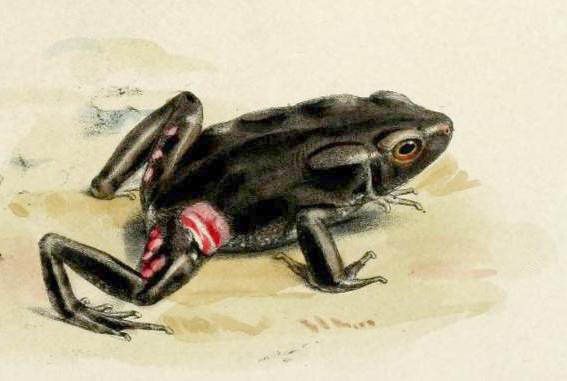
Secrets of the Smooth-Skinned Toad: Exploring the World of Rhaebo glaberrimus#
Under the verdant canopy of South America’s tropical forests, hidden among fallen leaves and shadow-cloaked roots, dwells an amphibian whose subtle charms and vital ecological role remain largely unnoticed by the untrained eye. The smooth-skinned toad, known scientifically as Rhaebo glaberrimus, invites intrigue and fascination through its quiet existence in dense rainforest habitats. Unlike more colorful or flamboyant amphibians, this subtle creature relies not on bright warnings or striking forms but on an understated blend into its surroundings—a master of the art of camouflage and quiet stealth. Yet behind this unassuming exterior lies an organism profoundly significant in its ecological web, remarkably adapted to rainforest life, and deserving attention for its nuanced beauty and importance to biodiversity.
Imagine stepping gingerly through a forest floor dappled with shadows and punctuated by bursts of sunlight spilling through gaps in the leafy canopy. Amidst the chorus of insects and distant calls of birds, your foot brushes gently past a cluster of damp leaves, sending tiny droplets of water scattering. There, nestled perfectly still, and harmonized in hues of earthy browns and auburn, sits Rhaebo glaberrimus, its smooth, moist skin reflecting the faint gleam of forest sunlight. A captivating moment, fleeting but deeply memorable—such encounters underscore the enigmatic allure of this little-studied species.
Taxonomy and Classification#
The smooth-skinned toad belongs to the family Bufonidae, a diverse group famously known as the true toads—a term distinguishing them from frogs primarily by their rugged, glandular appearance. Yet, intriguingly, Rhaebo glaberrimus breaks convention by its notably less rough, virtually smooth skin, a characteristic from which its scientific name, “glaberrimus,” literally meaning “smoothest,” is derived.
Within the genus Rhaebo, which encompasses a modest but fascinating array of neotropical toads specialized in terrestrial, leaf-litter life, Rhaebo glaberrimus stands out. Closely related to species such as Rhaebo haematiticus and Rhaebo guttatus, this species’ comparative rarity and discreet habits have made it among the least understood members of its genus—adding to its intrinsic allure for scientists and naturalists alike.
Natural Habitat#
Distribution and Range#
Rhaebo glaberrimus inhabits a realm of abundant biodiversity—the humid lowland and foothill forests of Western Colombia and Ecuador. Its range spans a lush belt along the Pacific slope of the northern Andes, a region renowned for remarkable biodiversity borne of complex geography and variable climate zones. Rainfall here is abundant, maintaining richly verdant vegetation and providing essential moisture crucial for amphibian survival.
Habitat Specialization#
This species dwells primarily within the leaf litter covering shady forest floors, usually near streams or humid areas where moisture content remains stable. Thus, the smooth-skinned toad exemplifies an amphibian exquisitely adapted to moist tropical environments. Contrary to tree frogs, with their arboreal lifestyles, Rhaebo glaberrimus thrives in terrestrial microhabitats, blending seamlessly into piles of fallen leaves, decaying vegetation, and shade-soaked forest floor detritus.
Because of their cryptic coloration and preference for shady concealment, encounters with this elusive amphibian are precious and enlightening experiences—fleeting glimpses into the hidden life thriving beneath the forest’s green veil.
Physical Characteristics#
A Subtle Beauty: Form and Coloration#
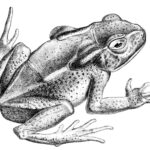
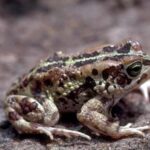
The smooth-skinned toad may not boast flamboyant colors or striking patterns, yet it holds quiet elegance all its own. Adults typically measure between 45 to 70 millimeters, a moderate size notable for toads of their genus. Their body shape is robust yet streamlined enough to move unobtrusively through tangled underbrush and leaf litter.
The striking characteristic, of course, is their exceptionally smooth skin—so smooth, in fact, as to give these creatures their Latin moniker since its original description. A sleek, almost satiny appearance distinguishes it from other rougher-skinned relatives.
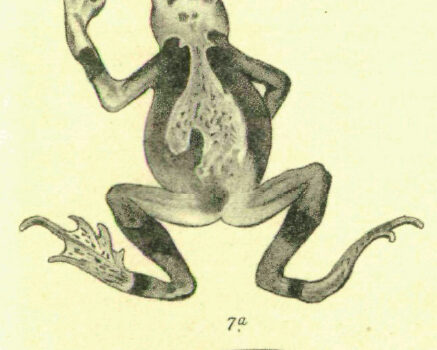
Color-wise, Rhaebo glaberrimus exhibits hues remarkably similar to the forest floor where it dwells. Chestnut browns, olive-gray, deep umbers, and subtle shades of rust blend in nearly perfect camouflage with damp leaf-covered terrain. Ventral coloration is pale, generally creamier and paler in hue, providing an effective disguise from beneath against a backdrop of dappled forest light.
Adaptive Traits in Action#
The coloration and concealment strategies of Rhaebo glaberrimus are fundamentally survival-driven. In the subtle intrigue of evolutionary adaptation, these traits are precisely fine-tuned—key armour in the eternal predator-prey arms race. Smooth skin, moreover, assists in quick movement through wet leaves and soils, reducing friction and offering advantage when evasive action becomes necessary.
Behavior and Life Cycle#
Dinner Among the Leaves: Feeding Habits#
Beneath the leafy canopy shelter, the smooth-skinned toad emerges primarily during twilight and nighttime hours to forage for food. An opportunistic carnivore, it feasts primarily on insects and small invertebrates. Equipped with sharp senses attuned to nocturnal forest-floor life, they hunt carefully amid the branches, roots, and litter, their quick tongues darting forth expertly to secure prey. Each successful catch supports not only their survival but perpetuates the delicate balance of rainforest ecosystems.
Love Songs in the Dark: Breeding and Reproduction#
With the arrival of the wet season, rainstorms bring these elusive amphibians into a more visible frenzy of secretive mating rituals. Males vocalize within the moist, leaf-laden shelter to attract females—a subtle chorus rather than the loud calls common to many tropical amphibians.
Egg-laying usually occurs in calm streams or shallow pools formed by rainfall. Clutches number in the hundreds, carefully concealed among aquatic vegetation or under submerged leaves. After hatching, tadpoles remain in the shaded pools and slowly develop, gaining nourishment and growth until they metamorphose and transition to terrestrial life. The cycle of growth and life in shadowed leaves and quiet waters renews annually, maintaining the species’ discreet presence beneath the rainforest canopy.
Ecological Role#
Rhaebo glaberrimus occupies a crucial role as both predator and prey in its rainforest ecosystem. As night-time insectivores, these amphibians help regulate populations of bugs and small invertebrates, contributing to the delicate ecological balance. Simultaneously, these amphibians serve as important food sources for numerous predators, including snakes, birds, mammals, and even larger frogs.
Moreover, amphibians are often considered vital indicators of environmental health. Their permeable skins, frequently moist and sensitive to pollutants and environmental changes, quickly reflect ecosystemic stressors. As such, studying Rhaebo glaberrimus offers important insights both into amphibian adaptations and broader ecological health.
Threats and Conservation Status#
Currently designated as “Least Concern” according to the International Union for Conservation of Nature (IUCN), Rhaebo glaberrimus remains relatively stable in suitable habitats. However, persistent threats such as habitat destruction due to deforestation, agricultural expansion, and climate-driven environmental changes create concerns for the future. Amphibian species globally face alarming declines due to habitat fragmentation, pollution, disease outbreaks—particularly chytrid fungus—and climate instability.
Continued vigilance—including sustainable forest management, environmental preservation, and scientific monitoring—remains imperative to ensure the ongoing survival of this subtle yet uniquely charming amphibian.
Cultural and Scientific Significance#
Though not overtly featured in folklore or indigenous symbolism as more charismatic species occasionally are, smooth-skinned toads like Rhaebo glaberrimus hold profound value scientifically. Biodiversity studies seeking to understand ecological mechanisms and environmental health often appreciate amphibians as key indicator species. Each piece of knowledge gained from these organisms enriches our ecological understanding and supports broader conservation efforts.
Conclusion#
Rhaebo glaberrimus, the delicate yet robust smooth-skinned forest dweller, illustrates how subtlety and quiet adaptation can reveal significant ecological strength and importance. On our dynamic and diverse planet, even discreet amphibians play crucial roles, meriting respect, admiration, and dedicated conservation effort. By learning and advocating for the preservation of such species, we renew our commitment to biodiversity and planetary health, ensuring thriving ecosystems for generations yet unborn to enjoy and appreciate.