Discovering the Hidden World of Rhaebo ecuadorensis: Ecuador’s Enigmatic Forest Toad#
In the rich tapestry of Ecuador’s lush, verdant rainforests, among dense foliage and the subtle whispers of wildlife echoes, lives an obscure yet captivating amphibian: Rhaebo ecuadorensis. Commonly known as the Ecuadorian Forest Toad, this species quietly navigates the forest floor with its unassuming yet mysterious presence. Despite remaining largely unseen and unnoticed by many casual observers, Rhaebo ecuadorensis plays a crucial role in the ecological balance of its delicate environment, capturing the keen interest of scientists and conservationists alike.
Striking yet elusive, the Ecuadorian Forest Toad intrigues anyone fortunate enough to observe it closely, revealing intricate secrets etched through millions of years of evolution. Among the plethora of amazing wildlife in the region, this little-known amphibian offers a profound understanding not only of the extraordinary resilience of life but also highlights ongoing challenges facing sensitive rainforest ecosystems.
Taxonomy and Classification#
Rhaebo ecuadorensis, recognized scientifically as a member of the family Bufonidae, belongs to a genus renowned for its robust, terrestrial toads. Bufonidae, commonly referred to as true toads, carries within it a myriad of fascinating creatures known for their resilience, adaptability, and striking adaptations. Within its genus Rhaebo, it shares lineage with other South American forest-dwelling toads, though each species presents unique adaptations finely tuned to their distinct habitats and niche environments.
Described formally in recent decades, this species has challenged researchers to delve deeper into understanding its evolutionary relationships. Genetic studies, along with morphological analyses, have begun shedding light on its place within toad evolutionary history, illuminating its lineage and evolutionary adaptations that allow survival in its particular environment.
Natural Habitat#
Rhaebo ecuadorensis finds its sanctuary primarily nestled within the lowland and foothill rainforests of northwestern Ecuador, a region teeming with biodiversity unparalleled elsewhere. This enchanting region, stretching from humid coastal plains into mist-shrouded tropical foothills, provides ideal conditions conducive to amphibian life—warm temperatures punctuated by frequent rainfall, the air thick and humid, and vegetation abundant and multilayered. Here, the Ecuadorian Forest Toad flourishes silently, thriving beneath dense canopies sheltering it from predators and harsh environmental fluctuations.
Habitually nocturnal and terrestrial, Rhaebo ecuadorensis roams the leaf-littered forest floors, often staying close to shallow streams, temporary pools, or moist depressions. This strategic preference ensures constant access to crucial moisture vital for skin respiration and prevents desiccation—a threat to amphibians universally.
Immersed in this emerald realm of tranquility and vibrancy, the Ecuadorian Forest Toad participates actively within the ecological interplay, subtly crafting niches and ecological interactions with countless neighbors from insects to larger predators. The intersection of humid microclimates, rich organic matter on the forest floor, and abundant stationary water sources form exactly the ecosystem this amphibian species has evolved to utilize efficiently.
Physical Characteristics#
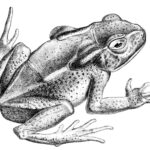
Upon first glance, the Ecuadorian Forest Toad may appear modest or even ordinary, a modest-sized amphibian typically measuring between 6 to 8 centimeters. Yet upon closer inspection, its extraordinary characteristics come vividly to life. Its robust build, sturdy limbs, and compact form lend the species an advantage in terrestrial locomotion across uneven terrain and leaf-littered pathways.
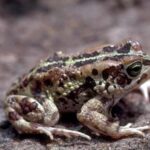
Coloration ranges from earthy browns, subtle olive-greens, to muted grays, colors designed by millions of years of evolution to blend seamlessly with the organic tones of the forest floor. Such effective camouflage ensures protection against potential predators like snakes, birds of prey, or opportunistic mammals sniffing for prey in the dark undergrowth.
Perhaps most compelling is the skin texture, rough yet distinctly patterned, frequently adorned with scattered wart-like protrusions characteristic of true toads. Such topography is far beyond mere aesthetics—it acts as a first-line defense, deterring predators that might otherwise feast upon its vulnerable form. Behind its eyes, pronounced parotoid glands sit prominently, capable of secreting toxins potent enough to dissuade prospective predators.
Behavior and Life Cycle#
Stepping quietly into the dim twilight hours, when subtle moonlight penetrates the dense canopy to illuminate patches of forest floor, is when Rhaebo ecuadorensis awakens. Alert, cautious, and constantly vigilant, the Ecuadorian Forest Toad emerges slowly from its sheltered hideaways, setting out on nightly foraging expeditions in search of nourishment.
The Art of Feeding in Darkness#
Primarily insectivorous, this toad patiently utilizes its keen senses to detect movements and vibrations beneath falling leaves and damp detritus. Its alert eyes and sensitive skin receptors guide it toward prey such as beetles, ants, spiders, and occasional soft-bodied invertebrates. With surprising speed and accuracy, once prey is detected, a rapid, precise tongue flick ensues, capturing the unsuspecting creature efficiently.
Breeding: Nature’s Subtle Ballet#
The rhythm of life cycles for forest-dwelling amphibians follows the gentle ebb and flow of seasonal rains. These environmental signals trigger reproductive instincts, drawing Ecuadorian Forest Toads toward seasonal pools and slow-flowing streams. Male toads arrive slightly earlier, settling in optimal locations and soon beginning their characteristic calls—a low, mellow trill that punctuates the quiet humid night air.
Female counterparts respond, drawn to the calls and selecting mates based partly upon the strength and resonance of male vocalizations. Upon pairing, fertilization occurs externally, where strings of gelatinous eggs are laid amidst shallow, vegetation-filled waters, carefully concealed from predators. Tadpoles emerge, transitioning through metamorphosis stages rapidly given the accelerated pace necessary in these temporary aquatic habitats.
Ecological Role#
Though diminutive and quiet, Rhaebo ecuadorensis plays a formidable role within its ecological context. Acting as predators controlling insect populations, they are an integral part of natural pest management, safeguarding vegetation and forest health. Conversely, their presence provides critical sustenance to various predators higher in the trophic ladder, from snakes to birds, thus existing in delicate ecological balance and biodiversity.
Yet beyond mere predator-prey relationships, the Ecuadorian Forest Toad serves as a vital bio-indicator species. Amphibians, particularly rainforest-dwelling species, are highly sensitive to environmental changes owing to their permeable skin and complex lifecycles. Their health and abundance reflect subtle hints about the overall health of forest ecosystems, offering valuable signals about imminent threats like pollution or habitat degradation.
Threats and Conservation Status#
Despite their profound ecological importance, Ecuadorian Forest Toads face intensifying threats. Habitat destruction stands prominent among these dangers, primarily due to expanding agriculture, logging, and infrastructure development. Fragmentation fiercely isolates populations, disrupting critical breeding and feeding habits, pushing fragile populations precariously toward decline.
An additional looming menace involves climate change, altering rainfall cycles, temperature patterns, and moisture regimes—elements fundamentally intertwined within amphibian survival. Disease outbreaks such as the chytrid fungus also represent enormous risk—capable of decimating populations rapidly and ruthlessly.
Currently listed under “Near Threatened” status by IUCN, the urgency remains palpable. Though recognized, data scarcity hampers precise population assessment, highlighting an imminent necessity for continued research and robust protective measures. Conservationists tirelessly advocate creating ecological corridors, protecting habitat sanctuaries, and educating communities, all integral steps needed to ensure this remarkable species endures.
Cultural and Scientific Significance#
Though enigmatic and eclipsed from mainstream cultural representation, amphibians such as Rhaebo ecuadorensis hold remarkable cultural and scientific significance. Indigenous traditions within Ecuador’s forest regions frequently uphold the view of amphibians as crucial symbols of fertility, environmental balance, and territorial health—creatures deeply bound to the spirit and rhythms of nature itself.
Scientifically, every amphibian species provides invaluable insights into evolutionary biology, pharmacology, and ecology. Studying their skin secretions has yielded important medical and pharmacological discoveries, leading to critical advancements in human medicine. Monitoring them also offers profound insights into the effectiveness of conservation efforts and ecological management strategies.
Conclusion#
Only through understanding and appreciation can genuine conservation hope to succeed. Species like Rhaebo ecuadorensis—a captivating amphibian lurking quietly in twilight realms of Ecuador’s lush forests—necessitates our collective attention and proactive protection. Through continued research, rigorous habitat preservation, and community awareness, we can ensure the fascinating Ecuadorian Forest Toad thrives, continuing its subtle yet essential role within ecosystems for generations yet to discover it.