- Introducing Rhaebo atelopoides: A Creature Shrouded in Mystery
- Taxonomy and Classification: Understanding Rhaebo atelopoides' Place in Nature
- Natural Habitat: Life in the Lush Tropics
- Physical Characteristics: A Master of Camouflage and Adaptation
- Behavior and Life Cycle: Cryptic Yet Fascinating
- Ecological Role: An Integral Player in Forest Health
- Threats and Conservation Status: Challenges Facing Rhaebo atelopoides
- Cultural and Scientific Significance: Unveiling Secrets and Symbolism
- Conclusion: Celebrating and Conserving Rhaebo atelopoides
Introducing Rhaebo atelopoides: A Creature Shrouded in Mystery#
Beneath the dense emerald canopy of South America’s lush rainforest habitats, cloaked by a perpetual twilight of foliage, lives one of nature’s enigmas: the little-known Rhaebo atelopoides. Commonly referred to as the Rio Pascado stubfoot toad, this fascinating amphibian dwells secretively on the forest floor, capturing the curiosity of researchers and nature enthusiasts alike. Despite its elusive nature and limited visibility to the average eye, this unique species offers profound insights into forest ecology, biodiversity, and the fragile relationship between wildlife and environmental conservation.
Belonging to the Bufonidae family—home to many of the world’s toads—Rhaebo atelopoides is distinct not only due to its scarcity and restricted distribution but also for its intriguing behaviors and remarkable adaptations. While this species may remain unfamiliar to many, the ecological stories and biological secrets held by this fascinating amphibian undoubtedly deserve our attention and admiration.
Taxonomy and Classification: Understanding Rhaebo atelopoides’ Place in Nature#
Scientifically classified within the vast and diverse toad family, Bufonidae, Rhaebo atelopoides exists within a smaller, specialized genus known as Rhaebo. First described scientifically by Lynch and Ruiz-Carranza in 1981, its taxonomic name, atelopoides, hints at its morphological resemblance to another genus of neotropical frogs, Atelopus. Indeed, this charming amphibian shares several physical features with its more famous cousins, although subtle yet critical differences highlight its unique evolutionary path.
Closely related species within the genus Rhaebo include the larger and more widely recognized Rhaebo blombergi and Rhaebo guttatus. Together, these species illustrate a fascinating evolutionary lineage specialized for life on South America’s tropical forest floors—a testament to the abilities of amphibians to diversify and adapt to specific ecological niches.
Natural Habitat: Life in the Lush Tropics#
The remarkable Rhaebo atelopoides has a relatively limited geographic distribution, primarily inhabiting distinct pockets of forest within Colombia and Ecuador. Often dwelling in lowland tropical rainforests, it prefers damp leaf litter, fallen logs, and shaded streams. This habitat shelters abundant food sources, ample availability of moisture, and numerous protective niches from potential predators—in sum, a perfectly shaded haven for a cautiously secretive species.
Imagine yourself within such a dense, layered rainforest. Humidity cloaks every surface. Soft sunlight filters gently through lofty foliage, warming patches of mossy ground. Streams trickle nearby, while leaf litter rustles underfoot, alive with countless insects and small invertebrates. This is the thriving, yet delicate ecosystem necessary for Rhaebo atelopoides’ survival. The intricate interplay of moisture, vegetation, insects, and other amphibians underscores the essential and irreplaceable context in which this toad has evolved and thrives.
Physical Characteristics: A Master of Camouflage and Adaptation#
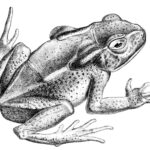
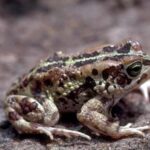
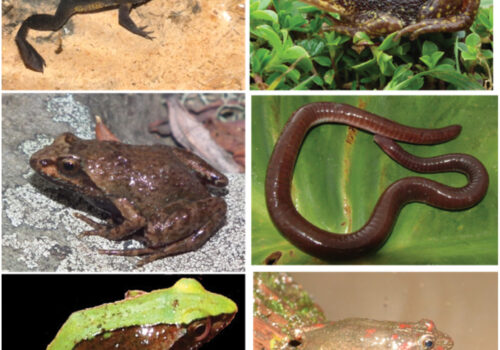
Upon encountering a Rhaebo atelopoides for the first time, your eyes might pause, uncertain, momentarily captivated by its brilliantly subtle coloration and unique form. This medium-sized toad measures around 40-60mm in length, with a smooth yet subtly textured skin, facilitating its superb camouflage against its leaf-covered habitat. Reddish-brown, olive, or tan hues dapple its dorsal surface, punctuated occasionally by dark, irregular markings that perfectly mirror the dappled shadows of rainforest floors.
Interestingly, their limbs are moderately elongated, suggesting a preference for ground-dwelling rather than arboreal lifestyles. The stubby toes, a defining “stubfoot” characteristic common within its genus, assist in navigation among moist leaves and logs, enabling efficient mobility in its cluttered habitat. Its small but expressive eyes, slightly protruding above its smooth head, are ideally positioned for vigilant observation of its surroundings—crucial for predator avoidance and prey detection.
Distinctive glands typical of Bufonidae adorn its skin, capable of secreting defensive toxins when threatened. These toxins act as potent deterrents against potential predators, offering vital protection in the teeming tropics where survival often rests on the fine line between predator and prey.
Behavior and Life Cycle: Cryptic Yet Fascinating#
Feeding Habits and Diet#
Like many amphibians, Rhaebo atelopoides is primarily insectivorous. It quietly stalks ants, beetles, spiders, and various small arthropods that scurry within the dense leaf litter. Through slow, deliberate, yet assured movements, it captures prey with a swift lunge and sticky tongue—an efficiency learned through countless generations of stealth-driven hunting practices.
Breeding Practices and Parental Care#
As rainfalls increase, signaling the breeding season, males vocalize softly with calls that echo gently through the dense undergrowth, hoping to attract receptive females. Courtship behavior remains understated and occurs mostly unseen, hidden carefully within vegetation or beneath fallen logs, sheltered from keen predator eyes.
Females lay strings of gelatinous eggs delicately draped atop calmly flowing streams or within damp, sheltered locations along stream banks. Unlike many frogs that leave their eggs behind entirely, females of this genus often exhibit slight parental care, occasionally revisiting the site to guard against predators and ensuring the safety of their developing offspring. Tadpoles mature swiftly within weeks, rapidly growing and contributing to the complex aquatic ecosystems into which they are born before transforming into juvenile toadlets. Reaching maturity in around one year, each new generation continues the nuanced cycle of life in these hidden rainforest sanctuaries.
Ecological Role: An Integral Player in Forest Health#
As both predator and prey, Rhaebo atelopoides fulfills several crucial ecological roles. By controlling populations of insects and other small arthropods, it contributes to maintaining a balanced insect population, thereby shaping the very ecosystem structure and function of its habitat. Simultaneously, it provides nourishment for larger predators such as snakes, birds, and mammals, forming indispensable links within the rainforest food web.
Moreover, amphibians like Rhaebo atelopoides are often considered indicator species, reflecting overall habitat health. Any rapid decline in their population signals ecological imbalance, alerting conservationists of broader environmental issues, such as pollution, habitat destruction, or pathogens—a vital early-warning system for ecosystems worldwide.
Threats and Conservation Status: Challenges Facing Rhaebo atelopoides#
Although detailed population studies are sparse, Rhaebo atelopoides faces significant threats that mirror broader patterns of amphibian declines globally. Habitat loss through agricultural expansion, deforestation for timber extraction, and human settlements are primary challenges—fragmenting critical environments necessary for survival. Climate change exacerbates these threats, altering rainfall patterns and humidity levels crucial for successful amphibian reproduction and overall health.
As per the latest assessment by the International Union for Conservation of Nature (IUCN), Rhaebo atelopoides is currently classified as Data Deficient, underscoring the urgent need for greater research and conservation planning. Ongoing studies, habitat preservation programs, and sustainable land management efforts remain invaluable in preventing irreversible declines in their populations.
Cultural and Scientific Significance: Unveiling Secrets and Symbolism#
Within the Amazon and Andean cultures, amphibians embody symbols of fertility, rain, renewal, and transitions between worlds. While explicit cultural references to Rhaebo atelopoides are rare, it fully embodies these symbolic roles within its natural community.
Scientifically, studying this elusive creature has helped researchers better understand amphibian resilience, toxins’ medicinal potential, ecological balances, and implications for environmental monitoring. Each discovery further emphasizes conservation necessity, illuminating our shared dependence upon these sensitive species for ecological insights and biomedically relevant findings.
Conclusion: Celebrating and Conserving Rhaebo atelopoides#
Obscure yet captivating, secretive yet vital, Rhaebo atelopoides reminds us that even the least conspicuous inhabitants play powerful, influential roles within nature’s intricate tapestry. As stewards of our planet, we possess a profound responsibility to ensure habitat preservation, promote research, and support informed conservation actions.
Through understanding and protecting creatures like Rhaebo atelopoides, we safeguard biodiversity’s delicate braiding and maintain the extraordinary ecological symphony of our shared natural heritage. Will you help champion conservation efforts that ensure the endurance of this rainforest gem, Rhaebo atelopoides, and the ecosystems it beautifully exemplifies?