- Secrets of the Cloud Forest: Discovering the Enigmatic Rhaebo andinophrynoides Frog
- Taxonomy and Classification of Rhaebo andinophrynoides
- Exploring Its Natural Cloud Forest Habitat
- Physical Characteristics: Adapted for Life Within Mists
- Behavior and Life Cycle: A Secret Life on Forest Floors
- The Ecological Role of Rhaebo andinophrynoides
- Threats and Conservation Efforts: Protecting an Amphibian Treasure
- Cultural and Scientific Significance: The Frog as Forest Ambassador
- Conclusion: The Quiet Ambassador of Ecuador's Mist-Shrouded Forest
Secrets of the Cloud Forest: Discovering the Enigmatic Rhaebo andinophrynoides Frog#
Hidden beneath verdant canopies and nestled deep within the moist, moss-covered leaf litter of tropical cloud forests, a small amphibian lives quietly, unnoticed by many, yet crucial to its ecosystem. The Rhaebo andinophrynoides is more than just another frog species; it is a fascinating creature whose story intertwines survival, adaptation, and ecological responsibility in one fragile, mountainous realm of Ecuador.
This unusual amphibian, scientifically known as Rhaebo andinophrynoides, belongs to a select group of frogs whose ecology and biology offer insights into the delicate balance of amphibian life in rapidly changing ecosystems. While relatively unknown outside specialist circles, its very existence is a testament to evolutionary resilience, hidden beauty, and ecological importance.
Journey with us as we explore the life, habitat, unique adaptations, and conservation status of this remarkable frog species, delving deep into the mysterious, mist-shrouded cloud forests that it calls home.
Taxonomy and Classification of Rhaebo andinophrynoides#
The Rhaebo andinophrynoides frog belongs to the family Bufonidae, commonly referred to as true toads. Within this diverse amphibian family, it finds its place in the intriguing genus Rhaebo. The genus itself is exclusive to tropical America, encompassing fascinating species known for their unique life strategies and adaptations.
Originally described scientifically by Lynch & Ruíz-Carranza in 1981, the species name “andinophrynoides” intriguingly hints at its distinct nature: “Andino” referring to its Andean distribution, and “phrynoides,” resembling “Phryne,” a classical reference often used in amphibian nomenclature. Despite its relatively recent description, it embodies considerable evolutionary lineage and adaptation—helping scientists unravel the amphibian evolutionary story embedded within South America’s biodiverse highlands.
Exploring Its Natural Cloud Forest Habitat#
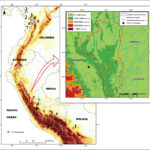
Natively inhabiting Ecuadorian cloud forests situated on the eastern slopes of the Andes, Rhaebo andinophrynoides thrives in a world perpetually immersed in mist and filtered sunlight. Its narrow geographical range presents an ecological niche finely tuned to elevations approximately between 1,000 to 2,000 meters above sea level. It resides predominantly within mature, humid montane forests characterized by dense foliage, abundant epiphytes, and moss-covered surfaces.
In these forests, heavy mists frequently cloak the steep mountain slopes, creating lush microhabitats with stable humidity and temperature levels—optimal conditions for amphibians like Rhaebo andinophrynoides. The constant trickle of water droplets provides the moisture crucial for this species’ skin respiration, hydration, and reproduction.
An Amphibian of the Leaf-Litter#
Rhaebo andinophrynoides predominantly inhabits the moist forest floor, camouflaged beneath a thick, nutrient-rich layer of decomposing leaves. Amidst the leaf litter and decaying logs, it finds both refuge and prey. This partly subterranean habit not only protects against predators but also helps regulate body temperature and moisture levels, key to a frog’s survival.
The frog’s specific preference for mature and undisturbed cloud forest habitats signifies its vulnerability to habitat degradation. Alterations to forest structure or moisture stability can result in dramatic declines, making their presence a notable indicator of habitat health.
Physical Characteristics: Adapted for Life Within Mists#
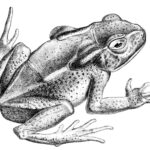
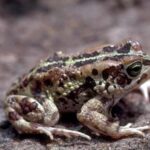
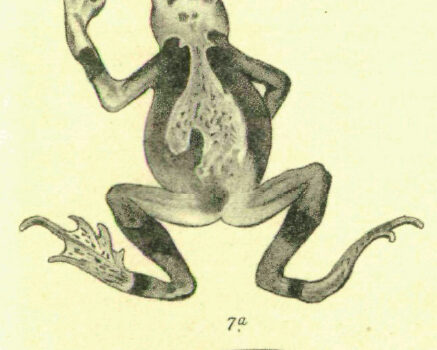
Although relatively modest in size, typically just 3 to 5 centimeters in length, Rhaebo andinophrynoides displays remarkable physical characteristics uniquely adapted for survival on the forest floor. Its compact and sturdy body is expertly camouflaged with patterns of brown, olive, and gray shades—colors that seamlessly blend with damp leaves, mossy ground, and shadowy environments.
The frog’s skin texture is rough and granular, dotted with tiny bumps and protrusions, which aid significantly in visual and tactile camouflage. A closer examination reveals robust limbs suited perfectly to navigating uneven leaf surfaces, climbing over fallen branches, and maneuvering through dense undergrowth.
Cryptic Coloration and Protective Adaptations#
Predation risks in the cloud forest are ever-present, making camouflage indispensable. This species employs cryptic coloration complemented by passive defense mechanisms like remaining motionless when threatened. Its coloration and morphological traits reflect evolutionary processes shaped by a diverse array of forest predators, including snakes, birds, and small mammals.
Interestingly, it lacks the vivid aposematic coloration associated with toxic frogs, indicating lesser toxicity—a significant hint toward its ecological behavior, biology, and interaction with predatory species in the cloud forest ecosystem.
Behavior and Life Cycle: A Secret Life on Forest Floors#
Functioning primarily as a nocturnal amphibian, Rhaebo andinophrynoides emerges from daytime hideaways beneath foliage and fallen logs once darkness enshrouds the forest. Its diet consists mainly of small invertebrates such as ants, termites, beetles, and larvae. A patient and resourceful predator, it stalks or ambushes prey on the forest floor.
Mating Calls and Reproduction#
During wet conditions typical of cloud forest rainy seasons, males actively seek females, using soft, bell-like calls resonating gently through the misty nights. Females, attracted by these subtle yet distinctive calls, converge at moist forest pools or slow-moving streams tucked in forest clearings or depressions—a vital component of successful reproduction.
After mating, the female deposits gelatinous egg masses often adhered to submerged vegetation or streamlined against leaf litter in ephemeral water bodies. Tadpole development occurs rapidly, with the aquatic environment rich in nutrients providing necessary nourishment until metamorphosis transforms tadpoles into tiny replicas of their terrestrial parents, who then return to the leaf litter, beginning the cycle anew.
The Ecological Role of Rhaebo andinophrynoides#
Though subtle and relatively unnoticed, the ecological niche filled by Rhaebo andinophrynoides plays an integral role in forest ecosystem dynamics. Acting as both predator and prey, this species helps regulate populations of small forest insects. By consuming various invertebrates that could otherwise propagate unchecked, the frog contributes to ecological balance, indirectly sustaining plant health and overall biodiversity in cloud forest ecosystems.
Moreover, as prey for snakes, birds, and small mammals, these frogs form an essential nutritional link, embedding deeply into the ecological web of relationships that underpin Ecuadorian cloud forests.
Threats and Conservation Efforts: Protecting an Amphibian Treasure#
Amphibian populations worldwide face increasing pressures from habitat loss, pollution, fungal infections, and climate-driven changes. Rhaebo andinophrynoides is no exception—its reliance on intact and undisturbed habitats subjecting it uniquely to threats posed by deforestation, agricultural expansion, and temperature alterations caused by climate change.
According to the International Union for Conservation of Nature (IUCN), it is currently classified as “Data Deficient,” highlighting the urgent need for targeted scientific research concerning its population abundance and distribution.
Conservation Initiatives in Ecuador#
Local and international researchers actively advocate conservation measures aimed at reducing habitat destruction, empowering habitat stewardship among local communities, and improving monitoring efforts. Ecuador’s national conservation strategies emphasize protecting cloud forest habitats, given their biodiversity importance and the multitude of endemic species such as Rhaebo andinophrynoides.
Cultural and Scientific Significance: The Frog as Forest Ambassador#
Though remotely located and obscure, the presence of Rhaebo andinophrynoides contributes to local ecological knowledge and cultural perception among indigenous and rural communities. Amphibians, including obscure species, are often culturally symbolic, representing indicators of environmental health and change.
Scientifically, amphibians like Rhaebo andinophrynoides are invaluable sentinel organisms. Changes to their populations provide early warnings of ecosystem degradation or disease emergence, increasingly important in understanding broader ecological impact from global climate change.
Conclusion: The Quiet Ambassador of Ecuador’s Mist-Shrouded Forest#
Though seldom praised by name, the extraordinary adaptations, hidden beauty, and ecological value of Rhaebo andinophrynoides deserve recognition. Through understanding and appreciation, we become better stewards of their fragile habitats, preserving ecosystems for future generations. It is a worthy invertebrate predator, a vital prey species, and our quiet ambassador—a gentle reminder of the wonder and vulnerability that surrounds us.
We invite you to continue exploring amphibian diversity, advocate for robust conservation measures, and enrich your appreciation of nature’s resilience and beauty.