- Introduction: An Amphibian Shrouded in Mystery
- Taxonomy and Classification: A Detailed Lineage
- Natural Habitat: Secrets of Southern Africa’s Wet Wonders
- Physical Characteristics: Undeniable Beauty in Compact Form
- Behavior and Life Cycle: Dancing with the Rain
- Ecological Role: Tiny Amphibians with Enormous Impact
- Threats and Conservation Status: Guardians Against a Fractured Ecosystem
- Cultural and Scientific Significance: Enriching Our Understanding
- Conclusion: Celebrating and Protecting Poyntonophrynus kavangensis
Introduction: An Amphibian Shrouded in Mystery#
Hidden among the pristine wetlands and tranquil flowing waters of southern Africa lies a modest yet remarkable amphibian: the Poyntonophrynus kavangensis. Often unnoticed, this distinctive toad quietly thrives in habitats overlooked by many—savanna ponds, floodplains, and gentle riverbanks that seem timeless and untamed. With a scientific name that rolls gently off the tongue, Poyntonophrynus kavangensis inhabits regions largely untouched, evoking scenes of quiet waterways, secluded marshes, and landscapes that age in harmony with nature.
But who exactly is this understated amphibian, and why should we dedicate our curiosity to this tiny amphibious resident? Commonly known as the Kavango pygmy toad or Kavango toadlet, this species represents a crucial thread woven diligently through the complex tapestry of its aquatic ecosystem. Before we embark on our journey into its tangled world of survival, reproduction, habitats, and ecological connections, let us first take a closer look at the precise scientific classification and evolutionary lineage of this enigmatic species.
Taxonomy and Classification: A Detailed Lineage#
Belonging to the family Bufonidae—a diverse group that includes “true toads” characterised typically by warty skin and stocky builds—the Kavango pygmy toad lays claim to a place within the genus Poyntonophrynus. First described scientifically in 1959 by esteemed herpetologist, John Poynton, the naming of the genus celebrates his lifelong dedication to African amphibian biodiversity research.
The full scientific moniker, Poyntonophrynus kavangensis, clearly signifies both its genus and the region that gave this species its identity, the Kavango region. Closely related species within the genus include the likes of Poyntonophrynus fenoulheti and Poyntonophrynus vertebralis. Yet, despite subtle similarities in morphology, behaviors, and habitats, kavangensis holds its unique niche, a testament to precise evolutionary adaptation driven by its environment and ecological interactions.
Natural Habitat: Secrets of Southern Africa’s Wet Wonders#
To encounter the Kavango pygmy toad, our journey takes us deep into southern Africa, primarily Namibia’s Kavango region, and adjacent parts of northern Botswana, Angola, and Zambia. Here, rivers meander calmly, flooding periodically and retreating slowly, unveiling a mosaic habitat of seasonal wetlands and grassy floodplains. Dense reeds ripple in marshy ponds, providing ample moisture, concealment, and bounty, while floodwaters birth countless tiny worlds essential to myriad amphibian lives.
Poyntonophrynus kavangensis shows a decided affinity toward such semi-aquatic, savanna and freshwater wetlands, inhabiting areas along the margins of streams, temporary pools, marshes, and shallow ponds. Their secretive nature, elusive behavior, and distinct camouflage adaptations allow them to melt invisibly into the subtleties of their surroundings. A pause at the water’s edge, an attentive ear, and a patient eye might be rewarded with the light rustle of movement or the brief flicker of amphibian form—indeed, discovering this species in its natural context demands both patience and respect.
Adapting with the Floods: The Advantage of Resiliency#
This species’s survival relies hugely on seasonal flooding cycles. During the rainy season, from about November to March, temporary water bodies emerge, setting the stage for a surge in breeding activity. The Kavango pygmy toad is exquisitely adapted to time its life cycle precisely around these pulses of water, a careful choreography with nature’s rhythm. The retreating floodwaters eventually expose mudflats and damp, fertile soils perfect for the tadpoles’ development—indeed, the species seems uniquely attuned to the beginning and end of the rains, showcasing marvelous evolutionary precision.
Physical Characteristics: Undeniable Beauty in Compact Form#
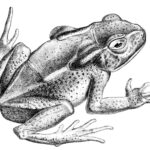
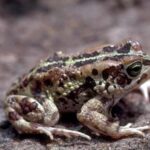
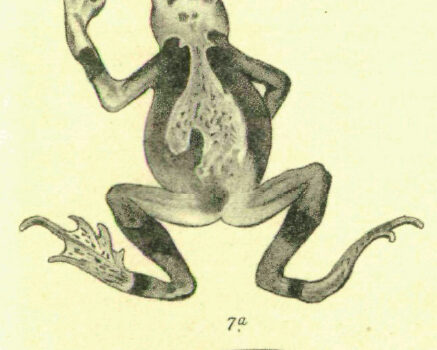
One might initially undervalue this amphibian due to its size and subtle colorations, measuring no more than 35 mm at adult length. Yet, close inspection reveals a surprising beauty: skin textured gently with tiny, warty granules offering an intricate camouflage, colored in shades of grey, olive-brown, and dark mottling that matches the vegetation and mud banks of their habitats impeccably. Their undersides bear paler shades of cream or white, contrasting briefly each time they leap or shift position, providing brief glimpses of delicate anatomical artistry.
A notable feature is their enlarged parotoid glands behind their eyes, designed to secrete mild toxins deterring predators—a sophisticated, natural defense strategy developed to combat predation by birds, mammals, and even larger amphibians. Their limbs are slender yet powerful, adapted either for swimming in gentle pools or climbing vegetation near the water’s edge. Thus, the physical construction of Poyntonophrynus kavangensis poetically blends function, survival, and beauty into a single masterful design.
Behavior and Life Cycle: Dancing with the Rain#
Life for the Kavango pygmy toad is inseparably tied to seasonal rains. The onset of these rains triggers one of nature’s remarkable displays—spanning mere weeks, if not mere days. Males congregate at temporary pools, calling distinctively in soft, repetitive notes designed to lure females from the surrounding savanna. This chorus—rhythmic, somewhat melodic—echoes quietly through wetlands as thousands of microscopic dramas unfold beneath orchestrated droplets of tropical rain.
From Tadpole to Toadlet: A Journey of Transformation#
Females, attracted by male choruses, lay small clutches of gelatinous eggs attached minimally to aquatic plants. Swift development occurs, as tadpoles emerge rapidly to utilize ephemeral waters. Tadpoles—a glancing shadow within the shallow pools—feed largely upon detritus, algae, and planktonic microorganisms, growing rapidly to complete metamorphosis before floodwaters recede.
Within weeks, tiny toadlets emerge ready to face terrestrial life—a race the rains force them to run victoriously. These juveniles disperse into moist, terrestrial niches, sheltering in damp leaf litter, beneath logs, or within thick vegetation, biding their time patiently until consecutive rains once again coax their journeys back to ancestral breeding sites.
Ecological Role: Tiny Amphibians with Enormous Impact#
At first glance, one might underestimate the ecological importance of such a diminutive creature. Yet, this quiet, modest amphibian plays multiple crucial roles within its environment. As predators of insects and other small invertebrates, they control pest populations, thus contributing indirectly to human and ecosystem health.
In turn, as prey animals, especially as tadpoles, they help sustain a diversity of predators—birds, snakes, mammals, and larger amphibians. Their sensitivity to environmental change and pollutants also positions them as invaluable ecological indicators, the proverbial canary of wetlands signaling ecosystem health.
Threats and Conservation Status: Guardians Against a Fractured Ecosystem#
Thankfully, Poyntonophrynus kavangensis is currently classified by the International Union for Conservation of Nature (IUCN) as of “Least Concern.” Yet, vigilance remains imperative, as these regions face the unrelenting pressures of wetland drainage, agriculture expansion, pesticide usage, and climate-driven uncertainties disrupting natural seasonal rains.
Continued research, monitoring, and land-use planning remain essential to ensuring their habitats remain vibrant and connected. Conservationists stress ecosystem-scale protection, recognizing that conservation success for species like this amphibian inextricably depends upon landscape-level protection.
Cultural and Scientific Significance: Enriching Our Understanding#
Though modest and largely overlooked culturally, this fascinating toad nonetheless provides important lessons. Scientists examine their responses to drought, flooding, and climate variability, gaining important insights applicable far beyond amphibians alone.
Conclusion: Celebrating and Protecting Poyntonophrynus kavangensis#
The Kavango pygmy toad stands testament to the understated beauty, intelligence, and ecological significance harbored within even the smallest creatures. Protecting this amazing species requires awareness, admiration, and dedicated conservation. Let us celebrate the unseen heroes of our planet’s wetlands, ensuring that generations to come might also cherish the quiet whisper of life revealed at water’s edge.