- Nymphargus armatus: Discovering the Enigmatic Glass Frog of the Andean Cloud Forests
- Taxonomy and Classification
- Natural Habitat: Life in the Andean Mist
- Physical Characteristics: A Masterpiece of Adaptation
- Behavior and Life Cycle: Intricate Rituals in Moonlit Streams
- Ecological Role: Guardians and Indicators of Forest Health
- Threats and Conservation Status: A Fragile Future
- Cultural and Scientific Significance: Embracing the Wonder
- Conclusion: Protecting Nature’s Fragile Treasures
Nymphargus armatus: Discovering the Enigmatic Glass Frog of the Andean Cloud Forests#
The night arrives softly in the cloud-drenched peaks of the Andes. Clouds drift slowly through silent valleys, mist swirling around towering, moss-covered trees. Through this veiled nocturne, gentle droplets begin falling with a rhythmic tapping against broad leaves. Within this mist-shrouded world lives a delicate, nearly see-through creature whose presence whispers quiet secrets of ancient forests and evolutionary wonders—the fascinating glass frog known scientifically as Nymphargus armatus.
Indeed, the naming itself—“glass frog”—sparks immediate curiosity. Nymphargus armatus possesses a uniquely translucent body revealing bones and internal organs, a sight both mesmerizing and peculiar in the animal kingdom. These tiny amphibians quietly occupy the lush mountainous tropics, serving as silent guardians of ecosystem integrity and barometers signaling the health of their precious habitats. Yet despite their aesthetic appeal and biological significance, these frogs remain widely unknown, enigmatic mysteries awaiting deeper exploration.
Taxonomy and Classification#
Nymphargus armatus belongs to the diverse Centrolenidae family, collectively known as glass frogs due to their distinctive transparent skin. Within Centrolenidae, the genus Nymphargus includes numerous closely related species inhabiting Andean cloud forests. Initially described in 1901 by scientist George Albert Boulenger, Nymphargus armatus was historically categorized within the genus Cochranella, only recently reclassified following meticulous genetic analyses.
Taxonomic revision reveals a fascinating evolutionary lineage among Andean glass frogs. Genetic studies suggest complex relationships within Centrolenidae, reflecting decades of species divergence driven by the ever-changing Andean ecology. Nymphargus armatus shares its genus with several visually similar species, posing identification challenges yet underscoring the subtle diversity waiting patiently within the misty Andes.
Natural Habitat: Life in the Andean Mist#
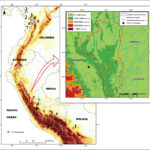
Poised on emerald leaves high within forest canopies or resting quietly near crystal-clear mountain streams, the habitat of Nymphargus armatus is emblematic of Andean cloud forests. Found mainly in Colombia, Ecuador, Peru, and parts of Bolivia, these frogs occupy elevations ranging from approximately 600 to 2,500 meters above sea level. They prefer regions perpetually veiled in fine mist, where air remains richly humid, and streams meander gently beneath an unbroken canopy of verdant foliage.
This habitat offers far more than aesthetic beauty; it provides the intimate balance of moisture, temperature, and shelter essential to the survival of these delicate amphibians. The perpetual humid air prevents their fragile skin from drying, while leafy vegetation serves as platforms from which males vocalize, females deposit eggs, and both sexes find nourishment.
Interactions with the Andean Ecosystem#
At night, as the rainforest unfolds into a symphony of chirping insects, trilling frogs, and nocturnal birds, Nymphargus armatus joins this chorus subtly. These frogs thrive within microhabitats near cascading freshwater streams with slow-moving water, relying heavily upon this proximity for successful reproduction. Leaf surfaces above streams offer ideal locations for eggs, safeguarding developing embryos and facilitating tadpole survival as they hatch and drop gently into waiting waters.
Physical Characteristics: A Masterpiece of Adaptation#
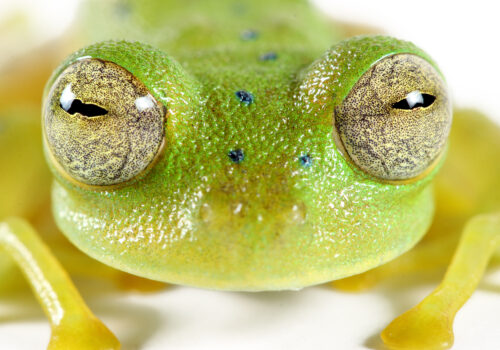
Encountering Nymphargus armatus within its natural environment is like stumbling upon hidden gems illuminated gently by moonlight. Adults generally measure between 20-30 millimeters, a diminutive size masking enormous biological sophistication. Their petite bodies radiate subtle beauty—delicate and intricately adapted camouflage suits enabling near-perfect concealment in their rainforest habitat.
A transparent abdomen allows careful observers glimpses into their incredibly intricate internal anatomy—lungs inflating rhythmically, a beating heart tracing gentle pulses beneath their translucent skin. Their greenish or bluish hue perfectly matches surrounding foliage, often with minuscule spots or subtle patterns, effectively camouflaging them from potential predators.
Adaptive Advantage through Transparency#
Yet why has evolution chosen transparency? This remarkable adaptation likely serves multiple purposes. Transparency can confuse predators visually, disrupting their search image and camouflage outline, providing essential protection from an array of avian, reptilian, and mammalian predators wandering forest canopies. Additionally, transparency aids thermoregulation and moisture retention—critical functions in ever-changing humid cloud forest climates.
Behavior and Life Cycle: Intricate Rituals in Moonlit Streams#
The reproductive behaviors of Nymphargus armatus display profound evolutionary intricacies tailored carefully to their microhabitats. With nightfall, stream entrances echo gentle, bell-like melodies, resonant vocalizations produced by male glass frogs. This chorus draws attentive females vigorously searching in moonlight dappled shadows for mates demonstrating vigor and superior fitness.
Females carefully select their partners based primarily upon song quality, indicative of male health and reproductive vigor. Upon successful pairing, males and females embark upon careful leafy exploration, meticulously choosing ideal leaf surfaces suspended high above streams. Females deposit jelly-like eggs adhering tightly to leaf undersides, inconspicuous to predators yet within easy reach of needed moisture, nutrients, and oxygen circulating gently underneath leaves.
Tadpole Development: A Fragile Journey of Survival#
Approximately two weeks after egg deposition, small, wriggling tadpoles emerge, descending gracefully from their elevated nursery leaves directly into gentle stream waters below. Here, amidst moss-covered stones and toned waters, tadpoles metamorphose under watchful eyes hidden beneath shadows.
During this aquatic phase lasting several months, survival rates face formidable challenges—rushing currents, predators, and shifting environmental conditions test their brief, early existence. Eventually, metamorphosed juveniles transition smoothly from underwater swimmers back into forest canopy climbers, continuing the generations-wide dance of survival.
Ecological Role: Guardians and Indicators of Forest Health#
In their quiet, inconspicuous way, Nymphargus armatus contributes significantly toward ecosystem balance within dense Andean cloud forests. Acting as both predator of insects, arthropods, and small invertebrates—and prey to larger animals—they connect trophic levels seamlessly, contributing toward broader biodiversity health.
Perhaps most importantly, glass frogs like Nymphargus armatus act as sentinel species—early warning indicators sensitive to environmental disturbances, including pollution, deforestation, climate change, and habitat fragmentation. Their sensitivity serves as warnings for early ecological imbalance within these regions, guiding conservation priorities accordingly.
Threats and Conservation Status: A Fragile Future#
Sadly, delicate ecosystems housing these ethereal creatures face mounting challenges threatening their long-term survival prospects. Increasing deforestation, land-use changes, mining activities, pollution, emergence of chytridiomycosis disease, and climate change-induced environmental shifts imperil fragile populations already struggling to adapt.
Currently listed by the IUCN Red List as Least Concern, due largely to habitat ranges extending across multiple protected sites, isolated populations remain vulnerable, and localized downturns continue quietly unnoticed. Conservation strategies include targeted habitat preservation, creation of biological corridors linking fragmented forests, and ongoing ecological monitoring—to maintain resilient populations ensuring continued survival.
Cultural and Scientific Significance: Embracing the Wonder#
Within Andean cultures, frogs symbolize renewal, fertility, and environmental balance—emblematic figures connecting humans intricately and deeply to the natural world surrounding them. For science, glass frogs like Nymphargus armatus offer potential goldmines—demonstrating physiological adaptations like skin permeability, toxin resistance, and disease immunity—each harboring incredible potential implications for medicine and biological research.
Conclusion: Protecting Nature’s Fragile Treasures#
Nymphargus armatus, hidden gently amidst rolling mist and towering slopes, represents nature’s quiet genius—an evolutionary masterpiece sculpted through patient millennia. Yet appreciating their beauty alone is not sufficient. Protecting these delicate creatures and their habitat reflects profound commitment toward safeguarding biodiversity, fighting ecological crises, and creating heritage lasting beyond individual lifetimes.
As gentle rains persist, when next confronted by nature’s ephemeral beauty, perhaps pause momentarily, acknowledging interconnected journeys shared collectively—silently committing toward ensuring delicate, translucent treasures continue quietly illustrating nature’s secret evolutionary elegance for generations yet unborn.