Unveiling Espadarana prosoblepon: The Glass Frog of Central America’s Emerald Canopy#
Amidst the emerald expanse of lush Central American rainforests, hidden within droplets of moisture dripping from broad, verdant leaves, a tiny being pulses with delicate life. Transparent, delicate, and astonishingly ethereal—the emerald glass frog, known scientifically as Espadarana prosoblepon, embodies nature’s artistry at its finest. Imagine glimpsing through translucent flesh to peer at a steadily beating heart, observing tiny lungs inflating rhythmically—this is the daily marvel of this extraordinary amphibian.
Belonging to one of nature’s most visually captivating amphibian families, Centrolenidae, this species offers intriguing insights not just through its translucent skin, but also as a critical indicator of ecosystem health. Before we dive further into the story of this enchanting frog, consider this curious fact: unlike the vivid colors most frogs use for attraction or warning, the emerald glass frog chooses practical invisibility, settling within the foliage with astonishing transparency.
Taxonomy and Classification#
The mesmerizing emerald glass frog, Espadarana prosoblepon, belongs to the expansive family Centrolenidae, known commonly as glass frogs due to their characteristic translucency. Classified under the genus Espadarana, this species shares kinship with a vibrant array of Central and South American amphibians bearing similar characteristics of transparent undersides and canopy-dwelling lifestyles.
Originally described by the zoologist Edward Drinker Cope in 1875 under the name Hyalinobatrachium prosoblepon, subsequent taxonomic adjustments placed this species within its current genus, reflecting greater understanding of genetic and morphological characteristics. Within its relatives, species differentiation can be subtle yet distinctive, with differences in vocalizations, coloration, and habitats acting as unique signatures in their identification.
Natural Habitat#
The emerald glass frog dwells predominantly within the lush rainforests stretching from Honduras southwards through Costa Rica, Panama, Colombia, and into western Ecuador. These verdant ecosystems, pulsing with humidity and rich in biodiversity, provide the perfect backdrop for this elusive amphibian. Specifically adapted to high-moisture environments, Espadarana prosoblepon typically occupies elevations from sea level up to 1,800 meters, favoring mid-to-upper elevation cloud forests and rainforest canopies.
Within these mist-shrouded locales, this species thrives near streams and small rivers flowing gently beneath thick forest canopies. Favored leaf perches, often positioned above moving water, allow the frogs both refuge and vantage points, integral during mating and egg-laying seasons. The damp vegetation not only sustains humidity suitable to their delicate physiology but also provides camouflage through translucency, aiding survival in predator-rich environments.
Immersed in these verdant corridors, the emerald glass frog engages in a fascinating nocturnal ritual, deeply reliant on the health and stability of its habitat. The very presence of Espadarana prosoblepon is, therefore, a quiet testimonial to the ecological integrity of these vital rainforest habitats.
Physical Characteristics#
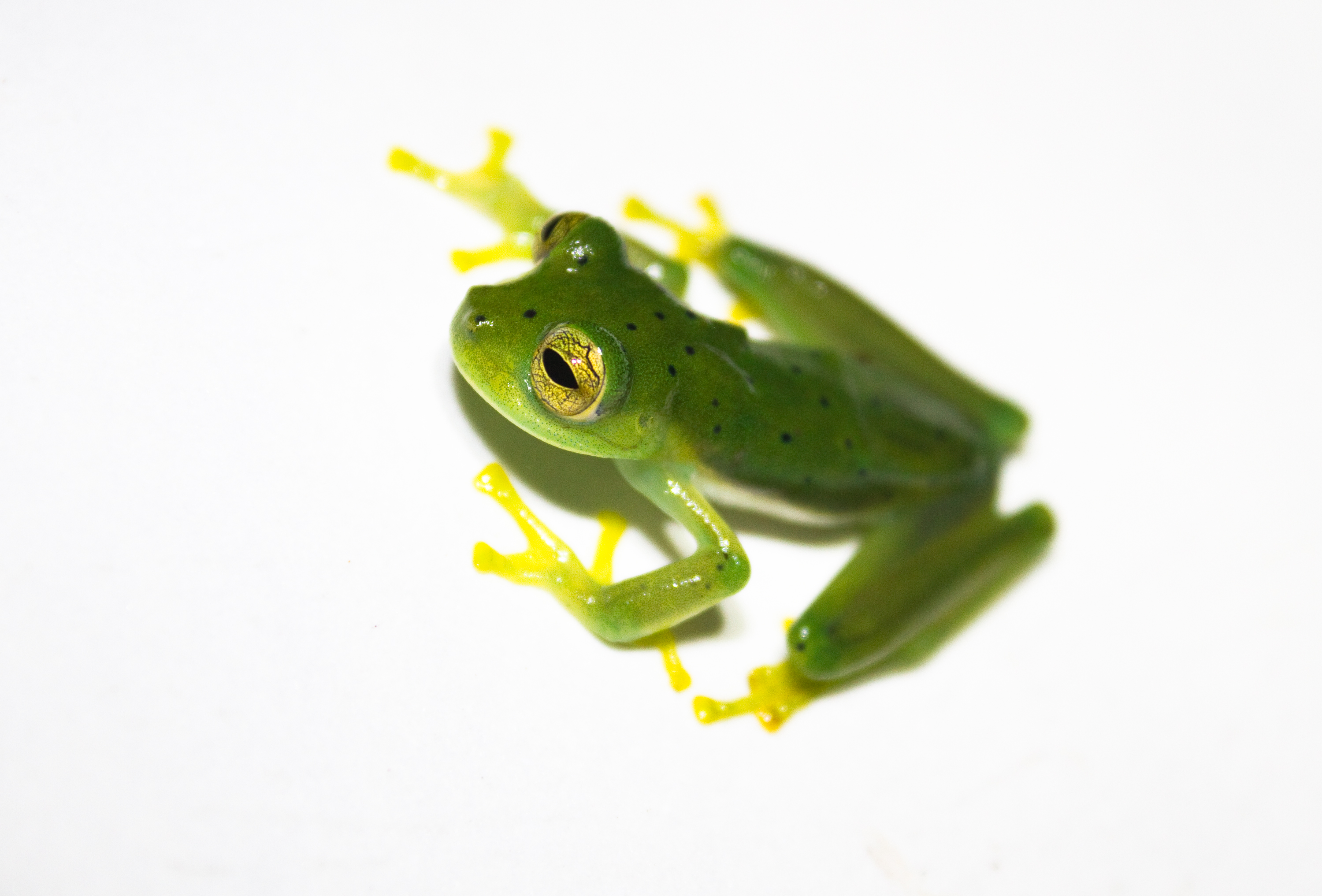
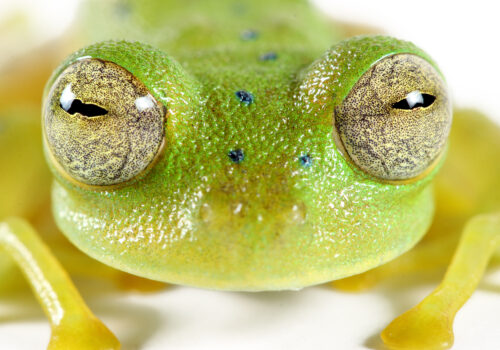
Perhaps the most captivating feature of Espadarana prosoblepon is its sheer transparency. At first glance, observers could easily mistake the tiny creature for a droplet of dew suspended upon a leafy backdrop. Possessing an average size between 20 to 30 millimeters, adults exhibit a luminous emerald-green dorsal coloration that allows effective camouflage. However, their ventral surfaces reveal spectacular transparency, a window into the intricate workings of their vital organs.
Upon close inspection, observers witness the rhythmic beating of the tiny heart, a delicate network of blood vessels branching outward, even the expanding and contracting of lungs as air gently flows in and out. This profound transparency acts as a unique evolutionary adaptation, providing stealth from predators as the frog sits motionless on foliage.
Bright, golden eyes with horizontal elliptical pupils lend an alert yet endearing appearance, vital for nocturnal activities. Likewise, expanded discs at the tip of each digit grant remarkable climbing and clinging ability, essential for navigating smooth, water-slick leaves.
Behavior and Life Cycle#
Nocturnal and Arboreal Lifestyle#
Espadarana prosoblepon is a nocturnal species, resting inconspicuously on leafy perches during daylight while hunting through the cover of darkness. Its nighttime adventures primarily involve diligent hunting for insect prey, primarily small flies, crickets, moths, and termites. Through rapid, precision lunges guided by excellent eyesight, these frogs provide invaluable pest control within their habitat.
A Unique Courtship Display#
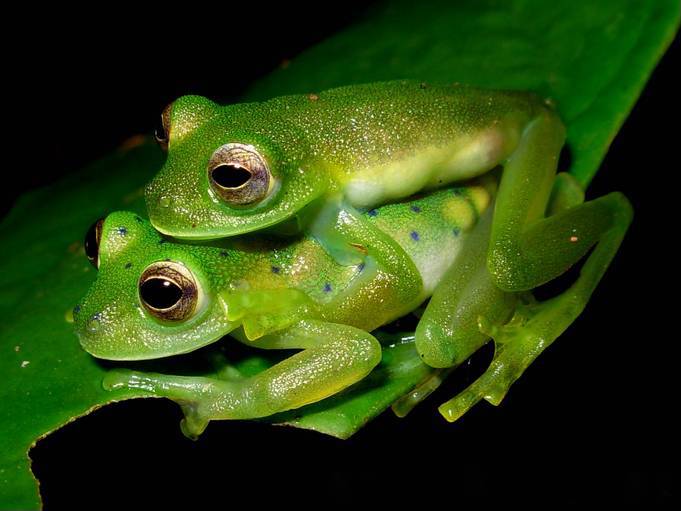
The emerald glass frog’s behavior truly shines during breeding season. Male frogs become exceptionally territorial, occupying carefully selected leaves overlooking gentle streams. Here they emit gently trilling calls, reminiscent of soft ticking sounds, resonating through the humid nighttime air to attract females and ward away competing males. Observers privileged enough to encounter these midnight serenades recount the soothing beauty of the escalating chorus, with each male vying audibly yet subtly for attention.
Egg-Laying and Parental Tenderness#
Once mating occurs, the female lays clusters of delicate eggs, often numbering between 20 and 40, directly on the undersides of carefully selected leaves positioned over water bodies. This strategic location ensures that newly hatched tadpoles fall gently into the water beneath, improving survival rates. Intriguingly, while many amphibians exhibit minimal parental care, emerald glass frogs reveal a subtle yet meaningful form of paternal guardianship, with males occasionally observed staying close to the egg clusters, attending to their well-being.
Development: From Tadpole to Froglet#
The tadpoles exhibit a streamlined design suited to life in flowing streams. Nutrient-rich algae and microscopic organisms nourish their rapid development. Within weeks, tadpoles undergo a miraculous transformation, developing functional legs and lungs, and seeking landward boundaries. This cyclical journey underscores nature’s beauty and resiliency, reminding us of the delicate interconnections within rainforest ecosystems.
Ecological Role#
Espadarana prosoblepon is intricately woven within the complex ecological tapestry of rainforests. As a predator, it plays essential roles in regulating insect populations, contributing to environmental stability. Concurrently, as prey for nocturnal birds, snakes, and larger amphibians, this small frog sustains higher trophic levels, reinforcing ecosystem complexity.
Due to sensitivity to environmental disturbance, it also functions as a critical biological indicator. Stable populations of emerald glass frogs indicate intact forest ecosystems; conversely, declining numbers frequently herald environmental degradation, effectively alerting researchers and conservationists of potential ecological disruptions.
Threats and Conservation Status#
While currently assessed as “Least Concern” by the International Union for Conservation of Nature (IUCN), Espadarana prosoblepon, like many amphibians, faces diverse environmental threats. Habitat loss from deforestation, logging, and agricultural expansion remains the most pressing concern, fragmenting habitats crucial to their survival. Additionally, intensive pesticide use causes bioaccumulation in frogs, leading to systemic health impacts.
Climate change adds further layers of risk, altering rainfall patterns and destabilizing temperature regimes critical for reproduction. Moreover, amphibian fungal pathogens such as chytridiomycosis are becoming increasingly problematic globally, demanding proactive research and conservation initiatives.
Ongoing efforts in Central and South America—including habitat protection through national parks, ecological reserves, and local conservation partnerships—offer hope. Continued research, conservation awareness, and community-driven stewardship will be invaluable to preserving this jewel-like species.
Cultural and Scientific Significance#
Beyond biological fascination, emerald glass frogs symbolize environmental purity in indigenous Central American narratives, often regarded as indicators of environmental health and harmony. Scientifically, they contribute significantly to research on amphibian physiology, particularly in transparent anatomical studies and bioengineering inspirations.
Insights gained from transparent amphibians could revolutionize areas of biology and medicine, fostering developments in tissue engineering or therapeutic interventions. Consequently, safeguarding their habitats benefits not merely the species themselves but humanity’s collective future.
Conclusion#
In the quiet, verdant sanctuaries of Central America, the emerald glass frog exemplifies nature’s delicate balance. Through its fragility, beauty, and remarkable biology, Espadarana prosoblepon urges humanity towards greater environmental responsibility and stewardship. Let us treasure this extraordinary creature not merely for its aesthetic appeal but as a sentinel calling forth deeper ecological awareness and action. By preserving its home, we preserve ours.