Cochranella ocellifera: The Enigmatic Glass Frog of the Cloud Forests#
In the dense, emerald-green shadows of South America’s humid cloud forests hides an amphibious wonder whose very existence seems touched by the surreal. Meet Cochranella ocellifera, commonly known as the Ocellated Glass Frog. Its name hints at the magic that adorns its delicate physique—translucent skin unveiling hidden inner workings, jewel-like eyes glinting under moonlit skies, and an elusive charisma that has captivated scientists and nature enthusiasts alike.
Belonging to a remarkable group of amphibians known popularly as glass frogs, Cochranella ocellifera traverses a world where beauty intertwines seamlessly with function. Imagine a creature whose bodily transparency allows you to witness the rhythmic pulse of its beating heart, the gentle inflation of delicate lungs, and the quiet flow of blood through its veins. These frogs blur the boundaries between myth and reality, becoming ambassadors for biodiversity, ecosystem health, and conservation urgency.
Taxonomy and Classification#
Cochranella ocellifera belongs to the family Centrolenidae, an extraordinary family consisting of glass frogs recognized for their unique transparency and arboreal lifestyles. Within this family, the genus Cochranella comprises frogs noted for their engaging coloration and specialized reproductive habits.
The scientific name, Cochranella ocellifera, is a homage to Doris Cochran, a pioneering American herpetologist dedicated to understanding amphibian diversity. The term “ocellifera” loosely translates from Latin as “bearing eyespots,” pointing to the intricate, eye-like markings on the frog’s back and limbs.
Close relatives within the genus Cochranella include species such as Cochranella granulosa and Cochranella euknemos, all of which share similar arboreal habitats and body transparency, yet differ subtly in coloration, vocalizations, and behavioral ecologies. Understanding the taxonomic relationships among these species aids conservationists aiming to strategically preserve habitats common to multiple threatened amphibians.
Natural Habitat#
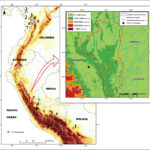
Venture into the shadow-laden foliage of the northern regions of South America—spanning from Venezuela through Colombia, Ecuador, and parts of Peru—and you might glimpse the enchanting silhouette of Cochranella ocellifera resting clandestinely upon a leaf. These frogs have an affinity for pristine, undisturbed cloud forests, regularly choosing elevations typically between 1,000 and 2,000 meters above sea level. Here, mists veil forests in perpetual moisture, creating a symphony of dripping leaves and subtle echoes that define their prime habitat.
Within these richly biodiverse habitats, Cochranella ocellifera is predominantly arboreal, spending much of its time perched on leaves and branches hanging above gently flowing streams or quiet pools. This proximity to water is critical for their reproductive strategy, as eggs deposited onto leaves depend on moist environmental conditions to ensure proper embryonic development and subsequent tadpole survival.
Why the Cloud Forest?#
The specialized microclimate of the cloud forest provides shelter, humidity, and ample prey supplies for Cochranella ocellifera. The abundant canopy layers shield them from the harsh sun and predators while offering a diverse range of insects to eat. Additionally, the consistent humidity helps sustain the gelatinous egg masses carefully placed by females, safeguarding fragile offspring from desiccation.
This fragile reliance means any disturbance—whether climate-driven or anthropogenic—can swiftly disrupt population stability, highlighting why so many conservationists diligently monitor these ecosystems as indicators of broader ecological health.
Physical Characteristics#
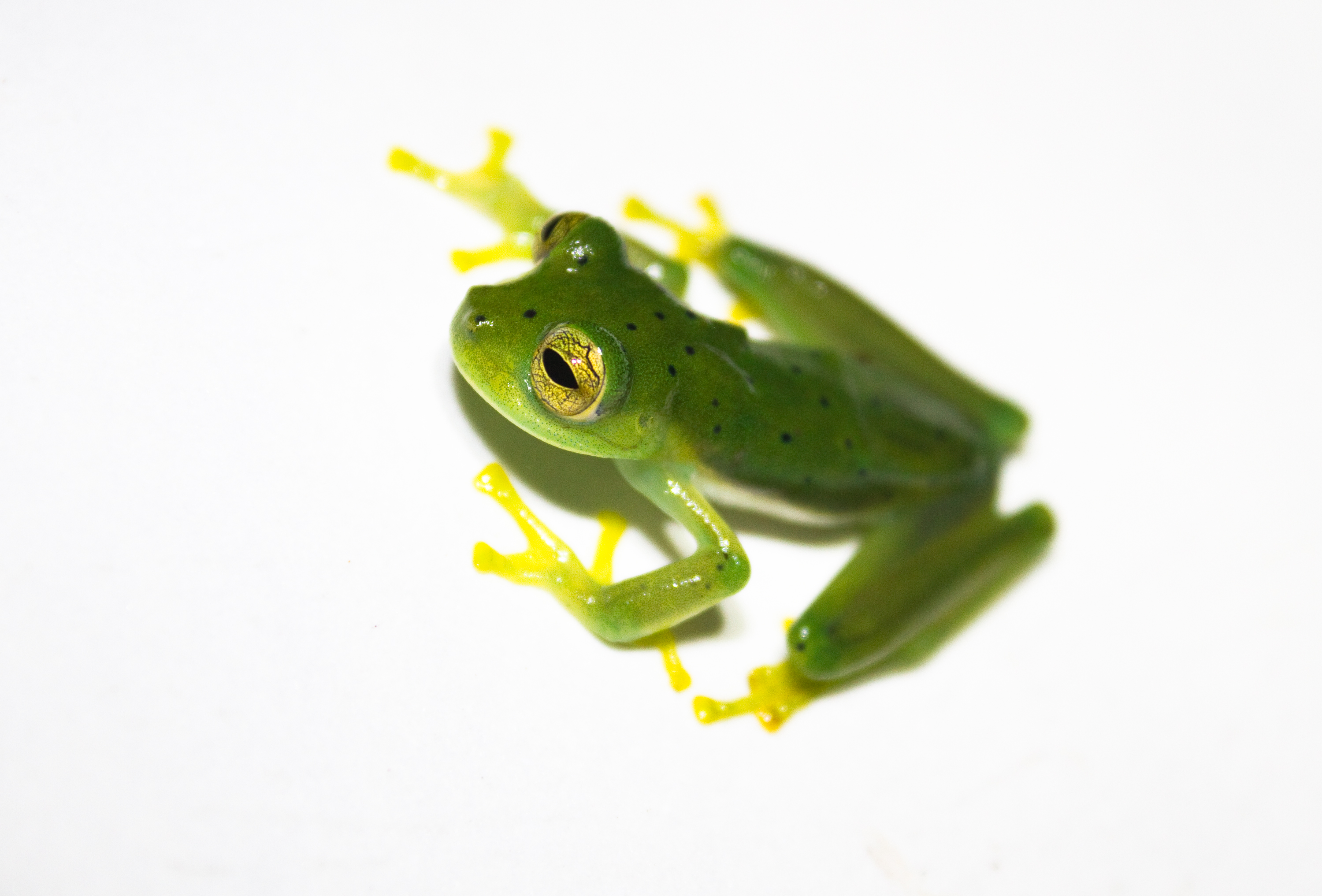
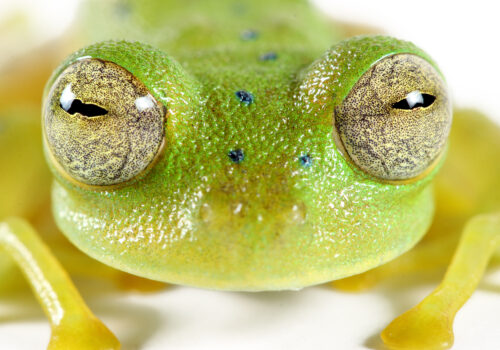
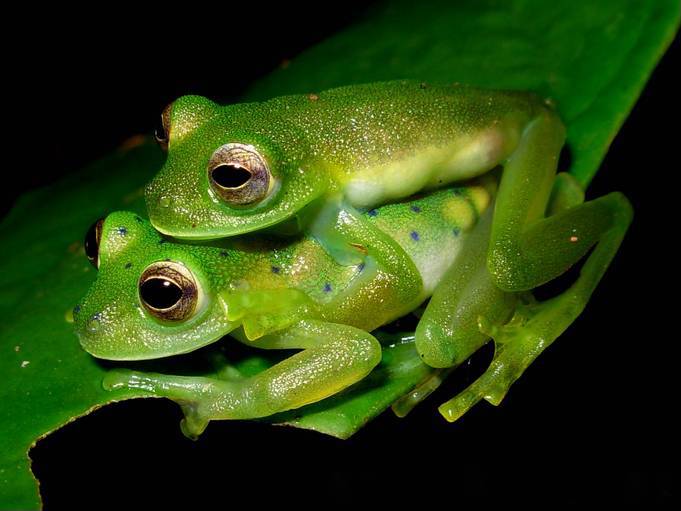
The Ocellated Glass Frog’s appearance is nothing short of remarkable. Adults are small and delicate, typically measuring between 20 to 28 millimeters in length—a body size small enough to rest comfortably on a fingertip yet intricate enough to warrant closer inspection. Its skin ranges from a vibrant emerald green to subtle shades of lime, a palette meticulously crafted by evolution to camouflage seamlessly within the leafy mosaic overhead.
Across its back and limbs, you’ll notice the distinctly elegant eye-shaped markings, or ocelli, that give the species its name. Each spot boasts pale centers ringed by darker pigments, creating complex patterns believed to confuse predators or communicate with potential partners.
But what truly strikes observers is the astounding translucent ventral skin. Flip gently underneath, and you enter another realm altogether—a realm where the mechanics of life are visible in breathtaking clarity. Internal organs, arteries, and veins delicately trace complex networks beneath glass-like skin. This transparency, though visually striking to humans, likely evolved to render the frog’s silhouette less conspicuous from below, protecting it from predators lurking beneath the foliage.
Behavior and Life Cycle#
The behavior patterns of Cochranella ocellifera reflect an intimate synchronization with their specialized environment. Predominantly nocturnal, these tiny amphibians awaken as dusk softens the daylight into smoky twilight. They become active, foraging meticulously for a variety of small invertebrates such as ants, flies, mosquitoes, and tiny spiders roaming the humid foliage.
Romantic Serenades above Moonlit Waters#
With the rainy season’s arrival, males prepare their romantic performances. Their musical trill, short yet melodious, drifts softly above moonlit streams, competing with other males for attention from receptive females who carefully scrutinize each potential mate’s vocal abilities and territory quality.
A female impressed by a male’s serenade and chosen perch will ascend beside him, laying her fragile clutch of eggs in clusters on the undersides of leaves suspended above water bodies. These gelatinous masses number up to around thirty eggs, each shimmering sphere containing developing embryos exposed yet artfully positioned outside predator-rich waters below.
Guardians of the Next Generation#
Males exhibit remarkable parental care by actively guarding their eggs against predation, dehydration, and fungus colonization. Under vigilant watch, the cluster remains safe until tiny tadpoles hatch, gracefully tumbling into the waters below to continue their development. Here, in quiet pools, the larval forms slowly mature into transparent juveniles—a miniature image of their parents—ready to begin their arboreal adult lives in the leafy canopy above.
Ecological Role#
In an intricate web of life, each species assumes vital functions, and Cochranella ocellifera is no exception. As insectivores, they control insect populations, including potentially troublesome mosquito numbers, thereby participating subtly yet significantly in ecological balance.
Simultaneously, they provide essential food sources for larger predators like birds, snakes, and other amphibians. But perhaps their most critical ecological contribution comes from their sensitivity to environmental change, making them significant biological indicators. The decline or disappearance of such sensitive species warns biologists of alarming ecosystem degradation, providing an early signal demanding conservation response.
Threats and Conservation Status#
Despite its captivating allure and ecological significance, Cochranella ocellifera does face tangible threats. Habitat loss emerges as its primary enemy, driven relentlessly by agriculture, logging, and urbanization. These activities fragment and shrink cloud forest habitats, isolating frog populations and disrupting ecological continuity.
Climate change exacerbates these pressures, altering rainfall patterns and moisture regimes crucial for egg and larval survival. Additionally, fungal diseases like chytridiomycosis, prevalent across global amphibian populations, pose real threats—each capable of devastating entire populations rapidly.
Although not currently listed as critically endangered, disruptions to microhabitats represent long-term risks that conservationists closely track, advocating urgently for protected habitats and ecological awareness.
Cultural and Scientific Significance#
Beyond biology and ecology, cultural connections weave deep roots for glass frogs like Cochranella ocellifera. Indigenous peoples in those regions often regard frogs as symbols of water purity, fertility, and environmental health. Their disappearance could signify deeper imbalances, suggesting nature’s harmony is at risk.
From a scientific perspective, the species is an invaluable model organism. Its remarkable transparency assists researchers investigating amphibian physiology, developmental biology, and ecological adaptation, helping bridge gaps between molecular biology discoveries and environmental studies comprehensively.
A Call to Conservation#
Cochranella ocellifera, with its translucent reminder of nature’s fragile beauty, symbolizes the urgency of amphibian conservation. Supporting local conservation initiatives, directing public attention toward ecosystem preservation, and promoting responsible tourism in cloud forests are pivotal steps each of us can take.
Let this captivating, delicate citizen of the cloud forest inspire action, becoming ambassadors for these intriguing creatures whose very presence enriches our world and whispers quietly of our interconnected, precious planet.