Cochranella nola: The Enigmatic Jewel of the Andean Forests#
In the humid shadows of lush cloud forests, hidden among moss-draped branches and veiled by drifting mists, lives a diminutive amphibian whose glassy transparency mesmerizes even seasoned naturalists—the Cochranella nola. More commonly known as Nola’s Glass Frog, Cochranella nola captivates the imagination through its sheer uniqueness. With translucent skin and delicate coloring, this elusive inhabitant of the Andean rainforests serves both as a natural marvel and a subtle sentinel of ecosystem health.
Though small and secretive, Cochranella nola shines brightly as a flagship species for conservation efforts within its limited habitat range. As we journey deeper into the misty glens and mountainous valleys of its residence, discovering its biology, behavior, and ecological significance, we gain essential insights into a world of remarkable evolution, delicate conservation challenges, and the urgent importance of protecting these fragile forest ecosystems.
Taxonomy and Classification#
Cochranella nola belongs to the family Centrolenidae—affectionately termed “glass frogs” due to their remarkable transparency in the abdominal region. Within the genus Cochranella, this species exemplifies evolutionary adaptations specialized for survival in dense, cloud-covered habitats. First scientifically described in 1996 by Harvey, it remains relatively understudied compared to its Centrolenid relatives, fostering a sense of wonder and stimulating ongoing scientific inquiry.
Belonging to the vast Amphibia class, Cochranella nola shares taxonomic kinship with similarly transparent cousins, such as Cochranella granulosa and Nymphargus grandisonae. Genetic analyses indicate subtle divergences from closely related species, highlighting unique evolutionary pressures that shaped Cochranella nola’s current adaptations and behaviors.
Natural Habitat#
Mist-Laden Treasures of the Andes#
Cochranella nola’s home stretches across specific locales within eastern slopes of the Andes mountains, most notably recorded in Bolivia’s montane forests. Its existence is inextricably tied to humid, cool, and densely vegetated environments typically between 500 to 1,800 meters above sea level.
Stepping into these cloud forests is akin to entering another world—a semi-shrouded realm surrounded by towering orchids, emerald-green ferns, dripping epiphytes, and an eternally soft fog that muffles sounds and diffuses sunlight. Cochranella nola finds sanctuary among broad-leaved plants and streamside vegetation, particularly favoring areas alongside gently flowing, crystal-clear forest streams and rivulets, crucial for breeding and development of its offspring.
Habitat Preferences and Microhabitat Utilization#
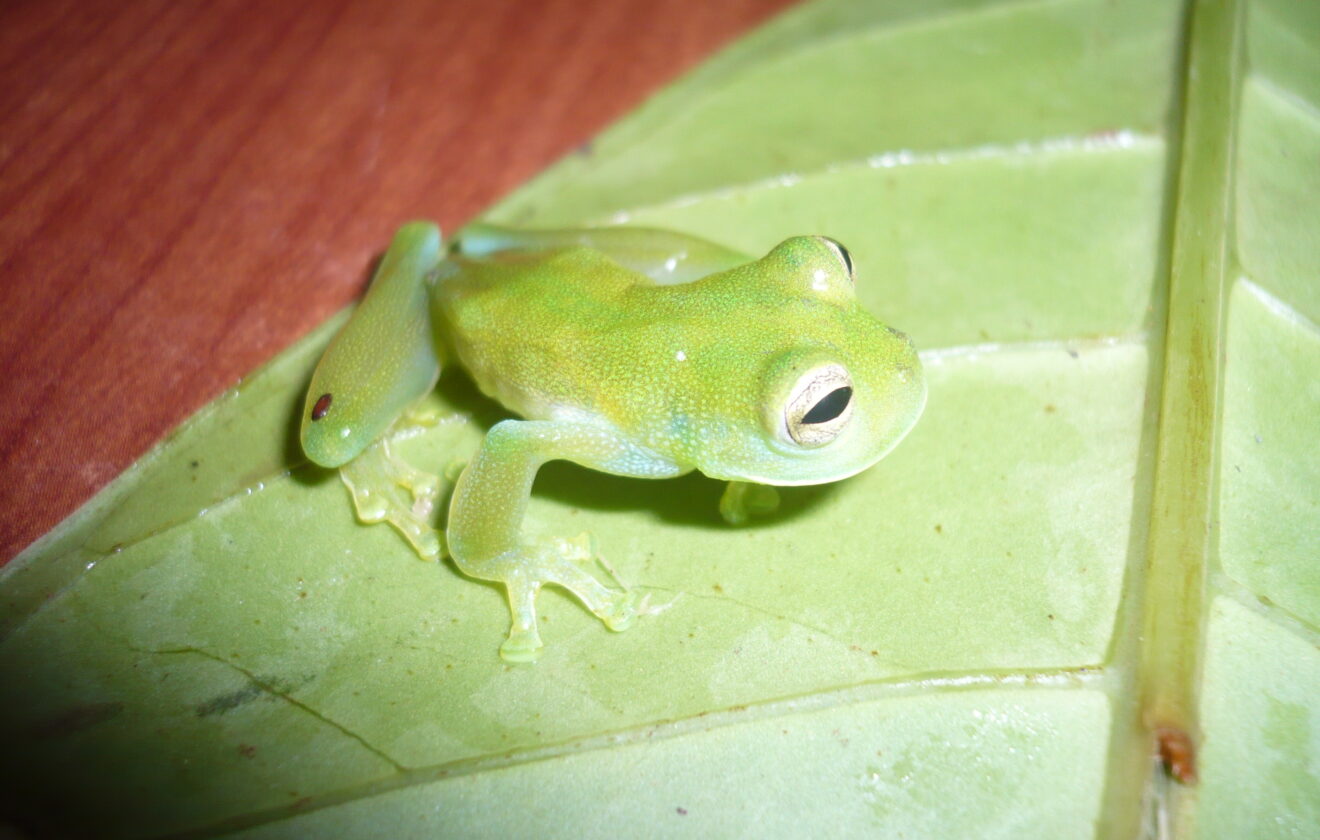
This species’ dependency on pristine, slow-flowing freshwater coupled with shaded, moisture-rich vegetation underscores its vulnerability to habitat disturbance. Cochranella nola often occupies carefully selected perches, usually on the undersides of leaves overhanging quiet waters—strategic locations facilitating mating and offering maximum protection for its delicate egg clusters and hatchling tadpoles from terrestrial predators.
Physical Characteristics#
Elegant Transparency and Cryptic Beauty#
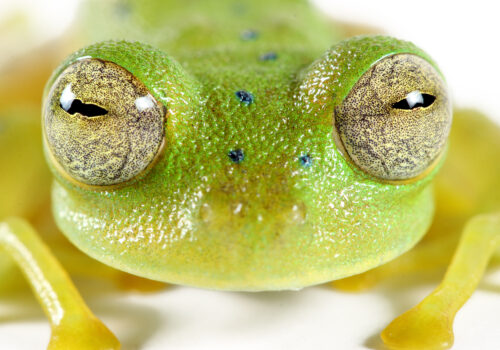
Measuring a modest 20-30 millimeters in length, Cochranella nola’s diminutive stature belies its intricate beauty. Perhaps most remarkable—and, in fact, enchanting—is its transparent skin. Hold one carefully against diffused forest light, and the intricate network of blood vessels and sturdy bones beneath the semi-translucent skin become strikingly visible to the naked eye.
This translucent appearance is more than mere aesthetic wonder—it’s a survival advantage in its leafy refuge. When resting quietly on a leaf’s underside, the species relies upon its transparent abdomen and greenish dorsal pigmentation to seamlessly blend into its surroundings, a cryptic disguise critical for evading predators. Beyond its transparency, subtle green hues continue up the slender limbs and digit-tipped feet adapted for adhesion to slippery foliage. Large, golden irises surrounding horizontally-shaped pupils grant Cochranella nola efficient nocturnal vision, enhancing its capacity to hunt and evade dangers under the shroud of darkness.
Behavior and Life Cycle#
Silent Hunters in Moonlit Hours#
Cochranella nola keeps a low profile during bright daylight, conserving energy while softly nestled beneath moist leaf surfaces. Come dusk, it awakens to conduct nightly escapades, venturing out skillfully among branches, leaves, and flower petals to hunt for prey—primarily soft-bodied insects like flies, treehoppers, ants, and small moths.
The frog’s hunting strategy relies heavily on patience punctuated by rapid, precise strikes. Relying on excellent eyesight and delicate vibration detection, it snatches prey quickly using a sticky, agile tongue. Such nocturnal activities also reduce predation risk, minimizing encounters with avian and reptilian predators active during daylight hours.
Intimate Reproduction Rituals#
Breeding season sees Cochranella nola males engaging in soft yet resonant mating calls that echo gently among rushing water sounds, helping females locate suitable mates and breeding territories. After intricate courtship behaviors, females carefully deposit small clutches of gelatinous, transparent eggs—typically fewer than 20 per clutch—attached to leaves hanging precariously over streams or creeks.
For roughly two weeks, these tiny transparent eggs incubate beneath vigilant paternal guardianship as males often stay nearby, deterring insect predators. Upon hatching, rain or gravity gently escorts tadpoles directly into clear waters below, where they commence their aquatic phase. Streams offer essential nourishment and protection, supporting rapid growth and development into terrestrial juveniles ready for independent life on land.
Ecological Role#
Cochranella nola fulfills multiple ecological roles within Andean ecosystems through complex interactions within food webs. As predator and prey, its presence contributes greatly to insect population control, regulating potential pest outbreaks and contributing positively to forest vegetation health.
Simultaneously, it serves as a valuable food source for larger animals—reptilian predators, nocturnal birds, and larger amphibians—demonstrating its integral role in maintaining thriving, balanced ecosystems. Importantly, it is also a sentinel species, with its well-being directly reflecting environmental health; disturbances in its populations can indicate broader environmental declines.
Threats and Conservation Status#
Vulnerability Amid Environmental Changes#
Globally, amphibians face escalating threats—and Cochranella nola is no exception. Though data-deficient in many conservation listings to date, ongoing habitat loss from deforestation, agricultural expansion, climate shifts affecting precipitation patterns, and water pollution compromise their restricted habitats. Dramatic climate variations, coupled with invasive species and potential spread of infectious diseases such as chytridiomycosis, present additional grave concerns.
While robust population assessments remain sparse, the species’ specialized habitat needs have undoubtedly created vulnerabilities. Conservationists advocate for targeted protection of crucial habitats through ecological corridors, strict environmental regulations, and educational programs raising local and global awareness of amphibians’ plight—steps vital for safeguarding Cochranella nola from extinction pressures in the coming decades.
Cultural and Scientific Significance#
Cochranella nola symbolizes a delicate aspect of biodiversity thriving in Andean cloud forests, enhancing appreciation for ecosystem complexity. Indigenous communities often root cultural traditions in relationships with forest species, and frogs within these habitats symbolize purity, fertility, and transformation across several Andean cultures—a reflection mirrored by their own extraordinary life journeys.
For scientists, these frogs offer invaluable knowledge about biological transparency, predator-prey dynamics, and bioindicators of ecosystem health, propelling novel research avenues from medical investigations derived from amphibian physiology to ecosystem management strategies.
Conclusion#
Cochranella nola remains an intriguing, fascinating resident hidden among the leafy recesses of Andean cloud forests—valued not merely for its ethereal beauty, ingenious adaptations, or biological significance but also for its role as ambassador of fragile environments whose futures intertwine with collective human stewardship. By fostering respect and awareness for Cochranella nola and habitats it embodies, we embrace deeper connections to biodiversity, initiating conservation actions necessary to preserve wonder, ecology, and life that sustain our planet’s interconnected ecological foundations.