Cochranella Granulosa: Exploring the Enigmatic Glass Frog of Central America#
The tropical rainforests of Central America have long been celebrated for their exceptional biodiversity—monkeys swing effortlessly through emerald canopies, brightly colored toucans punctuate the trees with bursts of color, and jaguars silently navigate dense underbrush. Amidst this rich tapestry of wildlife lives a creature effortlessly captivating—even puzzling—as it captures the imagination of scientists, conservationists, and curious nature enthusiasts alike. This creature is Cochranella granulosa, a member of the famed glass frog family known for its mesmerizing translucent skin and ethereal beauty.
Often dubbed the “grainy Cochran frog,” Cochranella granulosa enchants observers with its remarkable transparency, a feature so astonishing that it allows direct observation of its internal organs and even the gentle rhythm of its heartbeat. This enigmatic amphibian is far more than a marvel of natural curiosity; it serves as a humble indicator of environmental health and is profoundly impacted by human influence. Journey with me as we delve deeply into the compelling world of Cochranella granulosa—uncovering its hidden life, behavior, habitat, and conservation challenges.
Taxonomy and Classification#
First scientifically described in 1871 by John Edward Gray, Cochranella granulosa belongs to the family Centrolenidae, commonly known as glass frogs. Glass frogs earned their name due to their captivatingly transparent abdomens and ventral surfaces. Within this family, Cochranella granulosa is placed within the genus Cochranella, characterized particularly by granular textures on their skin, setting them distinctly apart from other centrolenids.
While related closely to other glass frogs such as Hyalinobatrachium fleischmanni and Centrolene prosoblepon, Cochranella granulosa can be distinguished most notably by its unique granular skin texture—giving it both its scientific epithet “granulosa” (Latin for “grainy”) and its vivid common name. Despite the growing understanding of these fascinating amphibians, taxonomic revisions are continuous as molecular analyses increasingly refine our understanding of their evolutionary relationships.
Natural Habitat#
Cochranella granulosa finds sanctuary within the humid, lush ecosystems of Central America, specifically ranging from Honduras southward into Costa Rica and parts of Panama. Remote rainforests, mist-laden cloud forests, and dense tropical pre-montane forests provide the essential backdrop for the delicate existence of these amphibians. Altitudinally, they thrive at elevations ranging roughly from 200 to 1,500 meters above sea level, dependent on intact ecosystems with abundant moisture and stable climates.
Preferred Microhabitats#
An evening stroll through a Costa Rican rainforest—beneath a dense canopy, alongside a crystal-clear stream—may offer the chance to spot this elusive species. Cochranella granulosa particularly favors habitats along clean, fast-flowing streams where dense vegetation and overhanging leaves provide perfect breeding and resting conditions. Broad-leafed vegetation, ferns, moss-covered branches, and shrubs that lean over bubbling waters help offer shelter and promote successful reproduction, demonstrating how intricately woven its life is with precise habitats.
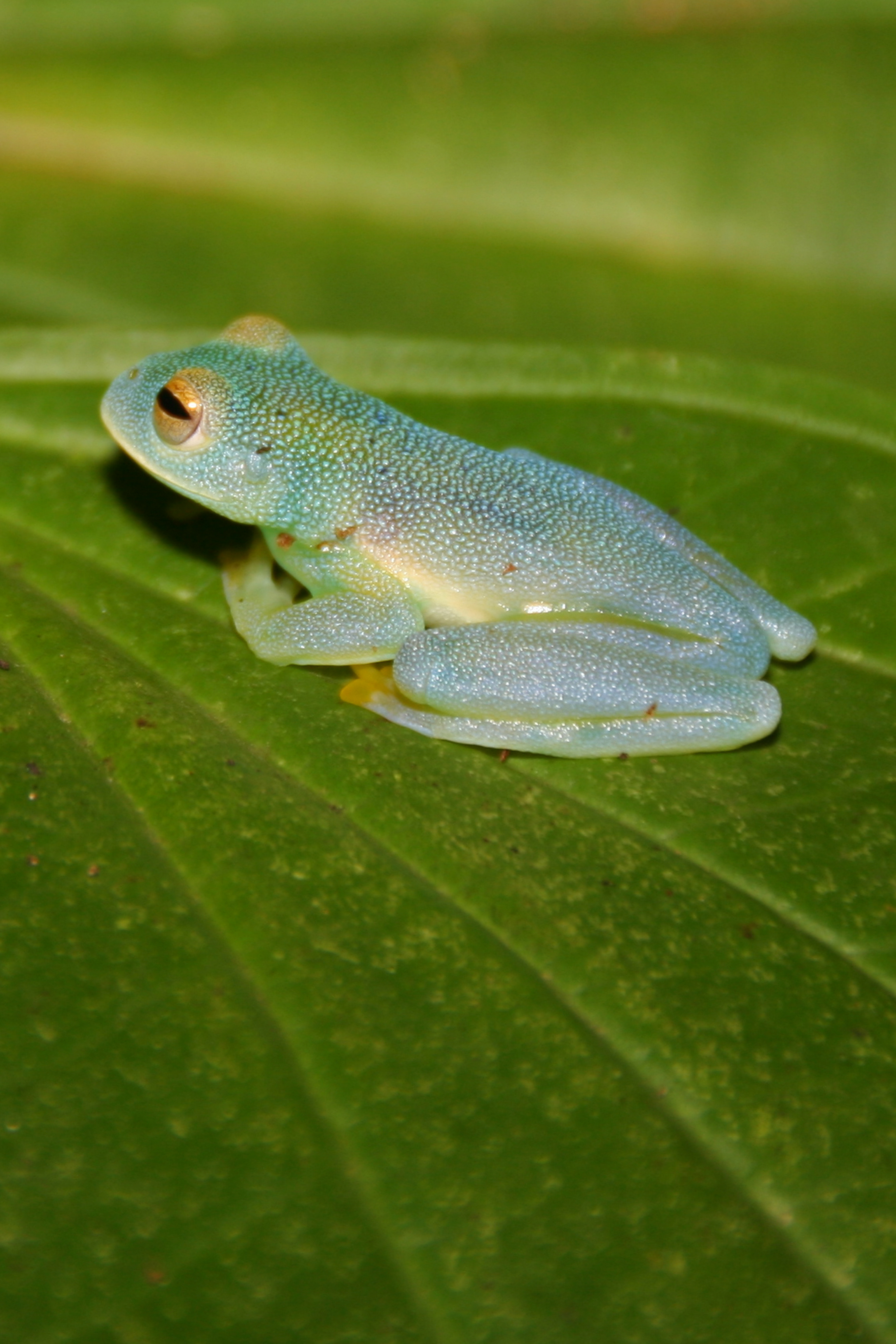
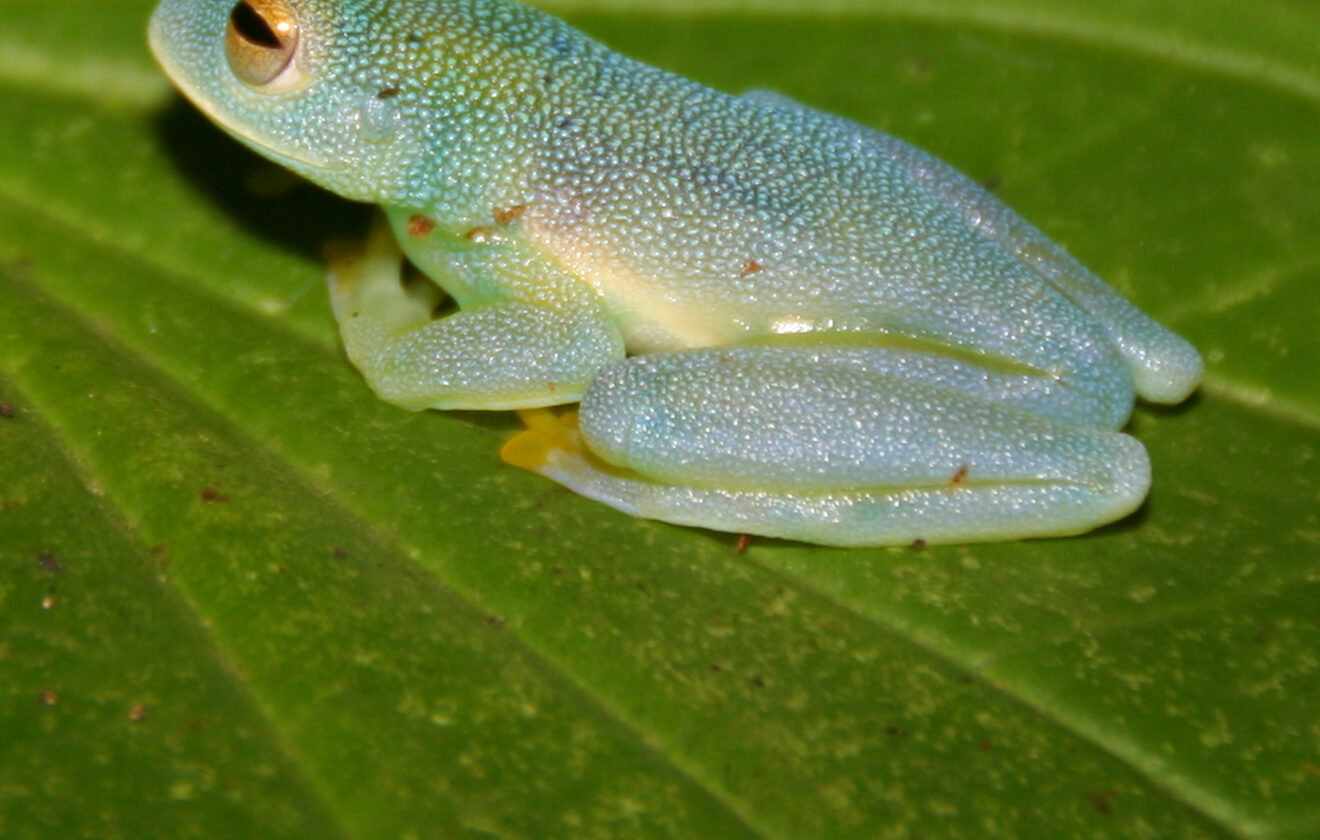
These frogs are arboreal, rarely descending to ground level. Instead, they pass most of their lives perched upon leaves, hidden amidst verdant foliage. This delicate lifestyle demands a meticulously balanced ecosystem where humidity and temperature fluctuations are minimal, underscoring their vulnerability to ecological disturbances.
Physical Characteristics#
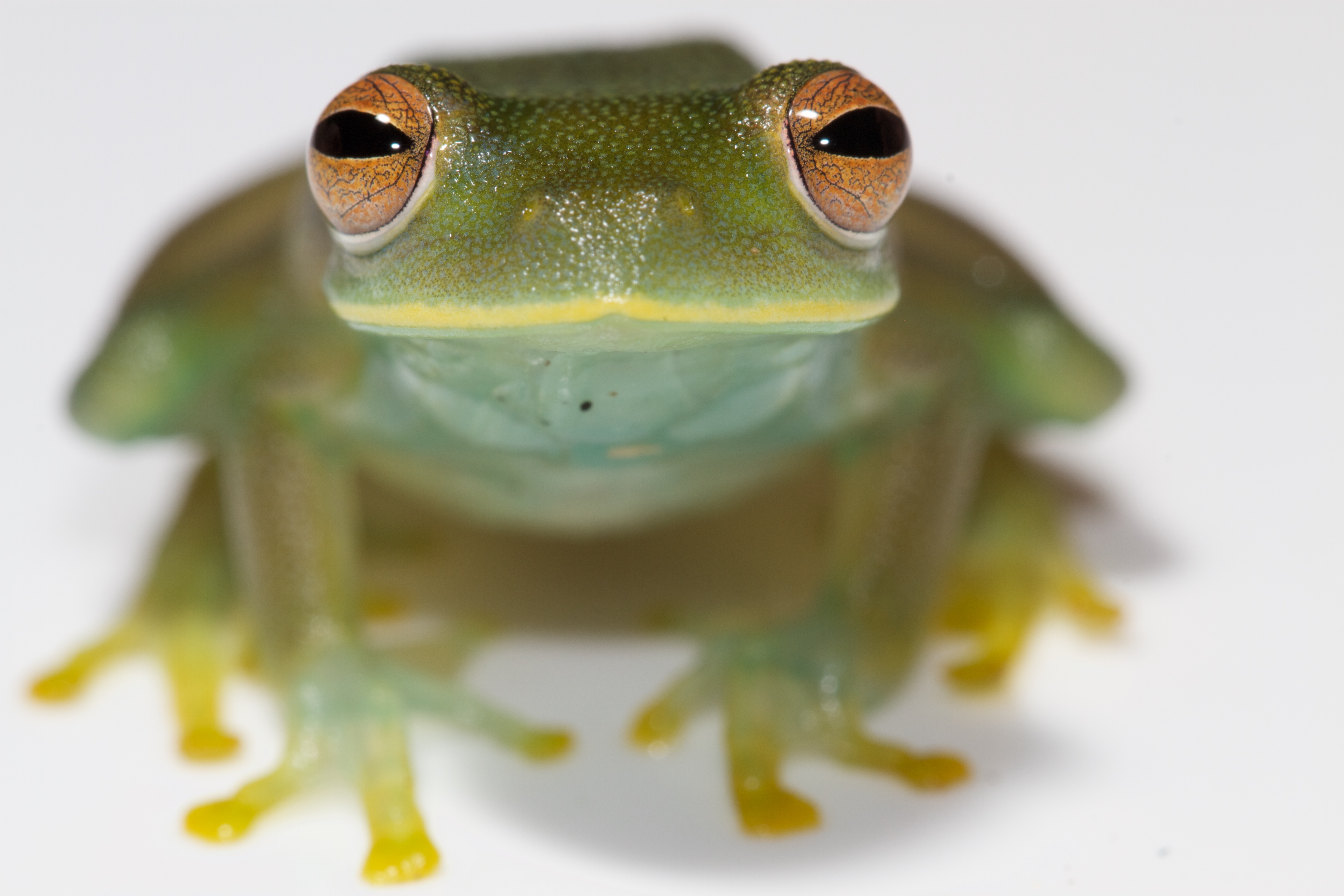
Like gemstones embedded in foliage, Cochranella granulosa’s appearance is uniquely graceful and intriguing. This species typically measures only 20–32 millimeters from snout to vent, reflecting its diminutive yet compelling presence. Their bodies are slender and trim, designed flawlessly for arboreal existence, with perfectly adapted limbs ending in adhesive digits, allowing secure grasping of slippery, wet leaves even during tropical downpours.
The Mesmeric Transparency#
The most striking feature of this species—and indeed all glass frogs—is their phenomenal transparency. Turned upside down, their translucent skin reveals internal anatomy: subtle veins appear like delicate green branches, organs manifest beneath a frosted window of flesh, and their heart visibly beats, an intimate and unforgettable view into their living biology.
The dorsal surface (back) of Cochranella granulosa is slightly opaque, hues of emerald or lime-green speckled with tiny granular textures, blending brilliantly with the foliage. This camouflage is a critical evolutionary adaptation, essential for predator avoidance. Predatory birds and tree-climbing snakes frequently roam these habitats, and the frog’s leaf-like coloration aids in its survival through remarkable cryptic concealment.
Behavior and Life Cycle#
To witness Cochranella granulosa in action is to marvel at subtlety and precision in nature’s design. Nocturnally active, these frogs engage their environment most vividly after sunset, their tiny black eyes catching the shimmering moonlight as they silently survey their leaf-top domains.
Diet and Feeding Habits#
Glass frogs such as Cochranella granulosa are primarily insectivorous, relying on an array of small arthropods including flies, moths, beetles, and ants. Their hunting method is one of patient observance. Remaining motionless for prolonged periods, the frog waits silently and patiently on a leaf until prey passes close enough. Lightning-fast movements unfold as a lightning-quick strike secures its meal with specialized projectile tongues—a moment as elegant and swift as a gentle raindrop striking a calm surface.
Intricate Breeding Rituals#
During the rainy season, typically between May and November, male Cochranella granulosa venture to streamside vegetation and let forth gentle, metallic mating calls—soft, bugle-like chirps often mistaken for insect sounds. These delicate calls serve as acoustic announcements to potential females, signaling suitability as reproductive partners, territory maintenance, and species identity.
Following mating rituals beneath rainforest canopies, females lay gelatinous clutches of transparent eggs directly onto leaves hanging over streams. Male frogs diligently guard these vulnerable clusters, protecting them from predators and performing moistening tactics to prevent desiccation. Upon hatch, the tadpoles gently fall into the stream’s calm waters below, where they undergo further crucial developmental stages before transforming into miniature replicas of their glass-like parents.
Ecological Role#
Cochranella granulosa embodies nature’s delicate equilibrium at critical stages within food webs. This species serves simultaneous roles as both predator and prey, contributing significantly to the ecological balance in its habitat. By feeding on abundant insect populations, they play valuable roles in regulating insect communities, thereby benefiting plant health and overall ecosystem stability.
Conversely, glass frogs are important prey items for various predators, inserting themselves as essential links in the rainforest’s intricate food chain. Perhaps most notably, amphibians such as Cochranella granulosa serve as highly sensitive bioindicators. Their health directly mirrors the environmental quality of ecosystems; declines in their populations signal broader ecological deterioration.
Threats and Conservation Status#
Despite their ecological importance and revered beauty, Cochranella granulosa faces numerous threats largely stemming from human-induced environmental degradation. Habitat fragmentation and loss due to rampant deforestation, agriculture expansion, and livestock grazing disrupt the critical microhabitats these frogs depend upon for survival. Additionally, pollution, particularly pesticide usage in agricultural regions, and climate change increasingly threaten their delicate, temperature-dependent life cycles.
Presently classified by the IUCN Red List as a species of “Least Concern,” Cochranella granulosa nonetheless warrants cautious monitoring due to these persistent threats. Conservationists continually emphasize the importance of preserving rainforest ecosystems and raising awareness of amphibian vulnerability as integral strategies to protect this charismatic species.
Cultural and Scientific Significance#
While globally less conspicuous than emblematic species such as jaguars and toucans, frogs like Cochranella granulosa hold subtle but profound roles in Central American cultural narratives. Indigenously, amphibians are often symbolic of necessary environmental balance and renewal—in essence, messengers revealing the health of the world around us.
Moreover, the fascinating biology of glass frogs continues to intrigue the scientific community. Researchers frequently explore glass frog physiology to understand transparency properties, insights with potential biomedical applications ranging from tissue engineering to innovative treatments for human diseases.
Conclusion#
The sheer existence of Cochranella granulosa invites reverence—from its fragile skin concealing no secrets to its delicate nocturnal serenades. To conserve these irreplaceable wonders is a challenge entrusted to all who cherish the living world. May each heartbeat made visible through translucent flesh remind us of life’s interconnectedness and the responsibility we share as stewards of that fragile beauty. Consider contributing your voice, support, or awareness toward conservation efforts protecting rainforests and ensuring that Cochranella granulosa can continue to captivate generations yet unborn.