Centrolene daidalea: The Intriguing Glass Frog of South America’s Misty Forests#
In the heart of a cloud-misted forest, a gentle stream cascades over moss-covered stones, whispering softly beneath the dense canopy. Amid this verdant symphony, an ethereal creature perches silently, almost invisible against the emerald foliage—Centrolene daidalea, a glass frog of remarkable delicacy and mystery. At first glance, it seems molded from the very jungle itself, its translucent green skin revealing internal organs like a delicate biological sculpture in glass. Yet despite its elusive nature, this enchanting amphibian speaks volumes about habitat health, biodiversity, and the intricate web of life in South American rainforests.
Join us as we journey deep into the secretive world of Centrolene daidalea, uncovering fascinating details about its life, its ecological significance, and the conservation struggles it faces in today’s rapidly changing world.
Taxonomy and Classification#
Centrolene daidalea, first described in detail by herpetologist Ruiz-Carranza and Lynch in 1991, proudly belongs to the family Centrolenidae, commonly known as glass frogs. Renowned for their remarkable translucent skin, these frogs form a family rich in biodiversity, boasting over 150 distinct species distributed throughout Central and South America.
This particular species, Centrolene daidalea, shares close evolutionary ties with other members of the genus Centrolene, a lineage celebrated for their delicate build and striking transparency. While closely related relatives, such as Centrolene heloderma and Centrolene lynchi, share this trademark see-through appearance, each species holds its own unique adaptations, behaviors, and range.
Natural Habitat#
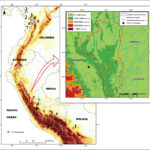
To locate Centrolene daidalea, one must journey into the humid, lush forests blanketing the slopes of the Andes Mountains, particularly within countries such as Colombia and Ecuador. These frogs favor mature montane forests at elevation ranges between 1,000 and 2,000 meters above sea level, where perpetual mist nourishes an ecosystem overflowing with life.
The forest habitat selected by Centrolene daidalea is characterized by steep, rocky terrain, constant moisture, dense vegetation, and pristine clear-water streams. These small frogs position themselves on broad, moisture-rich leaves that gently arch above fast-flowing forest streams. Here, embedded amid droplets and shadows, their transparent skin and green appearance blend seamlessly with their verdant surroundings, creating one of nature’s most effective concealment strategies.
An Intimate Connection with Moisture#
Unlike many terrestrial amphibians able to wander great distances, Centrolene daidalea is closely tethered to pristine streams and subtle microclimates within cloud forests. Stable humidity buffers the delicate water balance of their permeable skin, crucial for oxygen absorption and evaporative exchange. Their entire life cycle—from egg-laying to tadpole development—takes place near cool, clean streams sparkling on their forest floor habitat. Any alterations in these water sources deeply affect their chance of survival, highlighting the intimate dependency these glass frogs have upon their delicate surroundings.
Physical Characteristics#
The allure of the glass frog lies within its captivating appearance. At around 2–3 centimeters (less than an inch and a half) in length from snout to vent, Centrolene daidalea exhibits a diminutive and almost jewel-like presence. It sports slender, elongated limbs adapted for agile climbing among leaves and branches, each foot adorned with delicate, webbed digits that enhance its dexterous grip when navigating vegetation near the riverbanks.
Most striking, however, is the frog’s translucent skin. The ethereal transparency of its underside reveals the heart pumping rhythmically, vibrant red arteries branching across its belly, paired internal organs gently shifting with each breath—the complex machinery of life elegantly showcased beneath the glass-like exterior. The dorsal side and limbs are painted in delicate shades of pale and vibrant green, lightly spotted to visually dissolve contours amidst surrounding leaves, particularly when viewed from above by predators like birds and snakes.
A Master of Camouflage and Survival#
This ingenious camouflage is not mere aesthetic wonder; it is absolutely crucial for survival. Observation reveals that their translucent skin and intricate spotting grant them near invisibility, protecting them from predators. Even in daylight, their stationary posture blends seamlessly, rendering them undetectable among the dense, filtered sunlight of the rainforest understory.
Behavior and Life Cycle#
Life for Centrolene daidalea unfolds primarily under the blanket of darkness. They are nocturnal creatures, awakening from their leaf-bound slumber as twilight descends smoothly into darkness. Nights in these misty forests become animated with a chorus of gentle vocalizations as the male frogs perch strategically along small streams, calling softly to attract the attention of receptive females.
Breeding Ritual and Guardians of the Next Generation#
When mating occurs, females deposit clutches of approximately 15–30 eggs atop the undersides of leaves overhanging clean streams. Protected from ground-dwelling predators, these eggs—encased in a gelatinous substance—absorb ambient moisture for development. Unique among amphibians, some glass frog males guard their eggs diligently from parasites, fungi, and small predators, a behavior witnessed in Centrolene daidalea as well. The male, tirelessly vigilant, occasionally moistens the eggs, ensuring they stay hydrated and viable until the tadpoles hatch.
Upon emerging, tiny tadpoles make their way into the cool streams below, where they remain larval for several months, feeding primarily on algae and organic debris before metamorphosing into miniature replicas of their exquisite parents, signaling the completion of their remarkable life cycle.
Ecological Role#
Centrolene daidalea occupies an important ecological niche within cloud-forest ecosystems. Adults consume a variety of small insects, including flies, ants, mosquitoes, and other arthropods; this insectivorous habit helps naturally regulate populations that may otherwise become detrimental pests.
A Key Indicator Species#
Perhaps their most critical ecological role is as bioindicators, species whose presence and population health represent the overall ecological balance of their habitats. Due to their permeable skin and specific habitat requirements—intact forest vegetation, high water quality, stable humidity—the presence of healthy Centrolene daidalea populations signifies an equally healthy forest environment. Conversely, declining populations often reflect alarming environmental issues such as water contamination, habitat fragmentation, and climate change.
Threats and Conservation Status#
Like many remarkable species of these pristine habitats, Centrolene daidalea faces growing challenges. Currently classified as Near Threatened by the IUCN, the species struggles against mounting threats exacerbated by human activity—chief among these is deforestation driven by agricultural expansion, logging operations, and mining industries. Such practices fragment their forest homes, depreciate stream quality, and gradually reduce available suitable habitat patches.
Emerging Threats: Fungus and Climate Change#
Furthermore, newly emerging threats include chytrid fungus, a disease notorious for devastating amphibian populations globally. Climate change compounds these challenges, shifting rainfall patterns, humid microclimates, and water quality, significantly impacting glass frog survival.
Efforts to protect habitats and closely monitor glass frog populations are underway in various protected areas, such as national parks and ecological reserves in Colombia and Ecuador. Conservationists increasingly advocate community engagement and sustainable practices to aid in this delicate amphibian’s survival.
Cultural and Scientific Significance#
Beyond their intrinsic biological importance, glass frogs fascinate scientists due to their unique physiological features. Researchers explore the species’ transparent skin for insights into amphibian biology, ecological health indicators, and medicine. Traditionally, cultures in Andean regions value biodiversity-rich forests, believing the preservation of such delicate and beautiful creatures enriches both their heritage and their future.
Conclusion#
Centrolene daidalea, delicate yet profoundly significant, represents more than just a marvel of natural design. This ethereal frog is a living testament to the intricate balance and astonishing diversity of our planet’s tropical forests. By learning, sharing stories, and protecting habitats, we join a wider effort to ensure that future generations will continue to experience the extraordinary presence of these amphibian treasures in their natural wild homes.