Nymphargus cariticommatus: Discovering the Secrets of the Glass Frogs of the Andes#
Deep within the lush, verdant canopy of South America’s cloud forests, where moisture drapes the trees like a silken veil and the song of hidden birds echoes softly, exists a creature both elusive and astonishing. Loyal guardians of pristine mountain streams, glass frogs have always captivated those fortunate enough to glimpse their translucent, fragile forms. Among these breathtaking amphibians is Nymphargus cariticommatus, a delicate ambassador of Andean biodiversity whose very existence tells the story of a fragile ecosystem in balance. Known commonly as one of the “glass frogs,” this species offers a unique window into the mysteries of life within these rich forests.
With skin so transparent that observers can witness the quiet pulsing of its heart, Nymphargus cariticommatus easily enchants scientists and casual nature-lovers alike. Its haunting beauty hints at deeper ecological truths, inviting us collectively deeper into understanding and conserving the wonders of nature.
Taxonomy and Classification#
Belonging to the family Centrolenidae, Nymphargus cariticommatus is categorized among the charmingly-named glass frogs, distinctive for their often fully transparent skin. Within its genus, Nymphargus, this species stands out not only for its physical transparency but also for specific markings and patterns that distinguish it from close relatives. The genus Nymphargus, once classified under the larger genus Cochranella, represents frogs adapted specially to moist, montane microhabitats, where they have evolved remarkable adaptations suited perfectly to their cloud forest environments.
Closely related species, including Nymphargus griffithsi, share similar ecological niches and geographic ranges but often differ subtly in vocalizations, behavior, or physical markings. Understanding these delicate taxonomic distinctions is crucial not only for accurate scientific study but also for developing targeted conservation strategies aimed at protecting these beautifully adapted frogs and the unique ecosystems they inhabit.
Natural Habitat#
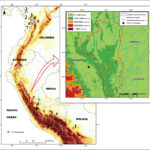
Nymphargus cariticommatus resides predominantly in the montane cloud forests of the eastern slopes of the Andes, primarily found in Ecuador, Colombia, and potentially extending into neighboring regions. These habitats, concealed by dense foliage and shrouded in perpetual mist, provide ideal conditions for amphibians that depend on consistently humid and cool climates.
Imagine a twilight realm, illuminated by filtered sunlight dancing through layers of emerald canopy leaves, perpetually kissed by moisture droplets condensing amid rising air currents. Here, nocturnal rhythms dominate, punctuated by soft, melodic choruses of frog calls—a secretive, almost mystical world, perfectly attuned to frogs like Nymphargus cariticommatus.
Streams meandering gently through these forests play a critical role in this species’ life cycle. Glass frogs favor vegetation overhanging crystal-clear, oxygen-rich mountain streams for egg deposition. These habitats ensure that newly hatched tadpoles fall graciously into the pristine water below, where they develop with minimal disturbance and abundant resources.
Unfortunately, these delicate ecosystems are under ever-increasing threat as human activity encroaches upon pristine Andean forests. Therefore, understanding and preserving these habitats becomes paramount if we wish to protect Nymphargus cariticommatus and its captivating relatives.
Physical Characteristics#
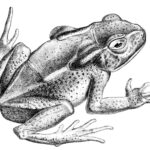
To encounter Nymphargus cariticommatus at night, lit only by the gentle beam of a headlamp, is to experience the wonder of evolutionary beauty up close. Adults generally measure between 22–26 millimeters in body length, making them remarkably small and delicate in appearance. Their limbs, slender and finely tuned for delicate leaps from leaf to leaf, end in adhesive pads that allow perfect adherence to slick, rain-slickened vegetation.
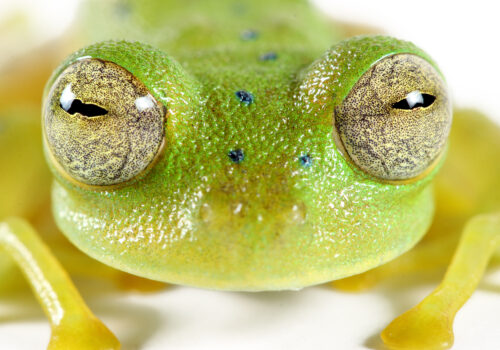
What distinguishes glass frogs most dramatically is their translucent skin, through which internal organs, bones, and even the rhythmic movements of their heart may sometimes be discerned. With a striking mix of pale greens, golds, and hints of blue scattered subtly across their backs—each uniquely patterned individual eerily illuminated beneath a flashlight—makes observation of Nymphargus cariticommatus an extraordinary experience.
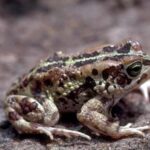
One defining characteristic is the presence of distinctive white or pale-yellow spots arranged irregularly across their dorsum and appendages, traits setting them apart from close relatives and assisting taxonomists during field identification. Such unique markings might aid camouflage, breaking up their outlines amid dew-laden leaves, seamlessly blending predators’ sight.
Behavior and Life Cycle#
Feeding Habits#
Small though they may be, glass frogs like Nymphargus cariticommatus are voracious nocturnal predators of small insects, arachnids, and other arthropods inhabiting their leafy domain. Quietly poised upon a leaf, eyes reflective and alert, they await passing prey, launching sudden and decisive ambushes. This strategy maintains both their energy reserves and their elusiveness, allowing survival within fiercely competitive ecosystems.
Breeding and Reproduction#
Concealed within humid nightfall, males access favored calling sites, often prominent leaves hanging above the swirling waters of mountain streams, gently emitting trilling calls to attract females. Each species within Nymphargus possesses distinct vocalizations—calls unique enough that amphibian researchers, simply by listening, can identify species hidden within the dense foliage.
Upon successful pairing, females meticulously deposit clusters of eggs upon lower leaf surfaces. Uncommonly dedicated among amphibians, males of certain glass frogs guard these developing eggs vigilantly from potential predators and parasitic insects. Protecting these expectantly suspended futures, the male remains near them night after night, fiercely repelling intruders and occasionally moistening them during dry periods to prevent desiccation.
When ready, tadpoles gracefully drop from their leafy nursery into the bubbling streams below, beginning their aquatic phase. Here, amidst oxygen-rich currents beneath sheltering stony substrates and stream vegetation, larvae feed quietly on algae, diatoms, and organic detritus, swiftly growing towards metamorphosis.
Ecological Role#
As predators, Nymphargus cariticommatus helps regulate populations of insects, contributing to the ecological balance of their delicate montane habitats. Conversely, these small amphibians serve as important prey for numerous species, including various birds, reptiles, and small mammals. Thus, glass frogs play a subtle yet undeniably crucial dual role in their complex Andean ecosystem.
Furthermore, their sensitivity to ecological changes makes them excellent bioindicators. By carefully observing changes in their populations, scientists gain vital clues about ecosystem health, potential impacts of climate change, pollution, or habitat disturbance across their range.
Threats and Conservation Status#
Nymphargus cariticommatus, like many amphibians worldwide, faces significant threats from habitat degradation due to deforestation, agriculture expansion, mining, and urbanization. Climate shifts influencing rainfall patterns and temperature fluctuations may also significantly threaten their delicate micro-environments, potentially disrupting breeding cycles and survival.
Currently classified as “Data Deficient” by the International Union for Conservation of Nature (IUCN), comprehensive studies on exact population numbers and distribution are still urgently needed. Conservation programs are increasingly advocating detailed ecological studies, habitat protection strategies, legal measures against habitat destruction, and widespread public education campaigns emphasizing these remarkable creatures’ ecological value.
Cultural and Scientific Significance#
Glass frogs have long intrigued indigenous communities within their natural range. Locally, they are often viewed as symbols of ecological purity, their transparent skin representing clarity and sensitivity towards the health of forest streams upon which communities depend.
Scientifically, glass frogs continue to offer astonishing discoveries, from insights about skin transparency adaptations potentially useful in biomedical research to better understanding of amphibian resilience amid changing global climates.
Conclusion: Guardians of Andean Dreams#
Nymphargus cariticommatus remains an enigmatic yet enchanting representative of nature’s quiet masterpieces. To truly protect this delicate species, efforts must be made not only in direct conservation actions but also in cultivating public fascination and ecological awareness. Each encounter with these ethereal wonders in luminously painted cloud forests offers a reaffirmation of our commitment to responsible stewardship of the delicate planetary bounty given to us.
Ultimately, caring for the future of Nymphargus cariticommatus represents more than safeguarding a single remarkable frog species—it symbolizes a commitment toward preserving the wild beauty and neon vibrancy of life’s greatest secrets, hidden, yet revealingly interconnected, within enchanted forest realms upon a mountainside far away.