- Introduction: Meeting Ikakogi tayrona
- Taxonomy and Classification
- Natural Habitat: Life Amid Mist and Mountains
- Physical Characteristics: Glass-bodied Wonders
- Behavior and Life Cycle
- Ecological Role: Guardians of Forest and Freshwater
- Threats and Conservation Status
- Cultural and Scientific Significance
- Conclusion: Protecting the Jewels of Sierra Nevada
Introduction: Meeting Ikakogi tayrona#
In the mist-shrouded slopes of the Sierra Nevada de Santa Marta mountains in Colombia, a hidden jewel lies silently camouflaged among the lush foliage of pristine rainforest. Ikakogi tayrona, commonly known as the Tayrona glass frog, is a recently described species, discovered only in the last decade. Named after the indigenous Tayrona people who inhabit these sacred mountains, Ikakogi tayrona is as mysterious as it is captivating.
Its remarkable translucence—allowing a glimpse into its very bones and blood vessels—and its delicate, carefully adapted body symbolize the pristine yet fragile nature of its endemic home. As night falls over the Sierra Nevada rainforest, a soft chorus of calls emerges, blending seamlessly into the sounds of trickling streams and leaves rustling in the quiet breeze. It is here, amid streams veiled in moss and amidst the shelter of sprawling bromeliads, that Ikakogi tayrona finds its niche.
Taxonomy and Classification#
Belonging to the family Centrolenidae—the glass frogs—Ikakogi tayrona is closely related to other small, arboreal amphibians known for their translucent undersides. Its genus, Ikakogi, currently encompasses a small number of rare and enigmatic glass frog species found exclusively in certain parts of northern South America.
The Tayrona glass frog was officially described and recognized by science in 2019 after field researchers identified subtle but distinct morphological and genetic traits separating it from similar species like Ikakogi ispacue. Its discovery underscored the rich amphibian biodiversity of Colombia and the importance of ongoing explorations in remote and isolated environments.
Natural Habitat: Life Amid Mist and Mountains#
Ikakogi tayrona is a true emblem of habitat specialization, restricted exclusively to a small elevational belt of montane cloud forest within Colombia’s iconic Sierra Nevada de Santa Marta—one of the planet’s highest coastal mountain ranges. Its known range lies roughly between 1,400 and 2,200 meters elevation, where the air grows cooler, humidity dense, and appearances often obscured by ethereal clouds drifting through thick forests.
These montane habitats are characterized by towering canopies of oak and laurel trees, lush understory vegetation, temperate microclimates, and countless freshwater streams winding through rocky gullies. Ikakogi tayrona often favors habitats near clean, fast-flowing streams and standing pools formed by rainfall, utilizing leaves suspended above the water for reproductive sites. Overgrown bromeliads, orchids, and ferns provide critical moisture-rich refuges, sheltering this delicate species from predators and harsh weather conditions.
Its exceptional adaptation to this specific microhabitat means any environmental disturbance or habitat degradation can severely endanger its long-term survival.
Physical Characteristics: Glass-bodied Wonders#
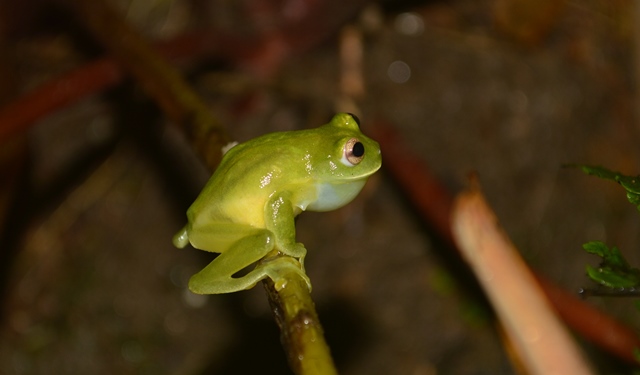
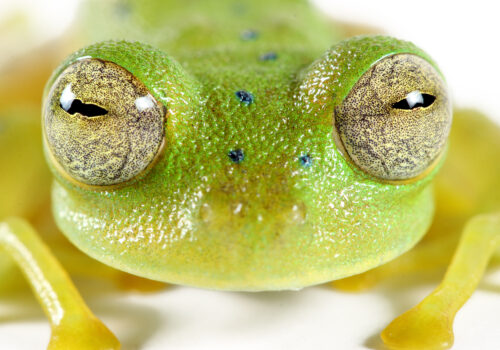
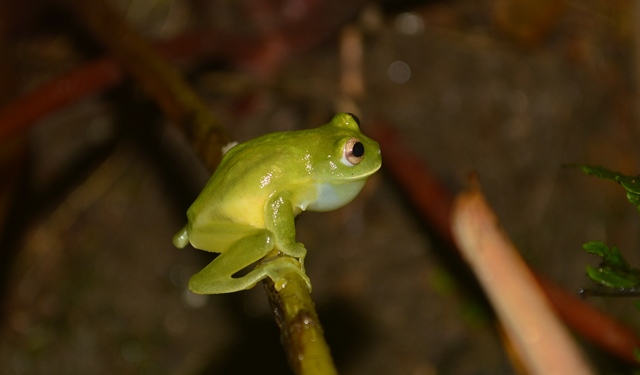
As with most glass frogs, Ikakogi tayrona exhibits an astonishing transparency in its ventral region, allowing curious naturalists to glimpse its internal organs, including the heart, arteries, and gastrointestinal tract. Its dorsum is typically marked with soft, subtle green hues, dotted occasionally by faint yellowish spots, complemented by large forward-facing eyes adapted to its nocturnal, arboreal lifestyle. These large, expressive eyes are golden, often rimmed delicately in silver or black—reflecting moonlight and helping locate prey in dimness.
Adults typically measure just 2.5 to 3 centimeters in length—no larger than a thumb tip—bearing slender limbs and sticky toe pads ideal for navigating slippery leaves and branches. Its diminutive size and cryptic coloration provide essential camouflage, helping it evade visually-oriented predators such as birds and snakes.
Moreover, its skin is exceptionally permeable, absorbing moisture directly from the humid mountain atmosphere—a remarkable adaptation making the frog highly sensitive to changes in environmental conditions.
Behavior and Life Cycle#
Nocturnal Hunters and Their Secretive Lives#
Emerging under cover of darkness, Ikakogi tayrona spends the night hours hunting small insects, spiders, and other invertebrates abundant in its forest home. With stealth and precision, the frog employs ambush tactics—patiently lying in wait until prey ventures close enough for a lightning-fast strike.
A Delicate Dance: Mating and Reproduction#
Rainfall triggers seasonal breeding events for Ikakogi tayrona, and males gather around streams to announce their readiness with distinctive, high-pitched calls. These gentle choruses echo softly through the mist-filled valleys, creating an auditory tapestry unmistakable to field researchers.
Female frogs carefully select their mates and, following successful courtship, lay clusters of translucent eggs upon leaves suspended directly over water. These eggs, protected from aquatic predators by their elevated position, gradually incubate, nourished by humid conditions and constant mist.
An Unusual Strategy: Parental Care and Tadpole Development#
After hatching, tiny tadpoles wriggle free, falling gently into pools below to begin their aquatic phase. Unlike many amphibians whose parental roles end at egg laying, male Ikakogi tayrona have been observed exhibiting protective behaviors, standing watch and providing moisture to developing embryos. This attentive guardianship enhances survival rates, demonstrating the complex and surprising parental investment found even among tiny amphibians.
Ecological Role: Guardians of Forest and Freshwater#
Ikakogi tayrona, though small and seemingly delicate, plays a vital ecological role within its montane habitat. As a predator consuming countless insects, it helps balance invertebrate populations, indirectly aiding vegetation growth and ecosystem stability. Moreover, as prey to larger predators such as snakes, spiders, mammals, and larger bird species, the Tayrona glass frog is a crucial item within the mountain food web.
Moreover, due to their highly permeable skin and specific habitat requirements, glass frogs like Ikakogi tayrona serve as important bioindicators of environmental health. Their presence often indicates clean water quality and stable microclimatic conditions, making conservation monitoring crucial for ecosystem management.
Threats and Conservation Status#
Unfortunately, the pristine environment vital for Ikakogi tayrona faces increasing threats from deforestation, agricultural encroachment, and climate instability. Habitat fragmentation caused by logging, farming, and urbanization significantly reduces available breeding sites and disrupts the delicate microclimates these frogs rely on.
Climate change further compounds these threats, altering rainfall patterns and temperature ranges critical to its reproduction success and survival. Invasive species, emergent diseases like chytrid fungus, and pollution also present ongoing challenges.
Due to its recent discovery and highly specialized habitat needs, Ikakogi tayrona is provisionally considered vulnerable, and further studies are required to ascertain its exact conservation status officially according to the IUCN. Colombian authorities, local communities, and conservation organizations are currently working to prioritize habitat protection and grow awareness about the remarkable biodiversity found within Sierra Nevada de Santa Marta forests.
Cultural and Scientific Significance#
Named in honor of the indigenous Tayrona people—whose ancestral lands overlap significantly with the frog’s range—Ikakogi tayrona symbolizes a deep cultural connection to place and nature. For centuries, the Tayrona have stewarded these mountain ecosystems, viewing wildlife as integral to spiritual and environmental harmony.
Scientifically, the discovery of Ikakogi tayrona aided conservationists and biologists in mapping the complex amphibian biodiversity of northern Colombia, providing further evidence of the invaluable genetic resources hidden within remote tropical forests. Its complex life cycle, reproductive strategies, and sensitivity make it an essential subject for ongoing research into climate change’s adaptive significance.
Conclusion: Protecting the Jewels of Sierra Nevada#
Ikakogi tayrona, Colombia’s remarkable Tayrona glass frog, serves as an unforgettable reminder of nature’s fragile beauty and incredible adaptability. As we delve deeper into understanding this species, the significance of preserving its unique habitat becomes increasingly clear.
We encourage readers to support conservation initiatives, promote sustainable practices, and advocate policies that safeguard this incredible amphibian and its natural home. Only through collective responsibility and awareness can we ensure future generations witness the moonlit silhouette of Ikakogi tayrona, thriving undisturbed in the heart of Colombia’s misty mountains.