- Secretive Wonders of the Forest: Exploring the Ikakogi ispacue Tree Frog
- Taxonomy and Classification
- Natural Habitat: The Cloud Forests of Colombia
- Physical Characteristics: Beauty through Transparency
- Behavior and Life Cycle: Nature’s Tiny Acrobats
- Ecological Role: Guardians of the Ecosystem
- Threats and Conservation Status: Facing the Brink
- Cultural and Scientific Significance
- Conclusion: Lending Your Voice for the Silent Amphibians
Secretive Wonders of the Forest: Exploring the Ikakogi ispacue Tree Frog#
Hidden within the mist-laden forests of Colombia’s Andes Mountains resides a small, mysterious amphibian known to scientists as Ikakogi ispacue. Often elusive, always enchanting, this recently described tree frog species has quickly captivated biologists and nature enthusiasts alike—not just for its delightful appearance, but for what it symbolizes: the untold ecological treasures concealed in the rapid greenery of cloud forests.
Though modest in size, Ikakogi ispacue has become a powerful ambassador for biodiversity, conservation, and ecological preservation. Join me as we explore deeper into the life, behaviors, and challenges that this fascinating creature encounters in its natural environment.
Taxonomy and Classification#
The frog species Ikakogi ispacue belongs to the expansive amphibian order Anura, known broadly as frogs and toads. Specifically, it finds a home within the taxonomic family Centrolenidae, commonly called glass frogs. These frogs are celebrated for their translucent undersides which reveal internal organs—a remarkable biological trait that never ceases to fascinate scientists and naturalists alike.
Initially unveiled to the scientific community in 2019 through diligent research endeavors, Ikakogi ispacue stood apart from related species with distinct genetic markers, unique morphology, and unmistakable vocalizations. Within the Centrolenidae family, this new species further exemplifies how much remains undiscovered even in well-studied biodiversity hotspots.
Natural Habitat: The Cloud Forests of Colombia#
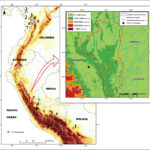
Nestled deep within moisture-laden cloud forests along Colombia’s Pacific slope, Ikakogi ispacue inhabits elevations ranging roughly between 1,500 to 2,200 meters above sea level. Here, in verdant forests frequently engulfed by slowly drifting clouds, the air is cool, moist, and rich with auditory splendor—a symphony composed by a multitude of frogs, insects, and birds.
Within these forests, crystal-clear streams wind gracefully beneath dense canopies, bathing the surroundings in humidity necessary for the survival of this delicate amphibian. Works of living artistry, bromeliads ornament tall trees with vibrant colors while mosses carpet surfaces with their emerald embrace. It is within these niches, especially near ephemeral streams and damp leaf-litter, where Ikakogi ispacue situates itself, flourishing in the microclimate these Cloud forests painstakingly maintain.
For these frogs, pristine waters and dense vegetation are not mere preferences—they are lifelines, critical components of their survival, reproduction, and well-being. Consequently, this delicate ecological balance renders these amphibians exceptionally sensitive indicators of environmental health and climate change.
Physical Characteristics: Beauty through Transparency#
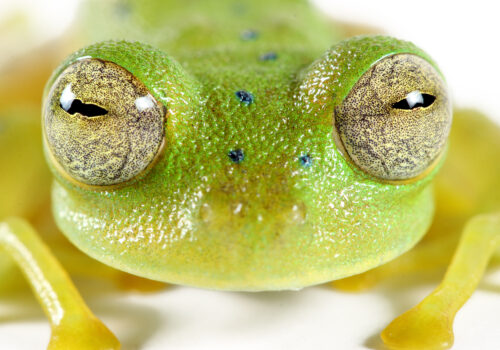
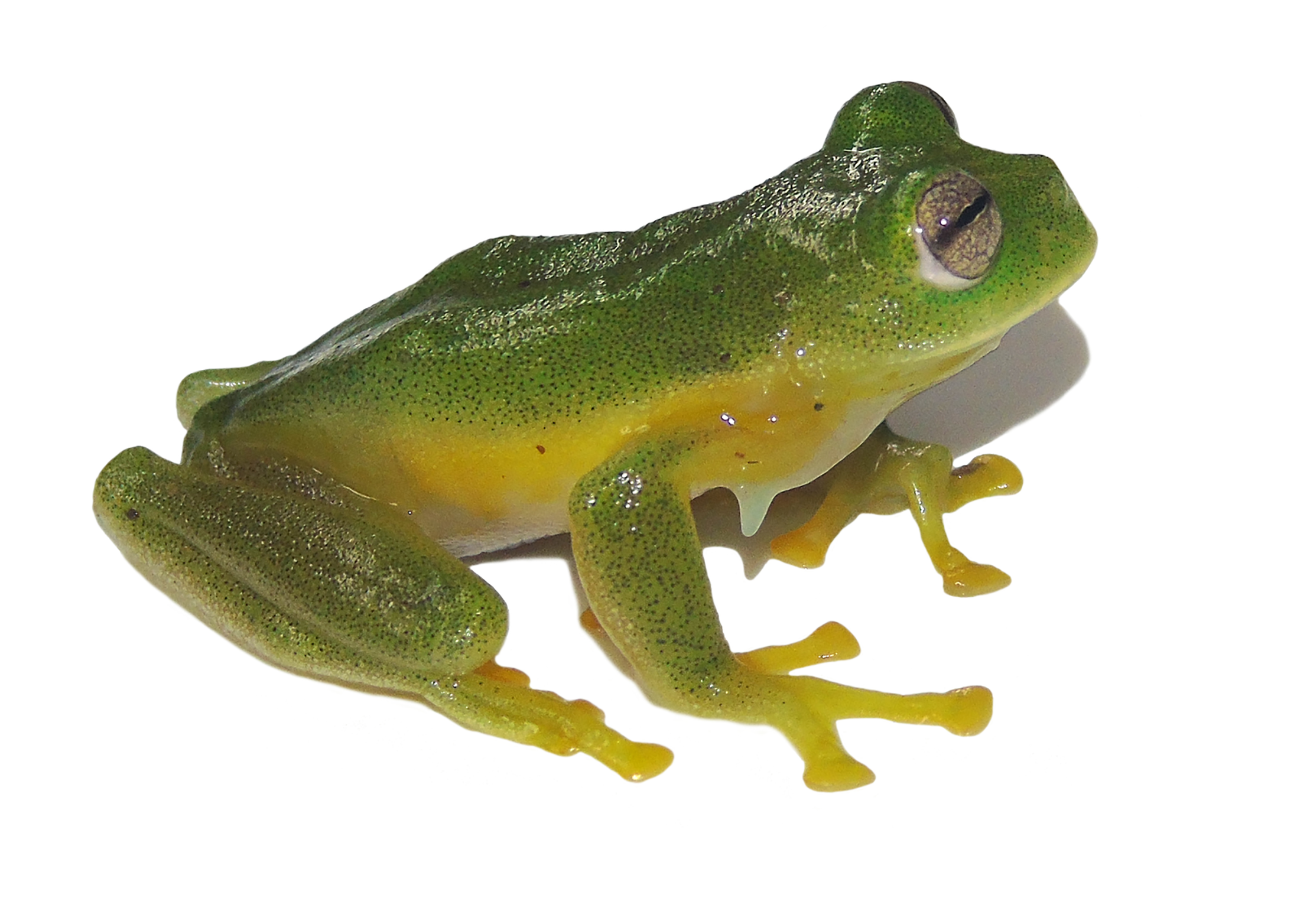
The first glimpse of an Ikakogi ispacue frog often sparks amazement. With a size averaging 2 to 3 centimeters, this tiny tree-dweller might appear delicate and easily overlooked—but a closer inspection reveals a stunning, almost surreal transparency along its belly. Translucent skin exposes elegantly arranged internal organs, including its beating heart and intricate vascular system—a biological marvel enhancing camouflage, confusing potential predators, and earning it the affectionate name “glass frog.”
Unlike other familiar colorful poison frogs, Ikakogi ispacue boasts a more subtle beauty. Its dorsal side generally exhibits a hue of varying shades of pale green, blending effortlessly into moss-covered foliage. The digits on their slender limbs are webbed, assisting tremendously in their arboreal lifestyle and agile movements across wet surfaces.
Behavior and Life Cycle: Nature’s Tiny Acrobats#
Feeding Habits#
Under cover of darkness, the nocturnal Ikakogi ispacue embarks on its foraging expeditions in search of sustenance. The diet primarily consists of tiny insects such as ants, small flies, midges, and minute beetles. Skilled ambush hunters, they patiently await movement, their clear and emerald coloration offering perfect camouflage beneath moonlit leaves.
Mating Rituals and Parental Care#
The rainy season breathes life into the forest streams, acting as nature’s starting whistle for an intricate mating ritual. Male frogs assume positions amidst dripping vegetation, producing melodious yet subtle vocalizations to attract nearby females. Once paired, their parental instincts become strikingly sophisticated for creatures so delicate.
Females meticulously deposit gelatinous clutches of eggs onto leaves suspended closely above streams or dripping foliage. Throughout incubation, males vigilantly guard these precious clusters. Armed with dedicated paternal instinct, fathers regulate egg moisture and maintain protection from predators until tadpoles hatch and drop safely into the streams below—a behavior of such care and complexity it often garners human admiration and empathy.
Ecological Role: Guardians of the Ecosystem#
Though small and seemingly insignificant, Ikakogi ispacue plays a pivotal ecological role. These frogs are nexus points in their habitats, serving as both predators and prey, deeply integrated into the fabric of the ecosystem. They aid significantly in insect population control, consuming quantities substantial enough to affect insect densities, and consequently impacting plant reproduction and overall biodiversity.
In turn, these tree frogs become nutrition-rich prey for birds, snakes, bat species, and other amphibian species—effectively situating themselves as crucial components within complex food webs. Thus, the health and stability of their population and habitat possess wide-ranging impacts that extend far beyond their diminutive frames.
Threats and Conservation Status: Facing the Brink#
Sadly, Ikakogi ispacue faces significant threats common to many amphibians worldwide. Habitat loss and degradation due to logging, agricultural expansion, urbanization, and illegal mining reduce the availability of pristine, stable environments they rely upon. Additionally, climate change induces alterations in precipitation patterns and forest microclimates, potentially disrupting the delicate balance these frogs require.
While the IUCN has yet to formally assess this recently described species, compelling evidence from field observations indicates these frogs could already be critically vulnerable to population declines and extinction. Conservationists stress the critical need to secure protected areas within the frog’s limited distribution, emphasizing research, population monitoring, and outreach about ecosystem preservation.
Cultural and Scientific Significance#
In indigenous communities near Colombia’s Pacific forests, similar small amphibians have long symbolized fertility, renewal, and ecological harmony. While specific cultural references to Ikakogi ispacue are yet not deeply documented, it is likely that as this newly differentiated species gains recognition, it will enrich local folklore and conservation storytelling.
From a scientific standpoint, the discovery and continued study of the Ikakogi ispacue contributes significantly towards understanding biodiversity in cloud forest ecosystems, the climate sensitivity of high-altitude neotropical environments, amphibian adaptation, and complex life-history behaviors exhibited by glass frogs.
Conclusion: Lending Your Voice for the Silent Amphibians#
The story of the Ikakogi ispacue serves as a poignant reminder of the precious biological treasures residing discreetly within our planet’s wild spaces. Through its translucent body, delicate voice, and amazing parental behaviors, this fascinating Pennsylvania-sized creature invites wonder, contemplation, admiration, and action.
To protect the Ikakogi ispacue is to safeguard intricate ecosystems, thousands of interconnected species, and ultimately, the integrity of our shared environment. Consider lending your voice—and supporting ongoing conservation efforts—by spreading awareness, fundraising for habitat protection projects, or simply celebrating the quiet magnificence of the natural world’s wonder, beginning with the flickering heartbeat of a small, translucent frog in the cloud forests of Colombia.