- Cochranella riveroi: The Enchanting Glass Frog of South America's Hidden Rainforests
- Understanding Cochranella riveroi: Taxonomy and Classification
- The Enchanting Habitat of Cochranella riveroi
- Physical Characteristics: The Glassy Beauty of Cochranella riveroi
- Behavior and Life Cycle: The Secretive Dance of Survival
- The Crucial Ecological Role of Cochranella riveroi
- Threats, Conservation Status, and Saving a Rainforest Jewel
- A Window into Biodiversity: Cultural and Scientific Relevance
- Conclusion: Cherishing Cochranella riveroi
Cochranella riveroi: The Enchanting Glass Frog of South America’s Hidden Rainforests#
In the quietly vibrant corners of Venezuela’s lush rainforests, among glistening leaves and cool, babbling streams, lives one of nature’s most magical creatures—a frog whose translucent beauty resembles crafted glass more than flesh and bone. The Cochranella riveroi, commonly known as Rivero’s Glass Frog, is an amphibian that bewilders scientists and enchants observers alike with its delicate, ghostly translucence and dazzling emerald tones. Named in honor of renowned Venezuelan zoologist Juan Arturo Rivero, this tiny amphibian holds far greater intrigue than its fragile stature would suggest. Remarkably transparent skin reveals a pulsing heart and subtle yet vibrant internal organs beneath its shimmering exterior. Cochranella riveroi invites us to peer through nature’s window, offering a captivating glimpse into one of Earth’s most delicate amphibious wonders.
Understanding Cochranella riveroi: Taxonomy and Classification#
Cochranella riveroi falls within the class Amphibia, order Anura, and belongs to the family Centrolenidae—famously known as glass frogs for their characteristic transparent undersides. The genus Cochranella encompasses species well adapted to damp, shaded environments often adjacent to streams or creeks, where moisture and vegetation provide necessary refuge. Scientifically identified and described by Ayarzagüena in 1992, Cochranella riveroi proudly claims its position as a unique species distinguished by subtle yet defining morphological traits which set it apart from cousins sharing its ancestral lineage.
The Centrolenidae family itself consists of numerous closely related but ecologically specialized species scattered throughout Central and northern South American territories. These frogs are evolutionary marvels, having adapted spectacularly well to their niche riverine environments. Among the glass frogs’ diversity, Cochranella riveroi stands out due to its distinctive physical traits and unique behavioral patterns, earning recognition from herpetologists as an important indicator of ecosystem health.
The Enchanting Habitat of Cochranella riveroi#
A Rainforest Paradise: Geographic Range and Ecosystem#
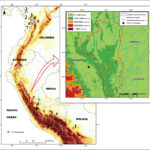
Embedded within Venezuela’s mountainous northern regions, Cochranella riveroi is primarily confined to the country’s cloud forest habitats and lower montane rainforest zones. Known occurrences of this species include locations in the Cordillera de la Costa mountains, home to myriad streams, rivers, and dense foliage, where humidity hangs perpetually in the air. Amid leafy canopies and moss-covered rocks, the glass frog thrives unnoticed, creating a symphony of life sculpted by abundant rainfall and subtropical warmth.
The species prefers elevations between 500 and 1200 meters, a critical zone that intertwines lowland ecology and mountain biodiversity, fostering rich growths of plants such as bromeliads and ferns, which significantly influence microclimatic conditions. These conditions enable essential moisture levels vital for the frogs’ delicate skin and reproductive success. Pockets of mist drifting along the upper canopy and gently swirling down trunks punctuate their forest haven, complemented by the sounds of trickling streams and distant bird song. It is here, in this pristine, vibrant ecosystem, that Cochranella riveroi quietly flourishes.
An Amphibian at One with Its Environment#
Indeed, this frog’s relationship with its habitat is intimate and symbiotic. The transparent amphibian’s survival heavily depends on maintaining life within undisturbed primary forest areas, often perched upon leaves directly above flowing water. Such situations provide both the humidity essential for their skin’s respiration and immediate access to breeding sites. Any disturbance to water systems directly threatens the frog’s reproductive cycles and survival, highlighting the intricate and fragile balance this species maintains with its environment.
Physical Characteristics: The Glassy Beauty of Cochranella riveroi#
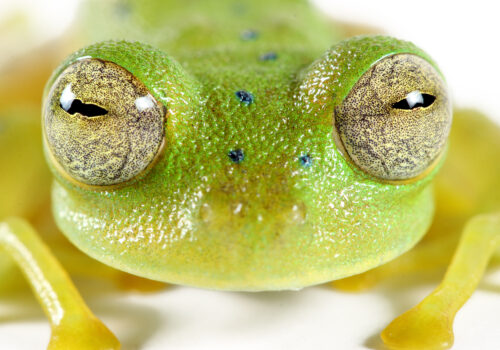
Few species command as immediate and spellbinding attention as Cochranella riveroi does upon first glance. Adult specimens average just 20 to 25 millimeters in length, fitting comfortably on a fingertip, yet this diminutive size only amplifies the appeal maximized by their enchanting, otherworldly appearance. Bright emerald-green dorsal hues aid in perfect camouflage against their leafy homes. Observers constantly find themselves lost in the subtle gradations and delicate shades blended expertly by nature itself.
Beneath, this amphibian presents a marvel of transparency, revealing internal organs distinctly visible against its clear and fragile underside. Pulsing hearts and circulating blood vessels remain openly visible, captivating scientists and enthusiasts alike. Such biological transparency—rare and unique in vertebrates—remains most pronounced in their abdominal cavities, an evolutionary trait hypothesized to reduce chances of detection by potential predators lurking below foliage.
The species possesses large, expressive eyes positioned prominently on its head, allowing lateral vision vital for predator detection and night navigation. Cochranella riveroi’s limbs are long, slender, and equipped with adhesive toe pads optimized for secure leaf attachment, vital in their arboreal lifestyle. These physical adaptations enable graceful movements reflecting their nocturnal lifestyle perfectly suited to the rainforest environment they occupy.
Behavior and Life Cycle: The Secretive Dance of Survival#
Feeding Habits and Hunting Strategies#
Cochranella riveroi is a nocturnal insectivore, primarily hunting smaller arthropods such as ants, flies, beetles, moths, and spiders among the lush vegetation of its tree-canopy home. Patient and stealthy, these frogs employ an ambush approach—stationing themselves silently upon leaves and branches, camouflaged perfectly against their surroundings. Upon spotting prey, the frog rapidly projects its sticky, elongated tongue with expert precision, securing meals efficiently before resetting itself to patiently await the next unsuspecting insect that ventures too close.
Breeding and Parental Care#
Rainy nights mark dramatic and vibrant breeding behaviors as male Cochranella riveroi climb low-hanging vegetation near gentle streams, signaling females with a characteristic mating call—a series of delicate, high-pitched chirps echoing softly amid the dripping foliage. Upon successful attraction, breeding pairs embark upon courtship rituals ending with the careful deposition of gelatinous egg clusters on leaf undersides directly above water.
Astonishingly, these protective parents exhibit behaviors rare among amphibians, particularly the guarding and attending of egg clutches—males vigilantly defend eggs from predators and maintain hydration critical for their survival. Eventually, resulting tadpoles emerge directly into waters below, where they complete their transformative journey toward adulthood. Such parental commitments vividly exemplify the astonishing resilience and adaptation that Cochranella riveroi has evolved to ensure progeny’s survival in its competitive ecological niche.
The Crucial Ecological Role of Cochranella riveroi#
As predator and prey, Cochranella riveroi significantly contributes to maintaining balanced rainforest food webs. The species acts as crucial insect population control, minimizing outbreaks of forest pests that could otherwise drastically affect plant health and forest equilibrium. Conversely, these frogs constitute an essential food source for larger arboreal amphibians, birds, reptiles, and even certain mammalian species inhabiting the same ecosystems.
This amphibian also functions notably well as an indicator species due to its sensitivity to environmental change, particularly pertaining to humidity variation, forest integrity, and pristine water quality. Their presence, abundance, and overall population health indicate the broader condition and integrity of the habitat they occupy, guiding conservationists toward prioritizing necessary protective measures.
Threats, Conservation Status, and Saving a Rainforest Jewel#
Currently listed as “Data Deficient” by the International Union for Conservation of Nature (IUCN), Cochranella riveroi faces increasing dangers from habitat fragmentation, illegal logging, agricultural expansion, and climate change. Pollution and disease—particularly chytrid fungus infections devastating amphibian populations globally—pose further threats that could undoubtedly stress this already elusive species.
Local and regional conservation efforts focus significantly on habitat protection and careful monitoring. Bolstered by advocacy campaigns and scientific research initiatives designed to improve ecological knowledge, studies examining Cochranella riveroi’s populations and habitat requirements are crucially ongoing endeavors.
A Window into Biodiversity: Cultural and Scientific Relevance#
Beyond their ecological roles, glass frogs like Cochranella riveroi captivate human curiosity and imagination, challenging our perceptions of physiology and evolution. Researchers study this frog’s transparency to shed light on broader biological processes, potentially offering insights useful within biomedical disciplines.
Conclusion: Cherishing Cochranella riveroi#
Cochranella riveroi is undeniably a living testament to biodiversity’s wondrous vulnerability, embodying nature’s subtle intricacies and sophisticated adaptations. Protecting this delicate, fascinating amphibian demands universal participation. Let our admiration propel actions toward conservation, safeguarding a species whose mesmerizing transparency lets us envision clearly the beauty and fragility that exists at the intersection between wonder and science in Earth’s timeless rainforests.