Unveiling the Mysteries of the Glass Frog: A Close Look at Centrolene pipilatum#
In the mist-laden, verdant forests of the neotropical realms, nestled quietly beneath the broad leaves of tropical trees and alongside gently trickling streams, dwells a mesmerizing creature of translucent wonder. Meet Centrolene pipilatum, a species fondly known as one of the mystical “glass frogs.” Named for the extraordinary transparency of its underbelly, this fragile-looking amphibian captivates both science and imagination, offering an unobstructed glimpse into its internal organs—the very heart beating visibly beneath delicate skin.
The glass frog, Centrolene pipilatum, embodies the rich biodiversity hidden within tropical ecosystems, but like many treasures of these vulnerable habitats, it faces increasing pressure from human influence. Amid vibrant shades of emerald and jade, its life unfolds quietly—yet, the lessons it can teach us reverberate hauntingly loud across global conservation communities.
Taxonomy and Classification#
To appreciate the ecological masterpiece that is Centrolene pipilatum, we must first navigate the foundations of its scientific classification. Belonging to the family Centrolenidae, the glass frogs earn their name from their translucent ventral skin. This family comprises numerous delicate, small-bodied frogs distributed primarily across Central and South American rainforests.
Centrolene, the genus within which our focus species resides, is renowned for frogs uniquely adapted to riparian habitats, boasting clear adaptation to life near flowing waters. Glass frogs are typically arboreal, and Centrolene pipilatum is no exception, spending much of its life perched among leafy vegetation near streams and rivers.
Natural Habitat#
Navigating the lush landscapes of pristine montane forests throughout Ecuador and Colombia, Centrolene pipilatum claims modest territories alongside clear, cool streams. Found at elevations typically ranging from 600 to 1800 meters above sea level, this amphibian chooses its aquatic and arboreal habitats with precision, profoundly dependent on clean, oxygen-rich waters and abundant foliage cover.
An Arboreal Jewel on Stream Banks#
Picture an early morning deep within the montane rainforest—when mist hangs thick over greenery still damp from nighttime drizzle; it is here, suspended on leaf undersides adjacent to the gentle ripple of stream currents, that you might spot a glass frog resting peacefully. The humid, temperate microclimate of riparian vegetation offers not only cover from predators but optimal breeding spots and safe havens for their tiny eggs and developing tadpoles.
Physical Characteristics#
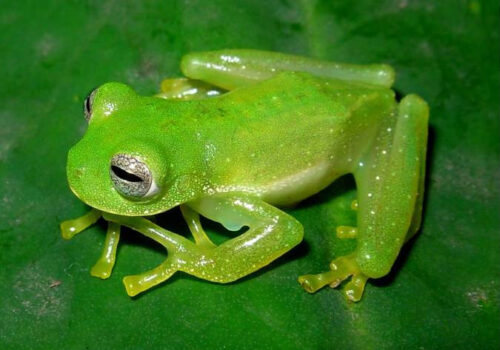
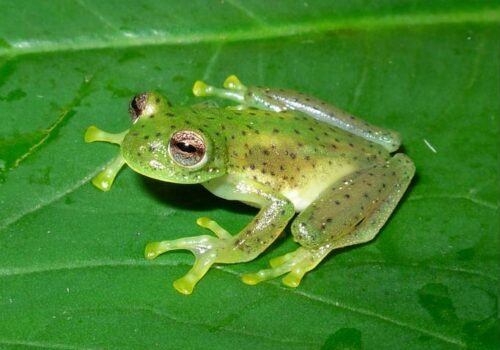
The true marvel of Centrolene pipilatum lies not in flamboyant colors, but rather in the astounding transparency for which glass frogs have earned their distinct niche in biodiversity narratives. Adult frogs typically measure from 20 to 28 millimeters, a diminutive size that renders them challenging to spot for the untrained eye.
Above, their dorsal surface reveals vivid shades of green, subtly varied by tiny flecks of gold or silver, effectively mimicking the dewdrop-studded leaves they call home. However, the ventral side impresses observers most profoundly; their skin is virtually translucent, clearly exposing visceral organs, blood vessels, and even a gently pulsing heartbeat. This extraordinary adaptation provides remarkable camouflage, protecting them from avian and reptilian predators.
Evolving invisibility—Nature’s Great Disguise#
Natural selection crafted this transparency as camouflage, enabling frogs to blend effortlessly into their luminous, water-soaked habitat. Observed from below, potential predators find it almost impossible to detect Centrolene pipilatum, their outlines and contours completely melding with light-speckled leaves. Such sophisticated evolutionary adaptations remind us vividly of nature’s exquisite detail and sentient-like intelligence in the endless pursuit of survival.
Behavior and Life Cycle#
Life in the forest for Centrolene pipilatum relies heavily on the precious resource of clean water. This sensitive amphibian displays particularly fascinating reproductive and parental behaviors, highly adaptive and intimately tuned to its unique ecological niche.
A Symphony of Glass: Breeding Rituals#
As night descends softly over rainforest canopy layers, male glass frogs begin their serenade. Their courtship orchestration comprises gentle chirping calls, harmoniously resonating through dense foliage and humidity-thick air. These nuanced vocalizations attract receptive females, signaling the commencement of their brief but elaborate reproductive dance.
Once paired, female glass frogs carefully select broad overhanging leaves to deposit their gelatinous, transparent egg masses, skillfully positioned above flowing streams. This strategic placement ensures that newly hatched tadpoles fall directly into hospitable aquatic habitats, ready to fulfill their next stage of life underwater.
Parental Guardianship of a Delicate Generation#
One particularly heartwarming trait often observed in glass frog species, including Centrolene pipilatum, involves vigilant male parental care. The devoted father remains close to the delicate clutch, providing protection from predatory insects, preventing fungal infections by periodically hydrating eggs, and deftly repelling rival males. The consequence is significantly increased survivorship—a necessary strategy for a species with precarious survival odds.
Ecological Role#
Despite their diminutive size and vulnerability, glass frogs profoundly impact their ecological environment. Centrolene pipilatum functions as both predator and prey, demonstrating vividly the intricate food web in which every organism, no matter how small or seemingly insignificant, plays an interconnected role.
Feasting predominantly on small arthropods like ants, termites, and flies, they exert effective insect population control—maintaining vital natural balance while simultaneously providing food for predatory species including birds, snakes, and larger amphibians. Their sensitive biology also identifies them as indicator species whose health reflects environmental conditions, highlighting ecosystem integrity and health.
Threats and Conservation Status#
Like many rainforest inhabitants worldwide, Centrolene pipilatum confronts mounting pressures from habitat loss and degradation. Accelerated deforestation, water pollution, illegal farming practices, and mining operations significantly compromise their delicate ecosystems. Climate change compounds these threats by altering precipitation patterns and stream dynamics—impacting breeding success and increasing vulnerability to disease.
Currently, Centrolene pipilatum holds the concerning rank of “Vulnerable” according to the International Union for Conservation of Nature (IUCN). Conservationists continually advocate for stronger protective measures for these amphibians, emphasizing habitat preservation, pollution control, and establishing protected natural reserves as key mechanisms to safeguard fragile populations.
Voices for Conservation: Protecting Transparent Treasures#
Various conservation groups and local communities now actively engage in conservation actions such as habitat rehabilitation, stream restoration initiatives, and captive breeding programs aimed at bolstering declining wild populations. Educational campaigns also enhance public awareness of the frog’s precarious plight—reinforcing that preservation of amphibian diversity directly relates to the health and resilience of the ecosystems upon which we all depend.
Cultural and Scientific Significance#
Beyond ecology and conservation, the symbolism and scientific allure of glass frogs underpin far-reaching implications. In indigenous folklore and cultural narratives of Andean regions, glass frogs symbolize clarity, renewal, and environmental purity—reminding local communities of nature’s delicate balance requiring constant respect and stewardship.
Scientifically, examining glass frogs’ transparency and unique anatomical integrities opens avenues for revolutionary biomedical advances. Their unusual tissues offer insights into evolutionary biology, developmental genetics, and even advancements in regenerative medicine research. Thus, protecting Centrolene pipilatum proves not only ethically imperative but scientifically invaluable.
Conclusion#
Centrolene pipilatum epitomizes both wonder and fragility—reminding us that biodiversity treasures must hold treasured places within our conservation dialogues. Embracing the fate of the glass frog means affirming our collective responsibility toward ecosystems and future generations. By championing education, advocacy, and conscientious stewardship, each of us can play a crucial role in securing brighter horizons for this ethereal creature—for the delicate, beating heart beneath translucent skin reminds us poignantly of our shared vulnerability and interconnected destinies.