- Centrolene petrophilum: Unveiling the Mysteries of the Glass Frog of the Andes
- Taxonomy and Classification
- Natural Habitat: The Secret World of Cascading Streams
- Physical Characteristics: Beauty in Transparency
- Behavior and Life Cycle: From Raindrop to Frog
- Ecological Role: Guardians of Balance
- Threats and Conservation Status: Protecting a Fragile Existence
- Cultural and Scientific Significance
- Conclusion: Guardian of the Hidden Forest
Centrolene petrophilum: Unveiling the Mysteries of the Glass Frog of the Andes#
Hidden among the emerald leaves and misty cloud forests of South America lies a wonder of evolutionary beauty: the glass frog, Centrolene petrophilum. Its delicate, translucent body seems kissed by the very raindrops it shelters beneath, allowing a fascinating glimpse of its internal anatomy. Belonging to the intriguing family Centrolenidae, these frogs offer unique windows into the intricate web of rainforest life. Yet, despite their enchanting beauty and fascinating biology, they remain unfamiliar to most, quietly thriving—or struggling—within their waterfall-bound world.
Have you ever envisioned a frog with a glass-like body, its very veins and heart visible through thin, pale green skin? Such is the marvel of Centrolene petrophilum, a species whose peculiar transparency serves both beauty and biological purpose, emblematic of the delicate balance and hidden challenges these frogs face.
Taxonomy and Classification#
Centrolene petrophilum, colloquially known as the Piedra Glass Frog, finds its place within the family Centrolenidae—frogs celebrated for their captivating transparent skin. The genus Centrolene comprises several closely related glass frog species, each demonstrating delicate morphological variations and occupying distinct niches across Neotropical rainforests.
First described scientifically in the early 20th century, the species name ‘petrophilum’ hints at its unique habitat preference, translating from Latin as “rock-loving.” Relatives within the Centrolenidae showcase similar glassy skin textures and hauntingly beautiful appearances, yet subtle ecological variations distinguish each species in their diverse rainforest homes.
Natural Habitat: The Secret World of Cascading Streams#
Geographic Range and Distribution#
Centrolene petrophilum is an inhabitant of cloud forests and montane rainforest regions in northwestern South America, notably in Colombia and Ecuador. Often confined to elevations between 950 to 1,900 meters above sea level, they populate restricted areas characterized by remarkable biodiversity and dense vegetation. Each population thrives almost exclusively near pristine mountain streams and waterfalls—nurtured by a humid, rain-laden environment that feels perpetually enveloped in clouds and mist.
Preferred Habitat#
A remarkable species adapted to staying intimately connected to water, Centrolene petrophilum exemplifies the definition of a habitat specialist. This glass frog’s range is intricately tied to vibrant, clear-bodied streams, pools, and rocky surfaces embedded within steep, vegetated ravines. Humidity remains consistently elevated, ensuring lush, moss-covered rocks and ever-moist foliage. It is these small, pristine microhabitats—often no larger than a few square meters—that provide refuge and spawning grounds for these delicate frogs.
Imagine the continuous whisper of water droplets falling from leaves, with the cool mountain breeze perpetually carrying moisture and creating a calming symphony of nature’s sounds and sensations. Within this captivating corner of rainforest life, Centrolene petrophilum gracefully carries on its existence.
Physical Characteristics: Beauty in Transparency#
A Living Window to Its Interior#
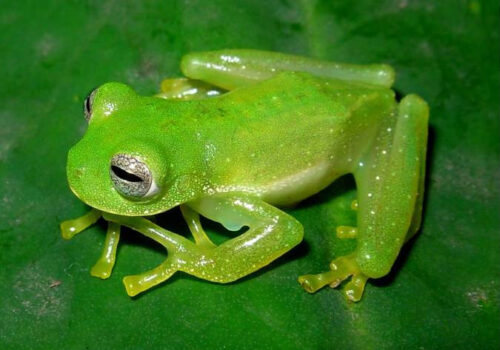
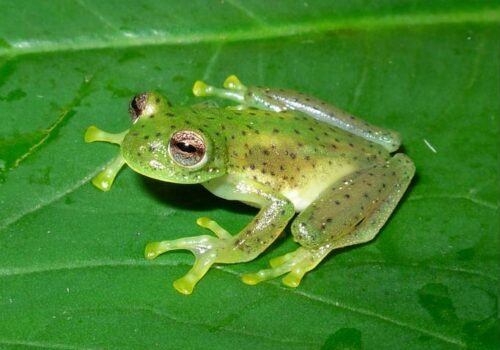
The mystical appeal of Centrolene petrophilum lies undeniably in its ethereal beauty and delicate transparency. This small amphibian rarely exceeds 3 centimeters in length, yet the impact of its appearance is immense. Pale green or sometimes almost entirely translucent, its minute body reveals the masterful workings of organs, bones, and, most astonishingly, its beating heart.
Underneath its minimal coloring lies skin thin enough that the observer can follow delicate crimson-hued blood vessels, marveling at the elegance of internal craftsmanship. Large, expressive eyes almost glow gold and seem endlessly curious, complementing the overall striking visual. Their limbs are thin yet strong, adapted for climbing and adhering to the rain-slickened rocks and vegetation in their environment.
Adaptive Advantages of Transparency#
But beauty is not the sole benefit. Such transparency serves as remarkable camouflage. Their skin’s glassy characteristics ensure predators struggle to discern their shapes from droplets of rainwater or the glossy foliage. Blending seamlessly into their habitats not only safeguards against predation, but enhances courtship displays and promotes reproductive success—a reflection of millions of years of evolutionary refinement.
Behavior and Life Cycle: From Raindrop to Frog#
Diet and Feeding Behavior#
Observing Centrolene petrophilum in its natural environment reveals a graceful yet efficient predator of small invertebrates. With swift, precise movements, these amphibians hunt mostly at night, plucking insects and arachnids hidden among veiled leaves or suspended in mid-air. Their feeding behaviors underscore their integral role in rainforest food webs, displaying the constant balance at play within these micro-ecosystems.
Breeding Rituals and Reproduction#
The astonishing breeding behaviors of Centrolene petrophilum reflect extraordinary adaptation to their challenging habitat. Male glass frogs proclaim their terrestrial domains through melodious yet high-pitched calls—notes that reverberate off stream-side rocks and foliage, uniting a chorus of competitors. Within peek reproductive seasons, they’re found perched strategically near streams, their territorial and courtship displays focused on enticing females.
Upon pairing, females meticulously deposit clusters of eggs onto vegetation hanging delicately over flowing streams. These translucent egg batches, numbering a few dozen per clutch, hang precariously above water, ensuring the tadpoles emerging have immediate access to survival opportunities below. Parental care typically leans towards paternal responsibility; males take sentinel positions close by, occasionally moistening their egg clusters and protecting their delicate offspring from predators.
Remarkable Tadpole Development#
Once hatched, tadpoles spectacularly descend directly into streams or pools beneath. They immediately navigate intricacies within their aquatic world, relying on algae and organic debris for nourishment. Gradually, through metamorphosis, these tadpoles take on terrestrial form and move towards their arboreal and terrestrial habitats—completing a beautifully synchronized cycle intimately tied to their rainforest home’s rhythm.
Ecological Role: Guardians of Balance#
Centrolene petrophilum contributes substantially to its ecosystem’s intricate balance. Operating as both predator and prey, these frogs maintain populations of insects and facilitate nutrient cycling through their interactions. Their vulnerable eggs and tadpoles offer vital nourishment for a variety of aquatic predators and insects, thus sustaining biodiversity across multiple trophic levels.
Furthermore, their delicate sensitivity to environmental disturbances establishes them as critical indicators of ecosystem wellbeing. An abundance of healthy glass frogs suggests overall habitat health, while their mysterious disappearance often signifies underlying environmental deterioration—warning signs we shouldn’t ignore.
Threats and Conservation Status: Protecting a Fragile Existence#
Despite their remarkable adaptability, Centrolene petrophilum faces significant threats. Habitat loss due to deforestation, agricultural expansion, pesticide runoff, and mining activities critically endanger their delicate ecosystems. In addition, climate change-driven alterations in rainfall patterns and stream temperatures threaten their fragile reproductive cycle.
Currently listed as Near Threatened by the International Union for Conservation of Nature (IUCN), their populations require immediate attention and concentrated conservation measures. Fortunately, numerous organizations across the region have dedicated efforts to safeguard these areas, striving for habitat restoration, protection measures, and raising public awareness about the species’ plight.
Cultural and Scientific Significance#
Culturally admired as symbolic environmental treasures within their native range, glass frogs captivate local communities and international researchers alike. Science marvels at their astounding biology, notably their transparent skin that allows unique insights into amphibian physiology and heart function. They’ve provided valuable clues toward new biomedical insights, enhancing scientific understanding of cardiac diseases and circulatory functions through innovative, non-invasive observation.
Conclusion: Guardian of the Hidden Forest#
The enchanting Centrolene petrophilum stands as an awe-inspiring representation of evolution’s artistry and precision. Its transparent form implores humanity to appreciate Earth’s wonders and to realize our profound responsibility in maintaining biodiversity and ecological balances globally.
We, as nature enthusiasts and advocates, owe it to ourselves—and to future generations—to support conservation efforts and safeguard habitats. Let the spellbinding beauty and vulnerability of the Piedra Glass Frog inspire a renewed dedication toward preserving nature’s delicate wonders. Together, we can secure the future of not only Centrolene petrophilum, but countless species that share this remarkable world.