- Introduction: A Window Into Nature's Wonders
- Taxonomy and Classification: Placing Centrolene notosticta in Context
- Natural Habitat: A Realm Between Mist and Verdure
- Physical Characteristics: The Living Glass Sculptures of Nature
- Behavior and Life Cycle: Night Songs, Parenthood, and Survival
- Ecological Role: Guardians of Ecosystem Health
- Threats and Conservation Status: Challenges Facing a Delicate Creature
- Cultural and Scientific Significance: Lessons from Transparent Lives
- Conclusion: Preserving the Crystal Jewel of the Andes
Introduction: A Window Into Nature’s Wonders#
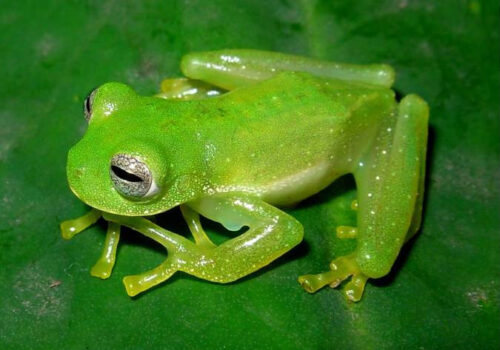
In the misty cloud forests of the Andes, hidden amongst the leaves and crystalline streams, lives a mysterious creature so delicate and captivating that it seems plucked straight from the pages of fantasy novels. Centrolene notosticta, a remarkable glass frog species, enchants observers with its translucent emerald-green body, allowing a curious glimpse into the inner workings of life itself. Known scientifically as Centrolene notosticta, this species belongs to a fascinating group of frogs aptly named for their glass-like appearance. They embody the perfect harmony of evolution, nature’s response to an existence that blends camouflage and vulnerability with astounding efficiency.
Few sights in the natural world are as memorable as coming face-to-face with a glass frog perched serenely on a rain-soaked leaf, illuminated faintly by moonlight. But beyond its enchanting beauty, Centrolene notosticta serves as a delicate indicator of ecosystem health and environmental balance, captivating conservationists, researchers, and nature lovers alike. From their nightly chorus beneath moonlit canopies to their extraordinary parental care strategies, these frogs open a captivating window into a mysterious world, subtly hidden within some of Earth’s most biologically rich habitats.
Taxonomy and Classification: Placing Centrolene notosticta in Context#
Centrolene notosticta was first described scientifically in 1946 by renowned herpetologist William Edward Duellman. Classified within the family Centrolenidae, or the glass frogs, this unique amphibian is closely related to other arboreal species found predominantly in Central and South America. The genus Centrolene itself comprises various similarly striking frogs, each bearing intriguing translucent properties, yet possessing unique traits that distinguish one species from another.
Within Centrolenidae, Centrolene notosticta resides alongside its relatives, sharing evolutionary adaptations shaped by life in the damp, lush tropical forests of the Andes region. Many closely related species, such as Centrolene prosoblepon and Hyalinobatrachium fleischmanni, offer fascinating points of comparison, particularly concerning their breeding habits, vocalization patterns, and overall ecological roles. Understanding their place within this intricate taxonomic web not only enriches our knowledge but invites greater curiosity about these captivating creatures.
Natural Habitat: A Realm Between Mist and Verdure#
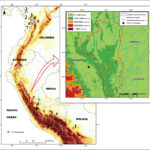
The story of Centrolene notosticta naturally unfolds in the mist-drenched cloud forests of the Andean region. Restricted mainly to Colombia and Ecuador, this enchanting frog finds solace in habitats ranging from approximately 1,200 to 2,100 meters above sea level. Often seeking refuge in areas with cool, humid conditions near clear, fast-running streams, C. notosticta chooses a delicate existence perched atop leaf undersides or amongst moist mosses along forested rivulets.
These habitats, often cloaked in dense fog and perpetual dew, provide the ecological tapestry upon which C. notosticta thrives. The species depends profoundly upon riparian zones—areas surrounding streams—for breeding, feeding, and shelter. The very existence of these frogs suggests a healthy, relatively undisturbed ecosystem, as they are indicators sensitive enough to reflect subtle environmental disruptions, from pollutants in the water to temperature fluctuations exacerbated by climate change.
Forest Interiors and Life in the Trees#
Unlike frogs typically observed hopping along forest trails, Centrolene notosticta rarely ventures to the ground. Instead, it spends the majority of its life balancing gracefully on broadleaf vegetation, moving cautiously under cover of darkness. Its lightweight and agile build is evolutionarily tailored for an arboreal lifestyle, limbs expertly adapted for gripping slippery leaves and navigating tangled branches as it moves quietly through the forest canopy.
The delicate balance in its specialized habitat underscores Centrolene notosticta’s vulnerability: its existence depends solidly upon the preservation of pristine waterways, balanced ecosystems, and the microhabitats found within lush, undisturbed forests.
Physical Characteristics: The Living Glass Sculptures of Nature#
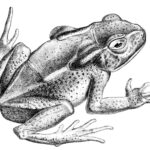
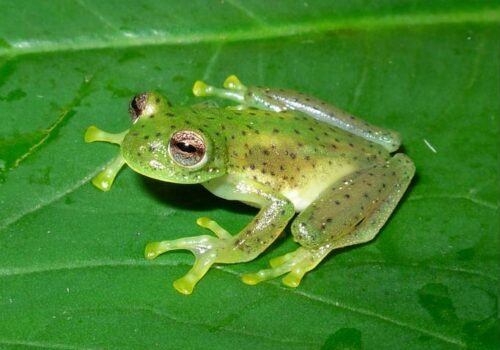
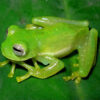
At first glance, observers of Centrolene notosticta are captivated by its most visually striking feature: the frog’s incredible transparency. Measuring approximately 22–25 millimeters in length, this small amphibian is as delicate as it is beautiful. From its dorsum, a rich emerald hue blends seamlessly with foliage surrounding it, while its ventral surfaces showcase startling transparency, displaying internal organs clearly—revealing hearts rhythmically beating and blood vessels gently pulsating.
The frog’s large forward-facing eyes, bright golden-amber in color, dominate its face, offering impressive nocturnal vision crucial for its nightly activities and prey capture. Long, slender limbs end in sticky, expanded pads, offering optimal adhesion on sleek, moisture-covered leaves, providing the frog stability and safety in its arboreal realm.
Specialized cryptic coloration helps this creature blend seamlessly with its leafy surroundings, cleverly evading the attentive eyes of predators. The species name “notosticta” originates from Greek, indicating a spotted back; indeed, subtle lighter spots and minute yellowish dots ornament its emerald dorsal surfaces, creating a delicate mosaic reflective of its extraordinary stealth.
Behavior and Life Cycle: Night Songs, Parenthood, and Survival#
As twilight cloaks the Andean forest in dim lights and shadows, Centrolene notosticta awakens, emerging silently from hidden daytime retreats. Their night-time emergence often coincides with gentle drizzles—ideal conditions for these amphibians to seek food and find mates under cover of moisture. Vocalizations break the silence: males utter delicate, chirping calls designed to attract discerning females, creating nocturnal symphonies hidden from human ears until you stand close enough amidst dripping leaves and softly rustling foliage.
A Unique Breeding Strategy#
After successful courtship, Centrolene notosticta illustrates a remarkable form of parental care, laying translucent eggs carefully attached to leaves suspended directly over streams. This strategic placement ensures rapid growth and protection of embryos, offering survival advantages such as avoidance of aquatic predators awaiting beneath the leaf’s veil above. Upon hatching, tadpoles drop gracefully into the stream below, commencing their transformation into fully realized amphibians within nutrient-rich waters.
Ecological Role: Guardians of Ecosystem Health#
Centrolene notosticta acts as both predator and prey in the intricate web of life within the Andean cloud forests. Primarily insectivorous, the species excels at controlling insect populations, feeding hungrily upon small insects like ants, moths, and mosquitoes. On the other hand, glass frogs fall victim to predation by snakes, birds, spiders, and occasionally even larger amphibians, contributing to the delicate balancing act within their complex habitat.
As indicator species, glass frogs serve as ecological barometers, signaling the environment’s overall health and resilience. Their apparent fragility and sensitivity offer valuable insights to biologists and conservationists monitoring ecological balance and biodiversity across amphibian-rich regions.
Threats and Conservation Status: Challenges Facing a Delicate Creature#
Unfortunately, the captivating Centrolene notosticta faces several serious threats in the rapidly changing modern world. Deforestation driven by agricultural expansion, logging activities, mining, and human settlement encroachments pose severe risks to its specialized habitat. These impacts, exacerbated further by climate change-driven declines in moisture availability, temperature shifts, and extreme weather events, threaten their delicate breeding processes and survival rates.
Currently, the International Union for Conservation of Nature (IUCN) lists Centrolene notosticta as “Near Threatened,” signifying that conservation actions should become paramount to preserve this frog and its habitat sustainably. Effective conservation necessitates protecting critical habitats, raising awareness among local populations, and promoting community-based ecological initiatives to support forest preservation and ecosystem integrity.
Cultural and Scientific Significance: Lessons from Transparent Lives#
Centrolene notosticta’s unique transparency highlights life’s incredible marvels, making it a beloved subject among scientists exploring biological adaptations, amphibian physiology, and evolutionary ecology. These amphibians also symbolize the fragility and beauty of entire ecosystems, inspiring cultural reverence and storytelling among Andean communities who value biodiversity deeply.
Conclusion: Preserving the Crystal Jewel of the Andes#
Centrolene notosticta represents a natural treasure hidden within remote, lush valleys, shimmering leaf-tops, and mystical forests. By deepening our connection and understanding of these enchanting creatures, we foster stewardship toward protecting wildlife and honoring nature’s depth and wonder. Let their presence inspire sustained dedication: supporting conservation projects, responsible tourism, and education to safeguard the forest’s delicate inhabitants. After all, protecting Centrolene notosticta preserves much more—an entire world behind glass.