Centrolene lynchi: Exploring the Secret Lives of Lynch’s Glass Frog#
In the lush heartland of the cloud forests and tropical rainforests of South America hides one of nature’s remarkable secrets—an amphibian so exquisitely delicate and astonishingly transparent you can almost witness its heartbeat through clear, translucent skin. Meet Centrolene lynchi, affectionately known by naturalists as Lynch’s Glass Frog—a striking creature whose seemingly fragile beauty masks an essential role in its vibrant ecosystem and holds critical insights for science and conservation alike.
Named after esteemed American herpetologist John Douglas Lynch, Centrolene lynchi captures the imagination with a captivating beauty matched only by its intriguing biology. Glass frogs, including this species, have enchanted scientists, wildlife photographers, and nature enthusiasts for decades, yet they remain elusive, cryptic residents of remote forest stream banks, rarely glimpsed except by determined observers.
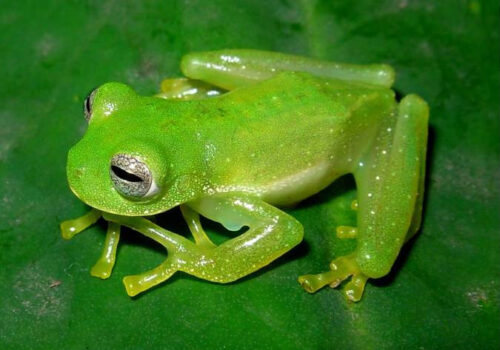
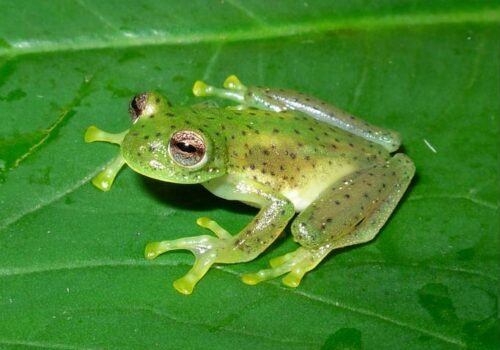
What makes this species exceptionally fascinating is its near-transparent abdominal skin, showing clearly visible internal organs—a characteristic that continues to captivate biologists and photographers. Understanding the story of Centrolene lynchi unveils essential lessons about biodiversity, ecosystem integrity, and the urgency of conservation efforts in rapidly changing tropical habitats.
Taxonomy and Classification#
Centrolene lynchi belongs to the family Centrolenidae—commonly recognized as glass frogs, renowned for their translucent skin. Centrally placed within the genus Centrolene, this species resides alongside numerous closely related species characterized by similar transparency and arboreal lifestyles.
Initially described scientifically by Duellman in 1980, Centrolene lynchi was recognized for several distinct morphological traits setting it apart from congeners. Though superficially resembling other glass frogs like Centrolene prosoblepon, meticulous research has identified subtle variations in coloration patterns, behavioral traits, and subtle morphological differences that clearly delineate Centrolene lynchi as a separate entity within the diverse amphibian tapestry of tropical Latin America.
Natural Habitat#
Centrolene lynchi inhabits a world wrapped in perpetual mist, residing predominantly in the mountainous, cloud-bathed tropical forests of Colombia and Ecuador. It thrives specifically within elevation ranges of approximately 1,800 to 2,400 meters above sea level, areas often designated as cloud forests due to characteristic persistent fogs and precipitation patterns.
Forest Streams and Surroundings#
The preferred microhabitats of Centrolene lynchi are moss-covered trees and bushes near clear, fast-flowing streams where humidity remains consistently high. Here, amidst the steady trickle of mountain water and dense green foliage bathed in mist, these fascinating frogs find refuge and forage. The humidity and low ambient temperatures of high-altitude forests provide ideal conditions, safeguarding their delicate physiology and watery reproductive habitats necessary for unrestricted embryonic development.
Ecologically, Centrolene lynchi benefits immensely from the stable microclimate provided by cloud forests, which harbor an extraordinary mix of biodiversity. Mosses, ferns, orchids, epiphytes, and towering trees create a layered ecological niche structure ideal for a small, nocturnal amphibian whose life is closely intertwined with moisture-dependent life cycles.
Physical Characteristics#
Perhaps the most intriguing characteristic of Centrolene lynchi is its striking appearance. Adults average around 22 to 27 millimeters in length, making them small yet cautiously conspicuous residents among streamside foliage. Their bright green dorsal surface, usually glistening with moisture, acts as near-perfect camouflage among dense vegetation and moss-covered branches during daylight hours. At night, however, individuals stay alert, perched gently atop leaves, relying on darkness to obscure their silhouette.
A Window to Inner Anatomy#
The hallmark of this species—and indeed the family—is its remarkable transparency. Centrolene lynchi displays a completely transparent underside that reveals everything from beating hearts and pulsing blood vessels to digestive tracts and internal organs. This mesmerizing feature isn’t merely an odd curiosity; researchers theorize it serves critical functions, potentially in cryptic camouflage within the intricate interplay of shadows and moonlight filtered through leaves.
The species’ toes are delicately webbed, perfectly adapted to secure footholds on slippery leaves over rushing streams. Their prominent, horizontally elliptical pupils give Centrolene lynchi exceptional low-light vision, ideal for vigorously hunting tiny insects and capturing minute prey under the cloak of night.
Behavior and Life Cycle#
Centrolene lynchi embarks on its nocturnal existence with remarkable stealth and precision, emerging at dusk when shadows lengthen beneath forest canopies. Individuals typically assume hunting positions on low-lying branches and large plant leaves, ambush-hunting unwary insects attracted by humid forest air, mossy scents, and blooming vegetation.
Reproductive Behaviors and Strategies#
The breeding season for Centrolene lynchi is typically synchronous with seasonally abundant moisture, an event that triggers a vibrant chorus of male calls in riparian habitats. Each male claims suitable vegetation above swiftly moving streams, asserting his breeding territory through gentle yet persistent chirping calls.
Females, carefully selecting partners with robust vocal displays, deposit clusters of clear, gelatinous eggs on strategically chosen leaves hanging directly above water. This behavior of arboreal egg placement ensures embryos remain safely suspended above predators roaming water surfaces. Once eggs hatch, tadpoles drop effortlessly into streams below, beginning their aquatic larval stage submerged in cool currents, protected from terrestrial dangers yet vulnerable to an entirely new suite of predators.
Remarkably, some documented glass frog species provide parental care, though explicit observation in Centrolene lynchi requires more in-depth field studies. The complexity and nuances of their reproductive behavior remain fertile ground for discovery by adventurous field biologists dedicating late nights to monitoring these fascinating amphibians.
Ecological Role#
While small in size, Centrolene lynchi exerts critical and disproportionately influential effects within its ecosystem. Amphibians consistently act as environmental indicators due to permeable skin closely bound with water-dependent physiology. Hence, Centrolene lynchi serves as a sentinel organism capable of sensitively responding to subtle changes in ecosystem health, manifesting early warnings of environmental degradation or climate instability.
As a voracious nocturnal insectivore, the frog actively regulates insect populations within its habitat, maintaining the ecological balance between plant-insect-animal trophic interactions. Conversely, the frog itself constitutes a vital prey component for snakes, birds, and larger amphibians, making it integral within complex food web dynamics of these biodiverse forests.
Threats and Conservation Status#
While inherently cryptic and discreetly camouflaged, Centrolene lynchi populations increasingly suffer from significant, anthropogenic threats. Deforestation, habitat fragmentation through agricultural expansion, and unregulated logging practices imperil the fragile microhabitats upon which it relies. Additionally, climate change-induced variability in precipitation and temperature patterns pose severe risks to reproductive success, potentially disrupting delicate breeding cues and larval developmental stages.
The International Union for Conservation of Nature (IUCN), recognizing the vulnerability of this species, categorizes Centrolene lynchi as “Endangered,” highlighting the urgent need for conservation actions and ecological monitoring efforts tailored toward safeguarding their dwindling habitats.
Laboratory studies and conservation breeding programs may increasingly become necessary components of proactive conservation strategies should wild populations decline further, providing critical genetic reserves and stable population insurance, allowing preservation of this vital amphibian asset within global biodiversity.
Cultural and Scientific Significance#
Beyond ecological roles, Centrolene lynchi embodies tremendous scientific and cultural significance. Traditional belief systems of indigenous communities inhabiting Andean cloud forests often ascribe symbolic significance to amphibians, associating frogs with fertility, water abundance, and environmental health—core components essential to maintaining cultural-environmental identity.
Scientifically, transparent skin features observed in glass frogs attract considerable attention, offering novel biomedical insights into skin permeability, circulation physiology, and evolutionary adaptations to arboreal life. In a broader conservation context, such charismatic microfauna like Centrolene lynchi effectively draw public awareness toward protecting precious yet often overlooked microhabitats critical for broader biodiversity health.
Conclusion: Safeguarding a Jewel of Nature#
Every aspect of Centrolene lynchi—its entrancing transparency, subtle ecological role, and vulnerability—makes it a compelling ambassador for tropical amphibians and biodiversity conservation. Each encounter with this exquisite creature deep within lush cloud forests symbolizes delicate interconnectedness between environmental health, biodiversity stability, and human stewardship of nature.
To preserve this truly remarkable species and its cloud-enshrouded habitat, proactive collaborations among scientists, policymakers, and local communities remain essential. By safeguarding Centrolene lynchi, we contribute meaningfully toward preserving the exquisite balance of life within our world’s fragile forests—ensuring future generations also have opportunities to marvel at translucent frogs glowing quietly amidst dripping leaves and moonlit streams.