- Introduction: A Small Marvel of the Rainforest
- Taxonomy and Classification: Understanding Its Place in Nature
- Natural Habitat: Life Amid Cloud and Stream
- Physical Characteristics: A Transparent Wonder
- Behavior and Life Cycle: Survival Secrets of the Rainforest Canopy
- Ecological Role: Guardians of Balance
- Threats and Conservation Status: Fragile Lives Under Threat
- Cultural and Scientific Significance: Insights Beyond the Canopy
- Conclusion: A Call to Conservation Action
Introduction: A Small Marvel of the Rainforest#
Hidden among lush Andean foliage, perched quietly on delicate leaves above crystalline streams, sits a tiny, translucent creature whose delicate charm conceals a story vital to biodiversity and ecological balance. Centrolene heloderma, known commonly as the Warty Glass Frog, captures the imagination of scientists and nature lovers alike with its transparent skin and intriguing habits. This rare amphibian isn’t merely fascinating because of its ghostly appearance; it serves as an indicator species, a living gauge of forest health, quietly reminding us of the delicate balance within our precious ecosystems.
Picture a nighttime walk deep into cloud-shrouded rainforests where droplets hang thickly from moss-covered branches, glittering like tiny gemstones in the beam of your flashlight. Suddenly your beam catches movement—shimmering like a jewel, a Centrolene heloderma gazes back calmly, revealing the mesmerizing sight of its internal organs through crystalline skin. It’s a moment that resonates profoundly and symbolizes the magical yet vulnerable world hidden in our planet’s richest ecosystems.
Taxonomy and Classification: Understanding Its Place in Nature#
Centrolene heloderma belongs to the amphibian order Anura, characterized by their absence of tails in adults. Within the Anura order, it sits nestled within the family Centrolenidae—glass frogs—renowned for their nearly transparent undersides. This fascinating group includes around 160 recognized species grouped into twelve genera, each species uniquely adapted to tropical conditions.
The genus Centrolene, to which our subject belongs, comprises remarkable glass frogs distinguished primarily by a combination of their unique morphology, behavioral ecology, and acoustic calls. Scientifically documented in 1985 by Duellman, Centrolene heloderma gets its name from the Greek “helo,” meaning wart, and “derma,” skin—aptly named for its subtly granular skin texture, a rare trait among typically smooth-bodied glass frogs.
Natural Habitat: Life Amid Cloud and Stream#
Geographic Range and Distribution#
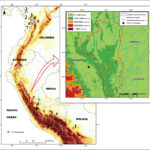
This elusive species resides exclusively within the montane cloud forests on the eastern flank of the Andes mountains, primarily found in regions of Colombia, Ecuador, and Peru. Typically dwelling at elevations between 1,500 and 2,400 meters above sea level, its habitats are a realm hidden beneath persistent clouds, rich with humidity and dense with vegetation.
Preferred Habitat Conditions#
Centrolene heloderma remains closely tied to pristine freshwater streams and untouched rainforest canopies. Highly dependent on clean, oxygen-rich water sources for survival, the species places eggs upon undersides of leaves directly over serene, flowing streams. Here, moisture-rich clouds perpetuate a damp microclimate, providing an ideal environment both for adults and for developing eggs. Amid lush ferns, orchids, and bromeliads, the frogs find ample shelter, moisture, and food—creating a microhabitat precisely attuned to their unique ecological needs.
Physical Characteristics: A Transparent Wonder#
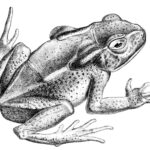
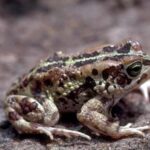
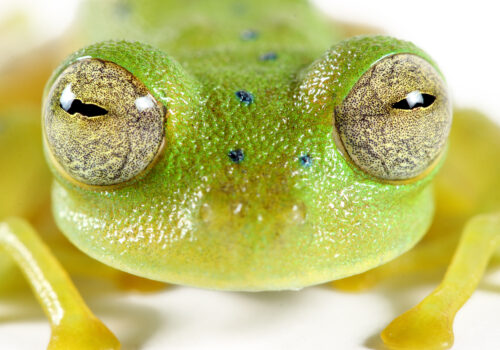
At first glance, Centrolene heloderma astounds thanks to its striking transparency. Adults measure just 2.5 to 3 centimeters long, their skin subtly colored in hues ranging from pale translucent green to bluish-grey edges. Visually striking above all else is their near see-through ventral side, revealing organs and even the gentle, rhythmic contractions of a tiny heartbeat. Unlike most other Centrolene species, the skin of Centrolene heloderma features a subtle granular surface texture—small, warty structures contributing to their camouflage among leaf surfaces and vegetation.
Their exceptional ability to blend seamlessly within their leafy perch is no simple vanity; it’s an evolutionary marvel—a means of survival critical for avoiding predators and staying hidden from prey. Such physical features perfectly intertwine beauty and practicality, blending seamlessly with their leafy habitat and reflecting millions of years of evolutionary fine-tuning.
Behavior and Life Cycle: Survival Secrets of the Rainforest Canopy#
Diet and Hunting Strategies#
Glass frogs, including the fascinating Centrolene heloderma, are primarily insectivorous. They thrive on a diverse diet of small invertebrates such as moths, flies, ants, spiders, and other arthropods that venture close to their leafy homes. Guided by their excellent vision and aided by stealth and patience, they ambush prey from a carefully selected perch. This blend of patience, stillness, and swift accuracy ensures a steady dietary supply crucial for sustaining their fragile, energy-efficient metabolisms.
Mating Calls and Egg-Laying Rituals#
As rain showers echo through their mountainous refuge, the males of Centrolene heloderma engage in delicate, flute-like choruses, their soft vocalizations resonating like tiny chimes through the night. These gentle, chirping calls signal territories and attract females who journey carefully through the lush foliage to select a suitable partner.
Following courtship, females deposit small clutches of gelatinous, transparent eggs beneath leaf surfaces directly above calm pools or aquatic streams. Remarkably, males often guard these eggs carefully, battling predators such as prowling insects and small snakes, fiercely defending their progeny’s fragile potential for life. After hatching, tadpoles drop gracefully into water below, where they mature until metamorphosis grants them the capacity for life among the leaves.
Ecological Role: Guardians of Balance#
Centrolene heloderma stands as an invaluable link in its intricate ecosystem. Serving vital ecological roles as both predator and prey, these glass frogs help regulate insect populations, keeping their roles firmly embedded within nature’s delicate web. They, in turn, provide nourishment for snakes, birds, and larger amphibians, reinforcing their centrality to rainforest biodiversity.
Furthermore, Centrolene heloderma serves as an important bioindicator. Due to its vulnerability to habitat alterations, changes in population numbers often reflect subtle ecosystem disturbances, alerting conservationists to urgent environmental concerns. Such ecological sentries signal the overall health of cloud forest ecosystems, underscoring the need to prioritize conservation initiatives.
Threats and Conservation Status: Fragile Lives Under Threat#
While Centrolene heloderma enchants through its exceptional beauty and unique biology, the species faces growing threats from habitat loss, climate change, agricultural expansion, and deforestation. Cloud forests, already sensitive to temperature shifts and moisture availability, are increasingly fragmented and degraded due to logging activities, plantations, and human settlements encroaching upon remote mountainous regions.
Adding to their challenges, global climate fluctuations alter rainfall patterns, resulting in prolonged droughts or unexpected heavy rains capable of disrupting vital breeding behaviors and tadpole development. Although currently listed as “Vulnerable” on the IUCN Red List, ongoing environmental pressures signal the importance of proactive conservation initiatives, bolstering habitat protection measures and fostering sustainable development practices in surrounding communities.
Cultural and Scientific Significance: Insights Beyond the Canopy#
While Centrolene heloderma may avoid the spotlight culturally, frogs as a whole carry prominent symbolism across Andean societies, often representing renewal, fertility, and ecological health in indigenous traditions. This species stimulates the curiosity of researchers particularly interested in amphibian sensitivity to environmental pollutants and pathogens, providing valuable insights into ecosystem health and resilience toward climate variations.
Increasing scientific attention devoted to species like Centrolene heloderma deepens our comprehension of rainforest ecosystems and highlights the interconnectedness between ecological health, climate stability, and human wellbeing.
Conclusion: A Call to Conservation Action#
As we immerse ourselves in the mesmerizing world of Centrolene heloderma, we inevitably recognize the powerful responsibility that humans bear toward safeguarding fragile ecosystems and remarkable species hidden throughout our planet. Protecting this small amphibian signifies more than ensuring its continued existence; it reveals a commitment to preserving biological diversity, ecological health, and the delicate, wondrous mysteries nestled within our natural world.
Inspired by the translucent marvel of the Warty Glass Frog, each of us can champion conservation efforts through knowledge, support for local protection programs, and advocacy for global environmental sustainability. Together, let us strive to ensure that extraordinary creatures like Centrolene heloderma continue their dance upon rainforest leaves, singing softly beneath an ever-vibrant sky.