- Introduction: An Enigmatic Amphibian of South America
- Taxonomy and Classification
- Natural Habitat: Where Rhinella major Thrives
- Physical Characteristics: A Creature Built for Survival
- Behavior and Life Cycle: Nature's Quiet Hunter
- Ecological Role: Guardians of Ecosystem Equilibrium
- Threats and Conservation Status: Challenges in a Changing World
- Cultural and Scientific Significance: Beyond Biological Wonders
- Conclusion: Appreciating the Subtle Majesty of Rhinella Major
Introduction: An Enigmatic Amphibian of South America#
Beneath the lush, green canopy of South America’s vast tropical forests, a creature both elusive and fascinating moves quietly among the leaves and roots, often overlooked yet incredibly significant — the Rhinella major. Closely related to the more infamous cane toad, Rhinella marina, this species remains relatively obscure yet harbors its own unique suite of wonders. Scientifically known as Rhinella major, this species is a member of the Bufonidae family, a distinctive and varied group of robust amphibians commonly known as “true toads.”
One cannot help but marvel at Rhinella major. Its adaptability, striking physical traits, and subtle behaviors offer incredible insights into the delicate balance that characterizes tropical ecosystems. Surprisingly, despite their ancient lineage and vital ecological role, these amphibians remain enigmatically aloof from popular notice. As we venture deeper into their story, prepare to uncover the nuanced realities behind this intriguing amphibian’s life.
Taxonomy and Classification#
Rhinella major is classified within the Bufonidae family, commonly known as true toads — an incredibly widespread and diverse family comprising over 35 genera. Within its own genus, Rhinella, it shares its lineage with approximately ninety other species, among them the infamous cane toad (Rhinella marina), notorious for its invasive status in Australia.
Previously, taxonomists grouped Rhinella major within the same species complex as Rhinella granulosa. However, advancements in molecular studies and detailed morphological analysis led to recognition as a distinct species, enriching our understanding and appreciation for amphibian biodiversity within Neotropical regions.
Establishing its identity as a distinct species underlines the rich biodiversity of South America’s tropical ecosystems and emphasizes the importance of meticulous scientific investigation—demonstrating that even overlooked species possess noteworthy individuality deserving of our attention and care.
Natural Habitat: Where Rhinella major Thrives#
Rhinella major finds its home nestled within the richly biodiverse expanses of South America’s tropical regions. It is predominantly found throughout central and northern regions of South America, including Brazil, Bolivia, Peru, Ecuador, Colombia, and Venezuela. Favoring humid conditions, it thrives amid damp leaf-littered forest floors, riparian habitats, and floodplain areas near streams and wetlands.
Amidst the densely shaded foliage and perpetually damp forest floor, this cryptic toad feels right at home, concealing itself beneath vegetation, logs, and leaf litter during daylight hours. The perpetually moist environment provides both camouflage protection from predators and easy access to prey such as insects, spiders, and other invertebrates abundant within leaf litter.
This intimate connection with their natural habitat underscores a critical ecological truth—healthy amphibian populations indicate thriving ecosystems. Conversely, declining frog populations can signal ecosystem damage, making Rhinella major not just a resident, but also a sentinel species within its environment.
Physical Characteristics: A Creature Built for Survival#
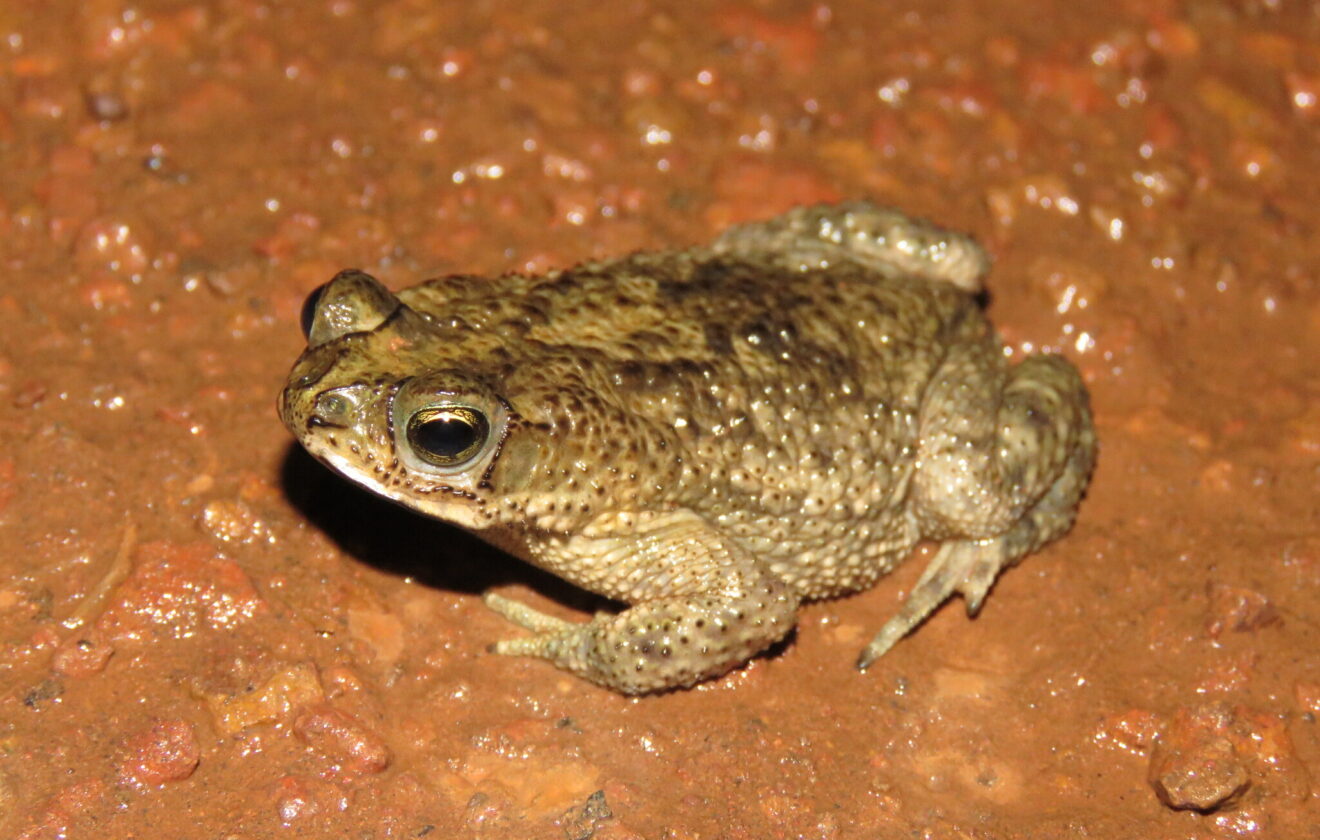
At first glance, Rhinella major may appear unassuming, but a closer look unravels an array of evolutionary adaptations intricately designed for survival. An adult typically measures between 7 and 12 centimeters, establishing itself as a moderately large, robust toad. Its body coloration ranges from earthy browns and grays to dark olives, hues cleverly blending with its surrounding environment.
The rugged skin texture, adorned with characteristic warts and ridges, provides surprising camouflage capability amid the intricate patterns of fallen leaves and disturbed soil. Importantly, these skin structures also play an essential physiological role, containing specialized glands secreting toxins vital to deter predators; remarkably effective chemical defenses clearly advertise “do not touch.”
Large, expressive eyes positioned prominently atop its head grant it an impressive field of vision vital for detecting predators and prey alike. The strong limbs equipped with muscular hind legs allow it to traverse uneven terrain swiftly, bounding skillfully through the undergrowth to evade threats or ambush prey.
Together, these specialized physical adaptations readily demonstrate how Rhinella major has expertly evolved to thrive amidst the many natural perils it faces daily within the tropical forest ecosystem.
Behavior and Life Cycle: Nature’s Quiet Hunter#
Feeding and Foraging Habits#
Nightfall signals activity for Rhinella major. Emerging from its daytime refuge, the toad navigates the tangled leaf litter and forest floor cryptically yet effectively. It hunts primarily through ambush tactics, remaining perfectly still, eyes alert for movement from unsuspecting insects such as beetles, ants, termites, and crickets. Swift and decisive lunges powered by their muscular back legs render prey capture swift and efficient.
Breeding and Reproduction#
Like most amphibians, Rhinella major’s reproductive cycle is an extraordinary phenomenon occurring seasonally, often synchronized with the onset of heavier rains. Males migrate toward suitable breeding habitats such as shallow water sources, emitting distinctive, resonant calls to attract potential mates. This vocalization strategy, integral for attracting females and deterring rival males, fills the air with a chorus echoing through calm tropical nights.
Following successful courtship, females deposit long strings of gelatinous eggs—a spectacle of astonishing productivity numbering into the thousands. These eggs rapidly develop into tadpoles, which subsequently metamorphose into fully terrestrial toadlets, embarking on a perilous journey of survival amid predators and environmental pressures until reaching maturity.
Ecological Role: Guardians of Ecosystem Equilibrium#
Though relatively modest in stature and often unnoticed, Rhinella major profoundly impacts ecosystem health. By actively consuming vast quantities of insects and various arthropods, these toads regulate insect populations, serving as natural pest controllers and protecting the intricate web of biodiversity within their habitat.
Additionally, Rhinella major provides an invaluable prey source, nourished upon by numerous predators such as snakes, birds, large insects, and mammals. The equilibrium maintained between their predator-prey relationships underpins broader ecosystem functionality, supporting biodiversity across multiple trophic levels.
Threats and Conservation Status: Challenges in a Changing World#
Currently, Rhinella major holds a status of “Least Concern” according to the International Union for Conservation of Nature’s (IUCN) Red List. However, this reassuring classification should not overshadow the subtle yet significant ecological threats they face. Rampant deforestation and habitat fragmentation within South America pose considerable threats, as the loss of forest cover directly impacts the moist habitats crucial for their survival. Additionally, pollution and pesticide use further impermeable amphibian skin, leading to declining health and reproductive success.
Climate change exacerbates these problems, altering precipitation patterns and causing more frequent drought episodes or erratic rainfall, profoundly disrupting breeding cycles and affecting population sustainability long-term. Conservationists and researchers alike advocate continuous monitoring and proactive habitat conservation to safeguard the resilience of Rhinella major populations across their extensive range.
Cultural and Scientific Significance: Beyond Biological Wonders#
Historically, native cultures within South America’s tropical forest regions have recognized and respected these animals, often incorporating subtle symbolic meanings of resilience and adaptability into local lore. More recently, scientists have studied Rhinella major and closely related species to understand amphibian resilience, skin toxin medicinal potentials, and ecological health indicators.
The chemical compositions extracted from their vivid glands offer exciting possibilities in pharmacological research, highlighting their importance beyond ecological roles and further emphasizing the need for conservation attention and commitment.
Conclusion: Appreciating the Subtle Majesty of Rhinella Major#
Although Rhinella major may remain elusive and lesser-known than its infamous relative, the cane toad, it embodies profound ecological importance, unique adaptations, and compelling biological intrigue. By shedding light on the rich tapestry of life this inconspicuous amphibian contributes, we cultivate deeper connections to our shared natural heritage.
Protecting species such as Rhinella major means safeguarding entire ecosystems and maintaining biodiversity integral to our planet’s health. Next time you venture into lush South American forests, spare a thoughtful glance toward the damp earth beneath your feet, considering the humble yet vital existence of these remarkable amphibians. Embrace their conservation, support preservation efforts, and champion biodiversity—because every creature, no matter how hidden, enriches our world immeasurably.